The Ulutas Medical Journal · ISSN 2149-0430 (print), 2149-388X (online) · https://www.ulutasmedicaljournal.com/?mno=291624
Original Research · Open access
Profile of Moderate and Severe Burns: Turkish Experience In A Tertiary Care Burn Unit
- Kartal Dr. Lutfi Kirdar Education and Research Hospital, Anaesthesiology and Reanimation Department, Kartal, Istanbul, Turkey ROR
Abstract
- Introduction
- We aimed to analyze the demographic and treatment outcomes of severe burn patients admitted to the burn intensive care unit and moderate burn patients admitted to the burn service and to contribute to the national statistical burn accumulation.
- Method
- We retrospectively reviewed the information of 4745 patients hospitalized in our burn center between 2009-2017 from a prospectively maintained database.
- Results
- 3583 (75.51%) moderate burn patients admitted to the burn service and 1162 (24.49%) severe burn patients admitted to the burn intensive care unit (BICU). The ratio of female to male in burn service group was 33.4/66.6, while it was 25.1 / 74.9 in burn intensive care group. When we examined the causes of burn traumas, the first order received scalding burns with 52.65% (n=1886) in moderate burns while it was flame burns with 54.22% (n=630) in severe burns. Acinetobacter species were the most common pathogen in our burn intensive care unit, and Pseudomonas species were in burn service. The average hospitalization length was 10.09 days in the burn service and 11.82 days in the burn intensive care unit. Our mortality rate was 7.64% (n=350).
- Conclusion
- This is one of the most extensive series presented in our country. In the developed countries, death rates in burn series have been reported below 5% in recent years, while our mortality rate was found to be 7,37%.
Keywords
Full text
Introduction
Burn injury is a universal type of trauma around the world with significant morbidity and mortality rates. It has a high cost of treatment due to prolonged hospitalization for wound and scar treatment together with rehabilitation (1). It also has adverse effects on psychology and social lives of both patients and their family members (2). Each year, nearly 6 million patients were treated for burns, and a significant portion of them was managed in outpatient services. But there are still controversies about a referral to burn units organized for specific treatment of these patients (3, 4). The predisposing factors, the demographical data and the epidemiologic coverage of the burn injuries differ between various countries and different regions. The etiological factors for burn injuries also vary among different states (5). But for everywhere, the best approach to treat a burnrelated injury is the prevention of the damage before occurrence (6).
The survival of a burn trauma individual differs due to the socioeconomic status of the region. In developed areas, an organized multidisciplinary approach including early hospitalization, proper fluid resuscitation and nutrition and infection control increases the survival (7, 8). But unfortunately, the majority of the burn traumas occur in the middle and low-income countries (9) in which low education, limited health service inhibits adequate treatment and rehabilitation for these patients (10, 11). Conse-quently, we observe higher mortality rates were in these areas.
Patients with acute burn injuries are usually brought to the nearest local hospital first. Then the primary interventions take place and finally they are stabilized followed by their transfer to the burn centers. There are various studies in the literature which were designed to evaluate the epidemiologic features of burn injuries and to determine the specific risk factors (12, 13). This study aims to analyze the demographic and epidemiologic characteristics of patients admitted to our burn center, to identify the main etiologic factors and to reveal the preventive measures for burn injuries.
Material and Method
Study design
Our study is a retrospective study including, the information of 4745 patients hospitalized in our burn center between 2009 and 2017 reviewed from a prospectively maintained database. We compared the number of patients hospitalized in burn service or burn intensive care unit according to years, the sex of patients, age, burn scars, causes of burns, days of hospitalization,occupancy rates according to years, infection rates and treatment outcomes.
Setting and sample
Kartal Dr.Lutfi Kirdar Education and Research Hospital Burns Centre is the most equipped burn center in Turkey with a multidisciplinary crew working due to the American Burn Association (ABA) criteria (14). The staff consists of general surgeons, plastic surgeons, anesthetists either in BICU or operating rooms, infectious disease doctors, pediatric surgeons, physiotherapists, psychologists, dieticians, and burn nurses. It has a helicopter landing field, and it accepts patients from every region of the country. It has six burns intensive care unit (BICU) rooms, 16 burn service beds, and two separate operating rooms all housed in one building.
All six bedrooms of our BICU were designed according to the American Burn Association (ABA) criteria with HEPA filters, laminar flows, and with cabin entrances. According to American Burn Association guidelines, the lesions of the patients treated in our burn center on an inpatient basis consisted of moderate and severe burn injuries.
Statistical analysis
We used SPSS Windows version 22.0 software for the statistical analysis. The descriptive statistics of the data were performed with proportion and frequency values. Chi-square test and Mann-Whitney U test were utilized for the study of the variables. Data were expressed as a mean ±standard deviation. P<0.05 was considered statistically significant.
Results
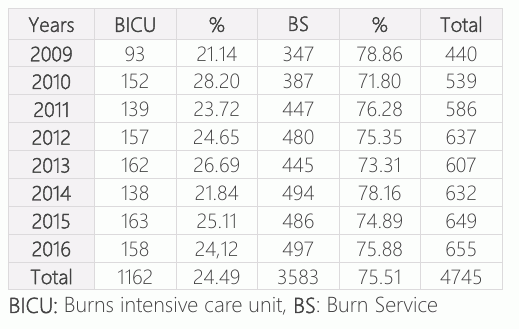
A total of 4745 patients admitted to our burn center during the 6-year period. 1162 (24.49%) of the severe burn patients were in intensive care unit, and 3583 (75.51%) of the moderate burn patients were hospitalized in the burn service.The mean annual admission to our burn center was 593.12, and these were 145.25 and 447.87 in burn intensive unit and burn service respectively (Table-1).
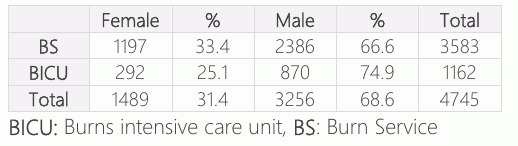
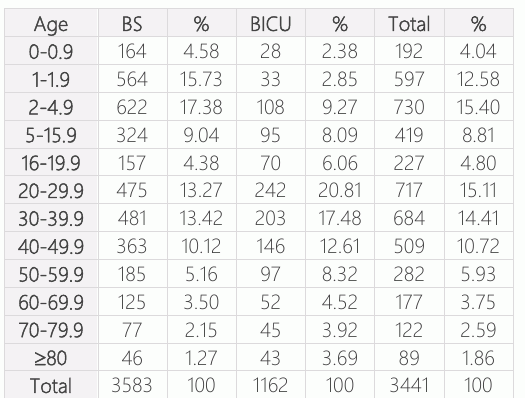
In the burn service group, the ratio of female to male was 33.4/66.6 while it was 25.1/74.9 in the intensive care group (Table-2). The male to female ratio was found to be significantly higher in the intensive care unit when compared with service (2.9 versus 1.9 respectively; p=0.003). The most common age range in the moderate burn group was 2-4.9 years with 17.38% (n: 622), but it was 20-29.9 years with 20.81% (n: 242) in the severe burn group (Table-3).
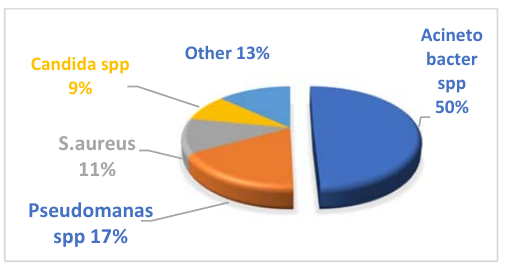
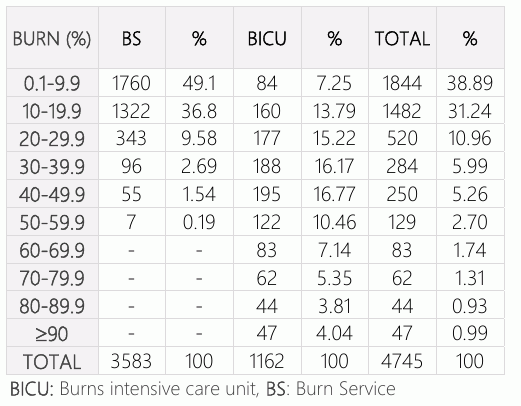
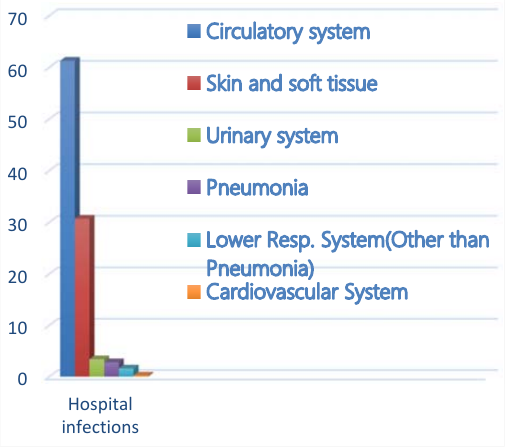
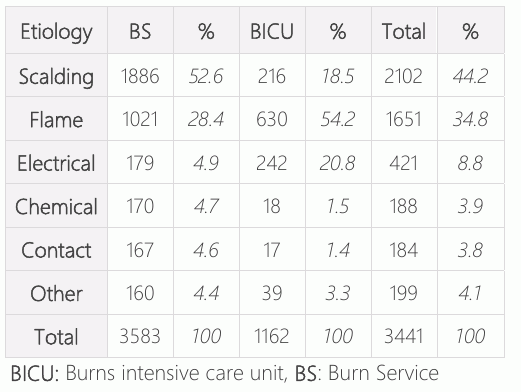
The highest rate of admission was in moderate burned patients was 49.12% (n: 1760) with a burned body surface area of 0.1-9.9%, while in the severely burned group it was 16.77% (n: 195) with a burning body surface area of 40- 49.9% (Table-4). The average percentage of burn surface area was calculated as 15.3%. The burn percentage was significantly higher in the intensive care unit (35.2±23.5%) compared to the burn service patients (10.7±8.5%) (p<0.05). When we examined the causes of moderate burns, the first order received scalding burns with 52.65% (n: 1886), and in severe burns, it was flame burns with 54.22% (n: 630) incidence (Table-5). For patients with the electrical burn and flame burn injuries, the rate of admission to the intensive care unit was significantly higher than other types of burn injuries (p<0.05). In the first eight years, the rate of burn intensive care infections was 56.04% on average, while it was 8.26% in our burn services. The incidence density of infection was 5.48% in our burn intensive care unit and 0.76% in the burn service. The most frequent infection in burn intensive care patients was blood circulation infection as 31.93%, while it was skin and soft tissue infections as 5.72% in burn service. Acinetobacter species were the most common pathogens in burn intensive care unit, and Pseudomonas species were the ones in burn service (Graphic 1, 2).
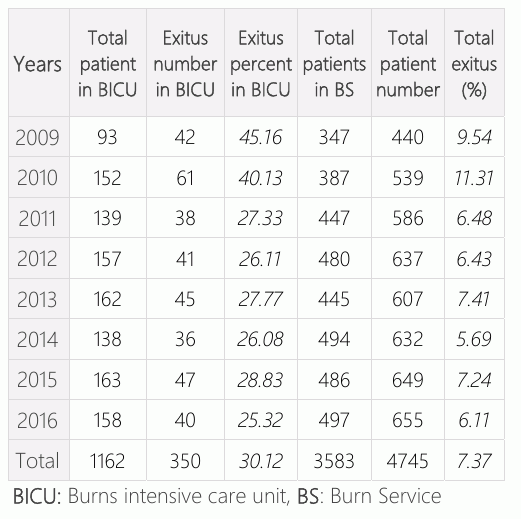
The annual average occupancy rate of the burn service was 89.39%, and the burn intensive care unit was 74.70%. The average hospitalization length was 10.09 days in burn service and 11.82 days in the intensive care unit. The duration of stay at the hospital was significantly higher in the electrical burn injuries (12.2±15.1 days) and flame burns (15.5±13.9days) compared to the other types of burn injuries (p<0.05). Our mortality rate was 7.37% (n:350) in our series(Table-6). The burn percentage was found to have a positive correlation with the mortality risk. The rate of mortality was signi-ficantly higher for electrical burn injuries (17.1% of all deceased patients)and flame burns (69.4% of all deceased patients) compared to other types of burn injuries (p<0.05).
Similarly, the patients with electrical burns and flame burn injuries had a significantly higher burn percen-tage in comparison to the patients with other types of burn injuries (23.3±19.9% and 28.6±24.5% respectively; p<0.05).
Discussion
The management of burn patients is quite tricky and an organized multidisciplinary approach is required to cope with the additional complications. So, it results in a prolonged hospitalization. Many different complications may occur during this process like extremity loss, repetitive surgical interventions, infections. The best way to the management of burn trauma is the prevention of the injury before its occurrence. First of all, a collection of data about these burn injuries in society is crucial for the production of ways of management of these burns. Our country as a developing country demands individual efforts on burn injuries; so in recent years, there are several studies about the burn epidemiology and the management of statistical data (15–17). Our study consisting of 4745 patients is one of the most extensive series presented in our country.
In our study, adult male patients constituted the majority of patients admitted to our burn center. This finding was similar to various other study results (18, 19). We can interpret this result as since women do not work in heavy industry. But in some other reports, female patients were more than males (20, 21). Our data resulted in the scalding burns as the highest percentage of burn cases. This was compatible with several other studies (22, 23), but in another study (24), flame burns constituted the majority of burn injuries. In our study scalding burns were followed by flame burns and electrical burn injuries as second and third most frequent types of burn injury. Our burn center is close to the industrial zone which explains the relatively increase frequencies of flame burns, electrical burns and contact burn injuries. Scalding burns commonly observed at home. The families with low socioeconomic status in a crowded environment may neglect their children, so these children are vulnerable to burn accidents with hot water, tea, milk or soup (25).
The highest mortality rate among our cases was in the flame burns group, followed by the electrical burn injuries. The level of burn percentage showed a direct correlation with the mortality rate. The highest burn percentage was in the flame burns group and the most prolonged duration of hospitalization in the electrical burn injuries group. Our mortality ratio was calculated to be around 7.37% which was higher than various other study results in developed countries (26–28).
In burn trauma, opportunistic infections are common due to the interruption of the skin integrity resulting from a way of penetration of microorganisms together with the suppression of the immune system. Antibiotic prophylaxis is routine for all patients under the direct control of our doctor of infectious disease and cultures fromallsites were taken.Acinetobacterspp were the most common microorganism in our results. Several studies reported different organisms as most common organisms growing in burn sites as S.aureus, Pseudomonas sp., and Klebsiella spp (19, 29, 30). Our results are different from previous findings.
In Turkey, Burn and Fire Disasters Association was established to conduct studies, education programs, national and international scientific activities on burns and fire disasters. We think that the conduction of appropriate notifications and education programs will provide significant benefits to protection from accidents.
This study revealed that the majority of burn patients in our region consisted of middle-aged male patients. The type of burn injury with the highest mortality risk was found to be the flame burns. The most common type of injury was scalding burns, and the largest group of patients experienced the burn injury while actively cooking in the evening. We believe that the traditional methods for preparing meals and tea brewing in Turkey should be re-evaluated and necessary precautions have to be undertaken.
Conclusion
Burn injuries are preventable disasters with physical and psychological scars. Thus the efforts for preventive measures and education programs should be increased. All social assistance foundations and burn associations should also work toward this goal.
Authorship Contributions
Concept: Y.Y., O.K.; Design: Y.Y., O.K..; Data collection &/or processing: Y.Y., O.K.; Analysis and interpretation: Y.Y., O.K.; Literature search: Y.Y., O.K.; Writing: Y.Y., O.K.; Critical review: Y.Y., O.K.
Declarations
- Author contributions (CRediT)
- All authors contributed equally to all 14 CRediT roles (Conceptualization, Data curation, Formal analysis, Funding acquisition, Investigation, Methodology, Project administration, Resources, Software, Supervision, Validation, Visualization, Writing – original draft, Writing – review & editing).
- Funding
-
Funding information was not reported in the published version of this article.
- Conflicts of interest
- The authors declare no conflict of interest
- Ethics approval
- Ethics approval details were not reported in the published version of this article.
- Data availability
- A data availability statement was not reported in the published version of this article.
References (30)
23 of 30 references are linked to their DOI.
- Sanchez-Sanchez JL, Pere Perez SB, Bastida JL, Martinez MM: Cost-utility analysis applied to the treatment of burn patients in a specialized center. ArchSurg 2007, 142:50-57, discussion 57. DOI Crossref PubMed Google Scholar
- Gullick JG, Taggart SB, Johnston RA, Ko N. The trauma bubble: patient and family experience of severe burn injury. J Burn Care Res. 2014;35(6): e413–27. DOI Crossref PubMed Google Scholar
- Chipp E, Walton J, Gorman D, Moiemen NS: Adherence to referral criteria for burns in the emergency department. Eplasty 2008, 8: e26. PubMed Google Scholar
- Anwar U, Majumder S, Austin O, Phipps AR: Changing pattern of adult burn referrals to a regional burns center. J Burn Care Res 2007, 28:299-305. DOI Crossref PubMed Google Scholar
- Taghavi M, Rasouli MR, Boddouhi N, Zarei MR, Khaji A, Abdollahi M: Epidemiology of outpatient burns in Tehran: an analysis of 4813 cases. Burns 2010, 36:109-113. DOI Crossref PubMed Google Scholar
- Sadeghi-Bazargani H, Mohammadi R: Epidemiology of burns in Iran during the last decade (2000-2010): a review of the literature and methodological considerations. Burns 2012, 38:319-329. DOI Crossref PubMed Google Scholar
- Tyson AF, Boschini LP, Kiser MM, Samuel JC, Mjuweni SN, Cairns BA, et al. Survival after burn in a sub-Saharan burn unit: challenges and opportunities. Burns. 2013;39(8):1619–25. DOI Crossref PubMed Google Scholar
- Ayaz M, Bahadoran H, Arasteh P, Keshavarzi A. Early Excision and Grafting versus Delayed Skin Grafting in Burns Covering Less than 15% of Total Body Surface Area; A Non-Randomized Clinical Trial.Bull Emerg Trauma.2014;2(4):141-5. PubMed Google Scholar
- Rybarczyk MM, Schafer JM, Elm CM, Sarvepalli S, Vaswani PA, Balhara KS, et al. A systematic review of burn injuries in low-and-middle-income countries: Epidemiology in the WHO-defined African Region. African Journal of Emergency Medicine. 2017 DOI Crossref PubMed Google Scholar
- Charles AG, Gallaher J, Cairns BA. Burn Care in Low- and Middle-Income Countries.Clin Plast Surg. 2017;44(3):479–83. DOI Crossref PubMed Google Scholar
- Gupta S, Wong EG, Mahmood U, Charles AG, Nwomeh BC, Kushner AL. Burn management capacity in low and middle-income countries: a systematic review of 458 hospitals across 14 countries. Int J Surg. 2014;12(10):1070–3. DOI Crossref PubMed Google Scholar
- Desouches C. Influence des pathologies associees et de l’age sur la mortalité des patients brûlés ages de plus de 65 ans. Brûlures 2000. Ann Burns Fire Disasters 1996, 9:131-138. PubMed Google Scholar
- Anlatici R, Ozerdem OR, Dalay C, Kesiktas E, Acarturk S, Seydaoglu G: A retrospective analysis of 1083 Turkish patients with serious burns. Burns 2002, 28:231-237. PubMed Google Scholar
- Gibran NS; Committee on Organization and Delivery of Burn Care, American Burn Association: Practice Guidelines for burn care, 2006. J Burn Care Res 2006, 27:437-438. DOI Crossref PubMed Google Scholar
- Al B, Coban S, Güloğlu C. Tandir burns in and around Diyarbakir, Turkey. Ulus Travma Acil Cerrahi Derg 2010, 16: 59-62. PubMed Google Scholar
- Al B, Yildirim C, Coban S, Aldemir M, Güloğlu C: Mortality factors in flame and scalds burns: our experience in 816 patients. Ulus Travma Acil Cerrahi Derg 2009, 15:599-606. PubMed Google Scholar
- Albayrak Y, Temiz A, Albayrak A, Peksoz R, Albayrak F, Yusuf Tanrıkulu Y. A retrospective analysis of 2713 hospitalized burn patients in a burns center in Turkey. Ulus Travma Acil Cerrahi Derg, 2018, 24;1:25-30. DOI Crossref PubMed Google Scholar
- Chien WC, Pai L, Lin CC, Chen HC. Epidemiology of hospitalized burns patients in Taiwan. Burns 2003,29:582-88. DOI Crossref PubMed Google Scholar
- Jie X, Baoren C: Mortality rates among 5321 patients with burns admitted to a burn unit in China: 1980-1998. Burns 2003, 29:239-245. DOI Crossref PubMed Google Scholar
- Morita S, Higami S, Yamagiwa T, Iizuka S, Nakagawa Y, Yamamoto I, Inokuchi S: Characteristics of elderly Japanese patients with severe burns. Burns 2010, 36:1116-1121. DOI Crossref PubMed Google Scholar
- Agbenorku P, Edusei A, Ankomah J: Epidemiological study of burns in Komfo Anokye Teaching Hospital, 2006-2009. Burns 2011; 37:1259-1264. DOI Crossref PubMed Google Scholar
- Alaghehbandan R, MacKay Rossignol A, Rastegar Lari A: Pediatric burn injuries in Tehran, Iran. Burns 2001; 27:115-118. DOI Crossref PubMed Google Scholar
- Zhou B, Zhou X, Ouyang LZ, Huang XY, Zhang PH, Zhang MH, Ren LC, Liang PF: An epidemiological analysis of Profile of Moderate and Severe Burns Yuce, et al. pediatric burns in urban and rural areas in south-central China. Burns. 2014 Feb;40(1):150-6. DOI Crossref PubMed Google Scholar
- Xie B, Xiao SC, Peng XD, Zhu SH, Lv KY, Li HY, Xia ZF: Epidemiology and outcome analysis of severe, extensive burns: a 12-year summary of 103 cases in a burn center in China. J Burn Care Res 2012, 33: e127-132. DOI Crossref PubMed Google Scholar
- Koç Z, Sağlam Z. Burn epidemiology and cost of medication in pediatric burn patients. Burns 2012, 38:813-819. DOI Crossref PubMed Google Scholar
- Brusselaers N, Monstrey S, Vogelaers D, Hoste E, Blot S. Severe burn injury in Europe: a systematic review of the incidence, etiology, morbidity, and mortality. Critical Care 2010, 14: R188. DOI Crossref PubMed Google Scholar
- Dokter J, Vloemans AF, Beerthuizen GI, Van der Viels CH, Boxma H et al. Epidemiology of burn injuries in Netherlands. Burns. 2014 Nov;40(7):1406-14. PubMed Google Scholar
- Lancerotto L, Sferrazza R, Amabile A, Azzena B. Burn care in relation to burn epidemiology in Italy. Burns. 2011 Aug;37(5): 835-41. DOI Crossref PubMed Google Scholar
- Akçay MN, Oztürk G, Aydinli B, Ozoğul B. Tandir burns: a severe cause of burns in rural Turkey. Burns 2008;34:268–70. DOI Crossref PubMed Google Scholar
- Ramakrishnan KM, Sankar J, Venkatraman J. Profile of pediatric burns Indian experience in a tertiary care burn unit. Burns 2005; 31:351–3. DOI Crossref PubMed Google Scholar
Read the full text
Open the PDF here
Loading the PDF…
If the PDF does not show here, use the download button above.
How to cite this article
Yuce Y, Kilavuz O. Profile of Moderate and Severe Burns: Turkish Experience In A Tertiary Care Burn Unit. Ulutas Med J. 2018;4(1):25-31. doi:10.5455/umj.20180221074628
Yuce, Y., & Kilavuz, O. (2018). Profile of Moderate and Severe Burns: Turkish Experience In A Tertiary Care Burn Unit. The Ulutas Medical Journal, 4(1), 25–31. https://doi.org/10.5455/umj.20180221074628
Yuce, Y. and Kilavuz, O. (2018) 'Profile of Moderate and Severe Burns: Turkish Experience In A Tertiary Care Burn Unit', The Ulutas Medical Journal, 4(1), pp. 25–31. doi: 10.5455/umj.20180221074628.