The Ulutas Medical Journal · ISSN 2149-0430 (print), 2149-388X (online) · https://www.ulutasmedicaljournal.com/?mno=26397
Case Report · Open access
Neonatal COVID-19: Two Case Reports
Also available in: العربية · Türkçe · 中文
- Department of Pediatrics, Medicine Hospital, Atlas University, Faculty of Medicine, Istanbul, Turkey ROR
- Department of Pediatrics, Division of Neonatology, Istanbul University, Faculty of Medicine, Istanbul, Turkey ROR
Abstract
Since its emergence in China in December 2019, a novel coronavirus disease (COVID-19) has rapidly spread all over the world and has been a major public health concern. This disease was pronounced as a pandemic by World Health Organization (WHO) and this highly contagious virus named severe acute respiratory syndrome coronavirus 2 (SARS-CoV-2). Although children have mild clinical manifestations, data on the potential harm and long-term effects of the disease are limited in children, especially newborns. Eight cases of COVID-19 were followed up in our hospital, two of which were proven, and six were suspected. In the thorax Computerized Tomography (CT) of the babies with COVID-19, there was a ground-glass opacity. However, during his close follow-up, no respiratory problems were observed.
Keywords
Full text
Introduction
Since its emergence in China in December 2019, a novel coronavirus disease (COVID-19) has rapidly spread all over the world and has been a major public health concern. This highly contagious virus named severe acute respiratory syndrome coronavirus (SARS-CoV- 2) and this disease was pronounced as a pandemic by World Health Organization (WHO) (1, 2). Globally, as of August 08, 2020, there have been 19.187.943 confirmed cases of COVID-19, including 716.075 deaths, reported to WHO (2). Infected children were 2% of cases In China, 1.2% of cases in Italy, 1.7 % of cases in the USA, and 1% of cases in Turkey. Although children have mild clinical manifestations, data on the potential harm and long-term effects of the disease are limited in children, especially newborns.1,3 Herein, we report two newborns with late-onset SARS-CoV-2 infection and six neonates born to mothers with COVID-19.
Case Presentation
Eight cases of COVID-19 were followed up in our hospital, two of which were proven, and six were suspected. COVID-19 PCR (polymerase chain reaction) test taken by nasopharyngeal swab was applied to all cases and their parents. The mothers had no comorbidity factor. All six newborns who had negative PCR tests at birth and 48 hours on the postnatal period were term babies born from pregnant women diagnosed with COVID-19. Clinical and laboratory findings were completely normal at baseline and follow-up. Below are presented two newborns infected with SARS-CoV-2 as a result of close contact with their parents.
Case 1
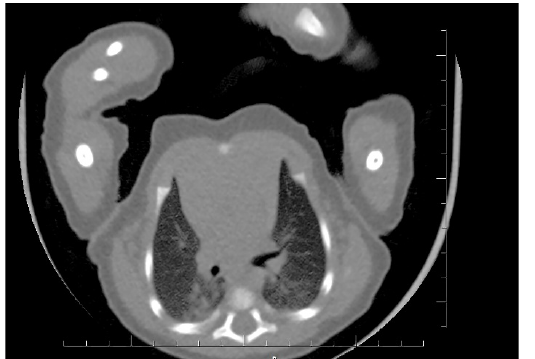
For the last two days, a 12-day-old male infant who had complaints of restlessness, burrs in the eyes, unwillingness to suck was brought to the newborn outpatient clinic. The baby was born at the 37th week of gestation with a birth weight of 3590 g. In addition to mild hypotonicity and dacryostenosis, no additional features were found in the physical examination of the baby. Her mother had been receiving treatment for the last 3 days with the diagnosis of COVID- 19 pneumonia. The baby was admitted to the NICU with late-onset neonatal sepsis and possible diagnoses of neonatal COVID-19. Laboratory test results; WBC: 14310/mm3, PLT: 537.000/mm3, Hb: 17.8 g/dL, Hct: 52%, sodium: 135 mEq/L, calcium: 10.8 mEq/L, total bilirubin: 10 mg/dL, direct bilirubin: 0.4mg/dL, C-Reactive Protein (CRP): <0.1 mg/dL, procalcitonin: <0.5 ng/mL, BUN: 5mg/dL, creatinine: 0.5 mg/dL, AST: 37 U/L, ALT: 24U/L, aPTT:28.9 seconds, PT: 12 seconds. Blood gas resulted normally. There was mild paracardiac infiltration on the X-ray. However, in thorax computed tomography (CT), there was ground-glass opacity in both lungs' lower lobes (Figure-1). Nasopharyngeal swab samples were sent for influenza A, B, and COVID-19 PCR. Blood and urine cultures were sent. Since sepsis could not be excluded, ampicillin and gentamicin were started. Parenteral fluid support was started due to insufficient enteral intake. On the second day of the hospitalization, the complaint of restlessness regressed and her oral intake improved. Influenza A and B PCR test was negative. On the third day of admission, the COVID-19 PCR test was positive. However, there was no pathological finding in his physical examination. Therefore, no additional treatment for COVID-19 was started. Antibiotic treatment was discontinued on the 5th day of the hospitalization, whose culture did not reproduce. COVID-19 PCR tests, which were sent twice as control from on the 3rd and 5th days of hospitalization were negative. The baby was discharged with healing on the 7th day of hospitalization.
Case 2
A 27-day-old male infant was brought to the hospital with complaints of decreased sucking and vomiting for the last day. The baby was born at the 39th week of gestation with a birth weight of 3760 g. A week ago, the parents’ COVID-19 PCR tests were positive. Since the mother had no complaints and no pneumonia was detected in thorax CT, no treatment was initiated. However, the treatment of his father with severe cough was started because the thorax CT imaging was compatible with COVID- 19 pneumonia. The baby was admitted to the NICU with late-onset neonatal sepsis and possible diagnoses of neonatal COVID-19. On physical examination, there was no additional feature except mild hypotonicity.
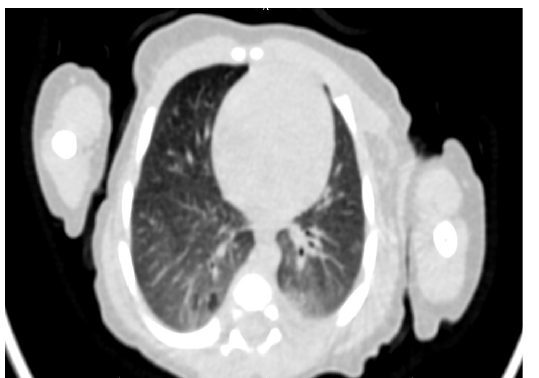
Laboratory test results; WBC: 10930/mm3, PLT: 418.000/mm3, Hb: 15.3 g/dL, Hct: 42%, sodium: 136 mEq/L, potassium: 4.9 mEq/L, total bilirubin: 2.1 mg/dL, direct bilirubin: 0.2 mg /dL, CRP:<0.1 mg/dL, procalcitonin: <0.5 ng/mL, BUN: 6.6 mg /dL, creatinine: 0.35 mg/dL, AST: 26U/L, ALT:19 U/L, aPTT: 32.4 seconds, PT: 11 seconds. Blood gas and complete urine analysis resulted normally. Adenovirus and rotavirus tests also resulted negatively. PCR was sent for influenza A, B, and COVID-19. Cranial and abdominal ultrasonography were observed as normal. Bilateral suspicious infiltrations were present on the X-ray. Multifocal ground-glass opacities were detected in both lungs following COVID- 19 in thorax CT imaging (Figure-2). However, no pathological finding was found in the respiratory system examination.
Since late-onset neonatal sepsis could not be excluded, antibiotic treatment was started. Parenteral fluid was started for the baby whose enteral intake was not sufficient. The COVID-19 PCR test was positive on the 3rd day of treatment. The patient's oral intake improved and the parenteral fluid was discontinued. No additional treatment for COVID-19 was initiated for babies, whose physical examination wasnormal. Antibiotic therapy was discontinued on the 5th day as the cultures were negative. Control COVID-19 PCR tests sent twice, resulted in negative. The baby was discharged with healing on the 10th day of hospitalization.
Discussion
COVID-19 can be seen in all age groups and shows a very fast course. Data on the transmission of the disease, clinical and laboratory findings, pathogenesis, and long-term effects are limited. For this reason, the information about the newborn period where the number of cases is low is very important. SARS-CoV-2 infection can be transmitted by droplets, environmental close contact, fecal-oral route among humans. Maternofetal vertical transition plays an important role in the transmission of many viral diseases to the baby during the neonatal period. However, no vertical transition has been shown from studies on SARS-CoV-2 infection so far (3, 4). Similarly, in our cases, PCR the results sent from nasopharyngeal swab samples of newborns born from COVID-19 positive pregnants were negative. No pathological finding was observed during the follow-up. Two newborns with SARS-CoV-2 received virus in the late neonatal period withclose contact from the environment. The incubation period of the disease is on average 5-6 days. Frequent symptoms may be accompanied by fever, dry cough, weakness, shortness of breath, and sometimes signs of the gastrointestinal tract (GIS). However, there is no specific clinical finding for the neonatal period. It usually progresses with asymptomatic or mild symptoms (5, 6). Similarly, there is no specific laboratory finding in the neonatal period. Leukocytosis, leukopenia, thrombocytopenia, creatinine kinase, alkaline phosphatase, AST, and ALT elevations can be seen. Ground-glass opacity or infiltrative view can be detected radiologically on X-ray or CT imaging. In the first case of SARS-CoV-2 infection positive, there were nonspecific findings such as restless ness, nutritional problems, and in the second, vomiting. Laboratory findings were normal. In the X-rays of the babies, there was a para cardiac infiltration and a ground-glass opacity on thorax CT. However, during his close follow-up, no respiratory problems were observed. Since all these changes are not specific, the most valuable method for diagnosis is PCR positivity wassent from the nasopharyngeal swab sample (3, 6–8). All infants with COVID-19 suspect who were followed up in our unit were PCR tested. The second control PCR test was performed 48 hours after the negative results. The treatment of the disease is symptomatic. Although some antiviral agents have been tried in adult patients, unfortunately, there is no proven treatment or vaccine for SARS- CoV-2 infection yet. In newborns, usually, there is no need for antiviral treatment, but there is no insufficient evidence in this regard (3, 4, 6). In both cases, although parenteral fluid supplementation was started for 2-3 days due to gastrointestinal symptoms, discontinued early due to the rapid recovery of oral intake. Anti-biotherapy was stopped because the culture results were negative.
Breast milk is the most important food source for newborns. Although some viral diseases are known to be transmitted by breast milk, no SARS-CoV-2 infection has been reported to date. Therefore, breastfeeding can be continued by taking the necessary isolation measures. If the mother is unable to breastfeed her baby, expressed breast milk can be given to the baby, following the hygiene rules (9, 10). Although we have been informed in detail about the necessity of breast milk, families did not want to take any risks in this period when the COVID-19 pandemic was the most active and the mortality rate was high. For this reason, both newborns were given formula milk instead of breast milk for feeding purposes during their hospital stay.
In the literature, it is known that COVID-19 has been seen less frequently and more mildly in the neonatal period. However, what problems COVID-19 can cause in the long term period is not clear as there is insufficient data on this subject.
Declarations
- Author contributions (CRediT)
- All authors contributed equally to all 14 CRediT roles (Conceptualization, Data curation, Formal analysis, Funding acquisition, Investigation, Methodology, Project administration, Resources, Software, Supervision, Validation, Visualization, Writing – original draft, Writing – review & editing).
- Funding
-
Funding information was not reported in the published version of this article.
- Conflicts of interest
- The authors declared no conflict of interest for the present article.
- Ethics approval
- Informed consent was obtained for children from their parents. All the study procedures were approved by the Local Medical Ethics Committee.
- Data availability
- A data availability statement was not reported in the published version of this article.
References (10)
10 of 10 references are linked to their DOI.
- De Rose DU, Piersigilli F, Ronchetti MP, Santisi A, Bersani I, Dotta A, et al. Novel Coronavirus disease (COVID-19) in newborns and infants: what we know so far. Ital J Pediatr. 2020;46(1):56 DOI Crossref PubMed Google Scholar
- World Health Organization. WHO Coronavirus Disease (COVID-19) Dashboard. Available from: https://covid19. who.int. Accessed on 08.08.2020 DOI Crossref PubMed Google Scholar
- Ovalı F. SARS-CoV-2 Infection and the Newborn. Front. Pediatr 8:294 Neonatal COVID-19 Özdemir et al. DOI Crossref PubMed Google Scholar
- Li JY, You Z, Wang Q, Zhou ZJ, Qiu Y, Luo R, et al. The epidemic of 2019-novel-coronavirus(2019-nCoV) pneumonia and insights for emerging infectious diseases in the future. Microbes Infect 2020;22(2):80-85 DOI Crossref PubMed Google Scholar
- Yu N, Li W, Kang Q, Xiong Z, Wang S, Lin X, et al. Clinical features and obstetric and neonatal outcomes of pregnant patients with COVID-19 in Wuhan, China: a retrospective, single-centre, descriptive study. Lancet Infect Dis 2020;20 (5):559-564 DOI Crossref PubMed Google Scholar
- Liu W, Wang J, Li W, Zhou Z, Liu S, Rong Z. Clinical characteristics of 19 neonates born to mothers with COVID-19. Front Med 2020;14(2):193-198 DOI Crossref PubMed Google Scholar
- Shi H, Han X, Jiang N, Cao Y, Alwalid O, Gu J, et al. Radiological findings from 81 patients with COVID-19 pneumonia in Wuhan, China: a descriptive study. Lancet Infect Dis 2020;20:425-34 DOI Crossref PubMed Google Scholar
- TangY-W, Schmitz JE, Persing DH, Stratton CW. Laboratory diagnosisof COVID-19: current issues and challenges. J Clin Microbiol 2020;58(6):e00512-20. DOI Crossref PubMed Google Scholar
- Frequently Asked Questions: Breastfeeding and COVID-19 For health care workers. World Health Organization. Available from: https://www.who.int/docs/default -source/ maternal-health/faqs-breastfeeding-and-covid-19.pdf?sfvrsn =d839e6c0_1. Accessed on 08.08.2020 DOI Crossref PubMed Google Scholar
- Marinelli KA, Lawrence RM. Safe Handling of Containers of Expressed Human Milk in all Settings During the SARS-CoV-2 (COVID-19) Pandemic [published online ahead of print]. J Hum Lact 2020;890334420919083 DOI Crossref PubMed Google Scholar
Respond to this article
Comments on a published article are welcome as a Letter to the Editor.
Get an e-mail when new articles in your fields are published
Questions to the authors
Questions are moderated: an editor approves each question, the authors answer, and an editor approves the answer before both appear here.
No answered questions yet.
Ask the authors a question
Discussion
Comments are moderated: they appear after the writer confirms the e-mail address and an editor approves them. Each comment carries a conflict-of-interest statement.
No comments yet.
Write a comment
Read the full text
Open the PDF here
Loading the PDF…
If the PDF does not show here, use the download button above.
How to cite this article
Ozdemir AA, Aslan MT. Neonatal COVID-19: Two Case Reports. Ulutas Med J. 2021;7(1):60-64. doi:10.5455/umj.20201113013139
Ozdemir, A. A., & Aslan, M. T. (2021). Neonatal COVID-19: Two Case Reports. The Ulutas Medical Journal, 7(1), 60–64. https://doi.org/10.5455/umj.20201113013139
Ozdemir, A.A. and Aslan, M.T. (2021) 'Neonatal COVID-19: Two Case Reports', The Ulutas Medical Journal, 7(1), pp. 60–64. doi: 10.5455/umj.20201113013139.
@article{umj26397,
  title = {Neonatal COVID-19: Two Case Reports},
  author = {Ozdemir, Abdurrahman Avar and Aslan, Mustafa Torehan},
  journal = {The Ulutas Medical Journal},
  year = {2021},
  volume = {7},
  number = {1},
  pages = {60--64},
  doi = {10.5455/umj.20201113013139},
  url = {https://www.ulutasmedicaljournal.com/?mno=26397},
  issn = {2149-388X}
}