The Ulutas Medical Journal · ISSN 2149-0430 (print), 2149-388X (online) · https://www.ulutasmedicaljournal.com/?mno=55300
Meta-Analysis · Open access
Iclaprim Versus Vancomycin for the Treatment of Acute Bacterial Skin and Skin Structure Infection: A Systematic Review and Meta-analysis of Randomized Controlled Trials
Also available in: العربية · Türkçe · 中文
- Pharmaceutical Sciences and Medical Technology, Putian University, Putian, China ROR
- Intensive Care Medicine, Chi Mei Medical Center, Liouying, Taiwan ROR
- Yijia Pharmacy, Tainan, Taiwan
- School of Management, Putian University, Putian, China ROR
- Orthopedic Surgery, Tung’s Taichung MetroHarbor Hospital, Wuqi District, Taichung City, Taiwan ROR
Abstract
This meta-analysis assessed the efficacy and safety of iclaprim compared with those of vancomycin in the treatment of acute bacterial skin and skin structure infection (ABSSSI). Only randomized controlled trials (RCTs) comparing the effect of iclaprim with vancomycin on adult patients with ABSSSIs were included. A total of 3 RCTs involving 1260 adult patients with ABSSSIs were enrolled. Iclaprim had a non-inferior clinical response rate compared with vancomycin. Similar trend was observed in the following subgroups: major cutaneous abscesses, cellulitis/erysipelas, wound infections, MRSA, MSSA, Streptococcus pyogenes infections. Finally, no differences were observed between iclaprim and vancomycin regarding the risks of any AE, drug-related AE, severe AE, discontinuation of study drug due to AE, and mortality. In conclusion, iclaprim exhibits non-inferior efficacy compared with vancomycin in the treatment of ABSSSI. Additionally, iclaprim was generally as well tolerated as vancomycin.
Keywords
Full text
Introduction
The incidence of acute bacterial skin and skin structure infection (ABSSSI) has gradually increased since 2000 and has become one of the most common types of infections (1–4). Administration of an appropriate antibiotic is key in treating ABSSSIs, which include cellulitis/erysipelas, major cutaneous abscesses, and wound infections; hence, this clinical entity is also a common reason for antimicrobial prescriptions worldwide (5, 6). As with other types of infections, such as pneumonia, intra-abdominal infection, urinary tract infection, and bacteremia, the emergence of multidrug-resistant organisms (MDROs) has largely limited the choice of antibiotic treatment and adversely affected the outcome of patients with ABSSSIs. Among ABSSSIs, methicillin-resistant Staphylo coccus aureus (MRSA) is the most notorious MDRO (7, 8). Empiric coverage of MRSA for purulent and severe ABSSSI was recommended by Infectious Diseases Society of America (9). In addition to vancomycin, daptomycin, and linezolid, which are conventional intravenous antibiotics for treating MRSA infection, several novel antibiotics with the anti-MRSA activity, including omadacycline, ceftaroline fosamil, delafloxacin, oritavancin, and telavancin, have been approved by the FDA for treatment of ABSSSIs (10–14). Iclaprim, a diaminopyrimidine antibiotic, can inhibit bacterial dihydrofolate reductase (DHFR) and exhibits little to no inhibition of the human enzyme at high concentrations, which requires at least 4 orders of magnitude higher than is necessary for bacterial DHFR inhibition (15, 16). Many in vitro studies have shown that iclaprim exhibits potent activity against gram(+) pathogens including MRSA (17, 18). However, the efficacy and safety of these new drugs have only been reported in limited clinical studies, whereas experience in real-world clinical practice remains scant (19–22). Moreover, it remains unclear whether the clinical efficacy and the risk of adverse events (AEs) of iclaprim are not inferior to those of commonly used anti-MRSA agents such as vancomycin. Therefore, we conducted this meta-analysis of randomized controlled trials (RCTs) to compare iclaprim and vancomycin in the treatment of ABSSSIs.
Materials and Methods
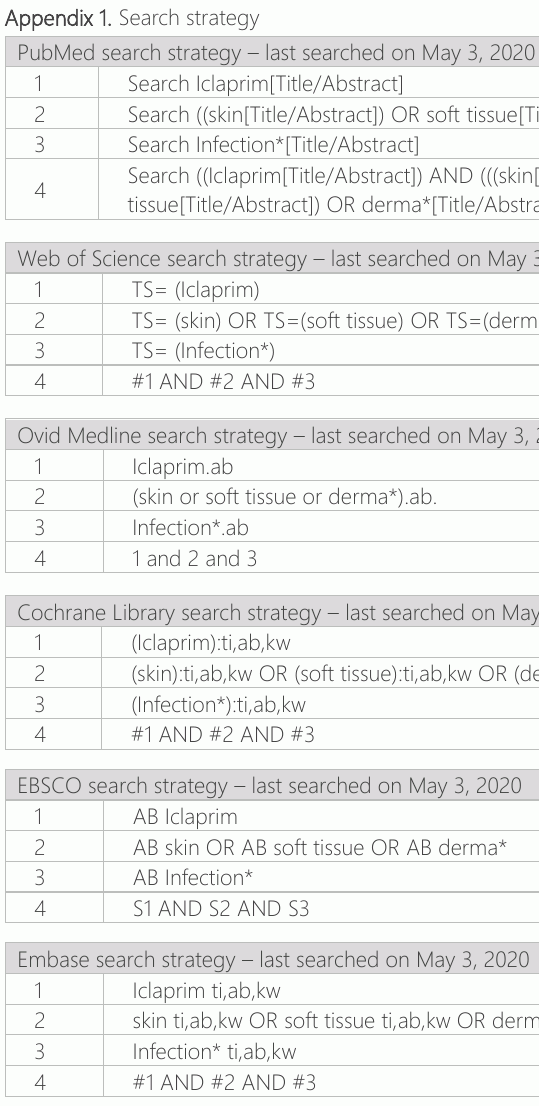
Study search and selection All candidate studies were initially identified by conducting a systematic review of databases, namely PubMed, Web of Science, EBSCO, Cochrane Library, Ovid Medline, and Embase databases until May 3, 2020, by using following terms: “iclaprim,” “skin,” “soft tissue,” “derma,” and “infection”. Only RCTs that compared the clinical efficacy and the risk of AEs of iclaprim and vancomycin for the treatment of adult patients (aged ≥18) with ABSSSIs were included. Exclusion criteria were as follows:(1)case reports or case series, (2) single-arm study, (3) study enrolling pediatric patients or newborns, (4) conference abstract or poster, (5) pharmaco-kinetic study, and (6) in vitro study. To avoid bias, 2 authors (Chang & Lan) were responsible for searching and examining articles. If these 2 disagreed, another author (Lai) would help resolve the issue and make the final decision. Data collected included authors, year of publication, studydesign and duration, patients’ demographic characteristics, clinical response, and the risk of AEs. The Cochrane Risk for Bias Assessment tool was used to assess the risk of bias for RCTs in this meta-analysis (23). This study was exempt from ethics approval of Chi Mei Medical center as the study authors just collected and synthesized data from previous clinical trials in which informed consent has already been obtained by the trial investigators. This systematic review followed the guidelines of the preferred reporting items for systematic reviews and meta-analyses and was registered in PROSPERO.
Definition and outcome The primary outcome was the clinical response to the test of cure (TOC). Secondary outcomes included the early clinical response (ECR) at early time points (ETPs), and the risk of AEs, namely treatment-emergent AEs (TEAEs), study drug-related TEAE, serious AEs, discontinuation because of AEs, and mortality. ECR was defined as a ≥20% reduction in lesion size compared with baseline, and ETP was defined as 48–72 hours after the first infusion of the study drug. Statistical analysis Statistical analysis was conducted using the software Review Manager, version 5.3. The degree of heterogeneity was evaluated with the Q statistic generated from the X(2) test. The proportion of statistical heterogeneity was assessed using the I2 measure. Heterogeneity was defined as significant when the P value was less than 0.1 or I2 more than 50%. A fixed-effects model and a random-effects model were applied when data were considered homogenous or heterogeneous, respectively. The pooled risk ratio (RR) and 95% confidence intervals (CI) were calculated, and a P value of <0.05 was considered statistically significant.
Results
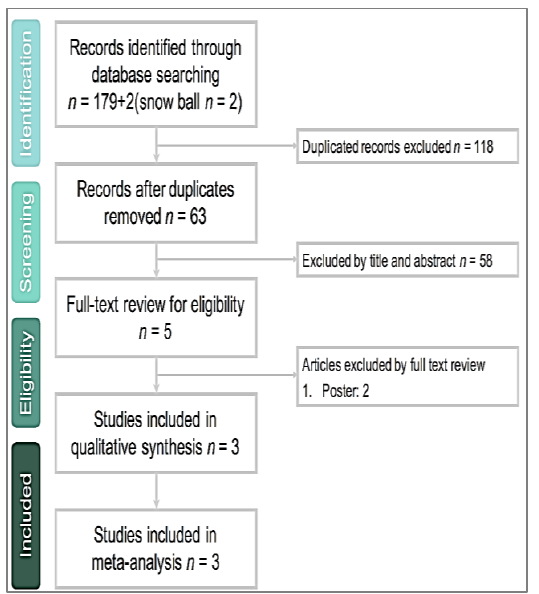
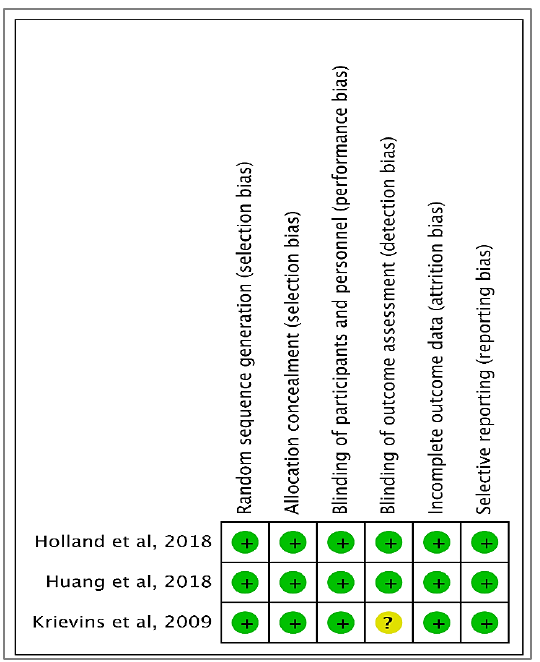
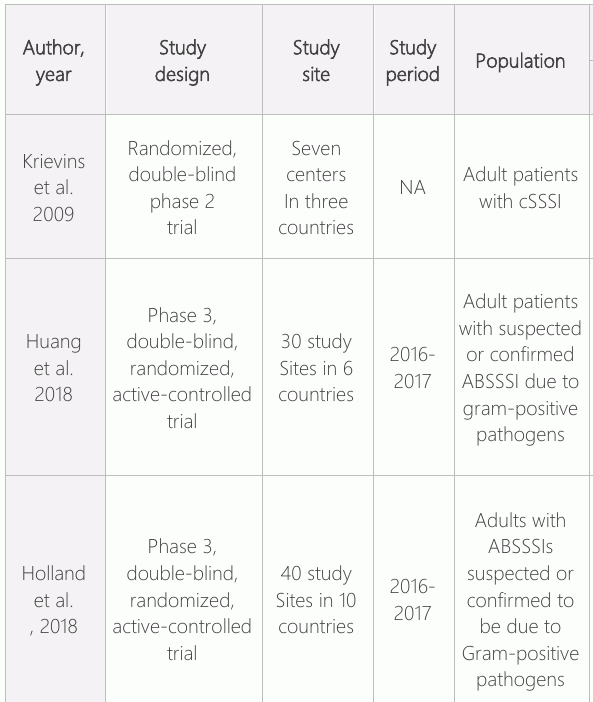
Study selection and characteristics The search program initially yielded 181 references, and then, 63 articles were screened after excluding 118 duplicated articles. Finally, 5 articles were identified for full-text review for eligibility. In total, only 3 studies (19–21) designed to compare the clinical efficacy and safety of iclaprim and vancomycin in the treatment of ABSSSIs were enrolled in this meta-analysis (Figure1 and Appendix 1). Overall, this meta-analysis involved a total of 1260 patients, including 625 in the iclaprim group and 635 in the vancomycin group. All included studies were multicenter and multinational RCTs. One was a Phase II trial, (19) and the other 2 were Phase III trials (20, 21) (Table 1). The duration of antibiotic use was 10 days in one study (19) and 5-14 days in the other 2 studies (20, 21). A total of 324 and 268 patients had identified pathogens in the iclaprim and vancomycin groups, respectively. In the Phase II trial, (19) 2 dosages–0.8 mg/kg and 1.6 mg/kg of iclaprim were assessed. We used the group given 1.6 mg/kg of iclaprim — which was the therapeutic dosage — in the analysis of clinical efficacy and used both the groups (0.8 mg/kg and 1.6 mg/kg) in the assessment of safety. Among infected patients, S. aureus was the most common pathogen, accounting for 68.5% (n=222) and 71.3% (n=191) in the iclaprim and vancomycin groups, respectively. Among S. aureus infections, MRSA was implicated in 100(40.1%) and 82(35.6%) infections in the iclaprim and vancomycin groups, respectively. The risk of bias in each study is shown in figure 2 and most of them were associated with a low risk of bias.
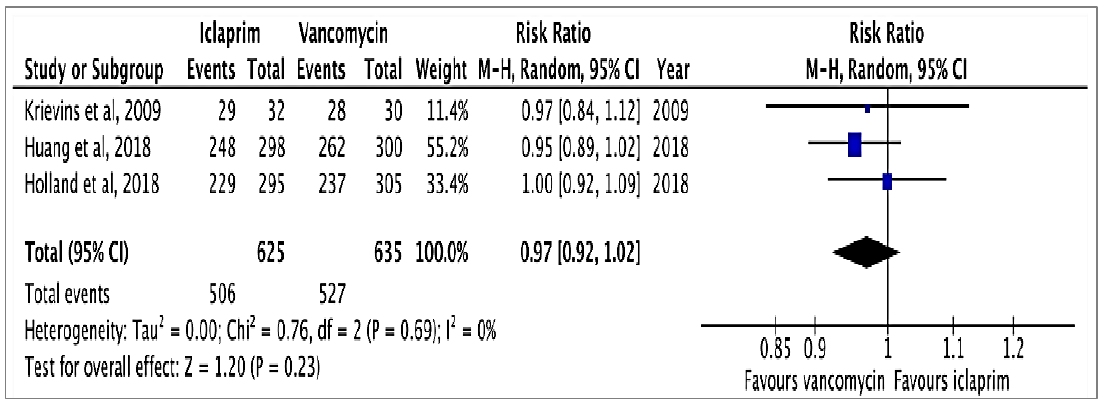
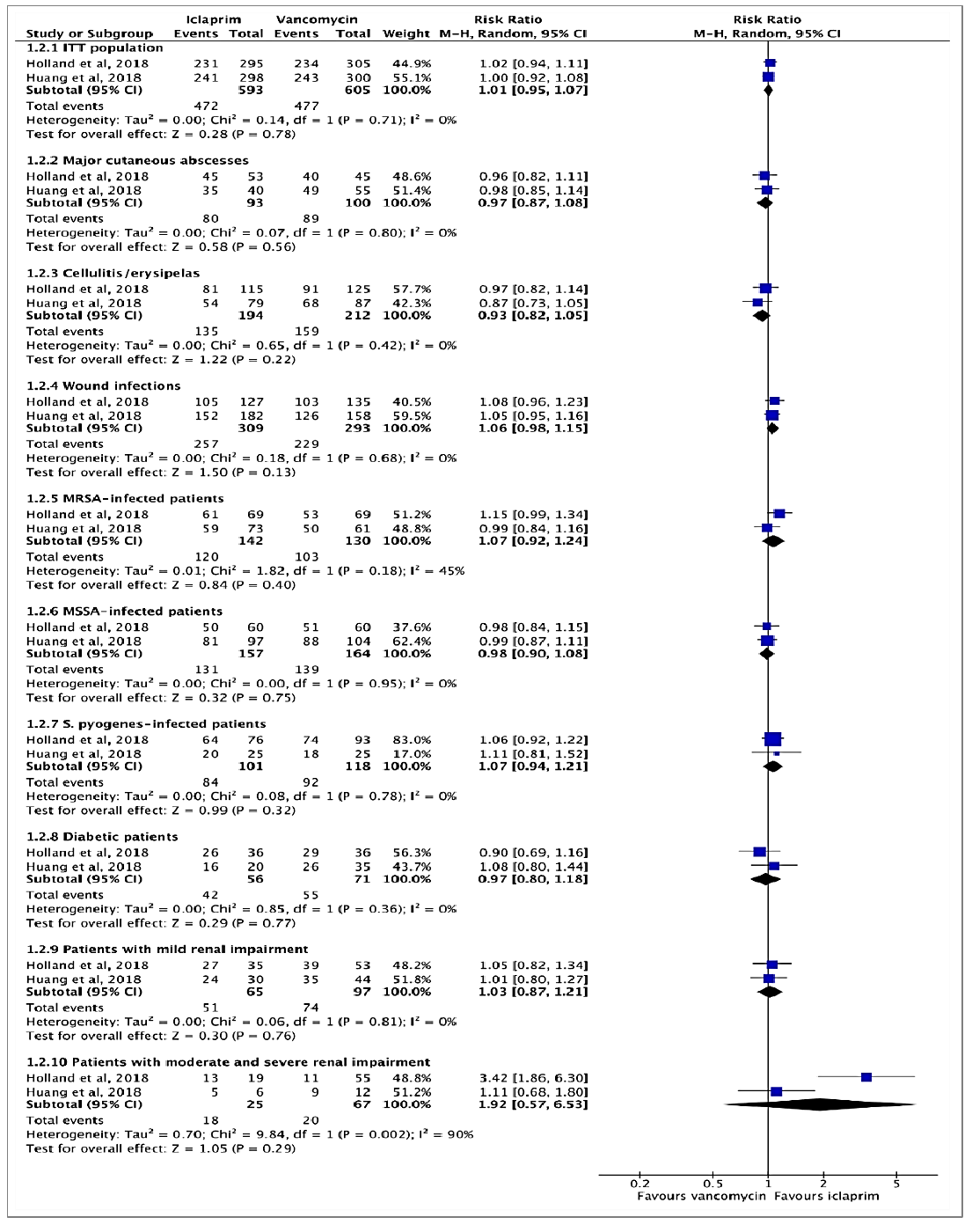
Clinical efficacy The pooled analysis of the 3 enrolled trials revealed that the clinical cure rate at TOC was 81.0% (506/625) and 82.3% (527/635) in the intention-to-treat (ITT) group of patients who received iclaprim and vancomycin, respectively. Overall, iclaprim and vancomycin had similar clinical cure rates (RR, 0.97; 95% CI, 0.92-1.02, I2=0%, Fig 3). Sensitivity analysis after deleting an individual study each time revealed the same findings. Only the 2 Phase III trials (20, 21) reported the findings of ECR at ETP. No differences were observed regarding ECR and ETP in ITT populations between the iclaprim and vancomycin groups (80% vs 78.8%; RR, 1.01; 95% CI, 0.95-1.07, I2=0%, Figure 4). In the subgroup analysis, iclaprim and vancomycin exhibited similar ECRs in the 3 types of ABSSSIs: major cutaneous abscesses (RR, 0.97; 95%CI, 0.87-1.08, I2=0%), cellulitis/erysipelas (RR, 0.93; 95%CI, 0.82-1.05, I2=0%), and wound infections (RR, 1.06; 95%CI, 0.98-1.15, I2=0%). Iclaprim and vancomycin were also similarly effective against 3 types of pathogens: MRSA (RR, 1.07; 95%CI, 0.92-1.24, I2=45%), MSSA (RR, 0.98; 95%CI, 0.90-1.08, I2=0%), and Streptococcus pyogenes infections (RR, 1.07; 95%CI, 0.94-1.21, I2=0%). The 2 drugs again showed similar effectiveness in patients with diabetes mellitus (RR, 0.97; 95% CI, 0.80-1.08, I2=0%) and renal impairment (mild degree: RR, 1.03; 95%CI, 0.87-1.21, I2=0%; moderate and severe degree: RR, 1.92; 95%CI, 0.57-6.53, I2=90%, Figure 4).
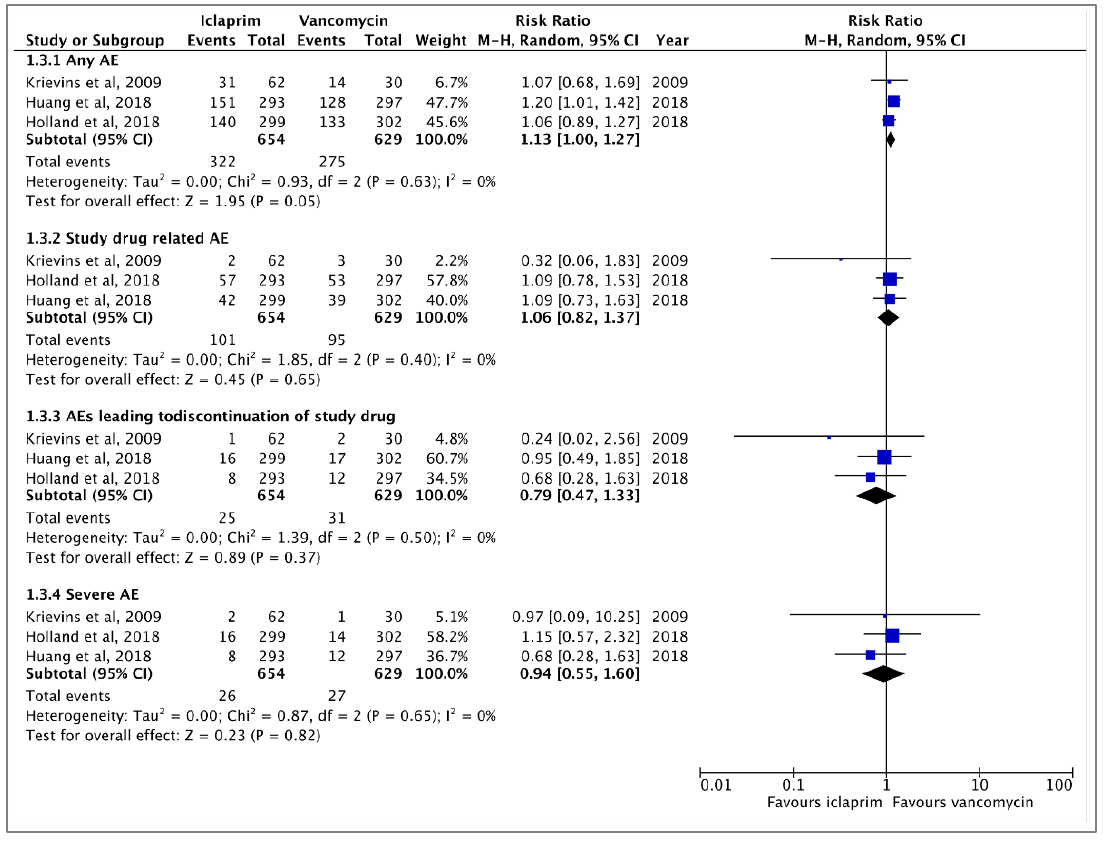
Adverse events In the pooled analysis of the risk of AEs, iclaprim and vancomycin were associated with similar risks in terms of any AE (RR, 1.13; 95% CI, 1-1.27, I2=0%), drug-related AE (RR, 1.06; 95% CI, 0.82- 1.37, I2=0%), discontinuation of study drug due to AE (RR, 0.79; 95% CI, 0.47-1.33, I2=0%) and severe AE (RR, 0.94; 95%CI, 0.55-1.60, I2=0%) (Fig-5). Although iclaprim was associated with a lower risk of nephrotoxicity than vancomycin, the difference did not reach a difference (0% vs. 0.3%; RR, 0.17; 95%CI, 0.17-1.40, I2=0) in the pooled analysis of two RCTs (20, 21). Finally, all-causes mortality was reported in 2 RCTs; no deaths were reported in patients who received iclaprim, but three deaths (0.5%) occurred in patients who received vancomycin.
Discussion
This meta-analysis enrolled a total of three RCTs19-21 involving 1260 patients with ABSSSIs, including 625 and 635 patients receiving iclaprim and vancomycin, respectively. Overall, our findings indicated that iclaprim is non-inferior to vancomycin in the treatment of ABSSSIs, and these findings are supported by the following evidence. First, the clinical cure rate at TOC of iclaprim was 81% in the ITT population, which was comparable to that of vancomycin (82.3%). This noninferiority of iclaprim to vancomycin remained the same in the sensitivity analysis. The non-inferiority of iclaprim to vancomycin in terms of early responses remained consistent across various populations, including different types of ABSSSIs (major cutaneous abscesses, cellulitis/erysipelas, and wound infection), different pathogens (MRSA, MSSA and S. pyogenes), and different underlying comorbidity (diabetes and renal impairment). These findings are consistent with those of previous studies – a pooled analysis of two phases 3 RCTs (24, 25), and the findings of Huang et al’s study (2, 6) which demonstrated iclaprim had a higher early clinical response rate (85.8%; 95%CI, 81.5%- 89.4%) compared with vancomycin (79.8%;95% CI, 74.8%-84.2%) among patients with ABSSSIs who were intravenous drug users. However, our findings were based on 3 RCTs with more patients and much more subgroup analysis. All the results remain consistent in the overall analysis and also across each subgroup analysis, so our findings can further confirm the clinical efficacy of iclaprim. In summary, the clinical efficacy of iclaprim in the treatment of ABSSSIs was non-inferior to that of vancomycin based on this meta-analysis.
Second, clinicians should consider safety issues when prescribing new antibiotics to treat acute bacterial infections. In the pooled analysis of the risk of AEs, iclaprim and vancomycin had similar risks in terms of any AE, serious events, discontinuation of study drug due to AE, and mortality. Moreover, none of the patients receiving iclaprim had drug-related nephron-toxicity, but 0.3% (5/599) of patients receiving vancomycin had nephrotoxicity in the two Phase-III trials (20, 21). Overall, our findings suggest that the safety of iclaprim is also comparable to that of vancomycin.
This meta-analysis has several limitations that should be addressed. First, only 3 RCTs were enrolled; thus, the number of included patients was limited. Second, only one RCT19 reported the microbiological outcome, in which microbiological eradication rates for gram-positive pathogens at the TOC visit were 26/29 patients (90%) for iclaprim at 0.8 mg/kg, 24/30 (80%) for iclaprim at 1.6 mg/kg, and 18/25 (72%) for vancomycin.Microbiological eradicationrate for S. aureus in the 3 treatment groups were 12/15 patients (80%), 13/18 patients (72%), and 10/17 patients (59%), respectively. Even 5 patients with MRSA—including 4 in 0.8-mg/kg-iclaprim group and one in the vancomycin group—were all clinically & microbiologically cured. However, additional large-scale studies are needed to investigate these issues.
Conclusion
This meta-analysis suggests that iclaprim exhibits non-inferior efficacy compared with vancomycin in the treatment of ABSSSIs. In addition, iclaprim is generally well tolerated as vancomycin, with an even lower incidence of nephrotoxicity.
Declarations
- Author contributions (CRediT)
- All authors contributed equally to all 14 CRediT roles (Conceptualization, Data curation, Formal analysis, Funding acquisition, Investigation, Methodology, Project administration, Resources, Software, Supervision, Validation, Visualization, Writing – original draft, Writing – review & editing).
- Funding
-
Funding information was not reported in the published version of this article.
- Conflicts of interest
- All authors declare there is no conflict of interest
- Ethics approval
- Ulutas Med J 2022;8(3):100-109 Figure 2. The risk of bias in each domain This study was exempt from ethics approval of Chi Mei Medical center as the study authors just collected and synthesized data from previous clinical trials in which informed consent has already been obtained by the trial investigators.
- Data availability
- A data availability statement was not reported in the published version of this article.
References (26)
25 of 26 references are linked to their DOI.
- Soriano A, Stefani S, Pletz MW, Menichetti F. Antimicrobial stewardship in patients with acute bacterial skin and skin structures infections: an international Delphi consensus. J Glob Antimicrob Resist. 2020;22:296-301. DOI Crossref PubMed Google Scholar
- Moran GJ, Abrahamian FM, Lovecchio F, Talan DA. Acute bacterial skin infections: developments since the 2005 Infectious Diseases Society of America (IDSA) guidelines. J Emerg Med. 2013;44(6):e397-412. DOI Crossref PubMed Google Scholar
- Garau J, Ostermann H, Medina J, Avila M, McBride K, Blasi F. Current management of patients hospitalized with complicated skin and soft tissue infections across Europe (2010-2011): assessment of clinical practice patterns and real-life effectiveness of antibiotics from the REACH study. Clin Microbiol Infect. 2013;19(9):E377-85. DOI Crossref PubMed Google Scholar
- Falcone M, Concia E, Giusti M, Mazzone A, Santini C, Stefani S, et al. Acute bacterial skin and skin structure infections in internal medicine wards: old and new drugs. Intern Emerg Med. 2016;11(5):637-48. DOI Crossref PubMed Google Scholar
- Roshdy D, Jaffa R, Pillinger KE, Guffey J, Rozario N, Davidson L, et al. Effect of a multifaceted stewardship intervention on antibiotic prescribing and outcomes for acute bacterial skin and skin structure infections. Ther Adv Infect Dis. 2018;5(6):103-9. DOI Crossref PubMed Google Scholar
- Jenkins TC, Sabel AL, Sarcone EE, Price CS, Mehler PS, Burman WJ. Skin and soft-tissue infections requiring hospitalization at an academic medical center: opportunities for antimicrobial stewardship. Clin Infect Dis. 2010;51(8):895-903. DOI Crossref PubMed Google Scholar
- Bassetti M, Carnelutti A, Righi E. The role of methicillin-resistant Staphylococcus aureus in skin and soft tissue infections. Curr Opin Infect Dis. 2017;30(2):150-7. DOI Crossref PubMed Google Scholar
- Bassetti M, Baguneid M, Bouza E, Dryden M, Nathwani D, Wilcox M. European perspective and update on the management of complicated skin and soft tissue infections due to methicillin-resistant Staphylococcus aureus after more than 10 years of experience with linezolid. Clin Microbiol Infect. 2014;20 Suppl 4:3-18. DOI Crossref PubMed Google Scholar
- Stevens DL, Bisno AL, Chambers HF, Dellinger EP, Goldstein EJ, Gorbach SL, et al. Practice guidelines for the diagnosis and management of skin and soft tissue infections: 2014 update by the Infectious Diseases Society of America. Clin Infect Dis. 2014;59(2):e10-52. DOI Crossref PubMed Google Scholar
- Tirupathi R, Areti S, Salim SA, Palabindala V, Jonnalagadda N. Acute bacterial skin and soft tissue infections: new drugs in ID armamentarium. J Community Hosp Intern Med Perspect. 2019;9(4):310-3. DOI Crossref PubMed Google Scholar
- Lan SH, Lin WT, Chang SP, Lu LC, Chao CM, Lai CC, et al. Tedizolid Versus Linezolid for the Treatment of Acute Bacterial Skin and Skin Structure Infection: A Systematic Review and Meta-Analysis. Antibiotics (Basel). 2019;8(3). DOI Crossref PubMed Google Scholar
- Lan SH, Chang SP, Lai CC, Lu LC, Chao CM. The efficacy and safety of omadacycline in treatment of acute bacterial infection: A systemic review and meta-analysis of randomized controlled trials. Medicine (Baltimore). 2019;98(51):e18426. DOI Crossref PubMed Google Scholar
- Lan SH, Lai CC, Lu LC, Chang SP, Huang HT. Efficacy and safety of delafloxacin in the treatment of acute bacterial skin and skin structure infections: a systematic review and meta-analysis of randomized controlled trials. Infect Drug Resist. 2019;12:1415-23. DOI Crossref PubMed Google Scholar
- Lan SH, Chang SP, Lai CC, Lu LC, Chao CM. Ceftaroline Efficacy and Safety in Treatment of Complicated Skin and Soft Tissue Infection: A Systemic Review and Meta-Analysis of Randomized Controlled Trials. J Clin Med. 2019;8(6). DOI Crossref PubMed Google Scholar
- Hawser S, Lociuro S, Islam K. Dihydrofolate reductase inhibitors as antibacterial agents. Biochem Pharmacol. 2006;71(7):941-8. DOI Crossref PubMed Google Scholar
- Peppard WJ, Schuenke CD. Iclaprim, a diaminopyrimidine dihydrofolate reductase inhibitor for the potential treatment of antibiotic-resistant staphylococcal infections. Curr Opin Investig Drugs. 2008;9(2):210-25. PubMed Google Scholar
- Sader HS, Fritsche TR, Jones RN. Potency and bactericidal activity of iclaprim against recent clinical gram-positive isolates. Antimicrob Agents Chemother. 2009;53(5):2171-5. DOI Crossref PubMed Google Scholar
- Schneider P, Hawser S, Islam K. Iclaprim, a novel diaminopyrimidine with potent activity on trimethoprim sensitive and resistant bacteria. Bioorg Med Chem Lett. 2003;13(23):4217-21. DOI Crossref PubMed Google Scholar
- Krievins D, Brandt R, Hawser S, Hadvary P, Islam K. Multicenter, randomized study of the efficacy and safety of intravenous iclaprim in complicated skin and skin structure infections. Antimicrob Agents Chemother. 2009;53(7):2834-40. DOI Crossref PubMed Google Scholar
- Holland TL, O'Riordan W, McManus A, Shin E, Borghei A, File TM, Jr., et al. A phase 3, randomized, double-blind, multicenter study To evaluate the safety and efficacy of intravenous iclaprim versus vancomycin for treatment of acute bacterial skin and skin structure infections suspected or confirmed to be due to Gram-positive pathogens (REVIVE-2 Study). Antimicrob Agents Chemother. 2018;62(5):e02580-17. DOI Crossref PubMed Google Scholar
- Huang DB, O'Riordan W, Overcash JS, Heller B, Amin F, File TM, et al. A Phase 3, randomized, double-blind, multicenter study to evaluate the safety and efficacy of intravenous iclaprim vs vancomycin for the treatment of acute bacterial skin and skin structure infections suspected or confirmed to be due to Gram-positive pathogens: REVIVE-1. Clin Infect Dis. 2018;66(8):1222-9. DOI Crossref PubMed Google Scholar
- Huang DB, File TM, Jr., Torres A, Shorr AF, Wilcox MH, Hadvary P, et al. A phase II randomized, double-blind, multicenter study to evaluate efficacy and safety of intravenous iclaprim versus vancomycin for the treatment of Iclaprim Versus Vancomycin Shao-Huan Lan et al. nosocomial pneumonia suspected or confirmed to be due to Gram-positive pathogens. Clin Ther. 2017;39(8):1706-18. DOI Crossref PubMed Google Scholar
- Higgins JP, Altman DG, Gotzsche PC, Juni P, Moher D, Oxman AD, et al. The Cochrane Collaboration's tool for assessing risk of bias in randomised trials. Bmj. 2011;343:d5928. DOI Crossref PubMed Google Scholar
- Huang DB, Corey GR, Holland TL, Lodise T, O'Riordan W, Wilcox MH, et al. Pooled analysis of the phase 3 REVIVE trials: randomised, double-blind studies to evaluate the safety and efficacy of iclaprim versus vancomycin for treatment of acute bacterial skin and skin-structure infections. Int J Antimicrob Agents. 2018;52(2):233-40. DOI Crossref PubMed Google Scholar
- Noviello S, Corey GR, Holland TL, Lodise T, O'Riordan W, Wilcox MH, et al. A pooled analysis of patients with wound infections in the Phase 3 REVIVE trials: randomized, double-blind studies to evaluate the safety and efficacy of iclaprim versus vancomycin for treatment of acute bacterial skin and skin structure infections. J Med Microbiol. 2020;69(4):625-630. DOI Crossref PubMed Google Scholar
- Huang DB, Noviello S, Balser B, Scaramucci A, Corey GR. A pooled analysis of the safety and efficacy of iclaprim versus vancomycin for the treatment of acute bacterial skin and skin structure infections in patients with intravenous drug use: Phase 3 REVIVE Studies. Clin Ther. 2019;41(6):1090-6. DOI Crossref PubMed Google Scholar
Respond to this article
Comments on a published article are welcome as a Letter to the Editor.
Get an e-mail when new articles in your fields are published
Questions to the authors
Questions are moderated: an editor approves each question, the authors answer, and an editor approves the answer before both appear here.
No answered questions yet.
Ask the authors a question
Discussion
Comments are moderated: they appear after the writer confirms the e-mail address and an editor approves them. Each comment carries a conflict-of-interest statement.
No comments yet.
Write a comment
Read the full text
Open the PDF here
Loading the PDF…
If the PDF does not show here, use the download button above.
How to cite this article
Lan SH, Chao CM, Chang SP, Lu LC, Hsu TL. Iclaprim Versus Vancomycin for the Treatment of Acute Bacterial Skin and Skin Structure Infection: A Systematic Review and Meta-analysis of Randomized Controlled Trials. Ulutas Med J. 2022;8(3):100-109. doi:10.5455/umj.20220613080211
Lan, S. H., Chao, C. M., Chang, S. P., Lu, L. C., & Hsu, T. L. (2022). Iclaprim Versus Vancomycin for the Treatment of Acute Bacterial Skin and Skin Structure Infection: A Systematic Review and Meta-analysis of Randomized Controlled Trials. The Ulutas Medical Journal, 8(3), 100–109. https://doi.org/10.5455/umj.20220613080211
Lan, S.H. et al. (2022) 'Iclaprim Versus Vancomycin for the Treatment of Acute Bacterial Skin and Skin Structure Infection: A Systematic Review and Meta-analysis of Randomized Controlled Trials', The Ulutas Medical Journal, 8(3), pp. 100–109. doi: 10.5455/umj.20220613080211.
@article{umj55300,
  title = {Iclaprim Versus Vancomycin for the Treatment of Acute Bacterial Skin and Skin Structure Infection: A Systematic Review and Meta-analysis of Randomized Controlled Trials},
  author = {Lan, Shao-Huan and Chao, Chien-Ming and Chang, Shen-Peng and Lu, Li-Chin and Hsu, Tzu-Liang},
  journal = {The Ulutas Medical Journal},
  year = {2022},
  volume = {8},
  number = {3},
  pages = {100--109},
  doi = {10.5455/umj.20220613080211},
  url = {https://www.ulutasmedicaljournal.com/?mno=55300},
  issn = {2149-388X}
}