The Ulutas Medical Journal · ISSN 2149-0430 (print), 2149-388X (online) · https://www.ulutasmedicaljournal.com/?mno=294089
Original Research · Open access
Gallstones in Young Population and Its Complications
Also available in: العربية · Türkçe · 中文
Abstract
- Background
- Gallstone disease (GSD) is quite a prevalent condition. The aim of this study was to determine the frequency and risk factors associated with gallstone disease in a younger age group and possible complications.
- Method
- This is a prospective study which was conducted at Surgical Unit-I of Holy Family Hospital, Rawalpindi from January 2015 and December 2016. 244 patients with cholelithiasis, confirmed by ultrasound examination, were interviewed and underwent physical examination and laboratory investigations. The risk factors considered were gender, pregnancy, use of oral contraceptives, family history of gallstone disease and diabetes mellitus, socioeconomic status, body mass index (BMI) and dyslipidemia.
- Results
- 244 (48.13%) patients were under the age of 30 years, out of 507. There were 208 females (85.2%) and 36 males (14.8%) with a mean age of 26.2±2.98 years. All patients presented with symptomatic disease. BMI, dyslipidemia and socioeconomic status were associated with gallstone disease. No link was noted with familial diabetes and GSD status, pregnancies, or contraceptive use. Only family history of GSD and socioeconomic status were significant risk factors in female patients (p<0.05).
- Conclusion
- High BMI, dyslipidemia and the raised socioeconomic status were associated with cholelithiasis in younger ages.
Keywords
Full text
Introduction
Cholelithiasis is a major surgical disease of the hepatobiliary system. More than two million cholecystectomies are being performed annually for its treatment (1). In the United States, the National Health and Nutrition Examination Survey-III study showed that cholelithiasis is prevalent in 7.9% of men and 16.6% of women (2). In Europe, gallstone disease is reported in 5% to 15% (3, 4) of the total population, and 5.9∼21.9% (5) according to different ultrasonographic surveys.
The prevalence of cholelithiasis in Asian population is estimated to be 3% to 10%. Published data showed the prevalence of GSD to be 3.2% in Japan (6), 3∼11% in China (7), 7.1% in Northern India (8) and 5% in Taiwan (9). In Pakistan, gallstones are found in 8% and 20% of patients above 40 and 60 years respectively (10). In another study, 22.5% were above 50 years, 66.5% between 25-50 years and 11% were less than 25 years of age (11). Gallstone disease is predominantly seen in 3rd to 5 decade of the life and is 4 times more prevalent in women (12). In the past, it was thought that cholelithiasis is merely a disease of old females, especially around 40 or 50 years but recently, its incidence in young females has increased. Risk factors for developing cholelithiasis in the younger age group are the same as in the older population. Epidemiological studies proposed that GSD may have a hereditary component associated with it but there is little data about genetic gallstones in literature (13) There is an indirect link of genes with obesity, some metabolic disorders, and hypercholesteromia (14).
There is a paucity of literature on the incidence of gallstones in young age group. Apart from the presence of gallstones in patients with blood disorders and malignancies, there are few studies showing the prevalence of cholelithiasis in young healthy subjects. The purpose of this study was to identify the incidence, different risk factors for GSD and complications in this age group.
Materials and Methods
From January 2015 to December 2016, a prospective, descriptive study was conducted at Surgical Unit-I, Holy Family Hospital, Rawalpindi.The ethical committee of Rawalpindi Medical College & Allied Hospitals granted approval for this study with the Registration Number: R-04/RMU.
Two hundred and forty-four (244) patients of both gender, age less than 30 years and with a diagnosed gallstone disease (GSD), were included in the study group. Informed written consent was obtained for all patients. All those who presented with symptomatology of biliary colic without any evidence of gallstones were also omitted.
All patients suspected of having a gallstone disease underwent ultrasonic examination. A fasting period of 12 hours was required prior to the examination, which was carried out in the supine position. A diagnosis of gallstone disease was made if the gallbladder showed a hyperechoic mass casting a posterior acoustic shadow, with a change of position.
All of the patients with GSD were hospitalized. Each participant was personally interviewed which were conducted by trained interviewers. The patients were inquired about their age, past history (with special emphasis on last pregnancy and years of oral contraceptive use, if any), socioeconomic status along with other demographic data. The family history of gallstones and diabetes mellitus was also determined.
Basic data on weight with the patient clothed and height without shoes was documented. Body mass index (kg/m2) was calculated as a measure of obesity. Patients were categorized as normal weight when BMI was less than 25; overweight with a BMI of 25-30 and obese when it exceeds more than 30.
All patients underwent laboratory analysis for blood complete picture with reticulocyte count, serum transaminases, bilirubin level, and fasting lipid profile. The Chinese guidelines for Adult dyslipidemia prevention (2007) were used to standardize the limits of dyslipidemia: Serum Cholesterol <200 mg/dL, Total Triglycerides <150 mg/dL. Patients were treated with a cholecystectomy, either laparoscopic or open. Postcholecystectomy complications, if any, were recorded.
Statistical analysis Data were recorded and analyzed using the Statistical Package for Social Sciences v16.0 (SPSS). Descriptive statistics were calculated for both qualitative and quantitative variables. Mean±SDwas calculated for demographic data. Chi-square test was employed to compare proportions or to determine associations. Qualitative variables were presented through tables and figures. A p-value <0.05 was considered statistically significant.
Results
Out of 507 patients admitted for symptomatic cholelithiasis, 244 (48.13%) patients under the age of 30 years were evaluated in this study. Demographic characteristics of the patients are listed in table-1.
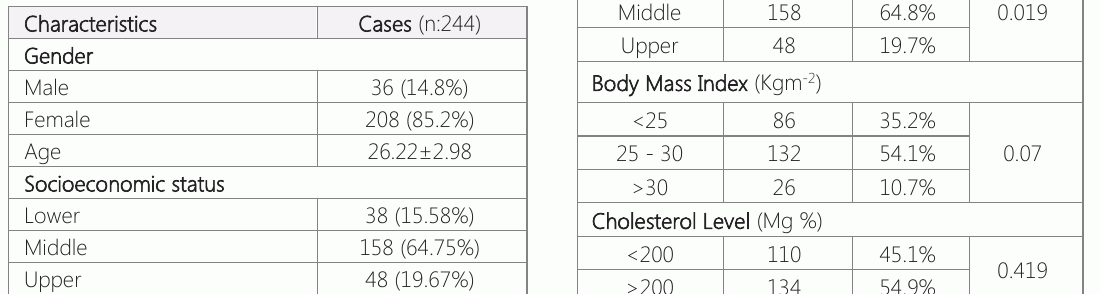
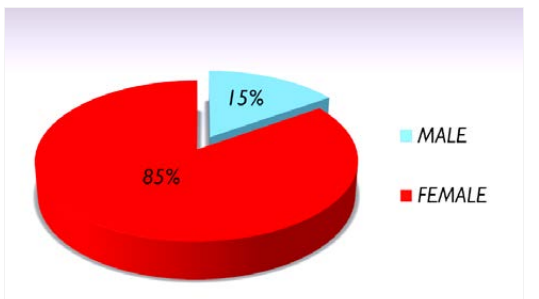
The study population was in the age group of 16 to 30 years with a mean age of 26.22±2.98 years. 208 (85.2%) of them were females and 36 (14.8%) were males. The gender distribution in the study population is shown in figure-1 with an undeniable female strength.
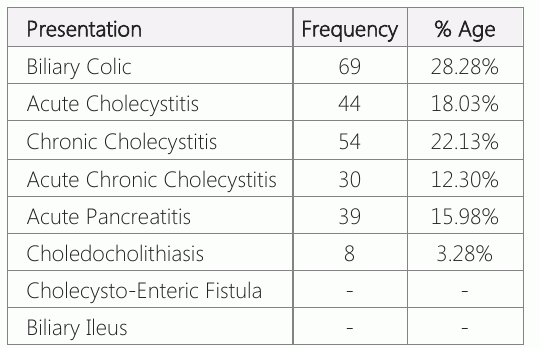
All patients presented with symptomatic GSD, with the biliary colic (28.28%) being the most common presenting feature. Acute and chronic cholecystitis was found in 44 (18.03%) and 54 (22.13%) cases respectively. All these complica-tions were seen more commonly among the female patients (Table-2).
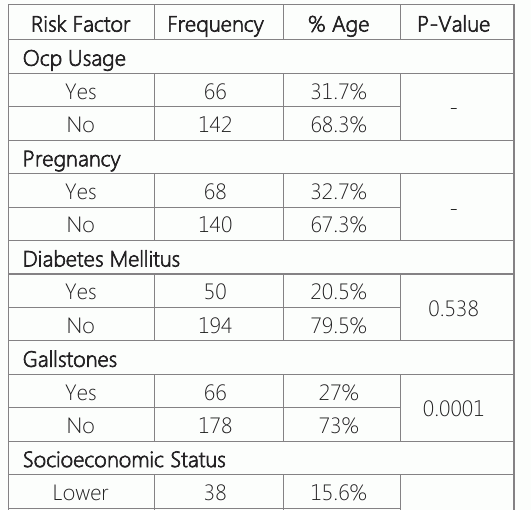
Approximately 16% participants belonged to the lower socio-economic class. Most (64.75%) cases had a BMI of more than 25. Previous studies showed that cholelithiasis is related to female gender,previous pregnancy, use of oral contraceptives, and a positive family history of GSD and diabetes mellitus (DM). These factors were also considered in this study and the results shown in Table-3.
Dyslipidemia, body mass index (BMI) and socioeconomic status were found to be associated with cholelithiasis. No link was observed with familial diabetes and GSD status, pregnancies, or contraceptive use. Only a positive family history of gallstones and socioeconomic status were significant risk factors in female patients (p<0.05).
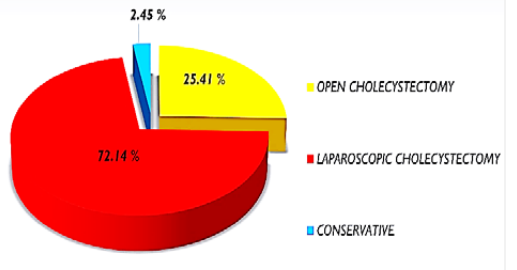
In the study group, sixty-two (25.4%) patients were operated by open cholecystectomy while 176 (72.13%) patients underwent laparoscopic counterpart. Only 6 (2.5%) were treated conservatively (Figure-2). A maximum number of patients (87%) was discharged in 2-3 days. No significant postoperative surgery-related complications occurred, except that twelve cases of surgical site infection that resulted in partial wound dehiscence and prolonged hospital stay.
Discussion
One of the commonest diseases in the world is cholelithiasis (15). It is defined by the occurrence of stones (larger than 3 mm) or sludge (small particles) in the gallbladder or biliary channels (12). Gallstones can be asymptomatic or symptomatic, appreciated by the presence of biliary colic, fever, right hypochondrial tenderness, and Murphy's sign (16). Symptoms can be severe with a patient presenting with acute cholecystitis, acute biliary pancreatitis, cholangitis, empyema gallbladder, carcinoma of gallbladder, bowel obstruction and complications of cholecystectomy (17–19). Gallstones are mostly attributable to these biliary symptoms, which are less often the associated with biliary sand. They are traditionally classified into 3 types, depending upon the content of cholesterol. These include: cholesterol stones (>70% cholesterol content), pigment stones (<30% cholesterol content) and mixed stones (30%-70% cholesterol content) (20). GSD is influenced by an intricate synergy of environmental and genetic factors (21).
Mechanisms associated with gallstone formation include: (i) supersaturation of cholesterol, its nucleation, and precipitation, ultimately leading to stone formation (22) (ii) gallbladder hypomotility (iii) abnormal expression of ATP binding cassette G5/G8 (ABCG5/G8), scavenger receptor B type I (SRB1), liver X receptor α (LXRα), Niemann Pick C1 like 1 (NPC1L1), CCKR and mucin genes (23–25).
In our study, 48.13% patients belonged to a younger age group (<30). Further evaluation showed that 18.54% (94 out of 507) patients belonged to the age group of 16 to 25 years. This is a significant number when compared to a study conducted in Romania, in which only 1.88% (6 out of 1905) patients were of the same age group (12).
There is a common perception that women are more prone to develop cholelithiasis as compared to men. This is largely due to reproductive and hormonal factors such as pregnancy and use of oral contraception. Female gender (85.2%) was found to be the main risk factor for gallstone disease in this study. This is in concordance with the findings of previous studies (26), Sukij et al (27) and Hui Sun et al (28). The female to male ratio for GSD in age group <40 years is approximately 4:1, 29, 30 which is comparable with 5.8:1 in our study. Pregnancy is another risk factor associated with gallstones. Epidemiological studies suggested a strong association between the frequency and number of pregnancies with a greater chance of developing cholelithiasis (22, 31). Raised progesterone (32) levels during pregnancy induces a change in the composition of bile and motility of gallbladder that in turn, stimulate lithogenesis (33). Our study showed no significant association between pregnancy and GSD, which is in contrast with the published literature.
Similarly, bile lithogenicity is increased with oral contraceptives usage (34). The progestin component of OCP is mainly responsible for the augmented bile lithogenicity and reduced GB contractility (35).A strong association was found between the use of progestin-containing OCPs and combined estrogen-progesterone containing OCPs, which are usually consumed in the younger age females (36). This is the rationale for an affirmative link between GSD and OCP usage. Khan et al (37) showed that use of oral contraceptives potentiates lithogenesis, principally in metabolically susceptible younger age women. In a study conducted by Jorgensen (35), oral contraceptive usage and the presence of gallstones in younger women showed no association. Our study also depicted that oral contraceptives use was not associated with gallstone disease, which is in concert with the findings of Sukij et al (27).
Genetic susceptibility is an important consideration in lithogenesis (38). Familial studies reveals an increased frequency. Several studies cited an increased incidence of GSD in first degree relatives of patients, as compared to control subjects, suggesting a genetic cause. We reported a 2.7:1 ratio, advocating a genetic basis for cholelithiasis. This is supported by Van der Linden and Simonson (39) in Sweden, and Gilat et al (40) in Israel, who demonstrated a 2.5:1 and 2:1 ratio respectively while an Indian study (41) showed three times more prevalence among family members of patients with gallstone than control subjects. A Persian Study (31) pointed out a statistically insignificant result (p:0.229) in this regard.
Diabetes mellitus has generally been linked to cholelithiasis and biliary tract inflammation. Underlying mechanisms may include fasting hyperinsulinemia, (42) diabetic neurogenic gallbladder (22) and possibly the inheritance of genetic mutations relevant to the pathophysiology of DM (43). Literature showed an inconstant conjunction between diabetes and gallstones. Chen et al (9) reported diabetes mellitus to be an independent risk factor for GSD. We found no significant relationship between gallstones and diabetes status, which supported the results of Jorgensen et al, (35) Barbara et al (44) and Shih-Chang et al (45). We noted a discernible association between increased levels of triglycerides and cholesterol and cholelithiasis. This is consistent with Zhu et al (46), Banim et al (47), Sun et al (28), and other studies. Some studies suggested that there is no definite association with hypercholesterolemia (26). The main reason might be due to raised triglycerides that lead to cholesterol supersaturation and subsequent stone formation. Moreover, high triglycerides are also linked to obesity and insulin resistance, promoting lithogenesis. However, Chen et al (48) were unable to associate GSD and dyslipidemia. In the present study, BMI (a measure of obesity) is strongly related to cholelithiasis. This is in accordance with the results of Qing Xu et al (49) & Shih-Chang Hung (45). This is due to a change in dietary habits (increased fat content of diet) and decreased physical activity and sedentary lifestyle. However, in a Korean (50) study, obesity was not found to be an important predictor for GSD. Similarly, no significant correlation was noted in another study by Zhu et al (46).
Gallstones were seen to be more prevalent in patients of middle & upper socioeconomic class, probably due to higher fat content in diet and obesity being common in them. Cholelithiasis can lead to grave outcomes, such as biliary pancreatitis and gallbladder cancer. The timely anticipation of associated risk factors can result in effective control of the disease.
Conclusion
Gallstone disease is the most common pathology of the hepatobiliary system with a high prevalence rate among females. In recent years the incidence of this disease in young people have increased rapidly which costs a lot to the health care system, especially in third world countries. Early recognition and surgery for cholelithiasis is the cornerstone of management even in young age groups to avoid complications related to this disease.
Declarations
- Author contributions (CRediT)
- All authors contributed equally to all 14 CRediT roles (Conceptualization, Data curation, Formal analysis, Funding acquisition, Investigation, Methodology, Project administration, Resources, Software, Supervision, Validation, Visualization, Writing – original draft, Writing – review & editing).
- Funding
-
Funding information was not reported in the published version of this article.
- Conflicts of interest
- The authors declare that they have no conflict of interest in the current study.
- Ethics approval
- The ethical committee of Rawalpindi Medical College & Allied Hospitals granted approval for this study with the Registration Number: R-04/RMU.
- Data availability
- A data availability statement was not reported in the published version of this article.
References (50)
40 of 50 references are linked to their DOI.
- Vlad L. Litiaza cãii biliare principale. In: Popescu I, ed. Tratat de chirurgie. Vol. IX, partea a II. Bucureæti: Ed. Academiei Române; 2009. p. 855-856. PubMed Google Scholar
- James D, Driver L. Ethnic and sex differences in selection for admission to Nottingham University Medical School. BMJ. 1999;319(7206):351-2. DOI Crossref PubMed Google Scholar
- Attili AF, Carulli N, Roda E, Barbara B, Capocaccia L, Menotti A, et al. Epidemiology of gallstone disease in Italy: prevalence data of the Multicenter Italian Study on Cholelithiasis (M.I.COL.). Am J Epidemiol. 1995 Jan 15;141(2):158-65. DOI Crossref PubMed Google Scholar
- Caroli-Bosc FX, Deveau C, Harris A, Delabre B, Peten EP, Hastier P, et al. Prevalence of cholelithiasis: results of an epidemiologic investigation in Vidauban, Southeast France. Dig Dis Sci. 1999;44:1322-9. DOI Crossref PubMed Google Scholar
- Stinton LM, Myers RP, Shaffer EA. Epidemiology of gallstones. Gastroenterol Clin North Am. 2010 Jun;39(2): 157–69. DOI Crossref PubMed Google Scholar
- Nomura H, Kashiwagi S, Hayashi J, Kajiyoma W, Ikematsu H, Noguchi A, et al. Prevalence of gallstone disease in a general population of Okinawa, Japan. Am J Epidemiol. 1988;128: 598-605. DOI Crossref PubMed Google Scholar
- Zhang W, Jiang Z, Han T, Lei R. Epidemiology and risk factors of cholelithiasis. J Surg Concepts Pract. 2011;16(4):408-12. PubMed Google Scholar
- Unisa S, Jagannath P, Dhir V, Khandelwal C, Sarangi L, Roy TK. Population -based study to estimate the prevalence and determine risk factors of gallbladder diseases in the rural Gangetic of North India. HPB (Oxford) 2011;13(2):117-25. DOI Crossref PubMed Google Scholar
- Chen CH, Huang MH, Yang JC, Nien CK, Etheredge GD, Yang CC, et al. Prevalence and risk factors of gallstone disease in an adult population of Taiwan: an epidemiological survey. J Gastroenterol Hepatol. 2006 Nov; 21(11):1737-43. DOI Crossref PubMed Google Scholar
- Moerman CJ, Smeets FW, Kromhout D. Dietary risk factors for clinically diagnosed gallstones in middle-aged men. A 25-year follow-up study (the Zutphen Study). Ann Epidemiol.1994 May;4(3):248-54. DOI Crossref PubMed Google Scholar
- Hayat N, Duja B, Ahmed T, Rehan AG. To determine the importance of age and sex in the clinical presentation and subsequent outcome in cholelithiasis. JUMDC. Jan-June 2013;4(1):36-41. PubMed Google Scholar
- Constantinescu T, Huwood Al Jabouri AK, Brãtucu E, Olteanu C, Toma M, Stoiculescu A. Gallstone disease in a young population:incidence, complications, therapeutic approach. Chirurgia. 2012 Sep-Oct; 107(5):579-82. PubMed Google Scholar
- Grünhage F, Lammert F. Gallstone disease. Pathogenesis of gallstones: A genetic perspective. Best Pract Res Clin Gastroenterol. 2006;20(6):997-1015. DOI Crossref PubMed Google Scholar
- Attili AF, De Santis A, Attili F, Roda E, Festi D, Carulli N. Prevalence of gallstone disease in first-degree relatives of patients with cholelithiasis. World J Gastroenterol. 2005 Nov 7;11(41):6508-11. DOI Crossref PubMed Google Scholar
- Sakorafas GH, Milingos D, Peros G. Asymptomatic cholelithiasis: Is cholecystectomy really needed? A critical reappraisal 15 years after the introduction of laparoscopic cholecystectomy. Dig Dis Sci. 2007;52(5):1313-25. DOI Crossref PubMed Google Scholar
- Senadrin MS, Gonzales RR, Gallardo L, Magboo-Gaviola MLC, Carpio RE, Lansang S. Risk factors to gallstone formation among NIDDM patients: Santo Tomas University Hospital experience. Philipp J Intern Med. 1998;36(3):91-4. PubMed Google Scholar
- Zaliekas J, Munson JL. Complications of gallstones: the Mirizzi syndrome, gallstone ileus, gallstone pancreatitis, complications of "lost" gallstones. Surg Clin North Am. 2008 Dec;88(6):1345-68. DOI Crossref PubMed Google Scholar
- Browning JD, Horton JD. Gallstone disease and its complications. Semin Gastroint Dis. 2003 Oct;14(4):165-77. PubMed Google Scholar
- Olaiya MT, Chiou HY, Jeng JS, Lien LM, Hsieh FI. Significantly Increased Risk of Cardiovascular Disease among Patients with Gallstone Disease: A Population-Based Cohort Study. PLoS One. 2013; 8(10): e76448. DOI Crossref PubMed Google Scholar
- Qiao T, Ma RH, Luo XB, Yang LQ, Luo ZL, Zheng PM. The systematic classification of gallbladder stones. PLoS One. 2013 Oct 4;8(10):e74887. DOI Crossref PubMed Google Scholar
- Wang HH, Portincasa P, Wang DQ. Molecular patho physiology and physical chemistry of cholesterol gallstones. Front Biosci. 2008 Jan 1; 13:401-23. DOI Crossref PubMed Google Scholar
- Agunloye AM, Adebakin AM, Adeleye JO, Ogunseyinde AO. Ultrasound prevalence of gallstone disease in diabetic patients at Ibadan, Nigeria. Niger J Clin Pract. 2013 Jan-Mar;16(1):71-5. DOI Crossref PubMed Google Scholar
- Jiang ZY, Parini P, Eggertsen G, Davis MA, Hu H, Suo GJ, et al. Increased expression of LXR alpha, ABCG5, ABCG8, and SR-BI in the liver from normolipidemic, nonobese Chinese gallstone patients. J Lipid Res. 2008 Feb;49(2):464-472. DOI Crossref PubMed Google Scholar
- Jiang ZY, Jiang CY, Wang L, Wang JC, Zhang SD, Einarsson C, et al. Increased NPC1L1 and ACAT2 expression in the jejunal mucosa from Chinese gallstone patients. Biochem Biophys Res Commun. 2009 Jan;379(1):49-54. DOI Crossref PubMed Google Scholar
- Xiao ZL, Chen Q, Amaral J, Biancani P, Jensen RT, Behar J. CCK receptor dysfunction in muscle membranes from human gallbladders with cholesterol stones. Am J Physiol. 1999 Jun;276(6):G1401-7. DOI Crossref PubMed Google Scholar
- Stinton LM, Shaffer EA. Epidemiology of gallbladder disease: cholelithiasis and cancer. Gut Liver. 2012 Apr;6(2):172-87. DOI Crossref PubMed Google Scholar
- Panpimanmas S, Manmee C. Risk factors for gallstone disease in a Thai population. J Epidemiol. 2009;19(3):116-21. DOI Crossref PubMed Google Scholar
- Sun H, Tang H, Jiang S, Zeng L, Chen EQ, Zhou TY, et al. Gender and metabolic differences of gallstone diseases. World J Gastroenterol. 2009 Apr 21;15(15):1886-91. DOI Crossref PubMed Google Scholar
- Everhart JE, Khare M, Hill M, Maurer KR. Prevalence and ethnic differences in gallbladder disease in the United States. Gastroenterology 1999 Sep;117(3):632-9. DOI Crossref PubMed Google Scholar
- Friedman GD, Kannel WB, Dawber TR. The epidemiology of gallbladder disease: observations in the Framingham Study. J Chronic Dis. 1966 Mar; 19(3):273-92. DOI Crossref PubMed Google Scholar
- Galyani Moghaddam T, Fakheri H, Abdi R, Khosh bavar Rostami F, Bari Z. The incidence and outcome of pregnancy-related biliary sludge/ stones and potential risk factors. Arch Iran Med. 2013 Jan;16(1):12-6. PubMed Google Scholar
- Everson GT. Gastrointestinal motility in pregnancy. Gastro enterol Clin North Am. 1992 Dec;21(4):751 -76. DOI Crossref PubMed Google Scholar
- Kern F Jr, Everson GT, DeMark B, McKinley C, Showalter R, Erfling W, et al. Biliary lipids, bile acids, and gallbladder function in the human female: effects of pregnancy and the ovulatory cycle. J Clin Invest. 1981 Nov;68(5): 1229-42. DOI Crossref PubMed Google Scholar
- Kern F Jr, Everson GT, De Mark B, Mckinley C, Showalter R, Braverman DZ, et al. Biliary lipids, bile acids, and gallbladder function in the human female: effect of contraceptive steroids. J Lab Clin Med. 1982 Jun;99(6):798-805. PubMed Google Scholar
- Jorgensen T. Gall stones in a Danish population: fertility period, pregnancies, and exogenous female sex hormones. Gut. 1988 Apr;29(4):433-9. PubMed Google Scholar
- Down RH, Whiting MJ, Watts JM, Jones W. Effect of synthetic estrogens and progestagens in oral contraceptives on bile lipid composition. Gut. 1983 Mar;24(3):253-9. DOI Crossref PubMed Google Scholar
- Khan MK, Jalil MA, Khan MS. Oral contraceptives in gall stone diseases. Mymensingh Med J. 2007 Jul;16(2 Suppl): S40-45. PubMed Google Scholar
- Lammert F, Matern S. The genetic background of cholesterol gallstone formation: an inventory of human lithogenic genes. Curr Drug Targets Immune Endocr Metabol Disord. 2005 Jun;5(2):163-70. DOI Crossref PubMed Google Scholar
- Van der Linden W, Lindelof G. The familial occurrence of gallstone disease. Acta Genet Stat Med. 1965; 15:159-164. DOI Crossref PubMed Google Scholar
- Gilat T, Feldman C, Halpern Z, Dan M, Bar-Meir S. An increased the familial frequency of gallstones. Gastroe nterology. 1983; 84:242-6. DOI Crossref PubMed Google Scholar
- Sarin SK, Negi VS, Dewan R, Sasan S, Saraya A. High familial prevalence of gallstones in the first-degree relatives of gallstone patients. Hepatology. 1995 Jul;22(1):138-41. DOI Crossref PubMed Google Scholar
- Graewin SJ, Kiely JM, Lee KH, Svatek CL, Nakeeb A, Pitt HA. Nonobese diabetic mice have diminished gallbladder motility and shortened crystal observation time. J Gastro intest Surg. 2004 Nov;8(7):824-9; discussion 829-30. DOI Crossref PubMed Google Scholar
- Hunt KJ, Lehman DM, Arya R, Fowler S, Leach RJ, Goring HH, et al. Genome-wide linkage analyses of type 2 diabetes in Mexican Americans: the San Antonio Family Diabetes/ Gallbladder Study. Diabetes. 2005 Sep;54(9):2655-62. DOI Crossref PubMed Google Scholar
- Barbara L, Sama C, Morselli Labate AM, Taroni F, Rusticali AG, Festi D, et al. A population study on the prevalence of gallstone disease: the Sirmione Study. Hepatology. 1987 Sep-Oct;7(5):913-7. DOI Crossref PubMed Google Scholar
- Hung SC, Liao KF, Lai SW, Li CI, Chen WC. Risk factors associated with symptomatic cholelithiasis in Taiwan: a population-based study.BMC Gastroenterol.2011(17);11: 111 DOI Crossref PubMed Google Scholar
- Zhu L, Aili A, Zhang C, Saiding A, Abudureyimu K. Prevalence of and risk factors for gallstones in Uighur and Han Chinese. World J Gastroenterol. 2014 October 28; 20(40):14942-9. DOI Crossref PubMed Google Scholar
- Banim PJ, Luben RN, Bulluck H, Sharp SJ, Wareham NJ, Khaw KT, et al. The aetiology of symptomatic gallstones quantification of the effects of obesity, alcohol and serum lipids on risk. Epidemiological and biomarker data from a UK prospective cohort study (EPIC-Norfolk). Eur J Gastroenterol Hepatol. 2011 Aug;23(8): 733-40. DOI Crossref PubMed Google Scholar
- Chen LY, Qiao QH, Zhang SC, Chen YH, Chao GQ, Fang LZ. Metabolic syndrome and gallstone disease. World J Gastroenterol. 2012 August 21; 18(31): 4215-20. DOI Crossref PubMed Google Scholar
- Xu Q, Tao LY, Wu Q, Gao F, Zhang FL, Yuan L, et al. Prevalences and risk factors for biliary stones and gallbladder polyps in a large Chinese population. HPB (Oxford). 2012 Jun;14(6):373-81. DOI Crossref PubMed Google Scholar
- Chang Y, Sung E, Ryu S, Park YW, Jang YM, Park M. Insulin resistance is associated with gallstones even in non-obese, non-diabetic Korean men. J Korean Med Sci. 2008 Aug; 23(4):644-50. DOI Crossref PubMed Google Scholar
Respond to this article
Comments on a published article are welcome as a Letter to the Editor.
Get an e-mail when new articles in your fields are published
Questions to the authors
Questions are moderated: an editor approves each question, the authors answer, and an editor approves the answer before both appear here.
No answered questions yet.
Ask the authors a question
Discussion
Comments are moderated: they appear after the writer confirms the e-mail address and an editor approves them. Each comment carries a conflict-of-interest statement.
No comments yet.
Write a comment
Tell me when this article is cited
Leave your e-mail address and confirm it. These notices are not being sent yet; your confirmed address is kept for them and used for nothing else.
Read the full text
Open the PDF here
Loading the PDF…
If the PDF does not show here, use the download button above.
How to cite this article
Shafique MS, Ahmad R, Ahmad SH, Hassan SW, Khan JS. Gallstones in Young Population and Its Complications. Ulutas Med J. 2018;4(3):131-138. doi:10.5455/umj.20180324011035
Shafique, M. S., Ahmad, R., Ahmad, S. H., Hassan, S. W., & Khan, J. S. (2018). Gallstones in Young Population and Its Complications. The Ulutas Medical Journal, 4(3), 131–138. https://doi.org/10.5455/umj.20180324011035
Shafique, M.S. et al. (2018) 'Gallstones in Young Population and Its Complications', The Ulutas Medical Journal, 4(3), pp. 131–138. doi: 10.5455/umj.20180324011035.
@article{umj294089,
  title = {Gallstones in Young Population and Its Complications},
  author = {Shafique, Muhammad Salman and Ahmad, Raheel and Ahmad, Sheikh Haseeb and Hassan, Syed Waqas and Khan, Jahangir Sarwar},
  journal = {The Ulutas Medical Journal},
  year = {2018},
  volume = {4},
  number = {3},
  pages = {131--138},
  doi = {10.5455/umj.20180324011035},
  url = {https://www.ulutasmedicaljournal.com/?mno=294089},
  issn = {2149-388X}
}