The Ulutas Medical Journal · ISSN 2149-0430 (print), 2149-388X (online) · https://www.ulutasmedicaljournal.com/?mno=146966
Original Article · Open access
Evaluation of Antibiotic Resistance of Patients with Ventriculoperitoneal Shunt Infection
- Elazığ Fırat University Faculty of Medicine, Pediatrics ROR
- Mardin Artuklu University Faculty of Medicine, Pediatrics ROR
- Gazi Yaşargil Training and Research Hospital, Pediatrics ROR
- Diyarbakır Dicle University Faculty of Medicine, Pediatrics ROR
Abstract
- Introduction
- Cerebrospinal fluid (CSF) shunts carry CSF to other body parts for absorption in cases of hydrocephalus. However, infections seen in these systems are serious problems that cause the shunt to fail and cause high mortality. The study aimed to evaluate the epidemiological, clinical, and laboratory findings of cases with a ventriculoperitoneal shunt (VPS) due to hydrocephalus and who developed shunt infection and to determine the antibiotic resistance of microorganisms that cause shunt infection.
- Materials and Methods
- This study was conducted in Dicle University Faculty of Medicine, Department of Child Health and Diseases, Department of Pediatric Infectious Diseases, between January 2014 and November 2016. Eighty-one cases of VPS infection, aged between 0 and 18, regardless of gender, were analyzed retrospectively.
- Results
- Gram-positive and negative microorganisms were grown in the CSF culture in 64.1% and 35.9% of patients. The most commonly grown gram-positive microorganism was coagulase-negative staphylococcus, while the most commonly grown gram-negative microorganism was Acinetobacter sp. The most effective antibiotics against gram-positive bacteria were vancomycin, teicoplanin, and linezolid. The most effective antibiotics against gram-negative bacteria were colimycin, amikacin, ceftazidime, and meropenem. 21% of the cases died.
- Conclusion
- If VPS infections are not treated correctly, especially in childhood, they progress to severe mortality and morbidity. Therefore, first of all, measures should be taken to prevent the formation of shunt infections, and we believe that long-term hospitalization rates and high treatment costs can be avoided by choosing appropriate and correct antibiotic regimens to prevent increasing antibiotic resistance.
Keywords
Full text
Introduction
Today, in the treatment of hydrocephalus, shunt systems are used to drain CSF into another body cavity to reduce intracranial pressure (1). These systems bring some severe complications along with high treatment costs. The most common complications primarily seen in the first months following surgery are shunt obstruction, hematoma, infection, shunt disconnection and slit ventricle syndrome (2, 3). Ventriculoperitoneal shunt (VPS) infection is a severe problem that causes the shunt to fail and is seen with a frequency of 5-15% (4).
Infection is the most serious and most common shunt complication. Shunt infections can lead to mortality and neurological deficits up to 30-40%. Colonization on shunt elements during surgery is the most accepted route. Therefore, 80% of shunt infections occur in the first three months and 90% in the first six months, unlike the mechanical complications of the shunt. The most extensive paediatric series published in 2012 determined that shunt infections occur between 6 days and eight months after surgery (5–7).
The parenteral antibiotic to be administered is selected under the guidance of CSF Gram staining and culture results. These results also guide empirical antibiotic treatments. Accordingly, a combination of vancomycin (15-20 mg/kg IV; every 8-12 hours; each dose not exceeding 2 g) and a drug effective against Gram-negative microorganisms is used empirically. These treatments are rearranged in light of the culture results. There are no randomized, prospective studies to determine the optimal duration of antibiotic therapy and time for shunt change. Some approaches vary according to clinical situations (8).
The present study evaluated the clinical and demographic characteristics of patients who had VPS in our clinic due to hydrocephalus and developed shunt infection. In addition, we analyzed the detection of the microorganism causing the shunt infection, the detection of antibiotic resistance against the microorganism, and the selection of the appropriate antibiotic.
Materials and Methods
Ethical Statement
Between January 2014 and November 2016, 81 patients who had VPS due to hydrocephalus in the Dicle University Faculty of Medicine Paediatric Infection Clinic and developed shunt infection were analyzed retrospectively. This study was approved by the Dicle University Faculty of Medicine, the Non-Invasive Clinical Research Ethics Committee with decision number 15 dated 12.01.2017.
Inclusion criteria: Consecutive patients with VPS infection, aged 0 to 18 years, regardless of gender, were included in the study. Cases the files that could not be accessed in hospital records, had missing data, and did not meet the diagnostic criteria for VPS infection were excluded from the study. All cases included in the study were evaluated with a standardized clinical follow-up form. The diagnosis of VPS infection was made by CSF analysis, blood and CSF cultures, and imaging methods. From the hospital file records of all cases, demographic data (age, gender, shunt insertion age, reason for shunt insertion), clinical findings, length of hospitalization, presence of growth in culture, growing microorganisms, culture antibiogram results, treatments given, and their durations, post-treatment follow-up and data regarding the results were recorded. Microorganisms grown in cases with positive CSF, antibiotic resistance rates according to antibiogram results, treatments, duration, and mortality rates were evaluated.
Statistical Analysis
The data collected in the study were analyzed using the statistical software package SPSS 18 (Statistical Package for the Social Sciences IBM®, Chicago, IL, USA). Whether the variables showed normal distribution was evaluated using histogram and analytical (Kolmogorov- Smirnov test) methods. Descriptive statistics for continuous variables, among the features emphasized, were expressed as mean± standard deviation, minimum and maximum values, while categorical variables were expressed as number and percentage. Student-t test was used to compare independent groups. Statistical analyses of the variables determined by the ratio were performed with the chi-square test. P<0.05 was considered significant in the statistical evaluation.
Results
43 (53.1%) were female, and 38 (46.9%) were male. The mean age of the cases was 25.7± 39.1 months (1-164 months). The mean hospital stay was 40.1±37.6 days (14-52). A shunt catheter was inserted in 62 (76.5%) cases with VPS infection at 0-1 months, while a shunt catheter was inserted in 12 (14.8%) at 1-3 months of age. The most common reason for shunt catheter insertion was hydrocephalus (95.1%). Demographic characteristic and clinical findings of the cases are given in Table 1.
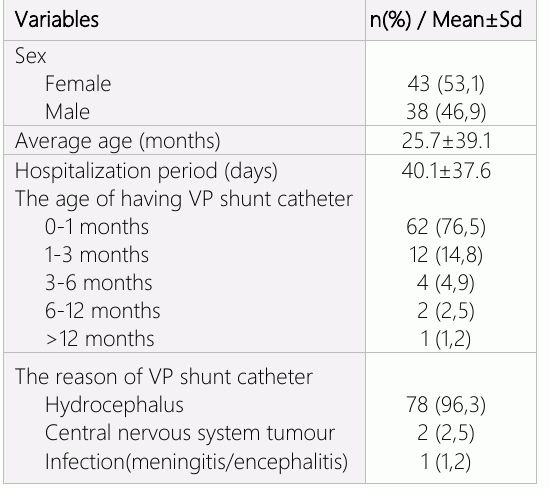
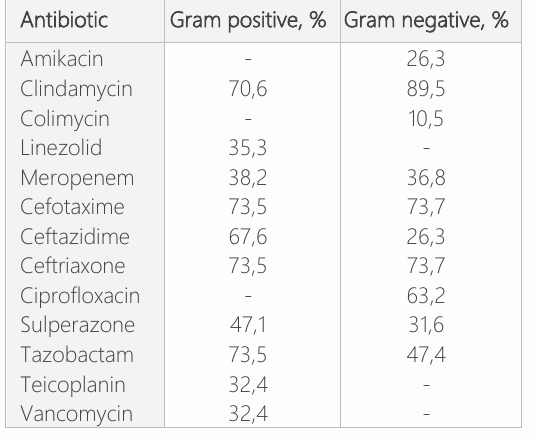
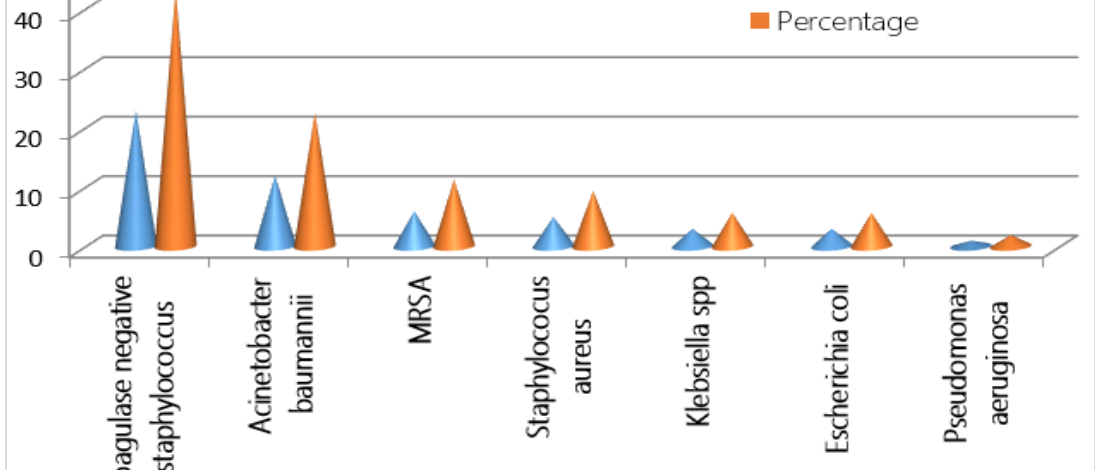
79 (%97.5) presented findings of fever, 76 (%93.8) of vomiting, 60 (%74.1) of anterior fontanel bulging, 59 (72.8%) of abdominal symptoms, 67 (67.9%) of shunt leakage, 42 (51.9%) of altered consciousness, 38 (46.9%) of convulsion, and 36 (44.4%) of meningeal irritation. Among CFS, BOS was the source of infection in 53 (65.4%), urine, wound, and/or tracheal aspirate in 14 (17.3%), blood in 11 (13.6%), and catheter (shunt and/or central venous catheter) three (3.7%). Culture positivity was detected in all 81 (100%). Of the cases with growth in CSF, gram-positive microorganisms were grown in 34 (64,1%), and gram-negative microorganisms were grown in 19 (35.9%). In which gram-positive microorganisms grew, coagulase-negative staphylococci grew in 23 (43.4%), methicillin-resistant staphylococcus aureus (MRSA) in six (11.3%) and staphylococcus aureus in five (9.4%). Of the cases where gram-negative microorganisms grew, acinetobacter spp. grew in 12 (22.6%), klebsiella spp. in three (5.7%), escherichia coli in three (5.7%) and Pseudomonas spp in one (1.9%). Microorganisms grown in CSF are given in Figure 1. When the culture antibiogram results with CSF positivity were evaluated, the antibiotics with the highest resistance among gram-positive bacteria were ceftriaxone (73.5%), cefotaxime (73.5%), tazobactam (73.5%), clindamycin (70.6%), and ceftazidime (67.6%), respectively. In comparison, the most effective antibiotics were vancomycin (67.6%), teicoplanin (67.6%), linezolid (64.7%), meropenem (61.8%), and Sulperazone (52.9%). The antibiotics with the highest resistance among gram-negative bacteria were clindamycin (89.5%), ceftriaxone (73.7%), cefotaxime (73.7%), and ciprofloxacin (63.2%), respectively, while the most effective antibiotics were colimycin (89.5%), amikacin (73.7%), ceftazidime (73.7%), Sulperazone (68.4%), and meropenem (63.2%) and tazobactam (52.6%) (Table 2).
infection. Shunt meningitis may also occur in patients without fever (16). In a study they conducted with 105 cases between 2009 and The mean duration of antibiotic use in all cases was 32.6±27.8 days (6-170 days), and the mean duration of antifungal use was 4.7±6.5 days (0- 16 days), while the mean duration of antibiotic use in cases with positive CSF was 33.8 ±29.5 days (7-170 days). Antibiotic changes were made during follow-up in 48 cases (59.3%). 17 (21%) of the cases included in the study died.
Discussion
VP shunts are the most effective and frequently used method in treatment of hydrocephalus. The most common complications are shunt occlusions and shunt infections (9–11). When the distribution of hydrocephalus cases in the paediatric age group by gender was examined, it was reported that shunt infections were more common in males, although shunt infections were more common in females in some studies (12–14). In our study, 46.9% of our cases were male, and 53.1% were female.
VPS and fever should be evaluated for shunt infection (15). Fever is seen in 42-87% of all patients with a shunt infection. Headache, vomiting, and lethargy may be other signs of 2014, Gülşen et al. reported that the most common clinical finding in patients with shunt infection was fever at a rate of 84.5%, nausea and vomiting(52%) along with fever complaints, and redness and restlessness along the shunt tracing (17). In our study, 97.5% of our cases had a fever. In addition, findings of vomiting, anterior fontanel bulging, abdominal symptom, shunt leakage, change in consciousness, convulsions, and meningeal irritation were detected in 93,8%, 74,1%, 72,8%, 67,9%, 51,9%, 46,9%, and 44,4% of our patients, respectively. In cases with shunt infection, coagulase-negative staphylococci S. epidermidis, S. capitis, and S. hominis are isolated in 40-70% of cases. S. aureus is the second most frequently isolated pathogen, varying between 10-40%. Of the other gram-positive organisms, group A streptococci, enterococcus, Propionibacterium, Corynebacterium, Haemophilus influenzae, streptococcus pneumoniae, and Neisseria meningitidis are also causative pathogens (18, 19). Gram-negative bacteria are causative in 5-25% of cases; E. coli, Klebsiella, and Proteus are common, while pseudomonas and Acinetobacter are less common. Gram-negative bacteria are the more common (40-60%) causative pathogens in nosocomial VPS meningitis. In the studies conducted, E. coli were reported at a rate of 52%, K. pneumoniae at 22%, and Proteus spp. 9%, P. aeruginosa 4% and Enterobacter 4% (20). Kulkarni et al. reported that 48.4% of the microorganisms grown in the culture were S. aureus, and 38.7% were coagulase-negative staphylococci (21). In our study, culture positivity was found in all 81 cases. Of the cases with growth in CSF culture, gram-positive microorganisms were grown in 64,1%, and gram-negative microorganisms were grown in 35.9%. Of the cases in which gram-positive microorganism grew, coagulase-negative staphylococci grew in 43.4%, methi cillin-resistant staphylococcus aureus (MRSA) in 11.3%, and staphylococcus aureus in 9.4%, of the cases where gram-negative microorganisms grew’ Acinetobacter spp. Growth is seen in 22.6%, klebsiella spp. 5.7%, escherichia coli in 5.7% and psedomonas in 1.9%.
The Infectious Diseases Society of America (IDSA) treatment guideline for VPS meningitis published in 2004 recommends combining a glycopeptide with ceftazidime, cefepime, or meropenem as empirical antibiotic therapy (22). The CSF profile determines the duration of antibiotic treatment, the causative microorganism, and the shunt removal. In infections where the causative agent is detected as CNS, an average of 7 days of treatment is sufficient after removal of the shunt. This period can be kept shorter (3-5 days) under conditions where CSF findings are expected from the beginning. Treatment times should be longer in infections caused by more virulent microorganisms and in cases where the shunt cannot be removed (23, 24). While the mean duration of antibiotic use in our patients was 32.6±27.8 days, the mean duration in cases with positive CSF culture was 33.8±29.5 days. While antibiotics were used in all of our cases, antibiotic changes were made in 59.3% of them during follow-up. In the study conducted by Demir in 2013, it was reported that the antibiotic susceptibility of gram-positive microorganisms was mainly found to have ampicillin, erythromycin, oxacillin, and ceftriaxone resistance. In the same study, the most ciprofloxacin, amikacin, and meropenem resistance was observed against gram-negative bacteria (25). In the study conducted by Çavuşoğlu in 2008, the presence of penicillin, ampicillin, erythromycin, and oxacillin resistance in antibiotic susceptibility of gram-positive microorganisms was reported. In the same study, the ampicillin, amoxicillin-clavulanic acid, and cefoxitin resistance was determined the be the most against gram-negative microorganisms (26). In our study, the antibiotics with the highest resistance in gram-positive bacterial growth in the CSF culture were ceftriaxone, cefotaxime, tazobactam, clindamycin, and ceftazidime, respectively.
In contrast, those with the least resistance were vancomycin, teicoplanin, linezolid, meropenem, and sulfentrazone. Among gram-negative bacteria, the antibiotics with the most resistance were clindamycin, ceftriaxone, cefotaxime, and ciprofloxacin, respectively, while those with the least resistance against were sulperazone, meropenem, colimycin, amikacin, ceftazidime and tazobactam. In our study, vancomycin, ceftriaxone, meropenem, linezolid, cefotaxime, teicoplanin, sulperazone, and clindamycin were used in antibiotic combinations, in order of frequency, in cases where gram-positive microorganisms were grown. Antibiotic combinations included meropenem, ceftriaxone, colimycin, amikacin, cefotaxime, tazobactam, and sulfentrazone in cases where gram-negative microorganisms were grown. Considering shunt-related infection, we think that empirically starting treatment with gram-positive vancomycin together with colistin or meropenem may be an appropriate initial treatment until culture antibiogram results are obtained.
Conclusion
If shunt infections are not treated properly, especially in childhood, they progress with severe mortality and morbidity for the rest of their lives. Therefore, first of all, measures should be taken to prevent the formation of shunt infections, and we believe that long-term hospitalization and high treatment costs can be avoided by choosing appropriate and correct regimens to prevent increasing antibiotic resistance. Microbiological data are vital for the correct empirical treatment approach. In this way, intensive antibiotic use and subsequent high resistance rates will be controlled.
Declarations
- Author contributions (CRediT)
- All authors contributed equally to all 14 CRediT roles (Conceptualization, Data curation, Formal analysis, Funding acquisition, Investigation, Methodology, Project administration, Resources, Software, Supervision, Validation, Visualization, Writing – original draft, Writing – review & editing).
- Funding
-
Funding information was not reported in the published version of this article.
- Conflicts of interest
- The authors declare no conflict of interest.
- Ethics approval
- This study was approved by the Dicle University Faculty of Medicine, the Non-Invasive Clinical Research Ethics Committee with decision number 15 dated 12.01.2017.
- Data availability
- A data availability statement was not reported in the published version of this article.
References (26)
17 of 26 references are linked to their DOI.
- Rekate HL. Treatment of hydrocephalus, In: Albright L, Pollack I, Adelson D (eds). Principles and Practice of Pediatric Neurosurgery. New York: Thieme Medica Publishers; 1999. p.45-73 PubMed Google Scholar
- Weprin BE, Swift DM. Complications of ventricular shunts. Techniques in Neurosurgery 2002;7:224-42 DOI Crossref PubMed Google Scholar
- Yılmaz A, Hacı AG, Müslüman AM, Çolak İ, Şahin Y, Aydın Y. Ventriküloperitoneal Şant Disfonksiyonları. Türk Nöroşirurji Dergisi 2006;16:150-5 PubMed Google Scholar
- Vanaclocha V, Saiz-Sapena N, Leiva J. Shunt malfunction in relation to shunt infection. Acta Neurochir 1996;138:829-34 DOI Crossref PubMed Google Scholar
- Erşahin Y. Beyin Omurilik sıvısı şant enfeksiyonları. Türk Nöroşirürji Dergisi 1999;9:12-20 PubMed Google Scholar
- Hirsch JF. Surgery of hydrocephalus: Past, present and future. Acta Neurochir (Wien) 1992;116:155-160 DOI Crossref PubMed Google Scholar
- Lee JK, Seok JY, Lee JH, Choi EH, Phi JH, Kim SK, Wang KC, Lee HJ. Incidence and risk factors of ventriculoperitoneal shunt infections in children: A study of 333 consecutive shunts in 6 years. J Korean Med Sci 2012;27(12):1563-1568 DOI Crossref PubMed Google Scholar
- Tunkel, A. R., Hartman, B. J., Kaplan, S. L., Kaufman, B. A., Roos, K. L., Scheld, W. M., & Whitley, R. J. (2004). Practice guidelines for the management of bacterial meningitis. Clinical infectious diseases: an official publication of the Infectious Diseases Society of America, 39(9), 1267–1284 DOI Crossref PubMed Google Scholar
- Brydon HL, Hayward R, Harkness W, Bayston R. Does the cerebrospinal fluid protein concentration increase the risk of shunt complications? British Journal of Neurosurgery 1996;10(3): 267-273 DOI Crossref PubMed Google Scholar
- Çelik İ, Erol FS, Cihangiroğlu M, Akdemir İ, Tiftikçi M. Ventriküloperitoneal şant infeksiyonlu olguların değerlendirme. ANKEM Derg 2003;17(1):60-64 PubMed Google Scholar
- Kontny U, et al. CSF shunt infections in children: Infection, 1993;21(2): 89-92 DOI Crossref PubMed Google Scholar
- Güzelbağ E, Erşahin Y ve Mutluer S. Cerebrospinal fluid shunt complications: The Turkish Journal of Pediatrics, 1997;39:363-71 DOI Crossref PubMed Google Scholar
- Choux M, et al. Shunt implantation: reducing the incidence of shunt infection: J Neurosurg, 1992;77:875-80 DOI Crossref PubMed Google Scholar
- Özbek Z, Özkara E, Vural M. A Retrospective Analyses of Newborns Operated Due to Midline Spinal Closure Defect: A Single Center Experience. Journal of Clinical and Analytical Medicine. 2017;1-4 DOI Crossref PubMed Google Scholar
- Noetzel MJ, Baker RP. Shunt fluid examination: riske and benefits in the evaluation of shunt malfunction and infection. J Neurosurg 1984;61(2):328-32 DOI Crossref PubMed Google Scholar
- Walters B, Hofman H, Hendrick E, Humpreys RP: Cerabrospinal fluid shunt infection: Influences on initial management and subsequent outcome. J Neurosurgery 1984; 60:1014-2 PubMed Google Scholar
- Gülşen İ, Ak H, Aycan A, Atalay T, Enver Sösuncu E, Akyol Me, Kuyumcu F, Arslan M. Pediatrik şant enfeksiyonları: 105 olguluk çift merkezli çalışma. Bozok Tıp Derg 2015;5(1):13-7 PubMed Google Scholar
- Filka J, Huttova M, Tuharsky J, et al. Nosocomial meningitis in children after ventriculoperitoneal shunt insertion. Acta Pediat 1999;88:576-8 DOI Crossref PubMed Google Scholar
- Stamos JK, Kaufman BA, Yogev R. Ventriculoperitoneal shunt infections with Gram-negative bacteria. Neurosurgery 1993; 33:858-62 DOI Crossref PubMed Google Scholar
- Arthur AS, Whitehead WE, Kestle JR. Dura- tion of antibiotic therapy for the treatment of shunt infection: a surgeon and patient survey. Pediatr Neurosurg 2002;36(5):256-9 DOI Crossref PubMed Google Scholar
- Kulkarni AV, Drake JM and Lamberti- Pasculli M. Cerebrospinal fluid shunt infection: a prospective study of risk factors. J Neurosurg; 2001;94:195-201 DOI Crossref PubMed Google Scholar
- Anderson, Evan J., and Ram Yogev. "A rational approach to the management of ventricular shunt infections." The Pediatric infectious disease journal 24.6 (2005): 557-558 DOI Crossref PubMed Google Scholar
- Fong IW. Staphylococcal central nervous system infections treated with Cloxacillin. J Antimicrob Chemother.1983;12:607- DOI Crossref PubMed Google Scholar
- Pfausler B,Haring HP, Kampfl A,Wissel J,Schober M,Schmutzhard E.CSF pharmacocinetics of intraventricular vancomycin in patients with staf. ventriculitis associated with external Csf drainage. Clin. Inf. Dis. 1997;25,733-5 PubMed Google Scholar
- Demir V. Ventriküloperitoneal Şant Enfeksiyonlarının Etyolojik ve Prognostik Açıdan Değerlendirilmesi. Tıpta Uzmanlık Tezi, Diyarbakır. 2013 PubMed Google Scholar
- Çavuşoğlu F. Ventriküloperitoneal Şant Enfeksiyonu Sebebiyle Tedavi Edilen Çocukların Retrospektif Değerlendirilmesi. Tıpta Uzmanlık Tezi, İstanbul. 2008 80 77 Antibiotic Resistance in Ventriculoperitoneal Shunt Ferhat Karakoc et al. PubMed Google Scholar
Respond to this article
Comments on a published article are welcome as a Letter to the Editor.
Get an e-mail when new articles in your fields are published
Questions to the authors
Questions are moderated: an editor approves each question, the authors answer, and an editor approves the answer before both appear here.
No answered questions yet.
Ask the authors a question
Discussion
Comments are moderated: they appear after the writer confirms the e-mail address and an editor approves them. Each comment carries a conflict-of-interest statement.
No comments yet.
Write a comment
Read the full text
Open the PDF here
Loading the PDF…
If the PDF does not show here, use the download button above.
How to cite this article
Karakoc F, Orhan O, Karakoc SE, Aktar F. Evaluation of Antibiotic Resistance of Patients with Ventriculoperitoneal Shunt Infection. Ulutas Med J. 2023;9(2):74-80. doi:10.5455/umj.20230320013100
Karakoc, F., Orhan, O., Karakoc, S. E., & Aktar, F. (2023). Evaluation of Antibiotic Resistance of Patients with Ventriculoperitoneal Shunt Infection. The Ulutas Medical Journal, 9(2), 74–80. https://doi.org/10.5455/umj.20230320013100
Karakoc, F. et al. (2023) 'Evaluation of Antibiotic Resistance of Patients with Ventriculoperitoneal Shunt Infection', The Ulutas Medical Journal, 9(2), pp. 74–80. doi: 10.5455/umj.20230320013100.