The Ulutas Medical Journal · ISSN 2149-0430 (print), 2149-388X (online) · https://www.ulutasmedicaljournal.com/?mno=152349
Original Article · Open access
Evaluation of the Risk Factors Associated with Post-conisation HPV Persistence during the COVID-19 Pandemic
- Department of Gynecologic Oncology, University of Health Sciences, Ankara City, Hospital, Ankara, Turkey ROR
- Department of Biostatistics, Ankara University School of Medicine, Ankara, Turkey ROR
Abstract
- Introduction
- This study aimed to evaluate the factors associated with high-risk human papillomavirus (hrHPV) persistence after excision during the COVID-19 pandemic.
- Materials and Methods
- A retrospective design was performed involving 171 patients who were analyzed regarding hrHPV clearance after conisation or LEEP. The clinicopathological findings, vaccination for COVID-19, history of SARS-CoV-2, or taking medication for SARS-CoV-2 infection before the first postoperative HPV test were evaluated.
- Results
- The rate of preoperative high-risk HPV type, including HPV 16 and/or HPV 18, was 56% of the patients (n=96). The post-excision hrHPV persistence rate was 30.4 % during the 6–36 months follow-up period. 76.6% of patients had their first after-excision HPV test between 6 and 12 months. The total surgical margin was positive in 15 (8.8%) patients. The rate of vaccination, positivity of SARS-CoV-2 infection history, and taking medication for COVID-19 infection were 35.1% (n:60), 15.8% (n:27), and 9.4% (n:16), respectively. The rate of smoking was 35.7%. None of the evaluated factors were significantly related to HPV persistence after excision.
- Conclusion
- No risk factors related to post-excisional HPV persistence were determined amongst age, clinic-pathological factors, vaccination for COVID-19, history of SARS-CoV-2 infection, or taking medication for SARS-CoV-2 infection during the COVID-19 pandemic.
Keywords
Full text
Introduction
Cervical cancer is the fourth most common cancer affecting women globally (1). Persistent infection with human papillomavirus (HPV) is the primary agent for nearly all preinvasive cervical lesions and cervical cancer (2). HPV has more than 200 different types, and at least 15 high-risk (hR) HPV subtypes have been identified (3). In more than 90% of cases of infections, HPV is usually cleared by the immune system within an average of 6–18 months, but approximately 10% of women have persistent HPV infections that can progress to 20%–30% cervical intraepithelial neoplasia (CIN) and 1%–2% cervical cancer (4, 5). Amongst HPV subtypes, HPV16 and HPV18 are the most frequently associated with a cervical cancer progression, accounting for more than 70% of cases of cervical cancer and preinvasive cervical lesions (3).
The main treatment methods for specific pre-invasive cervical lesions are excisional procedures, such as loop electrosurgical excision (LEEP) or conisation (6, 7). However, studies have not clarified whether excisional procedure alone results in HPV clearance. Previous studies reported a 5%–20% rate of residual or recurrent disease after treatment with excisional procedures (4, 5). However, the risk for preinvasive lesions and cervical cancer remains, primarily if HPV clearance is not achieved (6). Anderson et al. (6) reported positive HPV tests and abnormal cytology results in the first follow-up are significant independent predictors of high-grade CIN. Therefore, the risk factors for the persistent positivity of hR-HPV during the first follow-up after the excisional procedure should be identified to prevent cervical cancer. However, data about the risk factors for hR-HPV persistence are still lacking. Therefore, recent studies demonstrated that the effect of heterological infections and vaccines reducing infection by following the immune system is uncertain (7, 8). In addition, considering the COVID-19 pandemic, the effect of vaccination and/or severe acute respiratory syndrome coronavirus 2 (SARS-CoV-2) infection on the persistence of HPV remains unclear. This study aimed to evaluate the risk factors related to HPV persistence in patients who underwent excisional procedures within a period covering the COVID-19 pandemic.
Materials and Methods
Ethical Statement
Approval was obtained from the institutional review board. All patients signed an informed consent form that allows the participating institution to use their clinical data (Ethics committee approval: 20/12/2021-12). The study included 171 patients older than 18 years old who underwent conisation or LEEP because of the cervical biopsy result reported as high-grade squamous intraepithelial lesions (HSIL), low-grade squamous intraepithelial lesion (L- SIL) that persisted for 2 years, and discordance between pap smear and colposcopic biopsy results between September 2019 and October 2021. In addition to, all patients who were HPV positive before conisation were included.
Study Design
The exclusion criteria were the presence history of secondary malignancy, histological types other than serous epithelial tumors such as non-serous epithelial tumors, germ cell tumors, sex-cords cell tumors, patients who received neoadjuvant therapy, having local or systemic infection diseases, receiving a preoperative transfusion, history of splenectomy, using anticoagulant drug, comorbidity for renal disease and heart failure.
This study excluded the following patients: those who had cervical cancer in post-excision pathology results, did not have post-excision HPV-DNA test results in the follow-up period, underwent an HPV-DNA in the first five months after cervical excision, was lost to follow-up after the operation, received organ transplants, history of comorbidity for hypertension, diabetes mellitus, renal disease, heart failure, was pregnant, had any secondary cancer diagnosis, and was subjected to immune-suppressive or steroid treatment. Approval was obtained from the institutional board. All patients signed an informed consent form that allows participating institution to use the data. The same surgical team specializing in gynecological oncology performed all procedures in our institution. Specialized gynaecologic-pathologists evaluated cytology and obtained surgical specimens. Conventional cytology was performed and evaluated according to the Bethesda (9). Pathology and HPV DNA test results were assessed following the 2019 ASCCP guideline (10). Conisation was performed by conducting cold conisation or using a needle-pointed cutting-coagulation tool, depending on the surgeon’s preference.
DNA-Analysis
The HPV DNA test was carried out via the Hybrid Capture 2 HPV DNA test, which detects 13 high-risk HPV types (16, 18, 31, 33, 35, 39, 45, 51, 52, 56, 58, 59, 68 (hc2; Qiagen, Hilden, Germany). The first co-test (HPV DNA and pap smear) result during the post-excision follow-up period was considered for HPV DNA persistence. In the first evaluation of the follow-up period, positive HPV DNA test results or negative HPV DNA test results consistent with HSIL pap smear results of ASCUS<pathology result that was confirmed by biopsy were accepted as persistence for HPV. ASCUS concordance with negative HPV DNA test results was accepted as not persistent for HPV. Data included the first screening results, postoperative pathological findings, COVID-19 vaccination, vaccine type, history of SARS-CoV- 2 infection, and medication for SARS-CoV-2 infection. Having at least two doses of the Sinovac Life Sciences (inactivated) vaccine or having at least 2 doses of the Pfizer/BioNTech mRNA vaccine was recorded as positive for vaccination. The first post-postoperative HPV DNA test was routinely recommended in the sixth month; however, some patients could not present at the recommended time. Therefore, the duration between operation time and the first post-operative HPV-DNA test was recorded and categorized as 6 and 12 months or more than 12 months. If patients were vaccinated for COVID-19, had a history of SARS-CoV-2 infection, or had medication for SARS-CoV-2 infection before the post-operative first HPV test, they were recorded as positive for these variables. The clinical data, including patients havingSARS-COV-2 infection history and vaccine status, were obtained from the national electronic medical record database. If patients underwent reconisation before the first postoperative HPV-DNA test, they were noted, and their postoperative findings for their pathological surgical margin were revised according to their last operation.
Statistical Analysis
Data were presented as the mean ± standard deviation, median, and min–max for continuous variables and frequencies (percentiles) for categorical variables. Chi-square or Fisher’s exact test was performed to compare the clinicopathological factors and HPV persistence as appropriate. Binary logistic regression analyses were conducted to define the independent risk factors of HPV persistence. Statistical significance was set at p<0.05. Data were analyzed using SPSS 11.5 for Windows (SPSS Inc., Chicago, IL, USA).
Results
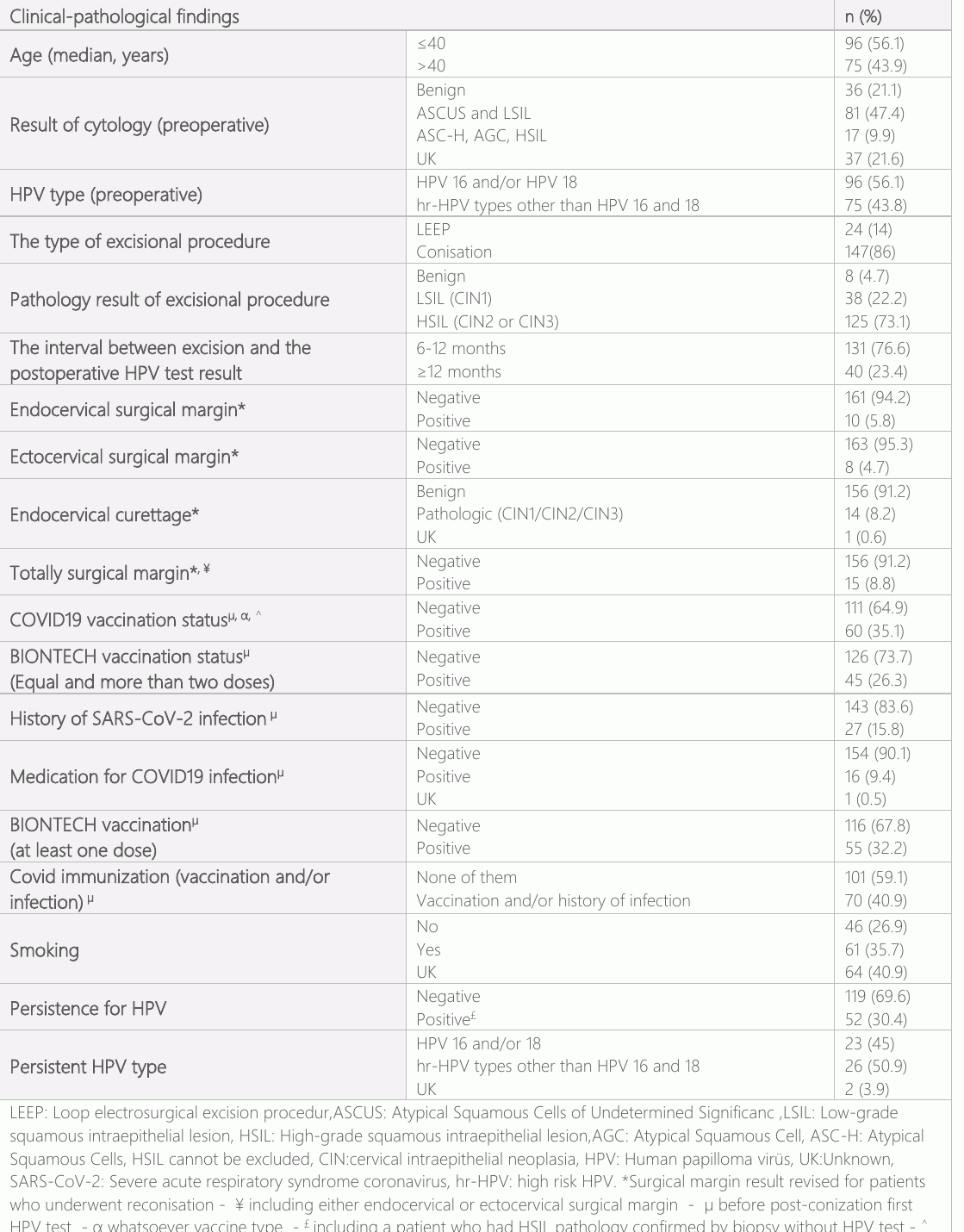
The median age of the entire cohort was 40 years (range= 20–68 years). The preoperative HPV test revealed positive results for all patients. The rate of preoperative HPV 16 and/or HPV 18 was 96 (56%) patients. The excisional procedure for 147 (86%) patients was conisation. The pathology result of the excisional procedure was reported as HSIL for 125 (73.1%) patients. The duration from the operation to the first post-excision HPV test ranged from 6 months to 36 months. In the follow-up period, 131 (76.6) patients had their first post-excision HPV test between 6 and 12 months. The 40 (23.4%) remaining patients had their first HPV test after 12 months. The first operation results showed that 19 patients had surgical margin positivity in the endocervical or ectocervical margin. Seven patients who had surgical margin positivity underwent reconisation before their first postoperative HPV test. Therefore, the surgical margin result was revised according to their last operation. Afterward, the total surgical margin was positive in 15 (8.8.6%) patients. The endocervical and ectocervical margins were positive in 10 (5.8%) and 8 (4.7%) patients. Endocervical curettage was at least CIN1 in 14 (8.2%). Furthermore, 101 (59.1%) patients were neither vaccinated nor had a history of SARS-CoV-2 infection before their first post-conisation HPV test. Sixty (35.1%) patients were vaccinated for COVID-19 before their first post-conisation HPV test. In this period, 45 (26.3%) patients had equal and more than two doses of the BioNTech vaccine, and ten patients had one dose of the BioNTech vaccine. Five patients did not receive the BioNTech vaccine but had at least two doses of the Sinovac vaccine. History of SARS-CoV-2 infection was positive in 27 (15.8%). 16 patients received favipiravir. The rate of smoking was 35.7% (n=61). The rate of HPV persistence was 30.4% (n=52). HPV persistence was positively defined in the HPV-DNA test for all patients except one patient with HSIL pathology in cytology, which was confirmed by colposcopic biopsy. The clinicopathological factors of the entire cohort are shown in Table 1.
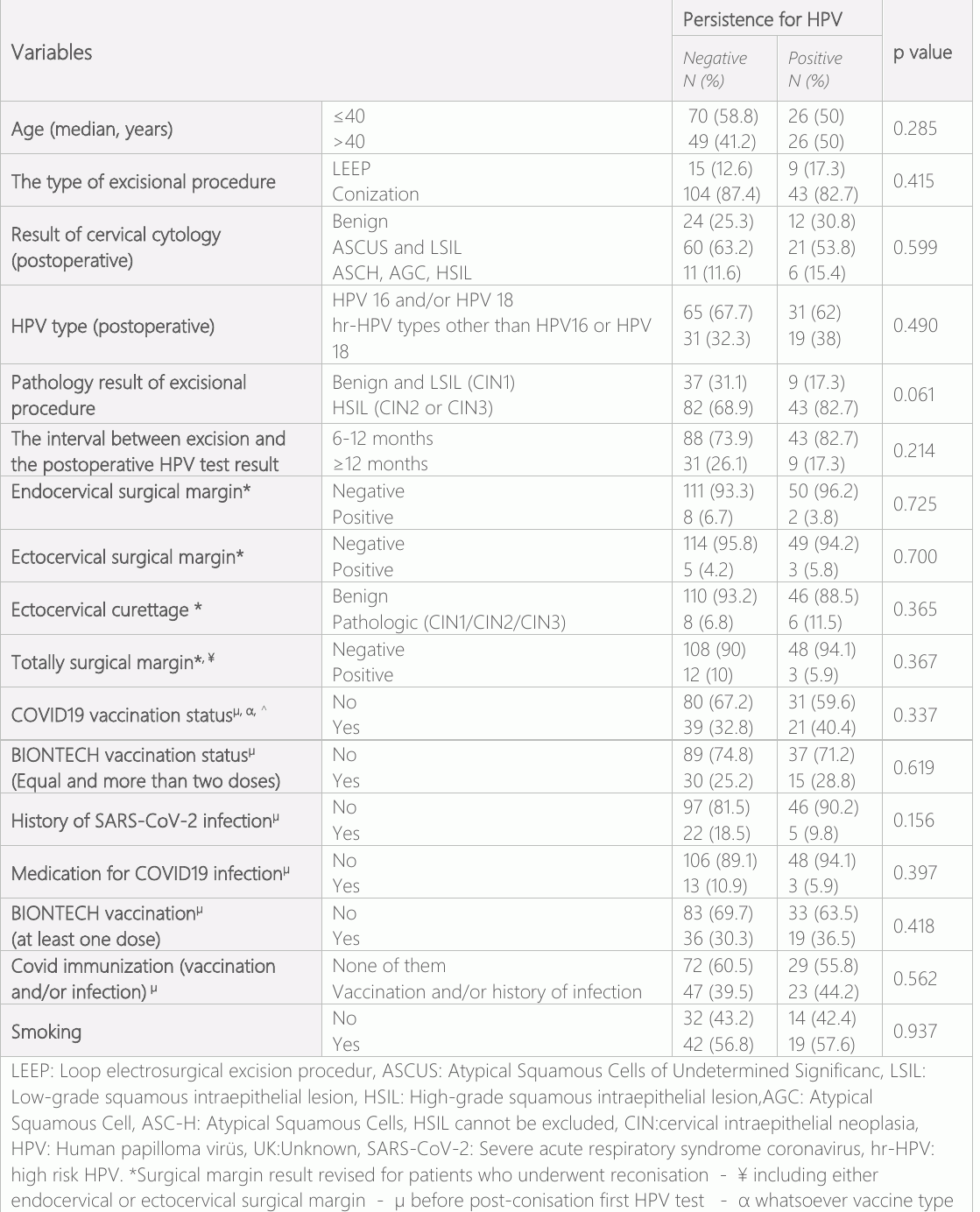
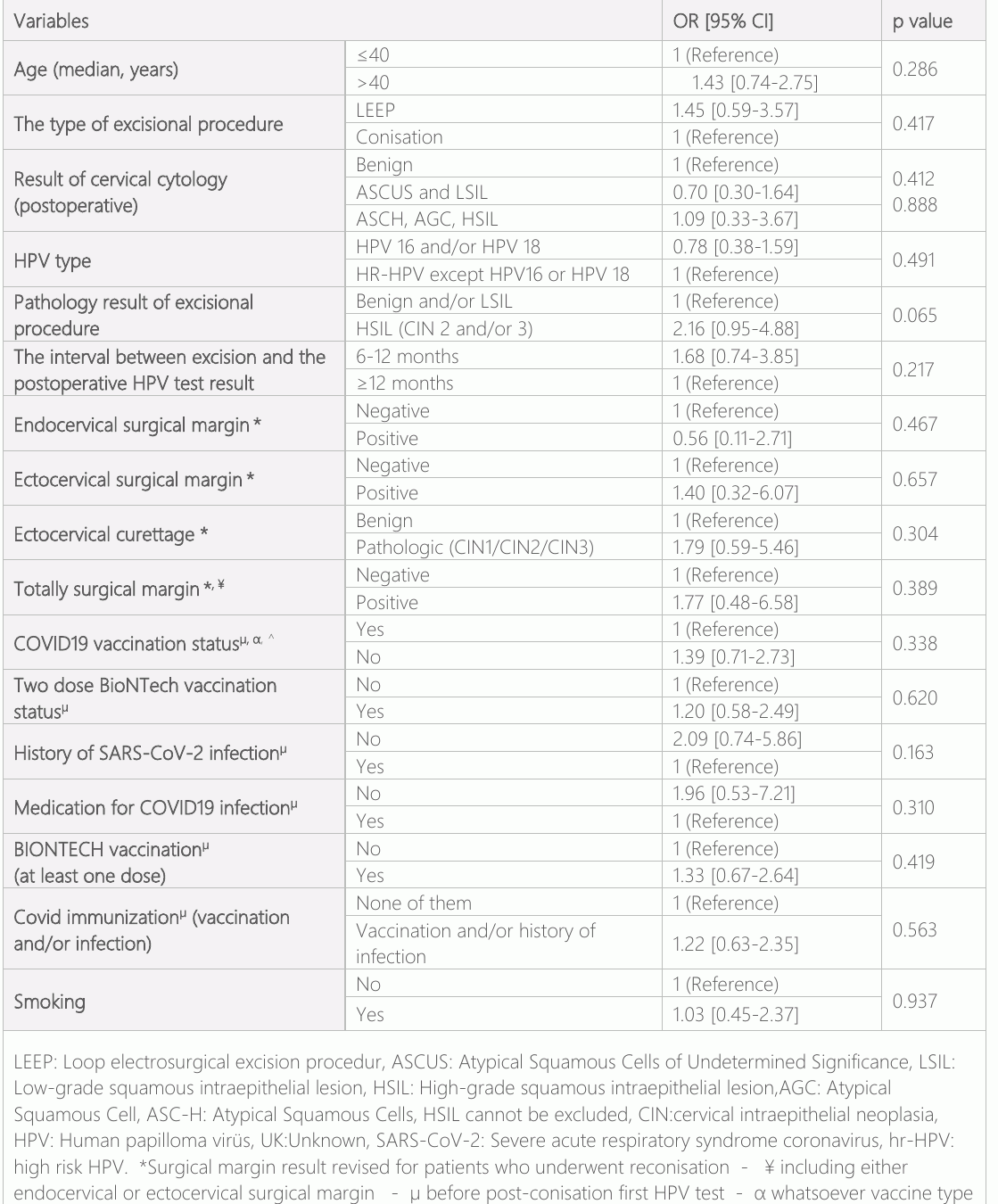
Median age, preoperative cytology or HPV type, type of excisional procedure, pathology result of the excisional procedure, status of surgical margins, the status of endocervical curettage, COVID-19 vaccination, history of SARS-CoV-2 infection, having equal and more than two doses of the BioNTech vaccine, having at least one dose of the BioNTech vaccine, receiving medication for SARS-CoV-2 infection, and smoking were analyzed to evaluate the associated factors of post-conisation HPV persistence (Table 2). None of these factors were related to post-excision HPV persistence. Logistic regression revealed that none were statistically significant risk factors for post-excision HPV persistence (Table 3).
Discussion
The effective treatment of CIN3 prevents the development of cervical cancer (11). The excisional procedure is the preferred treatment for nonpregnant patients with CIN that have > 60% immediate CIN3+ risk and are acceptable for those with risks between 25% and 60% (10). However, the treated women are still at risk of CIN. The persistence or recurrence of CIN is a significant risk factor for cervical malignancy (11). The persistence of the HPV infection after surgery is an essential factor in the recurrence of CIN and the progression to invasive cancer (6, 11). Therefore, an initial post-excision HPV-based test is recommended in the sixth month following the 2019 ASCCP guideline (10).
The 5-year CIN3+ risks after the excisional treatment of CIN3 in one, two, and three negative annual cotests are 1.7%, 0.68%, and 0.35%, according to Kaiser Permanente Northern California (KPNC) data, respectively (12). Furthermore, a cotest is recommended every three years for at least 25 despite three consecutive negative cotests (10). Surveillance is vital even if an excisional procedure is performed. With these findings, the prediction of post-excision HPV persistence protects its importance.
Smoking (13), age (14), history of the grade of CIN in colposcopic biopsy (14), status of surgical margins (14), cone volume (14), active sexual life period (14), viral load (15), HPV type (16), cone depth (17), and pre-treatment pap test results (18) are considered to be associated with HPV persistence. However, no consensus has been reached regarding the distinct risk factors of post-excision HPV persistence.
Older age is a high-risk factor for post-treatment HPV persistence (11, 18). Zang et al. (11) speculated that the transformation zone is retracted into the cervical canal because of defensive oestrogen, which may contribute to the inadequate resection of dysplastic lesions in older age. Conversely, Kudoh et al. (16) found no significant association between age and HPV persistence. In the present study, age was not associated with post-excision HPV persistence. In our study, all patients had endocervical curettage after cervical excision regardless of age, and this procedure might eliminate the age difference.
Hoffman et al. (19) demonstrated that post-treatment free surgical margins are associated with low-risk HPV persistence after treatment. Conversely, Song et al. (15) and Livays et al. (20) found that positive surgical margins are not a risk factor for hR-HPV persistence. In our study, the rate of positive surgical margins was 7.6 %; this finding was not related to post-excision HPV persistence, possibly because HPV is detected in the proximal vaginal mucosa during follow-up, the remaining cervical mucosa is reinfected, and a skip lesion is probably present even if the dysplastic lesion in the cervix is completely removed (11).
The rate of post-excisional HPV persistence varies from 2% to 69.3% because of the methodologies of the studies, which differed in terms of the histologic grade of cervical biopsy, follow-up duration, patients’ age, and included HPV type (21, 22). Costa et al. (14) estimated that the persistence of post-excision HPV is 36.5% for 2.4–39.2 months of follow-up. Lin et al. (22) determined that the constant hR-HPV rate is 69.3%, including follow-up of fewer than three months amongst patients treated for CIN3. Bais et al. (23) detected a post-excisional constant hR-HPV rate of 57.1% during 24 months of follow-up of patients treated for CIN2-3. Bodner et al. (24) reported a post-conisation constant hR-HPV rate of 27% for 3 months of follow-up. However, Kreimer et al. (25) showed that the persistent post-excisional hR-HPV rate range in patients with CIN1-3 biopsy results is 7.5%–10.5%. Hoffman et al. (19) conducted a systematic review analysis of studies involving different therapeutic modalities, such as LEEP, conisation, ablative therapy, mixed therapies, and unspecified HPV types. They reported median post-treatment HPV persistence of 27% at three months, 21% at six months, 15% at 12 months, and 10% at 24 months. Furthermore, they found that the median HPV persistence values in 3, 6, 12, and 24 months are 28%, 21%, 21%, and 9% for loop excision and 20%, 6%, 4%, and 2% for conisation, respectively; the included HPV types differ (19). In contrast to the overall HPV persistence, the median persistent hrHPV infection increased as the follow-up period was extended (i.e., 22% at six months, 31% at 12 months, and 32% at 24 months) (19). Our study's post-excisional persistence hrHPV was 30.4% during 6–36 months of follow-up. The value of the HPV genotype as a risk factor for HPV persistence after treatment remains controversial. Zang et al. (11) and Bogani et al. (26) determined that having a history of HPV 16/18 type positivity decreased the clearance tendency of HPV infection compared to the other HPV types. On the other than, So et al. (27) reported that there was no relationship between HPV type and HPV persistence after post-excision. In the present study, HPV type was not significantly associated with post-excision HPV persistence.
To our knowledge, this study was the first to investigate the effect of SARS-COV-2 infection and COVID-19 vaccination on post-excision HPV persistence. In our study, having equal and more than two doses of BioNTech vaccine for COVID-19, immunization for SARS-CoV-2 infection, and receiving medication for SARS- CoV-2 infection were not associated with HPV persistence during the COVID-19 pandemic, which has resulted in high morbidity and mortality worldwide. Case reports have shown persistent viral warts on the hands that regressed during the COVID-19 pandemic (28, 29). Erkayman et al. (29) showed that skin wart lesions were dramatically regressed by COVID-19 treatments, including favipiravir, dexamethasone, low-molecular-weight heparin, and azithromycin, in a transplant recipient who had skin wart lesions that started three years after renal transplantation and did not regress over 15 years despite numerous treatment modalities. The regression of warts continued for 2–3 weeks; then, the lesions reappeared (29). Although the underlying reason for this regression was unclear, three possibilities were asserted: (i) probable unknown mechanism of the antiviral effect of favipiravir, (ii) transition from methylprednisolone to dexamethasone, which might slightly differ from the immune-suppressive status, and (iii) effects of SARS- CoV-2 infection, such as immune responses to the antigen–antibody complex, the cytopathic effect of the virus, and effect of the hypoxic status of the patient on warts (29). Demirbaş et al. (28) reported a persistent patient with multiple viral warts for 10 years despite various therapy modalities and with lesions that regressed 1 month after COVID-19 treatments, including favipiravir and enoxaparin. They speculated that an extreme inflammatory response might cause a paradoxical immune reaction between SARS-CoV-2 and HPV infections (28, 29). Because of the viral RNA-dependent RNA polymerase inhibitor nature of favipiravir, the probability of the antiviral effect on the HPV DNA virus is low (28). We evaluated the post-excisional hR-HPV persistence during the COVID-19 based on these hypotheses. The rate of post-excisional persistent hR-HPV did not significantly differ during the pandemic. Furthermore, vaccination, history of SARS-CoV- 2 infection, or receiving medication for SARS- CoV-2 infection were not associated with HPV persistence during the pandemic.
The study's strength was excluding pre-excisional HPV negative or low-risk HPV types and ablative treatment. Experienced gyneco-pathologists evaluated all pathology results. The same experienced gynecological oncology team performed cervical excision procedures. The limitations were its retrospective design and limited number of patients. Laboratory-detected immune responses to COVİD-19 infection or vaccination could not be evaluated.
Conclusion
In the study, no risk factors related to post-excisional hR-HPV persistence were identified amongst age, preoperative cytology or HPV type, type of excisional procedure, pathology result of the excisional procedure, status of surgical margins, the status of endocervical curettage, vaccination for COVID-19, history of SARS-CoV-2 infection, receiving medication for SARS-CoV-2 infection, and smoking during the COVID-19 pandemic. The short follow-up period may make it difficult for us to find a significant relationship. The adequate immune response is unclear because the antibody response of patients to covid infection and vaccines was not studied. Further prospective studies are required to understand the risk factors associated with HPV persistence following excision.
Declarations
- Author contributions (CRediT)
- All authors contributed equally to all 14 CRediT roles (Conceptualization, Data curation, Formal analysis, Funding acquisition, Investigation, Methodology, Project administration, Resources, Software, Supervision, Validation, Visualization, Writing – original draft, Writing – review & editing).
- Funding
-
Funding information was not reported in the published version of this article.
- Conflicts of interest
- The authors declare no conflict of interest for the present study.
- Ethics approval
- Approval was obtained from the institutional review board. All patients signed an informed consent form that allows the participating institution to use their clinical data (Ethics committee approval: 20/12/2021- 12).
- Data availability
- A data availability statement was not reported in the published version of this article.
References (29)
26 of 29 references are linked to their DOI.
- Torre LA, Islami F, Siegel RL, Ward EM, Jemal A. Global Cancer in women: burden and trends. Cancer Epidemiol Biomark Prev. 2017;26(4):444–57 DOI Crossref PubMed Google Scholar
- Bowden SJ, Bodinier B, Kalliala I, et al. Genetic variation in cervical preinvasive and invasive disease: a genome-wide association study. Lancet Oncol. 2021;22(4):548-557 DOI Crossref PubMed Google Scholar
- Park E, Kim JY, Choi S, Kim DS, Oh YL. Carcinogenic risk of human papillomavirus (HPV) genotypes and potential effects of HPV vaccines in Korea. Sci Rep. 2019;9(1):12556 DOI Crossref PubMed Google Scholar
- Nagai Y, Maehama T, Asato T, Kanazawa K. Persistence of human papillomavirus infection after therapeutic conization for CIN 3: is it an alarm for disease recurrence? Gynecol Oncol. 2000;79(2):294-9 DOI Crossref PubMed Google Scholar
- Ghaem-Maghami S, Sagi S, Majeed G, Soutter WP. Incomplete excision of cervical intraepithelial neoplasia and risk of treatment failure: a meta-analysis. The lancet oncology. 2007;8(11):985-93 DOI Crossref PubMed Google Scholar
- Andersson S, Megyessi D, Belkić K, Alder S, Östensson E, Mints M. Age, margin status, high-risk human papillomavirus and cytology independently predict recurrent high-grade cervical 90 77 Post-conisation HPV Persistence during COVID-19 Sevgi Ayhan et al. intraepithelial neoplasia up to 6 years after treatment. Oncol Lett. 2021(9);22(3):684 DOI Crossref PubMed Google Scholar
- Goodridge HS, Ahmed SS, Curtis N, et al. Harnessing the beneficial heterologous effects of vaccination. Nat Rev Immunol 2016; 16:392–400. DOI Crossref PubMed Google Scholar
- Dominguez-Andres J, Barreiro LB, et al. Defining trained immunity and its role in health and disease. Nat Rev Immunol 2020; 20:375– 88 PubMed Google Scholar
- Perkins RB, Guido RS, Castle PE, et al. 2019 ASCCP Risk-Based Management Consensus Guidelines for Abnormal Cervical Cancer Screening Tests and Cancer Precursors. J Low Genit Tract Dis. 2020;24(2):102-31 DOI Crossref PubMed Google Scholar
- Zang L, Huang J, Zhu J, Hu Y. Risk factors associated with the persistence of human papillomavirus after cervical excision in patients with high-grade squamous intra-epithelial neoplasia. Eur J Obstet Gynecol Reprod Biol. 2021;266:175-181 DOI Crossref PubMed Google Scholar
- Egemen D, Cheung LC, Chen X, et al. Risk Estimates Supporting 2019 ASCCP Risk-Based Management Consensus Guidelines. J Low Genit Tract Dis. 2020;24(2):132-143 DOI Crossref PubMed Google Scholar
- Sarian LO, Derchain SF, Pitta Dda R, Morais SS, Rabelo-Santos SH. Factors associated with HPV persistence after treatment for high-grade cervical intra-epithelial neoplasia with large loop excision of the transformation zone (LLETZ). J Clin Virol. 2004;31(4):270-4 DOI Crossref PubMed Google Scholar
- Costa S, De Simone P, Venturoli S, et al. Factors predicting human papillomavirus clearance in cervical intraepithelial neoplasia lesions treated by conization. Gynecol Oncol. 2003;90(2):358-65 DOI Crossref PubMed Google Scholar
- Song SH, Lee JK, Oh MJ, et al. Persistent HPV infection after conization in patients with negative margins. Gynecol Oncol. 2006;101(3):418-22 DOI Crossref PubMed Google Scholar
- Kudoh, A., Sato, S., Itamochi, H. et al. Human papillomavirus type-specific persistence and reappearance after successful conization in patients with cervical intraepithelial neoplasia. Int J Clin Oncol 2016; 21: 580–587 DOI Crossref PubMed Google Scholar
- Baser E, Ozgu E, Erkilinc S, et al. Clinical outcomes of cases with cervical dysplasia absent in cold knife conization specimens. Asian Pac J Cancer Prev. 2014;14(11):6693-6 DOI Crossref PubMed Google Scholar
- Kilic D, Guler T, Atigan A, et al. Predictors of Human papillomavirus (HPV) persistence after treatment of high grade cervical lesions; does cervical cytology have any prognostic value in primary HPV screening? Ann Diagn Pathol. 2020;49:151626 DOI Crossref PubMed Google Scholar
- Hoffman SR, Le T, Lockhart A, et al. Patterns of persistent HPV infection after treatment for cervical intraepithelial neoplasia (CIN): A systematic review. Int J Cancer. 2017;141(1):8-23 DOI Crossref PubMed Google Scholar
- Livasy CA, Moore DT, Van Le L. The clinical significance of a negative loop electrosurgical cone biopsy for high-grade dysplasia. Obstet Gynecol. 2004;104(2):250-4 DOI Crossref PubMed Google Scholar
- K Elfgren, P Bistoletti, L Dillner, J M Walboomers, C J Meijer, J Dillner. Conization for cervical intraepithelial neoplasia is followed by disappearance of human papillomavirus deoxyribonucleic acid and a decline in serum and cervical mucus antibodies against human papillomavirus antigens. Am J Obstet Gynecol. 1996; 174:937–42 DOI Crossref PubMed Google Scholar
- C T Lin, C J Tseng, C H Lai, S Hsueh, K G Huang, H J Huang, A Chao. Value of human papillomavirus deoxyribonucleic acid testing after conization in the prediction of residual disease in the subsequent hysterectomy specimen. Am J Obstet Gynecol. 2001; 184:940–5 DOI Crossref PubMed Google Scholar
- Aagje G Bais, Marinus J C Eijkemans, Mateja Rebolj, et al. Post-treatment CIN: randomised clinical trial using hrHPV testing for prediction of residual/recurrent disease. Int J Cancer. 2009; 124:889– 95 DOI Crossref PubMed Google Scholar
- Bodner K, Bodner-Adler B, Wierrani F, et al. Is therapeutic conization sufficient to eliminate a high-risk HPV infection of the uterine cervix? a clinicopathological analysis. Anticancer Res. 2002; 22:3733–6 PubMed Google Scholar
- Aimée R Kreimer, Hormuzd A Katki, Mark Schiffman, Cosette M Wheeler, Philip E Castle; ASCUS-LSIL Triage Study Group. Viral determinants of human papillomavirus persistence following loop electrical excision procedure treatment for cervical intraepithelial neoplasia grade 2 or 3. Cancer Epidemiol Biomarkers Prev. 2007; 16:11–6 DOI Crossref PubMed Google Scholar
- Bogani G, DI Donato V, Sopracordevole F, et al. Recurrence rate after loop electrosurgical excision procedure (LEEP) and laser Conization: A 5-year follow-up study. Gynecol Oncol. 2020;159(3):636-641 PubMed Google Scholar
- So KA, Lee IH, Kim TJ, Lee KH. Risk factors of persistent HPV infection after treatment for high-grade squamous intra-epithelial lesion. Arch Gynecol Obstet. 2019;299(1):223-227 DOI Crossref PubMed Google Scholar
- Demirbaş A, Eker H, Elmas ÖF, et al. COVID-19 and human papillomavirus: Paradoxical immunity. J Cosmet Dermatol. 2021;20(7):2001-2003 DOI Crossref PubMed Google Scholar
- Erkayman MH, Bilen H. Clearance of longstanding treatment-resistant warts during COVID-19 in a transplant recipient. Transpl Infect Dis. 2021;23(4):e13572 DOI Crossref PubMed Google Scholar
- Zarandi PK, Zinatizadeh MR, Zinatizadeh M, Yousefi MH, Rezaei N. SARS-CoV-2: From the pathogenesis to potential anti-viral treatments. Biomed Pharmacother. 2021;137:111352 DOI Crossref PubMed Google Scholar
Read the full text
Open the PDF here
Loading the PDF…
If the PDF does not show here, use the download button above.
How to cite this article
Ayhan S, Comert GK, Arslanca T, Kar I, Turkmen O, Ersak B, et al. Evaluation of the Risk Factors Associated with Post-conisation HPV Persistence during the COVID-19 Pandemic. Ulutas Med J. 2023;9(2):81-91. doi:10.5455/umj.20230506025428
Ayhan, S., Comert, G. K., Arslanca, T., Kar, I., Turkmen, O., Ersak, B., Ceylan, O., Sahin, M., Kilic, F., & Turan, A. T. (2023). Evaluation of the Risk Factors Associated with Post-conisation HPV Persistence during the COVID-19 Pandemic. The Ulutas Medical Journal, 9(2), 81–91. https://doi.org/10.5455/umj.20230506025428
Ayhan, S. et al. (2023) 'Evaluation of the Risk Factors Associated with Post-conisation HPV Persistence during the COVID-19 Pandemic', The Ulutas Medical Journal, 9(2), pp. 81–91. doi: 10.5455/umj.20230506025428.