The Ulutas Medical Journal · ISSN 2149-0430 (print), 2149-388X (online) · https://www.ulutasmedicaljournal.com/?mno=160874
Original Article · Open access
Evaluation of Postoperative Follow-ups of Children Having the Glenn Procedure
Also available in: العربية · Türkçe · 中文
- Mardin Artuklu Üniversitesi Nur Mh Diyarbakır Yolu Yenişehir Yerleşkesi, 47200 Artuklu/Mardin ROR
- S.B.U. Gazi Yaşargil Training and Research Hospital ROR
Abstract
- Introduction
- This study aimed to evaluate the treatment results, complications, and the factors affecting mortality in cases who were followed up postoperatively in the pediatric intensive care unit (PICU) after the Glenn shunt procedure.
- Materials and Methods
- The duration of the patients on the pump during surgery, transition times to feeding, blood gas and other laboratory parameters, complications developed during follow-up in the intensive care unit, and exitus rates were evaluated retrospectively.
- Results
- BDG was performed due to tricuspid atresia, the most common diagnosis (30.2%). In the evaluation of the relationship between postoperative patient findings and exitus, a positive correlation was found between the duration of inotropic support, early extubation, and the duration of HFNC therapy in all patients (p<0.05); and a negative correlation was found in terms of the fluid the patients received on the first day after surgery (p<0.05). In patients who developed complications, a negative correlation was observed only in terms of the fluid they received on the first day after surgery (p<0.05)
- Conclusions
- In terms of all patients, it was observed that mortality increased with early extubation and prolonged duration of inotropic support and HFNC therapy, and it decreased as the fluid the patients received on the first day after surgery decreased. In patients who developed complications, it was only observed that mortality decreased as the fluid the patients received on the first day after surgery decreased.
Keywords
Full text
Introduction
Congenital heart diseases are one of the most frequently detected congenital disorders and are seen in 4- 10/1000 live births, may require surgical intervention and may have fatal results (1). Functional single ventricle, which is rare among congenital heart diseases and has a complex nature, constitutes 7.7% of congenital heart diseases diagnosed in childhood (2).
In complex congenital heart diseases, in which two-ventricle repairs cannot be performed, the bidirectional cavopulmonary anastomosis (BDG = Glenn shunt) procedure is preferred to increase pulmonary blood flow. Functional single ventricle surgery has a risk of morbidity and mortality; therefore, BDG shunt procedure can be lifesaving in these patients (3, 4). The bidirectional Glenn procedure is performed in patients typically before they reach 6 months of age (5).
The first Glenn shunt was an anastomosis between the side of the ligated SVC and the distal end of the transacted pulmonary artery and only flowed to the ipsilateral lung; the contralateral lung was being supplied by antegrade flow from the main pulmonary artery. Today, BDG is almost exclusively performed by placing one end of the superior vena cava (SVC) to the superior side of the ipsilateral pulmonary artery (PA) connection; therefore, the superior caval return has drainage to both lungs, meaning that it is bidirectional (6).
In BDG shunt procedure, it is aimed to increase pulmonary blood flow. This procedure does not change the amount of blood returning to the heart and therefore the heart is not exposed to volume overload. BDG is performed as an intermediate surgical treatment in which the right ventricle is completely excluded in patients with single ventricle morphology (6, 7).
This study aimed to evaluate the treatment results, complications and the factors affecting mortality in patients who were followed up postoperatively in the paediatric intensive care unit (PICU) after Glenn shunt procedure.
Materials and Methods
Study Design
In the study, 53 patients who underwent BDG procedure in the PICU between 01/01/2019 and 31/03/2022 and were followed up postoperatively were included. The duration of the patients on pump during surgery, duration of anaesthesia, whether they were receiving nitric oxide (NO), sildenafil or sedation, their vasoactive-inotropic scores (VIS), length of stay on mechanical ventilation (MV), extubation times, whether they were receiving high flow nasal cannula (HFNC) oxygen therapy, length of hospital stay, transition times to feeding, blood gas and other laboratory parameters, complications developed during follow-up in the intensive care unit, and exitus rates were evaluated.
Surgical Technic
After standard median sternotomy in all patients, the thymus was completely resected. All operations were performed under normo-thermic cardiopulmonary bypass. In patients who did not undergo atrial septectomy, cardiopulmonary bypass was initiated by cannulation of the right atrium. In other patients, cardiac arrest was achieved by antegrade blood cardioplegia following aortic-bicaval cannulation, and then atrial septectomy was performed. Patent ductus arteriosus ligated immediately at the start of cardiopulmonary bypass. Following clamping, the superior vena cava was transacted from the right atrium entrance and the atrial side was sutured on itself. The superior vena cava end-to-side anastomosis was performed with 7/0 polypropylene sutures to the arteriotomy performed on the anterior aspect of the right pulmonary artery. In some patients, pulmonary artery reconstruction was performed with an autologous pericardial patch treated with glutaraldehyde. The azygos vein was closed with a clip. To reduce the pulmonary artery pressure, main pulmonary artery was ligated or a band was placed on the pulmonary artery. The VIS score was calculated as: dopamine (µg/kg/min) + dobutamine (µg/kg/min) + 10 × milrinone (µg/kg/min) + 100 × epinephrine (µg/kg/min) + 100 × norepinephrine (µg/kg/min) + 10,000 × vasopressin (U/kg/min). The inotrope score was calculated as: dopamine (µg/kg/min) + dobutamine (µg/kg/min) + 100 x epinephrine (µg/kg/min) (8).
Statistical Analysis
Statistical analysis of the study was performed using the SPSS version 26 software package (IBM Corp., Armonk, NY, USA). Descriptive statistics include number (n) and percentage (%). Continuous variables were summarized as mean and standard deviation. Spearman Rank Correlation Coefficient was used to evaluate the obtained data. Statistical significance level was accepted as p<0.05 in all tests.
Ethical Statement
Approval for the study was obtained from the Good Clinical Practice Ethics Committee of Diyarbakir Gazi Yaşargil Training and Research Hospital (Approval date/ID: 20.05.2022/96).
Results
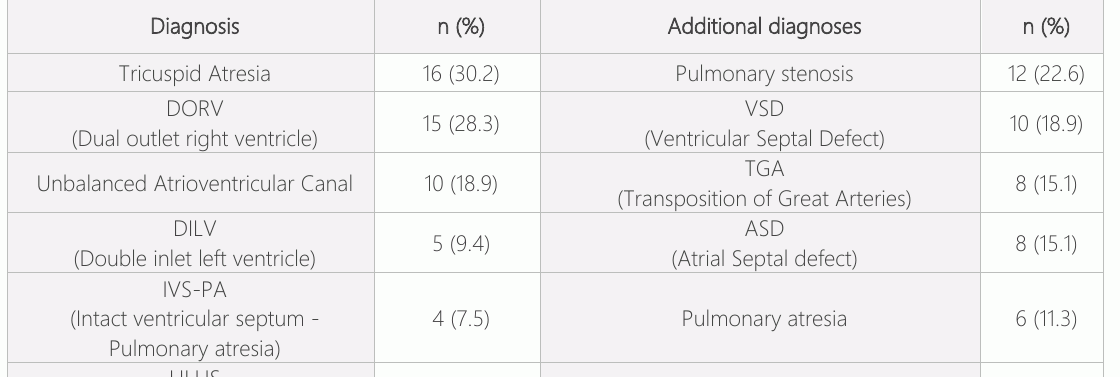
In the study, 32 of the 53 patients, who were followed up in the Pediatric Intensive Care Unit after the Glenn shunt procedure, were male and 21 were female. BDG had been performed due to tricuspid atresia, which was the most common diagnosis (30.2%). The most common additional diagnosis was pulmonary stenosis (PS) (22.6%) (Table 1).
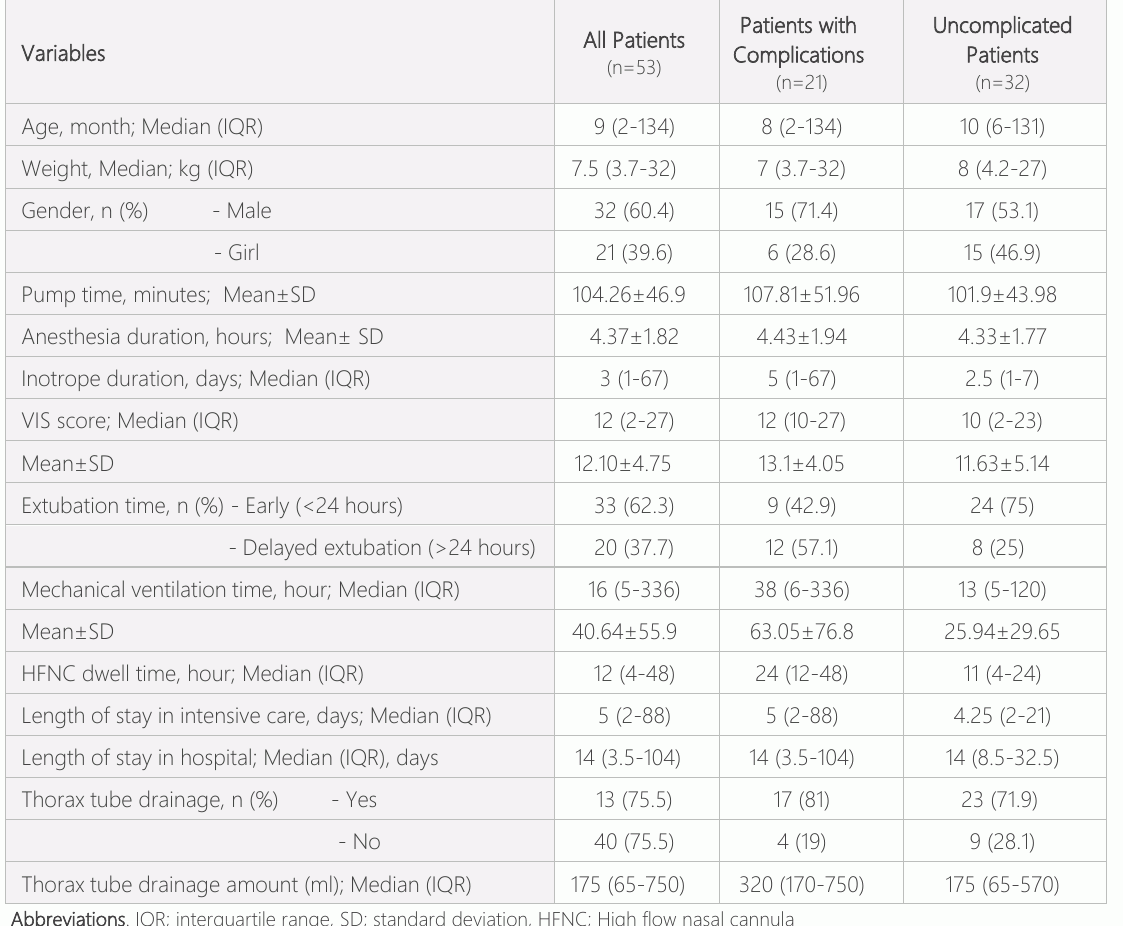
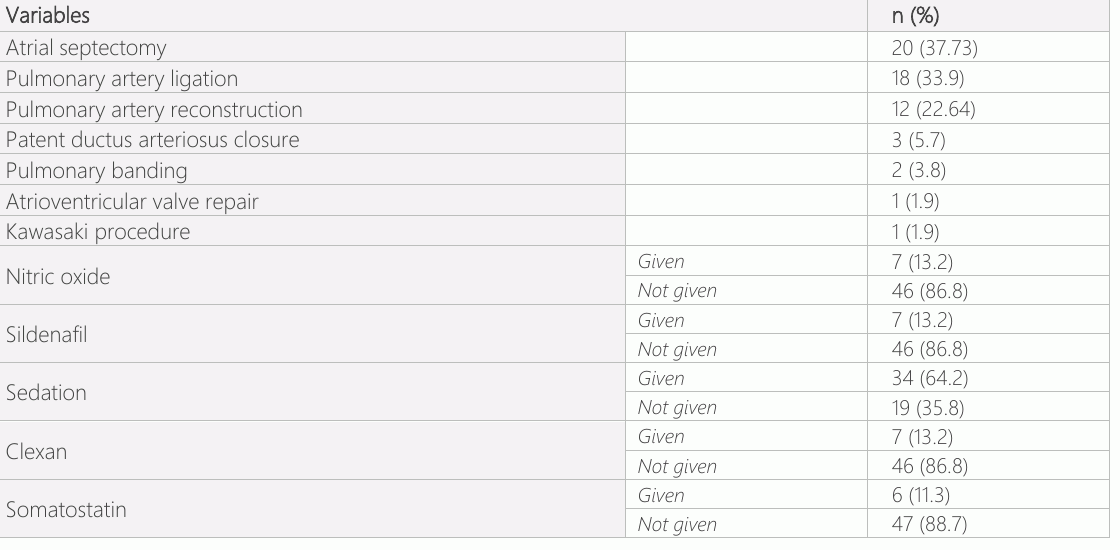
The median age was 15.21 (IQR;2-134) months. The mean duration of anesthesia was 4.37±1.82 hours and the mean duration of the patients on pump was 104.26±46.90 minutes. The median duration of inotropic support was 3 (IQR; 1-67) days. The mean VIS score of the patients was 12.1±4.75. The mean time of switching antibiotics was 3.2±1.40 days. The median extubation time (length of stay on mechanical ventilation) of the patients was 16(IQR;5-336), the median length of stay in the intensive care unit was 5(IQR;2-88) days, and the median length of hospital stay was 14(IQR;3.5-104) days. Thirty-three of the patients were extubated within 24 hours, and 20 patients were extubated after more than 24 hours (Table 2). In patients who underwent BDG, atrial septectomy was the most frequent additional surgical intervention, which was performed in 20 (37.73%). Other additional procedures were pulmonary artery ligation, pulmonary artery reconstruction, PDA closure, pulmonary artery banding, AVvalverepair and surgical procedure for Kawasaki, respectively (Table 3). Additional procedures and medical treatments performed in the patients were presented in Table 3.
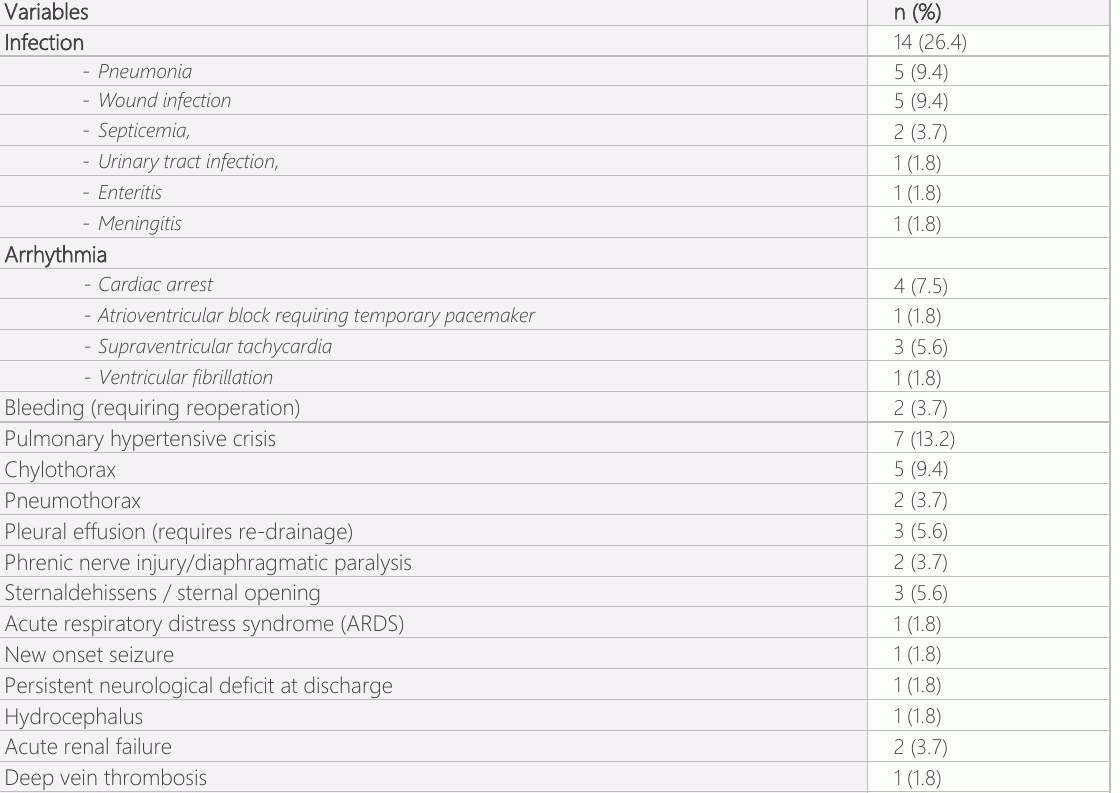
The mean time to the initiation of Clexane treatment was 1.86±1.07 days. Postoperative antibiotic prophylaxis was administered to all patients. The mean time of switching antibiotics was 3.2±1.4 days. No complications developed in 32, while some complications developed in 21 patients. The most common complication was infection (developed in 15 patients). The most common infections were wound infection, pneumonia, sepsis, meningitis and enteritis, respectively. Five (94.3%) of the patients who underwent Glenn were declared exitus (Table4). In the evaluation of the relationship between postoperative patient findings and exitus, a positive correlation was found between the duration of inotropic support, early extubation, and the duration of HFNC therapy in all patients (p<0.05); and a negative correlation was found in terms of the fluid the patients received on the first day after surgery (p<0.05). In patients who developed complications,a negative correlation was observed only for the fluid they received on the first day after surgery (p<0.05) (Table 5).
Discussion
In our study, complications were observed in 21 of the children who underwent Glenn procedure, and 5 patients were declared exitus. A negative correlation was found between the findings of the patients who were declared exitus and the age, duration on pump, duration of anesthesia, length of stay in the intensive care unit, length of hospital stays, fluid received on the first day after surgery, and nitric oxide therapy status of the patients who developed complications. Among these, only correlation in terms of the fluid they received on the first day after surgery was significant.
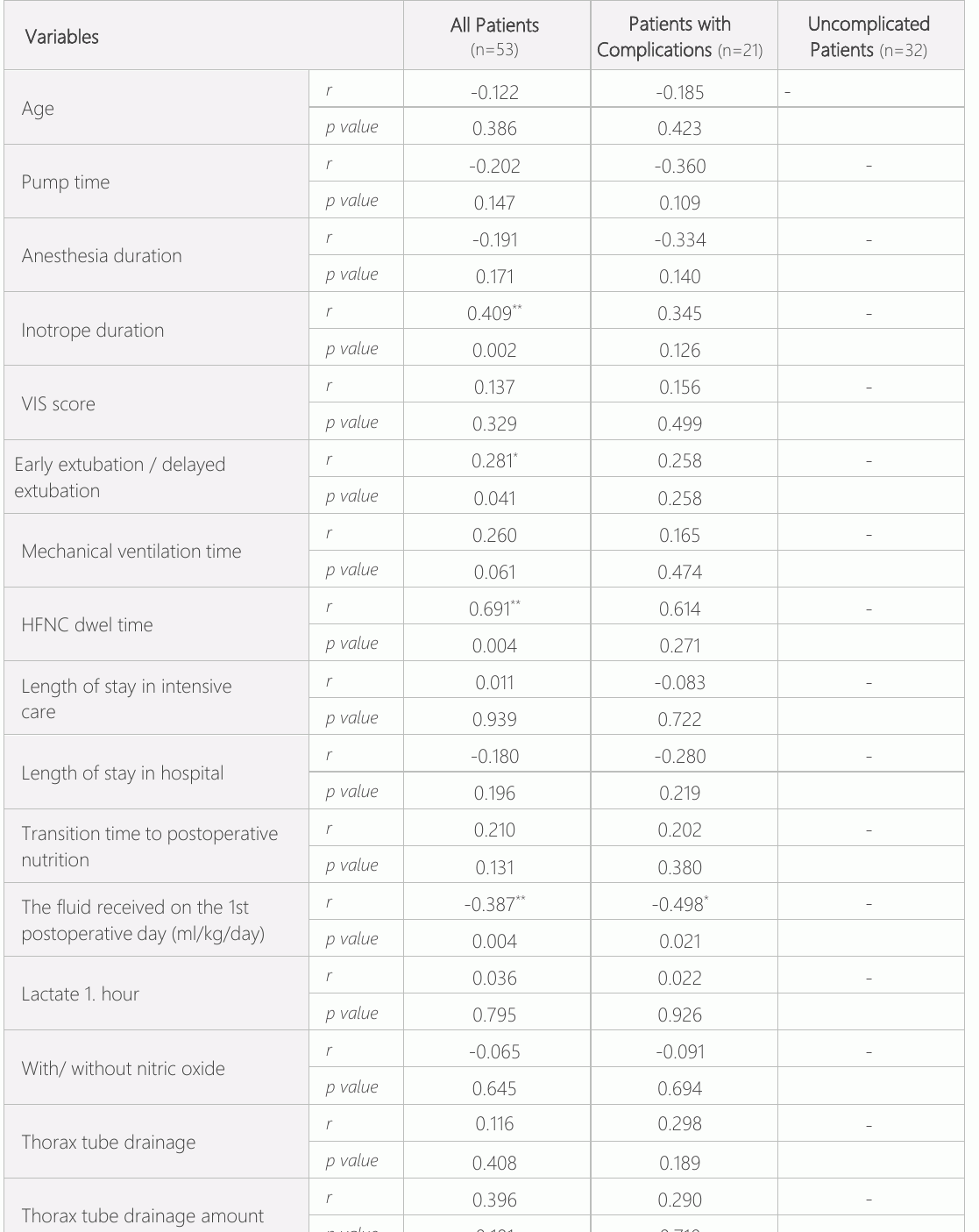
There was a positive correlation between the other complications, which was not significant. In the study conducted by Meyer et al., the duration of anesthesia and surgery were longer in the group with post-operative complications, and the administration of perioperative nitric oxide was found to be an important risk factor for complications in the patients (9). In the study conducted by Tan et al., the incidence of complications was reported as 13.7% (10).
In the study of Shidhika et al., postoperative infectious complications were observed in 27.6% of 193 patients operated for congenital heart diseases (including 11 BDG) and acquired heart diseases. In the same study, 26.3% of the patients with infection were diagnosed with postoperative pneumonia (11). In a study conducted in Nigeria, it was observed that 13.7% of the cardiac surgery patients developed postoperative lower respiratory tract infection. In our study, infectious complications were observed in 26.4% of the patients. 35.7% of the infectious complications were pneumonia and 35.7% were soft tissue infection (12). The data in our study were consistent with previously conducted studies.
Gram-negative bacilli are the most common cause of nosocomial infections in children after cardiac surgery (13). In a study conducted on bacteria isolated from tracheal aspirate samples, 54% of bacteria were Pseudomonas aeruginosa,16% were Acinetobacter baumannii, and 8% were Staphylococcus aureus (14). In our study, Staphylococcus epidermidis was found in the blood samples of the patients, and Stenotrophomonas maltophilia, Acinetobacter lwoffii, Enterobacter, Candida, Acinetobacter baumannii were found in the tracheal aspirate samples. Candida was observed in the wound culture and Escherichia coli was observed in the urine culture. The high rate of gram-negative bacteria found in our study was similar to the results of other studies.
In the study of Kogon et al., it was found that patients with complications had prolonged ICU and hospital stays (15), which was similar to the results of our study.
In some patients with balanced circulation as a result of bidirectional Glenn shunt procedure, any intervention prior to cavopulmonary anastomosis is not required; however, the majority of them are subjected to preliminary procedures in early infancy. The modified Blalock-Taussig shunt is required for right side structures, the Norwood procedure for left side structures, and pulmonary artery banding is required for pulmonary hypercirculation; in the presence of a persistent left superior vena cava, creating bilateral bidirectional superior cavopulmonary anastomosis is necessary (15, 16). The present study performed additional surgical interventions such as atrial septectomy, pulmonary artery ligation, and pulmonary banding were.
Data show that the duration of mechanical ventilation, pleural drainage, stay in the intensive care unit and hospital are prolonged in patients who are younger than 4 months (17). In the study of Kogon et al., it was observed that the duration of chest tube drainage and the presence of effusive complications were not associated with complication or mortality (15). Similarly, in our study, no relationship was found between the duration of pleural drainage and the presence of effusive complications, the length of stay in the intensive care and hospital, and surgical mortality.
After BDG, the upper trunk and brain are at risk of exposure to high venous pressure, which leads to a low transcranial pressure gradient and may cause neurologic damage. Although it does not result in major neurological effects, subclinical changes can be observed in the brain (18). In our study, new-onset seizures were observed in one patient and neurological deficit was observed in another patient, which continued after discharge.
Conclusion
The bidirectional Glenn shunt procedure in cardiac patients with functional single ventricle morphology provides an increase in oxygen saturation. Increased oxygen saturation in the systemic circulation improves the quality of life of patients and decreases mortality. In terms of all patients, it was observed that mortality increased with early extubation and prolonged duration of inotropic support and HFNC therapy, and it decreased as fluid. The patients received on the first day after the surgery decreased. Mortality decreased as the fluid the patients received on the first day after surgery decreased in patients who developed complications. We believe that further research and multicentre studies should be conducted to achieve more effective results.
Declarations
- Author contributions (CRediT)
- All authors contributed equally to all 14 CRediT roles (Conceptualization, Data curation, Formal analysis, Funding acquisition, Investigation, Methodology, Project administration, Resources, Software, Supervision, Validation, Visualization, Writing – original draft, Writing – review & editing).
- Funding
-
Funding information was not reported in the published version of this article.
- Conflicts of interest
- The authors declare no conflict of interest.
- Ethics approval
- Approval for the study was obtained from the Good Clinical Practice Ethics Committee of Diyarbakir Gazi Yaşargil Training and Research Hospital (Approval date/ID: 20.05.2022/96).
- Data availability
- A data availability statement was not reported in the published version of this article.
References (18)
15 of 18 references are linked to their DOI.
- Hallıoğlu O. Karpuz D. Giray D. Demetgül H. Öztaş A. Doğumsal Kalp Hastalıkları Sıklığının Risk Gruplarına Göre Dağılımı: Fetal Ekokardiyografik Tarama. Jinekoloji-Obstetrik ve Neonatoloji Tıp Dergisi. 2018; 15(1): 1-4. PubMed Google Scholar
- Patrick W O'Leary. Prevalence, clinical presentation and natural history of patients with single ventricle. Progress in Pediatric Cardiology 2002;16(1):31-38. DOI Crossref PubMed Google Scholar
- Blalock A, Taussig HB. The surgical treatment of malformations of the heart in which there is pulmonary stenosis or pulmonary atresia. JAMA 1945; 128: 189-202. DOI Crossref PubMed Google Scholar
- Gleenn WW. Circulatory bypass of the right side of the heart. IV. Shunt between superior vena cava and distal right pulmonary artery; report of clinical application. N Engl J Med 1958; 259: 117-20 PubMed Google Scholar
- Reddy, V. Mohan, et al. Outcomes after bidirectional cavopulmonary shunt in infantsless than 6 month sold. Journal of the American College of Cardiology 1997;29(6): 1365-1370. DOI Crossref PubMed Google Scholar
- Sharma, Rajesh. The bidirectional Glenn shunt for univentricular hearts. Indian Journal of Thoracic and Cardiovascular Surgery 2018; 34(4): 453-456. DOI Crossref PubMed Google Scholar
- Şaşmazel A, Fındık O, Yıldırım A, Fedakar A, Baysal A, Çalışkan A, et al. Tek ventrikül morfolojisine sahip hastalarda çift yönlü Glenn şant işleminin kısa ve orta dönem sonuçları. Turkish J Thorac Cardiovasc Surg 2010;18(2):88-93. PubMed Google Scholar
- Belletti, Alessandro. Vasoactive-inotropicscore: evolution, clinical utility, and pitfalls. Journal of cardiothoracic and vascular anesthesia 2021;35(10):3067-3077. DOI Crossref PubMed Google Scholar
- Meyer, Heidi M., et al. "Outcomes After Bidirectional Glenn Shunt in a Tertiary- Care Pediatric Hospital in South Africa." Journal of Cardio thoracic and Vascular Anesthesia 2022; 36(6): 1573-1581. DOI Crossref PubMed Google Scholar
- Tan, Ann- Marie. Fontan completion rate and outcomes after bidirectional cavopulmonary shunt." European journal of cardio-thoracic surgery 2010; 38(1): 59-65. DOI Crossref PubMed Google Scholar
- Shidhika, Fenny F., et al. "The Namibian Children’s Heart Project: a South–South partnership to provide cardiac care." Cardiology in the Young 2019;29(2): 206-213. DOI Crossref PubMed Google Scholar
- Falase, Bode, et al. Open heart surgery in Nigeria; a work in progress. Journal of cardio thoracic surgery 2013;8: 1-9. DOI Crossref PubMed Google Scholar
- Tan, Linhua, et al. Epidemiology of nosocomial pneumonia in infants after cardiac surgery. Chest 2004;125(2): 410-417. DOI Crossref PubMed Google Scholar
- Kogon, Brian E., et al. The bidirectional Glenn operation: a risk factor analysis for morbidity and mortality. The Journal of thoracic and cardiovascular surgery 2008;136(5): 1237-1242. DOI Crossref PubMed Google Scholar
- Reddy, V. Mohan, John R. Liddicoat, and Frank L. Hanley. "Primary bidirectional superior cavopulmonary shunt in infants between 1 and 4 months of age. The Annals of thoracic surgery 1995;59(5): 1120-1126. DOI Crossref PubMed Google Scholar
- Jaquiss, Robert DB, et al. Early cavopulmonary anastomosis in very young infants after the Norwood procedure: impact on oxygenation, resource utilization, and mortality. The Journal of thoracic and cardiovascular surgery 2004;127(4): 982-989. DOI Crossref PubMed Google Scholar
- Jahangiri, Marjan, et al. Should the bidirectional Glenn procedure be performed through a thorac otomy without cardiopulmonary bypass? The Journal of Thoracic and Cardiovascular Surgery 1999;118(2): 367-368. DOI Crossref PubMed Google Scholar
- Rodriguez, Rosendo A., Nihal A. Weerasena, and Garry Cornel. Should the bidirectional Glenn procedure be better performed through the support of cardiopulmonary bypass? The Journal of Thoracic and Cardiovascular Surgery 2000;119(3): 634-635. DOI Crossref PubMed Google Scholar
Respond to this article
Comments on a published article are welcome as a Letter to the Editor.
Get an e-mail when new articles in your fields are published
Questions to the authors
Questions are moderated: an editor approves each question, the authors answer, and an editor approves the answer before both appear here.
No answered questions yet.
Ask the authors a question
Discussion
Comments are moderated: they appear after the writer confirms the e-mail address and an editor approves them. Each comment carries a conflict-of-interest statement.
No comments yet.
Write a comment
Read the full text
Open the PDF here
Loading the PDF…
If the PDF does not show here, use the download button above.
How to cite this article
Talay MN, Doyurgan O. Evaluation of Postoperative Follow-ups of Children Having the Glenn Procedure. Ulutas Med J. 2023;9(3):137-144. doi:10.5455/umj.20230712015152
Talay, M. N., & Doyurgan, O. (2023). Evaluation of Postoperative Follow-ups of Children Having the Glenn Procedure. The Ulutas Medical Journal, 9(3), 137–144. https://doi.org/10.5455/umj.20230712015152
Talay, M.N. and Doyurgan, O. (2023) 'Evaluation of Postoperative Follow-ups of Children Having the Glenn Procedure', The Ulutas Medical Journal, 9(3), pp. 137–144. doi: 10.5455/umj.20230712015152.
@article{umj160874,
  title = {Evaluation of Postoperative Follow-ups of Children Having the Glenn Procedure},
  author = {Talay, Mehmet Nur and Doyurgan, Onur},
  journal = {The Ulutas Medical Journal},
  year = {2023},
  volume = {9},
  number = {3},
  pages = {137--144},
  doi = {10.5455/umj.20230712015152},
  url = {https://www.ulutasmedicaljournal.com/?mno=160874},
  issn = {2149-388X}
}