The Ulutas Medical Journal · ISSN 2149-0430 (print), 2149-388X (online) · https://www.ulutasmedicaljournal.com/?mno=101247
Case Report · Open access
Pleurocutaneous Fistulas of Fecopneumothorax: Unusual Complications of Penetrating Thoracic Trauma Due to Zebu Gord
- Teaching Hospital of Joseph Ravoahangy Andrianavalona, Department of Surgery Division of Thoracic Surgery. Faculty of Medecine, University of Antananarivo. Madagascar ROR
- Teaching Hospital of Joseph Ravoahangy Andrianavalona, Department of Surgery Division of Urology and visceral Surgery. Faculty of Medecine, University of Antananarivo. Madagascar ROR
Abstract
- Introduction
- Our case highlights an extremely rare colopleural fistula in the setting of post-traumatic diaphragmatic hernia following penetrating wound thoracic of zebu gord with delayed presentation, suspected clinic-radiologically and confirmed on surgery.
- Case presentation
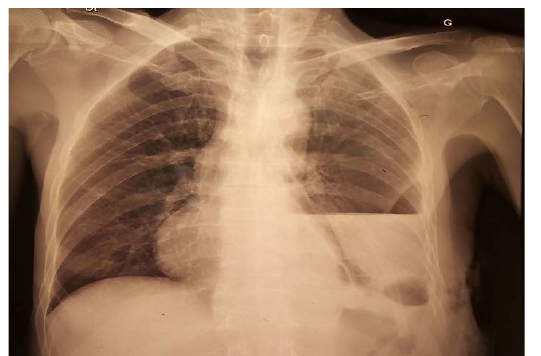
- A 60-year old moribund male with three months history of open-chest penetrating due to zebu gord, came to the emergency department with a clinical presentation of sepsis syndrome and a deterioration of the general status. On examination, the patient cachectic presented a fecopurulent liquid drainage from an orifice in the anterolateral region of left hemithorax with necrotizing fasciitis. A chest X-ray showed uncompressing hydropneumothorax in the left pleural cavity.
- Conclusion
- The patient we report had the most serious complications of post-traumatic diaphragmatic hernia, fecopneumothorax, pleurocutaneous fistula, and necrotizing fasciitis. An emergency laparotomy was carried out. The problem was successfully treated by colon resection anastomosis, pleurectomy, and negative pressure therapy.
Keywords
Full text
Introduction
Fecopneumothorax due to acute traumatic diaphragmatic rupture is a rare entity but clinical picture is critical. The systematic review of Tien Yew Chern et al. report 12 cases reports in the literature in the past 50 years (1). We performed a literature research, over the past 20 years, by consulting PubMed/MEDLINE using the terms “fecopneumothorax and chest penetrating injury”. The search revealed only four reported cases of colopleural fistula associated with diaphragmatic herniation due to chest injury but none following chest penetrating trauma (1–3). Our second search using the terms “fecopneumothorax and pleurocutaneous fistulas” revealed zero results. We hereby present a case of a patient referred to Teaching Hospital Ravoahangy Andrianavalona, Antananarivo, Madagascar with conditions to delayed management of chest penetrating trauma to zebu gord which was complicated by diaphragmatic rupture and colonic perforation inside the left hemithorax. The authors discuss the mechanism and the relevance of post-traumatic thoracostomy on diagnosis and surgical management of this complex entity.
Case Presentation
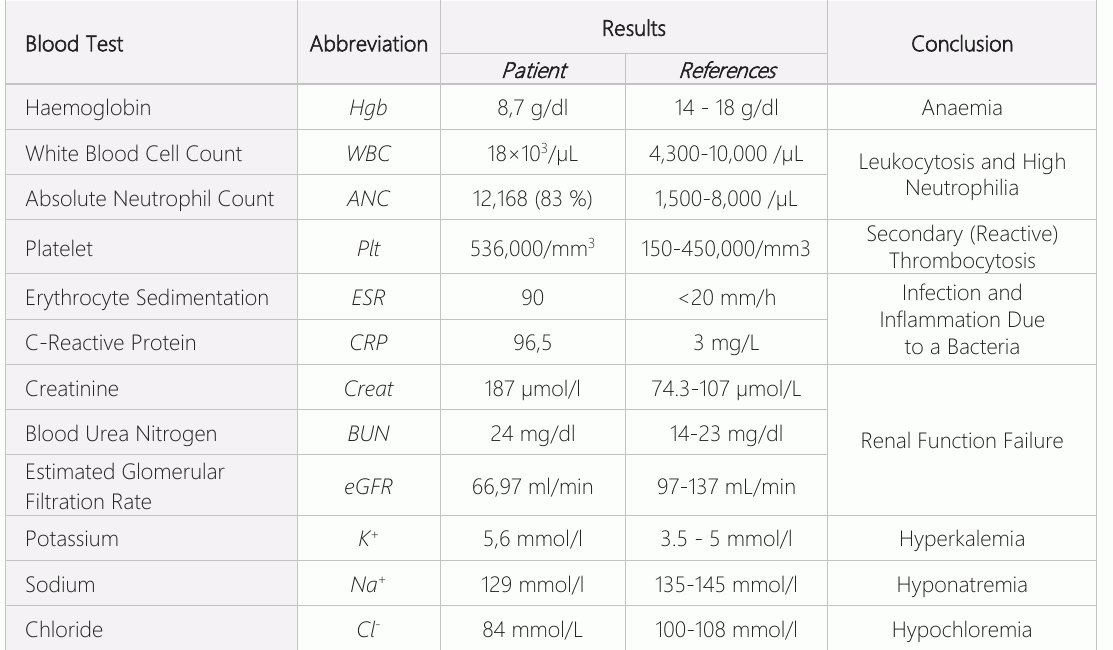
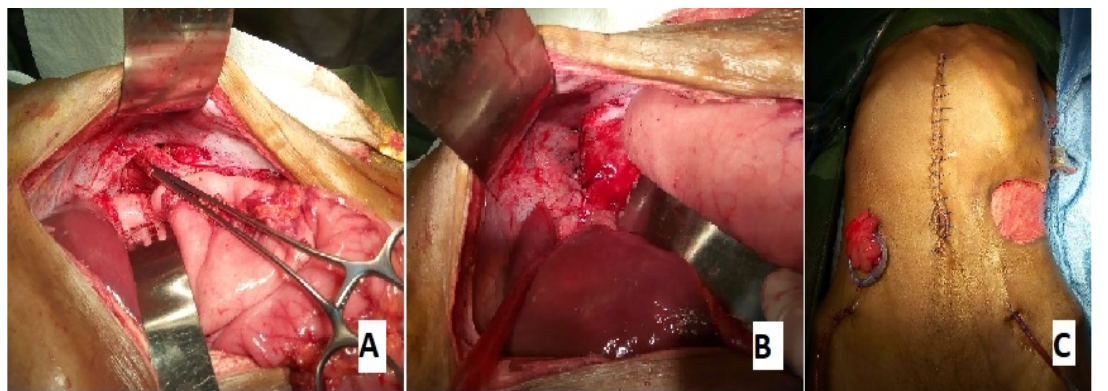
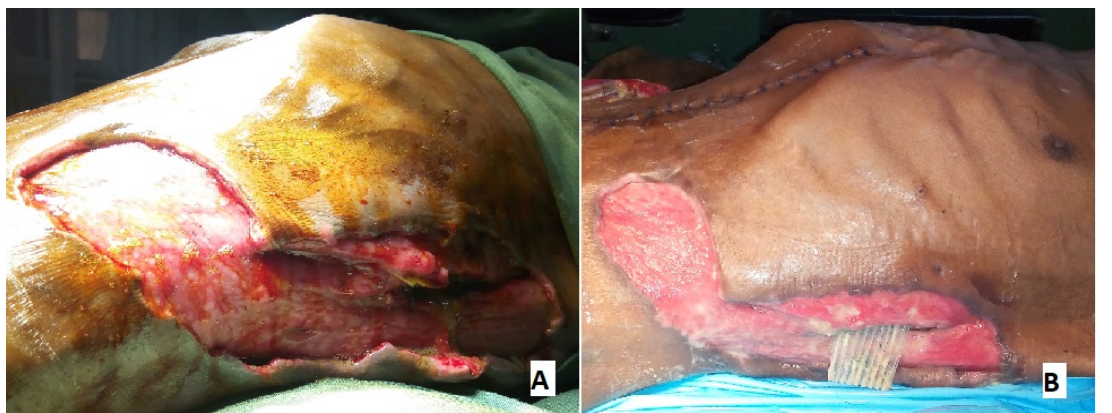
Α 60-year old male, livestock and arable farmer, with a history of zebu gord, was urgently transferred into the emergency department of our hospital with severe sepsis. A physical examination, the patient's oxygen saturation was 96% and he was spontaneously breathing (23 breaths/min). He had heart rate 120/min, hemodynamic instability status (systolic blood pressure <90 mmHg) without an altered level of consciousness (Glasgow score=15). In chest examination, inflammatory large open chest-wall and necrotizing fasciitis on the left hemithorax (7th intercostal space, midaxillary line) was seen. We noticed the outflow of a malodorous fecopurulent liquid through the orifice and ascaris worm according to interrogation of patient family. Auscultation found a breath sounds decreased in the left hémithorax side. Abdominal and the rest of the examination were unremarkable. Laboratory investigations revealed signs of the severe sepsis (Table-1). Chest X-Ray revealed the potential appearance of hydropneumo thorax or pyothorax with concomitant deviation of the trachea towards the right side. For financial reasons, CT scan was not feasible. The diagnosis of diaphragmatic hernia with colopleural fistula inside the left hemithorax was immediately suspected. Therefore, emergency laparotomy was indicating. Explorative midline laparotomy was performed. Intraoperative findings a 5 cm anterolateral rupture in the left hemidiaphragm with a left colic angle incarcerated and densely adherent into the pleural cavity. After reintegration of colon into the peritoneal cavity through the traumatic rupture of the left hemidiaphragm, there was a perforated and gangrenous colonic segment. The colopleural fistula from the splenic flexure was laboriously mobilized and then resected. The digestive continuity was ensured by termino-terminal anastomosis of the viable colic protected by temporary transverse colostomy requiring a Bogota bag. The defect of hemidiaphragm was repaired with separated non-absorbable sutures. Thoracotomy was not feasible to be carried out because of his unstable haemodynamic status in the lateralised position but the cavity pleura was lavaged transpleurostomy and drained with Delbet drain. For the necrotizing fasciitis, we performed fasciotomy, necrosectomy of devitalized tissue. A homemade closed drainage system (negative pressure wound therapy) was installed with the replacement of the absorbent gauze every 72 hours during 17 days. Three months after discharge from the hospital, the patient is in good clinical with spontaneous closure of thoracostomy and chest radiographic with satisfactory result. Our patient was programmed for colostomy reintegration with an uneventful postoperative course. At follow-up 6 months after surgery, the patient was well and active without restrictive lung syndrome.
Discussion
Fecopneumothorax or fecothorax or faecal empyema is an exceptionally rare but life-threatening condition (4). The first case caused by a colo-pleural fistula was reported by Radin DR et al in 1986 (5). Post-traumatic diaphragmatic hernias complicated with feco pneumothorax are reported with an incidence of 3%, have high mortality rates and require an urgent multidisciplinary approach (6). In literature, penetrating diaphragmatic injury is the most common injury of the diaphragm with a ratio to blunt injury 2:1 (7) and usually results from a stab wound or gunshot wounds of lower thoracic, upper abdomen, or back (8). The specificity of our observation resides in the delayed diagnosis of the diaphragmatic rupture secondary to open penetrating chest wound by zebu gord. This situation is specified in our country as Rabenjamina FR et al confirmed in their work by describing a similar lesion (9). In literature, the authors claim diaphragmatic laceration in penetrating injuries is usually unrecognized during the acute phase because of the lack of symptoms (1, 2, 8, 10). This is due to the small size of diaphragmatic rupture undiagnosed, <1 cm in diameter, in acute episodic and leading herniation of abdominal viscera through the diaphragmatic defect. Secondary colonic perforation is due to ischemia necrosis (8, 10) or percutaneous inter costal drainage (11). According to classification of Grimes and al. (12), our case refers to the obstruction phase where hernias have become chronic and complicated. In another hand, except for the delayed diagnosis of penetrating diaphragmatic trauma, some clinical reports have claimed that the sub-diaphragmatic abscess due to malignant tumour, Crohn’s colitis, diverticular disease, lung resection may play some role in the formation of colopleural fistula resulting in feco pneumo thorax (13, 14). If clinical presentation of the incarcerated traumatic diaphragmatic hernia as a “tension fecopneumothorax” (tachypneic, tachycardic, respiratory distress, and possibly hypotensive, the elevation of the jugular venous pressure caused by mediastin) is reported in literature (1, 2, 10). Pleurocutaneous fistulae presented by patient demonstrate the natural progression of this entity resulting in pleurocutaneous fistula never described in the medical literature in our knowledge. The delayed care noted in our case can be attributable by spontaneous pleurostomy that represents vicarious function by decreasing sepsis symptomatology and preventing mediastinal compression for our patient.
The diagnosis of fecopneumothorax remains clinical in our observation but remains very difficult in cases without pleurocutaneous fistula. The published case reports reveal that 18% of blunt and 32% of penetrating injuries are diagnosed in a delayed fashion, generally more than 3 years after the initial trauma and sometimes as many as 40 years later (15). A systematic review of the literature by Rashid et al revealed 17 cases of delayed presentation of diaphragmatic rupture ranging from a period of 24 hours to 50 years (16). A nurse, named Sister Leena, noticed that the amount of purulent drainage was directly related to the amount of the patient’s oral intake. She observed that by switching to a parenteral feeding regimen, significantly less volume will be discharged by chest tube drainage. The authors named that observation as the “Sister Leena’s sign” and pointed out that this sign may be useful in differentiating colopleural fistula (faecal empyema) from empyema (4, 17).
The diagnosis of diaphragmatic rupture can only be ruled out by direct vision and can be demonstrated operatively in a trauma laparotomy or laparoscopy with a sensitivity of 100% and specificity of 87.5% with the latter (1, 18). Occult injuries do occur in 12-66% due to the difficulty of initial diagnosis and often the absence of symptoms and can be complicated from 2 months up to 50 years (1). If there is no surgical emergency for that in the first step, and in the absence of hemodynamic instability, the diagnosis of diaphragmatic injuries will have to depend on imaging including Chest X-Rays, ultrasound, magnetic resonance imaging (MRI), or computed tomography (CT) (1, 19). In a recent study of diagnosis value of CT scan in diaphragmatic injuries, Yucel M and al. have demonstrated greater sensitivity (82%) and specificity (88%) (15, 20). For the late phase, the simplest and most practical way to establish the diagnosis is by using immediate chest X-ray along with gastrografin enema (2).
Management of this entity is debated in the literature. On the one hand, non-operative treatment advocates who suggest staged treatment, in which improving the patient’s health and controlling the sepsis (chest drainage of the pleural empyema, antibiotic treatment, parenteral nutrition) should precede definitive surgical closure of the fistulae for all uncomplicated fistulae if possible (17). On the other hand, Barisiae and al. (19) suggested that surgical treatment is mandatory as soon as the diagnosis is established. A combined thoraco abdominal is the reference approach for several authors for diaphragmatic hernia of delayed diagnosis because the herniated contents tend to be firmly adherent to intrathoracic structures, and this is made worse if bowel strangulation and perforation is present (15). Chatzoulis G et al performed an emergency thoracotomy and laparotomy in their case with a favourable result, which resulted in a very heavy operation (10). In our case, a transabdominal approach enabled closing the defect in the diaphragm resection of the gangrenous and perforated splenic flexure colon with transverse colon colostomy and decortication of the left pleural cavity with lung fully expanded postoperatively. The pleurocutaneous fistulae avoided recourse to thoracotomy for our patient. The necrotizing chest wall fasciitis was debrided and treated with “homemade” therapy negative pressure. This technique exposes the lesion to a negative pressure by the closed system, favouring microcirculation and improving blood flow and stimulates cellular proliferation of granulation tissue for cicatrisation (21). For our part, we agree with Kelly and al. (22) and Chatzoulis and al. (10) that the latter diagnosis leads to high morbidity and mortality as seen in several clinical presentations in literature.
Conclusion
Fecopneumothorax is a potential complication following a traumatic diaphragmatic rupture resulting from a zebu gord. The clinical anamnestic elements are useful to guide therapeutic decision and it should be repaired without delay. This observation can be useful for early suspicion of colopleural fistula in the case of fecothorax because perforated colon in these circumstances may present without any abdominal signs. The possibility of a diaphragmatic rupture should always be kept in mind of the physician in the event of penetrating chest trauma to avoid progression to serious delayed complications such as diaphragmatic hernia and fecopneumothorax.
Declarations
- Author contributions (CRediT)
- All authors contributed equally to all 14 CRediT roles (Conceptualization, Data curation, Formal analysis, Funding acquisition, Investigation, Methodology, Project administration, Resources, Software, Supervision, Validation, Visualization, Writing – original draft, Writing – review & editing).
- Funding
-
Funding information was not reported in the published version of this article.
- Conflicts of interest
- The authors declare no competing interests.
- Ethics approval
- The authors declare that the involved patient gave his informed consent for participation in research. The study was done according to the declaration of Helsinki.
- Data availability
- A data availability statement was not reported in the published version of this article.
References (22)
18 of 22 references are linked to their DOI.
- Chern TY, Kwok A & Putnis S. A case of tension faecopneumothorax after delayed diagnosis of traumatic diaphragmatic hernia. Surg Case Rep 2018;4(1):1-5. DOI Crossref PubMed Google Scholar
- Seelig MH, Klingler PJ & Scho K. Tension fecopneumothorax due to colonic perforation in a diaphragmatic hernia. Chest 1999;115(1):288-91. DOI Crossref PubMed Google Scholar
- Vermillion J, Wilson E & Smith R. Traumatic diaphragmatic hernia presenting as a tension fecopneumothorax. Hernia 2001;5(3):158-60. DOI Crossref PubMed Google Scholar
- Ibrahim WH & Thomas L. Sister Leena's sign: a sign that may be useful in differentiating colopleural fistula (fecal empyema) from usual empyema. Chest 2007;131(5):1616-7. DOI Crossref PubMed Google Scholar
- Radin DR, Ray MJ, Halls JM. Strangulated diaphragmatic hernia with pneumothorax due to colopleural fistula. Am J Roentgenol 1986;146:321-2. DOI Crossref PubMed Google Scholar
- Jarry J, Razafindratsira T, Lepront D, et al. Tension faecopneumothorax as the rare presenting feature of a traumatic diaphragmatic hernia. Ann Chir 2006;131:48-50. PubMed Google Scholar
- Duzgun AP, Ozmen MM, Saylam B, et al. Factors influencing mortality in traumatic rupture of diaphragm. Ulus Travma Acil Cerrahi Derg 2008;14:132– 8. PubMed Google Scholar
- Mahmodlou R, &Abbasyvash R. The early fecopneumothorax due to simultaneous colonic perforation and herniation through diaphragmatic laceration: within 6 days. Indian J Thorac Cardiovasc Surg 2011;27(3):144. DOI Crossref PubMed Google Scholar
- Rabenjamina FR, &Rakotozafy G. Une plaie abdomino-diaphragmatique droite par encornement de zébu. Ann Chir 2000;125(5):497. DOI Crossref PubMed Google Scholar
- Chatzoulis G, Papachristos IC, Daliakopoulos SI et al. Septic shock with tension fecothorax as a delayed presentation of a gunshot diaphragmatic rupture. J Thorac Dis 2013;5(5):E195. PubMed Google Scholar
- Mohite PN, Mistry JH, Mehta H, et al. Ascaris worm in the intercostal drainage bag: inadvertent intercostal tube insertion into jejunum: a case report. J Cardio thorac Surg 2010;5(1):125. DOI Crossref PubMed Google Scholar
- Grimes OF. Traumatic injuries of the diaphragm. Diaphragmatic hernia. Am J Surg 1974;128(2):175– 81. DOI Crossref PubMed Google Scholar
- Hayashi A, Susaki Y, Ose N, et al. Colopleural fistula caused by aspergillus: an extremely rare complication after lung resection - case report. Surg Case Rep 2016;2(1):1-5. DOI Crossref PubMed Google Scholar
- Olubaniyi BO, Fontaine EJ, & Page RD. Colo-pleural fistula following pneumonectomy. Eur J Cardiothorac Surg 2006;30(6):950-1. DOI Crossref PubMed Google Scholar
- Abdullah M, & Stonelake P. Tension pneumothorax due to perforated colon. BMJ Case Rep 2016. doi:10.1136/bcr-2016-215325. DOI Crossref PubMed Google Scholar
- Rashid F, Chakrabarty MM, Singh R, et al. A review on delayed presentation of diaphragmatic rupture. World J Emerg Surg 2009;4:32. DOI Crossref PubMed Google Scholar
- Komatsu T & Henteleff H. Colopleural fistula with atypical presentation as a complication of diaphragmatic hernia repair. Ann Thorac Surg 2010;90(2):662-3. DOI Crossref PubMed Google Scholar
- Powell BS, Magnotti LJ, Schroeppel TJ et al. Diagnostic laparoscopy for the evaluation of occult diaphragmatic injury following penetrating thoracoabdominal trauma. Injury 2008;39(5):530– 4. DOI Crossref PubMed Google Scholar
- Barišiæ G, Krivokapiae Z, Adžiæ T et al. Fecopneumothorax and colopleural fistula–uncommon complications of Crohn's disease. BMC Gastroenterol. 2006;6(1)17. DOI Crossref PubMed Google Scholar
- Yucel M, Bas G, Kulali F, et al. Evolution of diaphragm in penetrating left thoracoabdominal stab injuries: the role of multislice computed tomography. Injury 2015;46(9):1734–7. Pleurocutaneous Fıstulas of Fecopneumothorax Razafimanjato et al. DOI Crossref PubMed Google Scholar
- Razafimanjato NNM, Ravelomihary TDN, Ravoatrarilandy M, et al. Necrotizing fasciitis of the chest wall: our preliminary results on the 14 observations treated by negative pressure. J Func Vent Pulm 2018;9:27. PubMed Google Scholar
- Kelly J, Condon E, Kirwan W, et al. Post-traumatic tension faecopneumothorax in a young male: case report. World J Emerg Surg 2008;3:20. DOI Crossref PubMed Google Scholar
Respond to this article
Comments on a published article are welcome as a Letter to the Editor.
Get an e-mail when new articles in your fields are published
Questions to the authors
Questions are moderated: an editor approves each question, the authors answer, and an editor approves the answer before both appear here.
No answered questions yet.
Ask the authors a question
Discussion
Comments are moderated: they appear after the writer confirms the e-mail address and an editor approves them. Each comment carries a conflict-of-interest statement.
No comments yet.
Write a comment
Read the full text
Open the PDF here
Loading the PDF…
If the PDF does not show here, use the download button above.
How to cite this article
Razafimanjato NNM, Tsiambanizafy OG, Ravelomihary TDN, Ravoatrarilandy M, Rakototitana AF, Rakotovao HJL. Pleurocutaneous Fistulas of Fecopneumothorax: Unusual Complications of Penetrating Thoracic Trauma Due to Zebu Gord. Ulutas Med J. 2020;6(2):80-86. doi:10.5455/umj.20200422034809
Razafimanjato, N. N. M., Tsiambanizafy, O. G., Ravelomihary, T. D. N., Ravoatrarilandy, M., Rakototitana, A. F., & Rakotovao, H. J. L. (2020). Pleurocutaneous Fistulas of Fecopneumothorax: Unusual Complications of Penetrating Thoracic Trauma Due to Zebu Gord. The Ulutas Medical Journal, 6(2), 80–86. https://doi.org/10.5455/umj.20200422034809
Razafimanjato, N.N.M. et al. (2020) 'Pleurocutaneous Fistulas of Fecopneumothorax: Unusual Complications of Penetrating Thoracic Trauma Due to Zebu Gord', The Ulutas Medical Journal, 6(2), pp. 80–86. doi: 10.5455/umj.20200422034809.