The Ulutas Medical Journal · ISSN 2149-0430 (print), 2149-388X (online) · https://www.ulutasmedicaljournal.com/?mno=231892
Original Research · Open access
The Prevalence, Severity and Occupational Risk Factors of Low Back Pain among ICU Nurses
- Assistant Professor, Department of Surgical Nursing, Aydin Health School, Adnan Menderes University ROR
- Assistant Professor, Department of Public Health Nursing, Aydın Health School, Adnan Menderes University ROR
- Assistant Researcher, MSc Surgical Nursing Student. Department of Surgical Nursing, Aydın Health School, Adnan Menderes University ROR
- BSc, RN, Adnan Menderes University, Training and Research Hospital, General Surgery ICU. ROR
Abstract
- Background
- Low back pain (LBP) is a common disorder that causes disability and absence from work. Healthcare professionals are in the first place of health problems related to LBP. The aim was to investigate the prevalence, severity and occupational risk factors of LBP among ICU nurses.
- Method
- The sample of this descriptive study was a total of 76 Intensive Care Units (ICU) nurses of a training and research hospital in the West of Turkey. A total of 1174 nursing care procedures was observed. After the completion of nurses' socio-demographic data collection, it was determined whether the nurses had LBP each time before and after providing care to patients and if they did, the severity of LBP were measured according to Numeric Pain Rating Scale NRS (NRS).
- Results
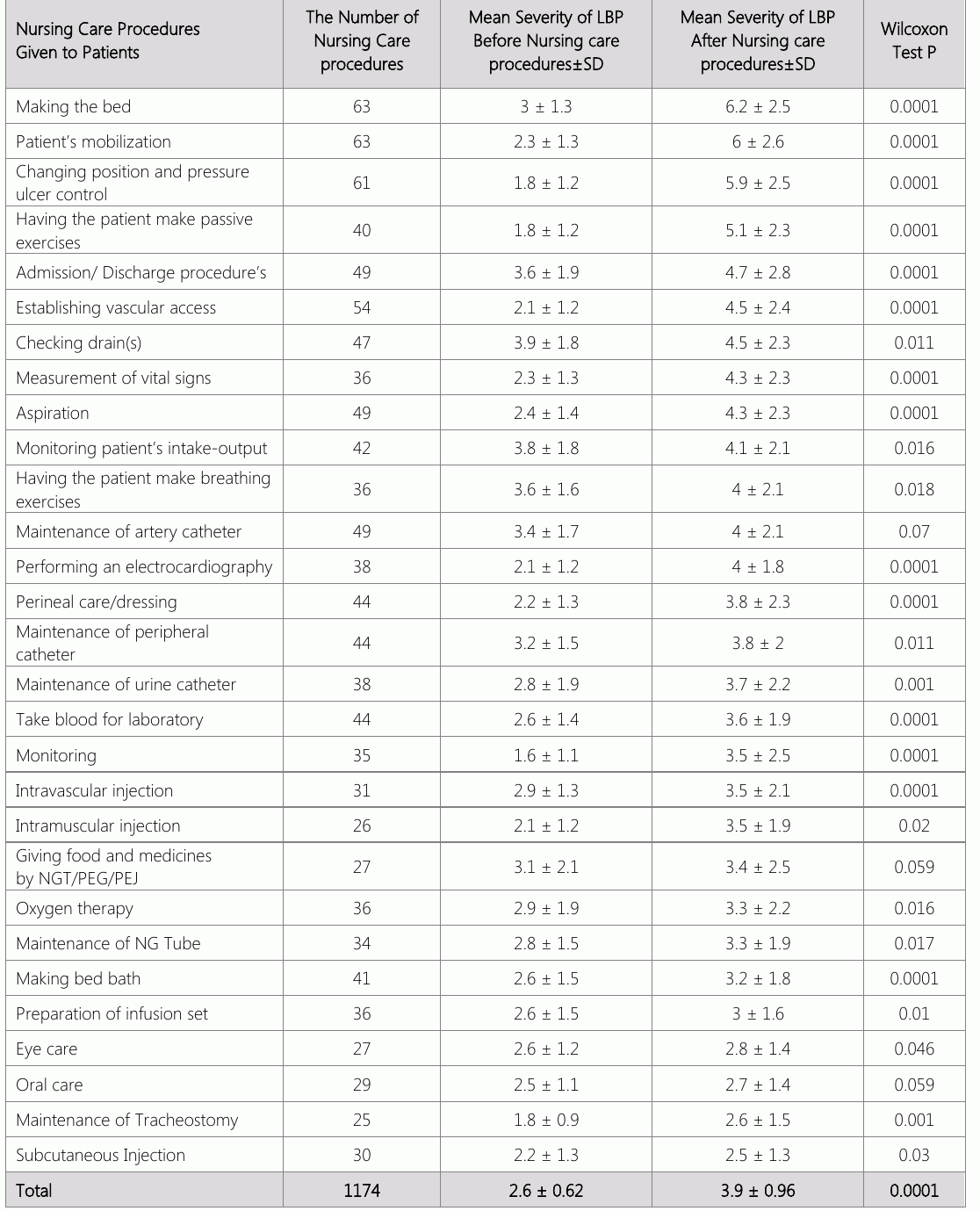
- 88.2% of nurses had LBP and the mean severity of LBP was 2.84±1.44. Emergency and general surgery ICU nurses had the highest severity of LBP. The nursing care procedures were as follows in decreasing order of the severity of LBP: making the bed (6.2±2.5), patient's mobilization (6,04±2,6), changing position/checking of pressure ulcer (5.9±2,3), make passive exercises (5.1±2,3), admission/discharge procedures (4.7±2,8), vascular access (4,5±2,4), checking drain(s) (4,5±2,3), measurement of vital signs (4,3±2,3), aspiration (4,3±2,3), and monitoring intake-output (4,1±2,1).
- Conclusion
- The prevalence of LBP among nurses was high and the mean severity of LBP was mild. According to the results of this study it is recommended that ICUs nurses receive in-service training on occupational risks, use of body mechanics during nursing care procedures requiring physical strength, incorporate their knowledge into their behaviors and regularly health checks can be helpful in prevention or decrease of LBP.
Keywords
Full text
Introduction
Labor back pain has been highly prevalent and it is a musculoskeletal disorder that directly interferes in the quality of life at work and overloads the health system due to the high index of absenteeism and removals attributed to it. The main related reason as triggering factor for low back pain (LBP) is the unbalance between the needed effort to perform an activity and the potential to conduct it, that is, an unbalance between the functional load and the functional capacity. National and international researchers reveal that due to the profession characteristics, as well as the work conditions, the nursing team presents a high probability to develop LBP and consequently it negatively impacts the quality of assistance offered to the population. Borges et al (2014) study showed that 71.5% of nurses have LBP (1). LBP is a common disorder that causes disability and absence from work (2). LBP is defined as pain of the dorsal region between the last rib and gluteal fold (3). Samedly et al (1995) demonstrated that 80% of active populations has experienced LBP for a period in their lives.
LBP constitutes an important problem in terms of both public health and loss of work power, causing serious economic and psychological problems due to it's chronic nature (4). It affects about 60-80% of adults at some point in their lives, and it is mostly seen between the age of 25 and 44 (5, 6). It often occurs as a result of lower-back strain or injury (5, 6). Previous studies established a strong relationship between LBP and performance of physically demanding repetitive tasks, rotation and flexion of the upper part of the torso, exposure of the whole body to vibration and manual lifting of items (6–9). LBP, which is the most common cause of decreased productivity in people under the age of 45, causes problems including loss of working day and labor loss, reduced production and financial losses (8, 10, 11).
Previous studies demonstrated that daily lives of people with LBP are negatively affected and they encounter psychological and sexual problems (6, 8). Although LBP is common in many professions, it is more common in certain occupational groups. Healthcare profes- sionals are in the first place of risk for health problems from work environment (3, 5). The most common problems in healthcare professionals are related to lower back and dorsal regions (6, 8). Work-related LBP is more common among nurses, compared to other occupations (5). In a study by Derek et al (2003) LBP was the most common individual musculoskeletal disorders, affecting 59% of all Japanese staff. Work conditions have an important place among the main causes of nurses commonly having LBP (12). LBP contributory factors usually include workplace activities such as strenuous actions, manual handling, repetitive tasks and job strain. Furthermore, demographic characteristics such as age, smoking and sex are also known to be important predictive variables (12). Ando et al. (2000) reported that some nursing tasks had higher musculoskeletal disorders risk ratios than others among Japanese nurses (5). LBP is associated with many reasons such as that an individual lifts things which exceed the power of the individual, lack of appropriate handling equipment, increased physical load depending on the lack of staff, high workload and lack of education (13, 14). Actions to prevent LBP include exercise, proper use of body mechanics, getting people adopt the habit of proper posture, ergonomic design of the work environment, remedying situations that may pose a risk such as smo-king, stress and obesity (3). Numerous studies were conducted on the prevalence of LBP among nurses working in healthcare insti-tutions (1, 3, 5, 6, 8), however a few studies were published on the relationship between the severity of LBP and nursing care procedures. Additionally, nature of the professional activity and especially the physical load is questioned during common LBP in about 75% of the cases (10). The aim of this study was to investigate the correlations between the pre-valence and the severity of LBP, nursing care procedures and LBP.
Study design
This descriptive study was conducted in a training and research hospital (Clinics bed capacity:485, ICU bed capacity:102, Total Bed capacity:587) in Aydın province (census: 1,006, 541) in the West of Turkey between January 20 and April 25, 2014.
Setting and collecting samples
The population of the study was comprised of all nurses (n:121) working in Emergency (n:21), General Surgery (n:24), Burn (n:14), Internal Medicine (n:18), Neurology (n:16), Anesthesia-Reanimation (n:27) and Coronary (n:18) ICUs . In this study the inclusion criteria were as follows:
• Voluntary participation, • Didn’t have cervical disc hernia • Didn’t have lumbar disc hernia From all ICU nurses, a total of 76 of them were eligible in this study and selected.
Ethical considerations
Written consents of Non-Interventional Research Ethics Committee of Medical School, and Hospital Chief Physician’s Office were obtained. After necessary explanations were made to the nurses, their verbal and written consents were obtained.
Measurement/Instruments
Socio-demographic data collection form (14 items) which was developed by the researchers in line with the literature, and data collection form for the relationship between nursing care procedures and LBP (29 items) which was developed by the researchers in line with the literature and nurses observation during shifts, were used to collect data. In these forms, Numeric Pain Rating Scale (NRS) was used to measure the severity of LBP. This scale is a 11-point horizontal line divided into intervals of "0" no pain, "1-3" mild pain, "4-6" moderate pain and "7-10" severe pain.
Data collection/Procedure
A total of 1174 nursing care procedures was observed. Nurses’ socio-demographic data collection form consisted of 14 items, including age, sex, marital status, educational background, smoking/alcohol consumption, socio-economic level, sports activity, whether s/he had any health problem (other than lower back/neck pain) before starting the job at ICU, experience in the field (in years), weekly workload, whether s/he works night shift, whether she/he has LBP and if s/he does, the severity of LBP.
After the researchers completed nurses’ socio-demographic data collection form, it was determined whether the nurses had LBP each time before and after providing care to patients and if they did, the severity of LBP according to NRS, and the answers were entered into the respective form. Hence, the prevalence of LBP among nurses, the severity of LBP and the severity of LBP specific to each type of nursing care procedures were identified.
Statistical analysis
Statistical Package for the Social Sciences (SPSS) for Windows 16.0 software package was used to analyze the data obtained from the study. Numbers-percentages and average were used to assess socio-demographic characteristics of the nurses.
Mean value was considered in assessing LBP in nursing care procedures. Independent t-test, pearson chi-square, kruskal-wallis and correlation pearson analysis test were used to assess the correlation between age, workload and the prevalence of LBP, the correlation between sex, marital status, smoking/alcohol consumption, sports activity, whether s/he works night shift and the prevalence of LBP, the correlation between whether s/he works night shifts and severity of LBP and the correlation between age, workload and severity of LBP, respectively. Statistical signifi-cance was set at p<0.05, as appropriate.
Results
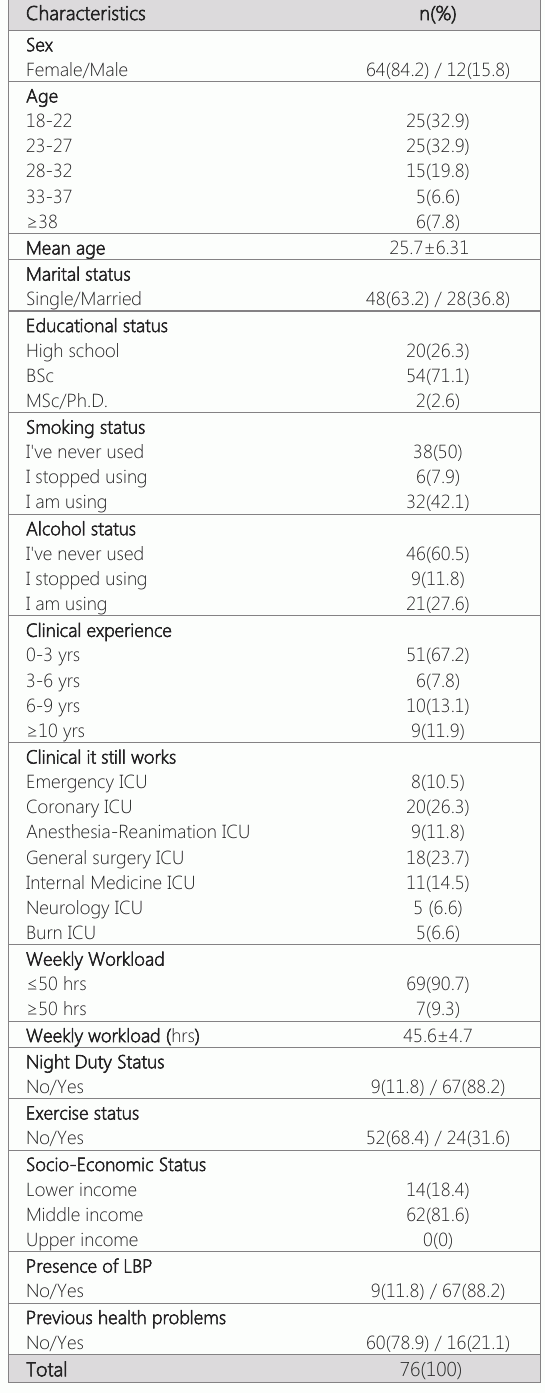
According to the study data, it was established that the mean age of nurses was 25.7±6.31 years, 84.2% of nurses were female, 63.2% were single, 71.1% were registered nurses (28.9% were high health school graduate working in nurse position and MSN/PhD), 50% don’t smoke and 59.2% don’t consume alcohol, 81.6% were from middleclass and 52.6% don’t do sports. Moreover, it was identified that nurses’ mean weekly workload was 45.6±4.7 hrs and 88.2% worked night shifts and 77.6% had no health problems before (before starting the job at ICU), 88.2% had LBP and 88.2% didn’t receive treatment for LBP (Table-1).
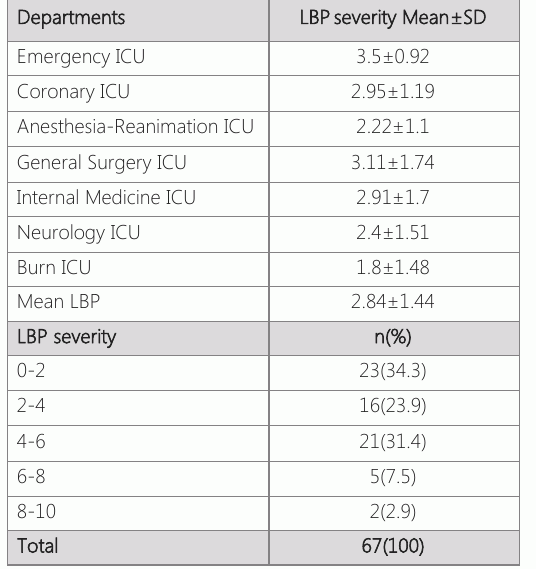
In view of the severity of LBP by the units the nurses worked in, even though the severity of LBP was in the range of 1.8 to 3.5. The Mean LBP severity among ICU nurses was 2.84±1.44. Emergency and general surgery ICU nurses had the most severe LBP. Moreover, the severity of LBP was in the range of 0 to 2 and 4 to 6 for 34.3% and 31.4% of the nurses with LBP, respectively (Table-2).
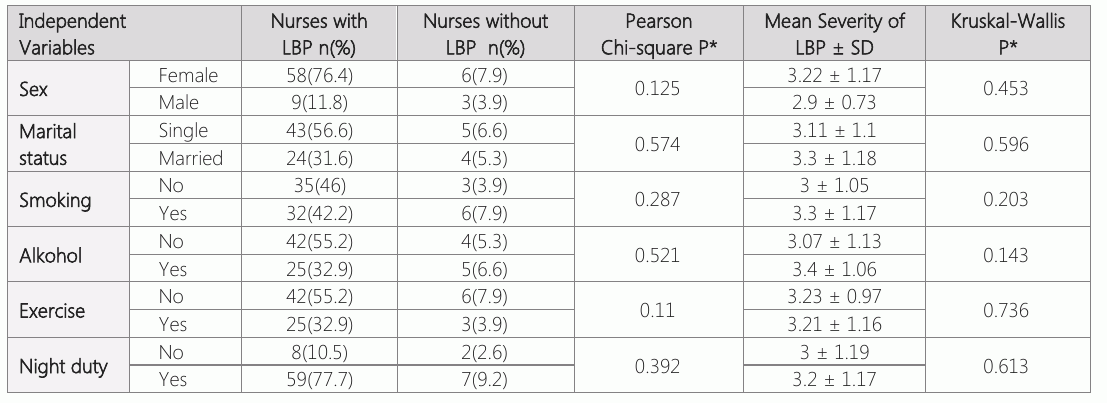
According to the results of the study, LBP was more common among female single nurses who don’t smoke and consume alcohol, do sports and who work night shifts, however, no statistically significant difference was found between the said factors and the prevalence of LBP according to the results of pearson chi-square test analysis.
According to the results of the study, the severity of LBP was higher among female married nurses who smoke and consume alcohol, don’t do sports and who work night shifts, however, no statistically significant difference was found between the said factors and severity of LBP according to the analysis results of kruskal-wallis test (Table-3).
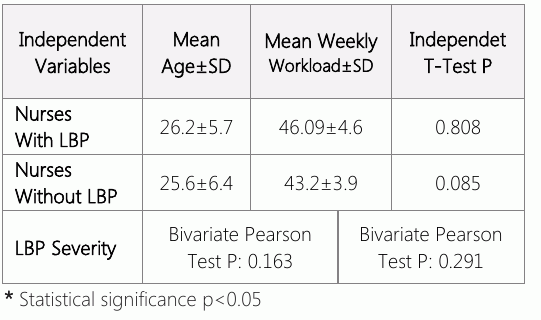
The results of the study revealed that the mean age of nurses with and without LBP were 26.2±5.7and 25.6±6.4 years, respectively, however, no statistically significant relationship was found between LBP and age according to analysis results of independent t-test (p:0.808). Moreover, there was no significant relationship between the nurses’ age and the severity of LBP according to the analysis result of pearson test (p:0,163).
Weekly workload values of nurses with and without LBP were 46.09±4.6 hrs and 43.2 ±3.9 hrs, respectively, however, no significant relationship was found between LBP and workload according to the analysis result of independent t-test (p,0.085). There was no significant relationship between weekly workload and the severity of LBP of the nurses according to the analysis result of Pearson test (p:0,291) (Table-4).
A total of 1174 nursing care procedures applied by nurses was observed. The mean severity of LBP before and after all nursing care procedures was 2.6±0.62 and 3.9±0.96, respectively. According to the analysis result of Wilcoxon test the mean severity of LBP before and after all nursing care procedures was significantly (p<0.0001). In view of the mean severity of LBP by nursing care procedures, mean severity of LBP before and after nursing care procedures was significant except maintenance of artery catheter, giving food and medicines by NGT/PEG/PEJ and oral care procedures (p>0.05). The mean severity of LBP during 13 nursing care procedures was found to be moderate (in the range of 4 to 6). These nursing care procedures were as follows in decreasing order of the severity of LBP: making the bed (6.2±2.5), ensuring patient’s mobilization (6,04±2,6), changing position (5.9±2,3), making the patient do passive exercises (5.1±2,3), discharge procedures (4.7 ±2,8), establishing vascular access (4.5±2.4), checking drain(s)(4.5±2.3), aspiration (4,3±2,3), measurement of vital signs (4.3±2.3), monitoring patient’s intake-output (4.1±2.1), maintenance of artery catheter (4.0±2.1), making the patient do respiratory exercises (4.0±2.2) and performing an electrocardiography (4.0± 1.8) (Table-5).
Discussion
LBP, which is in second place among diseases that lead to loss of labor in developed countries, it is considered as the most important factor affecting the production decline (10, 11). Occupational LBP, which develops as a result of exposure to risk factors, including lifting items, working by leaning forward, using low back and the body in wrong positions, and of inappropriate working conditions, is a common cause of injury (8). Altınel et al. (2008) reported a LBP prevalence rate in the range of 32 to 79.2% in hospital staff (14). Ando et al. (2000) found a LBP prevalence of 54.7% in hospital staff in Japan (5). Bejia et al. (2005) reported a LBP prevalence of 57.7% in hospital staff (15). In Lagerström et al. (1995), Larese et al (1994) and Stubbs et al (1983) studies LBP prevalence among nurses working in hospitals were 56%, 48% and 45%, respectively (16–18). In Smith et al. study (2004) on nurses in China, 70% of them had musculoskeletal disorders and 56.7% of them developed disorders in low back and 38.9% in dorsal region (19). In Tezel’s study (2006), 69% of nurses were found to suffer from LBP (20). Mendelek et al. (2013) study results indicated that about half of hospital satff were suffering from moderate to high back pain (10). Karadag et al. (2004) reported rates of LBP in nurses of 68.6% (21). In a study by Dıracoglu (2006) evaluating musculoskeletal system pain in all healthcare personnel, the complaint with the highest rate was reported to be LBP (22). In a study by Kabatas et al. (2012) of 167 healthcare workers at a Hospital in Turkey, complaints of LBP were determined in 40% of the participants at a mild level and in 3.3% at a severe level. The results of that study showed that the onset of LBP was more after starting work and it was seen more in nurses than in other healthcare workers (23).
At present study, the prevalence of LBP was 88.2%, and 31.4% of the nurses had moderate LBP. In addition, the severity of LBP was higher among emergency and general surgery ICU nurses, compared to other ICU nurses. At present study the prevalence of LBP was high in compare of litarature. It may be associated with higher number of nursing care procedures, long shifts and higher number of patients per nurse in these ICUs.
According to the results of Larese & Fiorito (1994) study conducted to examine the relationship of manpower to LBP, a direct link was established between patient to nurse ratio and LBP. The rate of LBP was higher among nurses who had less number of patients in the wards with a high patient to nurse ratio (17). Bejai et al. (2005) identified that LBP is more prevalent in the elderly and women. Bejai stated that marital status, smoking and length of experience in years are among LBP risk factors, and stressed that doing sports prevent LBP (15). In Altınel's (2008) study, although LBP was more prevalent in those who smoke, no difference was identified between the level of sports/daily activities and the prevalence of LBP (14).
In Akalp & Aytac (2012) study, the mean LBP was calculated as 18.44 for the single participants and as 18.08 for the married nurses, but the difference was not statistically significant (24). In Nas et al. (2001) study rates of back pain was to be higher in married hospital staff than in single staff. The findings of the current study do not conform to those of literature in this respect (25).
In our study, mean age was found to be high among nurses with LBP, however, no significant difference was found between the pre-valence of LBP and age (p:0.808). In addition, there was no significant relationship between age and severity of LBP (p:0.163). The average weekly workload of nurses with LBP was found to be high, however, there was no significant relationship between workload and LBP (p: 0.085). Furthermore, there was no significant correlation between weekly workload and the severity of LBP (p:0.291). In our study, the prevalence of LBP was higher among single female nurses who don’t smoke and consume alcohol and do sports. In addition, the severity of LBP was higher among female married nurses who smoke and consume alcohol and don’t do sports. The results of our study were found to be in good agreement with previous studies.
Ando et al. (2000) reported a correlation between patient transfer and LBP (5). Other studiessuggested that nursing care procedures requiring physical strength, including lifting patients from bed, ensuring mobilization of patients and lifting patients from the floor onto bed, cause LBP (26, 27). Harber et al., (1985) stated that lifting patients is one of the most important causes of LBP(26). In an Italian study on musculoskeletal disorders among nurses, the prevalence of LBP was found to be in the range of 40 to 50% per annum and the rate of musculoskeletal disorders was found to be higher in females than in males. In addition, musculoskeletal disorders common in women (in lumbar and thoracic regions) were found to be related to work requiring physical strength (13).
In our study, severity of LBP was moderate for nursing care procedures, including making the bed, ensuring patient’s mobilization, changing position, making the patient do passive exercises, discharge procedures, establishing vascular access, checking drain(s), aspiration, measurement of vital signs, monitoring patient’s intake-output, maintenance of artery catheter, making the patient do respiratory exercises and performing an electrocardiography. When results of previous studies and our study were compared, since the above mentioned nursing care procedures are in the category of nursing care procedures that require strength and remaining standing for a long time, the severity of LBP at the end of such procedures was found to be higher. The strength of this study was comparison of LBP among ICUs nurses and relathionship between nursing care procedures and LBP. The results of this study showed that LBP had the most sever in emergency and general surgery ICUs and related on nursing care procedures which requiring physical strength. This study investigated on registered nurses and high health school graduate (who were working in nurse position). Therefore, for actual results it was no possible to disable of high school graduate nurses from the study. On the other hand, this study did on in a university hospital ICUs nurses. So, for generalize the results of this study it is recommended do same researchs in other hospitals.
Conclusion
In our study the prevalence of LBP among ICU nurses was high and the severity of LBP was mild. Emergency and general surgery ICU nurses had the most severe LBP. The severity of LBP was found to increase in the case of nursing care procedures requiring physical strength. According to the results of present study, the ICU nurses were established to be under serious risk in terms of LBP. According to the results of this study it is recommended that ICUs nurses receive in-service training on occupational risks, use of body mechanics during nursing care procedures requiring physical strength, incorporate their knowledge into their behaviors and regularly health checks can be helpful in prevention or decrease of LBP.
Declarations
- Author contributions (CRediT)
- All authors contributed equally to all 14 CRediT roles (Conceptualization, Data curation, Formal analysis, Funding acquisition, Investigation, Methodology, Project administration, Resources, Software, Supervision, Validation, Visualization, Writing – original draft, Writing – review & editing).
- Funding
-
No specific grant for this research was received from any funding agency in the public, commercial or not-for profit sectors.
- Conflicts of interest
- No conflict of interest has been declared by the authors.
- Ethics approval
- Written consents of Non- Interventional Research Ethics Committee of Medical School, and Hospital Chief Physician’s Office were obtained. After necessary explanations were made to the nurses, their verbal and written consents were obtained.
- Data availability
- A data availability statement was not reported in the published version of this article.
References (27)
19 of 27 references are linked to their DOI.
- Borges TP, Kurebayashi LFS, Silva MJPD. Occupational low back pain in nursing workers: massage versus pain. Revista da Escola de Enfermagem da USP, 2014. 48(4), 670-676. DOI Crossref PubMed Google Scholar
- Lizier, DT, Perez, MV, Sakata, RK. Exercícios para tratamento de lombalgia inespecífica. Rev Bras Anestesiol, 2012;62(6),838-846. DOI Crossref PubMed Google Scholar
- Smedley J, Egger P, Cooper C, Coggon D. Manual handling activities and risk of low back pain in nurses. Occup Environ Med. 1995; 52: 160-163. DOI Crossref PubMed Google Scholar
- Hoogendoorn WE, Van Poppel MNM, Bongers PM, Koes BW, Bouter LM. Systematic review of psychosocial factors at work and private life as risk factors for back pain. Spine; 25: 2114–2125. DOI Crossref PubMed Google Scholar
- Ando S, Ono Y, Shimaoka M, Hiruta S, Hattori Y, Hori F, Takeuchi Y. Associations of self estimated workloads with musculoskeletal symptoms among hospital nurses. Occup Environ Med. 2000; 57: 211–216. DOI Crossref PubMed Google Scholar
- Darragh RA, Huddleston W, King P. Work-related musculoskeletal injuries and disorders among occupational and physical therapists. The American Journal of Occupational Therapy. 2009; 63 (3): 351-362. DOI Crossref PubMed Google Scholar
- Walker BF, Muller R, Grant WD. Low back pain in Australian adults: prevalence and associated disability. J Manipulative Physiol Ther. 2004; 27 (4): 238-244. DOI Crossref PubMed Google Scholar
- Lorusso A, Bruno S, L’abbate N. A review of low back pain and musculoskeletal disorders among italian nursing personnel. Industrial Health. 2007; 45: 637– 644. DOI Crossref PubMed Google Scholar
- Ozguler A, Leclerc A, Landre M F, Pietri -Taleb F, Niedhammer I. Individual and occupational determinants of low back pain according to various definitions of low back pain. J. Epidemiol. Community Health. 2000; 54: 215– 220. DOI Crossref PubMed Google Scholar
- Mendelek F, Caby I, Pelayo, P, Kheir RB. The application of a classification-tree model for predicting low back pain prevalence among hospital staff. Archives of Environmental Occupational Health. 2013; 68 (3): 135-144. DOI Crossref PubMed Google Scholar
- Tinubu MS, Mbada EC, Oyeyemi LA, Fabunmi AA. Work-related musculoskeletal disorders among nurses in Ibadan, South-west Nigeria: a cross-sectional survey. Musculo-skeletal Disorders. 2010; 11 (12): 1-8. DOI Crossref PubMed Google Scholar
- Derek RS, Kumeko O, Zentaro Y, Junko M. Musculoskeletal disorders among female nurses in a rural Japanese hospital. Nursing and Health Sciences. 2003; 5: 185– 188. PubMed Google Scholar
- Camerino D, Cesana GC, Molteni G, Vito G, Evaristi C, Latocca R. Job strain and musculoskeletal disorders of italian nurses. Occupational Ergonomics. 2001;2(4):215-222. DOI Crossref PubMed Google Scholar
- Altınel L, Köse KC, Ergan V, Işık C, Aksoy Y, Özdemir A, Toprak D, Doğa N. The prevalence of low back pain and risk factors among adult population in Afyon region, Turkey. Acta Orthop Traumatol Turc. 2008; 42 (5): 328-333 PubMed Google Scholar
- Bejia I, Younes M, Jamila HB. Prevalence and factors associated to low back pain among hospital staff. Joint Bone Spine. 2005; 72(3):254-259. DOI Crossref PubMed Google Scholar
- Lagerström M, Wenemark M, Hagberg M, Hjelm EW. Occupational and individual factors related to musculo-skeletal symptoms in five body regions among Swedish nursing personnel. Int Arch Occup Environ Health. 1995; 68:27–35. DOI Crossref PubMed Google Scholar
- Larese F, Fiorito A. Musculoskeletal disorders in hospital nurses: a comparison between two hospitals. Ergonomics.;37:1205–1211. DOI Crossref PubMed Google Scholar
- Stubbs DA, Buckle PW, Hudson MP, Rivers PM, Worringham CJ. Back pain in the nursing profession. I: Epidemiology and pilot methodology. Ergonomics. 1983; 26:755– 765. DOI Crossref PubMed Google Scholar
- Smith DR, Wei N, Kang L, Wang RS. Musculoskeletal disorders among professional nurses in Mainland China. Journal of Professional Nursing. 2004; 20 (6): 390-395. DOI Crossref PubMed Google Scholar
- Tezel A. Musculoskeletal complaints among a group of Turkish nurses. Intern J Neuroscience. 2005; 115: 871-880 Occupational Risk Factors of Low Back Pain Hossein ASGAR POUR, et al. DOI Crossref PubMed Google Scholar
- Karadağ M. Yıldırım N. Hemşirelerde Çalışma Koşullarından Kaynaklanan Bel Ağrıları Ve Risk Faktörleri. Hemşirelik Forumu Dergisi, 2004; 7: 49. PubMed Google Scholar
- Dıraçoğlu D.Sağlık Personelinde Kas-İskelet Sistemi Ağrıları. Türkiye Klinikleri Fiziksel Tıp Rehabilitasyon Dergisi, 2006; 26, 132-139. PubMed Google Scholar
- Kabataş MS, Kocuk M, Küçükler Ö. Sağlık Çalışanlarında Bel Ağrısı Görülme Sıklığı ve Etkileyen Faktörlerin İncelenmesi. F.Ü.Sağ.Bil. Tıp Derg. 2012; 26 (2): 65-72. PubMed Google Scholar
- Akalp G, Aytac S. The Prevalence of Low Back Pain among a Group of Turkish Nurses. International Journal of Science and Research. 2014; 3(12): 2457-2462. PubMed Google Scholar
- Nas K, Gür A, Çevik R. Hastane Çalışanlarında Bel Ağrısı Sıklığı Ve Risk Faktörleri. Ege Fizik Tıp Rehabilitasyon Dergisi 2001; 7: 123-128. PubMed Google Scholar
- Harber P, Billet E, Gutowski M, SooHoo K, Lew M, Roman A. Occupational low-back pain in hospital nurses. J Occup Med. 1985; 27: 518-524. PubMed Google Scholar
- Violante FS, Fiori M, Fiorentini C, Risi A, Garagnani G, Bonfiglioli R, Mattioli S. Associations of psychosocial and individual factors with three different categories of back disorder among nursing staff. J Occup Health. 2004; 46, 100–108. DOI Crossref PubMed Google Scholar
Respond to this article
Comments on a published article are welcome as a Letter to the Editor.
Get an e-mail when new articles in your fields are published
Questions to the authors
Questions are moderated: an editor approves each question, the authors answer, and an editor approves the answer before both appear here.
No answered questions yet.
Ask the authors a question
Discussion
Comments are moderated: they appear after the writer confirms the e-mail address and an editor approves them. Each comment carries a conflict-of-interest statement.
No comments yet.
Write a comment
Read the full text
Open the PDF here
Loading the PDF…
If the PDF does not show here, use the download button above.
How to cite this article
Pour HA, Ozvurmaz S, Tipirdamaz B, Gundogmus EE. The Prevalence, Severity and Occupational Risk Factors of Low Back Pain among ICU Nurses. Ulutas Med J. 2016;2(3):138-147. doi:10.5455/umj.20160714112747
Pour, H. A., Ozvurmaz, S., Tipirdamaz, B., & Gundogmus, E. E. (2016). The Prevalence, Severity and Occupational Risk Factors of Low Back Pain among ICU Nurses. The Ulutas Medical Journal, 2(3), 138–147. https://doi.org/10.5455/umj.20160714112747
Pour, H.A. et al. (2016) 'The Prevalence, Severity and Occupational Risk Factors of Low Back Pain among ICU Nurses', The Ulutas Medical Journal, 2(3), pp. 138–147. doi: 10.5455/umj.20160714112747.