The Ulutas Medical Journal · ISSN 2149-0430 (print), 2149-388X (online) · https://www.ulutasmedicaljournal.com/?mno=14145
Original Article · Open access
Surgical Treatment in Gynecological Emergency: The Experience of a Tertiary Hospital
Also available in: العربية · Türkçe · 中文
- Department of Obstetrics & Gynaecology, Okmeydanı Training & Research Hospital, Cemil Taşçıoğlu City Hospital, Istanbul, Turkey ROR
Abstract
- Introduction
- Gynecological emergencies are conditions that are frequently encountered every day and can account for high morbidity and mortality rates. Ectopic pregnancy, tuboovarian abscess, ruptured ovarian cysts, and adnexal torsion are common gynecological diseases that require an emergency surgical approach.
- Materials and Methods
- Our retrospective study was conducted by examining the records of patients between the ages of 18-55 who applied to Prof. Dr. Cemil Taşçıoğlu City Hospital emergency department between January 1, 2017, and December 31, 2020. A total of 464 patients who were treated surgically with laparotomy or laparoscopic approaches were included in our study.
- Results
- The mean age of all patients was 32.28±8.25 years. 79.74% of the patients were under the age of 40, and our patients were operated on for ruptured ectopic pregnancy (50.64%), ruptured ovarian cyst (20.25%), ovarian torsion (12.71%), and tuboovarian abscess (16.37%), while 23.49% of the patients required blood transfusions. The mean initial β-hCG concentration was 3346 mIU/ml in ectopic pregnancy. The hospital stay was observed to be significantly longer in cases with tuboovarian abscesses. Salpingectomy was the most common surgical operation performed in all cases.
- Conclusion
- Gynecological emergencies have an important place in admissions to the emergency departments. Early diagnosis and treatment both reduce the morbidity and mortality of the patients and are important for preserving their fertility status in the later stages of their lives.
Keywords
Full text
Introduction
Gynecological emergencies are conditions that are frequently encountered every day and can account for high morbidity and mortality rates. Ectopic pregnancy, ruptured ovarian cysts, tubo-ovarian abscess, and adnexal torsion are common gynecological diseases that require an emergency approach. The most common findings in patients who applied to the gynecology emergency clinics are a pain in the lower abdomen that started suddenly. Vaginal bleeding, nausea, vomiting may accompany these findings. In the approach to the patient, the patient's age and fertility desire should also be taken into account while making the decision favoring surgical intervention (1).
Ectopic pregnancy is defined as implantation of the fertilized ovum outside the uterus in a tissue other than the endometrium. The incidence of ruptured ectopic pregnancy differs in studies (2, 3). Tuboovarian abscess (TOA) should also be considered in reproductive age patients presenting with lower abdominal quadrant pain. It presents with tachycardia, fever, tenderness, nausea, vomiting, lower quadrant, rebound, or septic shock (4).
Patients with ovarian cyst rupture may present with significant blood loss and signs of shock. However, some cases do not require emergency surgery and are followed up conservatively. Ovarian torsion, on the other hand, occurs when the ovary rotates around the ligaments on which it is supported. In some cases, the ovary with the adjacent fallopian tube rotates around itself, and this condition is termed adnexal torsion. Twisting of these ligaments can lead to venous congestion, edema, and, loss of blood supply to the ovary, and may result in ovarian necrosis and loss of fertility (5).
Differential diagnose of it should be made between gastrointestinal, and gynecologic and urologic diseases. Ultrasonography is the diagnostic imaging method that should be used as the first imaging technique. Computed tomography (CT) and magnetic resonance imaging (MRI) are useful in diagnosing suspicious cases, especially in complex adnexal masses or in detecting bleeding sites (6). Surgical intervention is performed urgently using laparoscopic methods or laparotomy, especially in patients with hemoperitoneum (7). Our study aims to determine the proportion of emergencies among gynecological surgeries in a tertiary care center and to examine the clinical presentation of the diseases.
Materials and Methods
Our retrospective study was conducted by examining the records of patients between the ages of 18-55 who applied to Prof. Dr. Cemil Taşçıoğlu City Hospital emergency department between January 1, 2017, and December 31, 2020. The study was initiated after the approval of the hospital’s Ethics Committee. Patients under the age of 18, and cases that underwent conservative management,oncological surgery, suction and evacuation, elective gynecological surgeries, and obstetric emergencies were excluded from the study. In our study, only the patients who underwent emergency surgery with laparotomy/laparoscopy were examined. A total of 464 patients were decided to be included as a study sample. After physical and gynecological examination, laboratory tests and ultrasonography were performed for each patient. Imaging methods such as computed tomography (CT and MRI) was used in patients who could not be definitively diagnosed. All data were retrieved from database. Information about gravida, parity, number of miscarriages, laboratory values, type of operation, length of hospital stay, and need for blood transfusion were recorded for all patients.
Ethical Statement
This study was performed in line with the principles of the Declaration of Helsinki. Approval was granted by the Ethics Committee of University of Health Sciences, Prof. Dr. Cemil Tascioglu City Hospital (Okmeydanı Training and Research Hospital - Date.17/01/2022/No. 48670771-514.99/04) Statistical Evaluation In the study, statistical analyzes were performed with NCSS (Number Cruncher Statistical System) 2007 Statistical Software (Utah, USA). Descriptive statistical methods, mean, standard deviation, median, frequency, interquartile range and percentage distributions were used in the evaluation of the data
Results
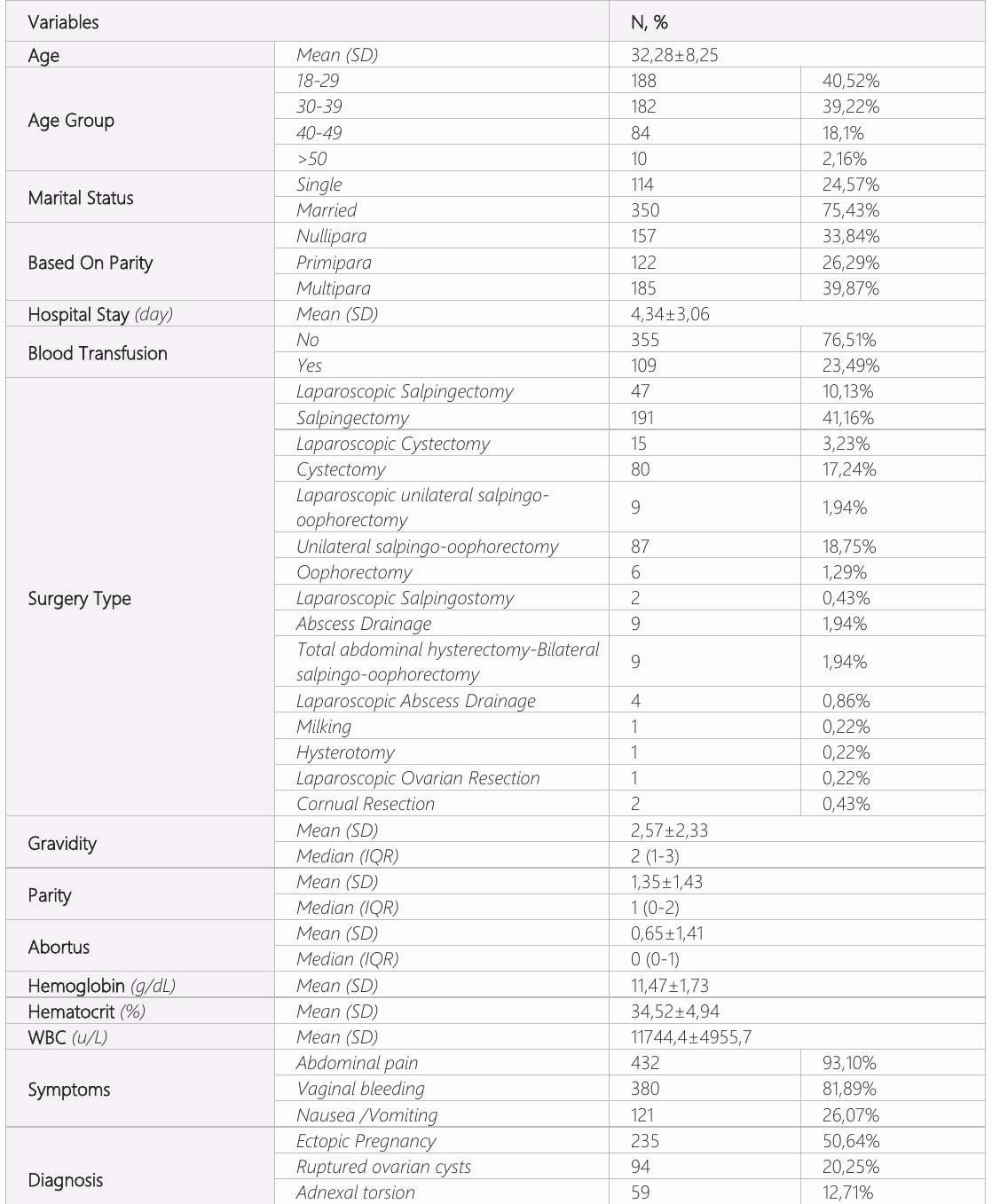
A total of 4121 gynecological surgeries were performed in our clinic for 5 years. Of these patients, 456 were oncology patients, and 473 patients had been operated on in the emergency gynecology. Nine patients under the age of 18 were not included in the study. A total of 464 patients who were treated surgically with laparotomy or laparoscopic approaches were included in our study. The demographic characteristics of all patients included in the study are summarized in Table-1.
The mean age of all patients was 32.28±8.25 years. 79.74% of the patients were under the age of 40, and our patients were operated on for ruptured ectopic pregnancy (50.64%), ruptured ovarian cyst (20.25%), ovarian torsion (12.71%), and tuboovarian abscess (16.37%), while 23.49% required transfusions. The hospital stay was 4.34±3.06 days.
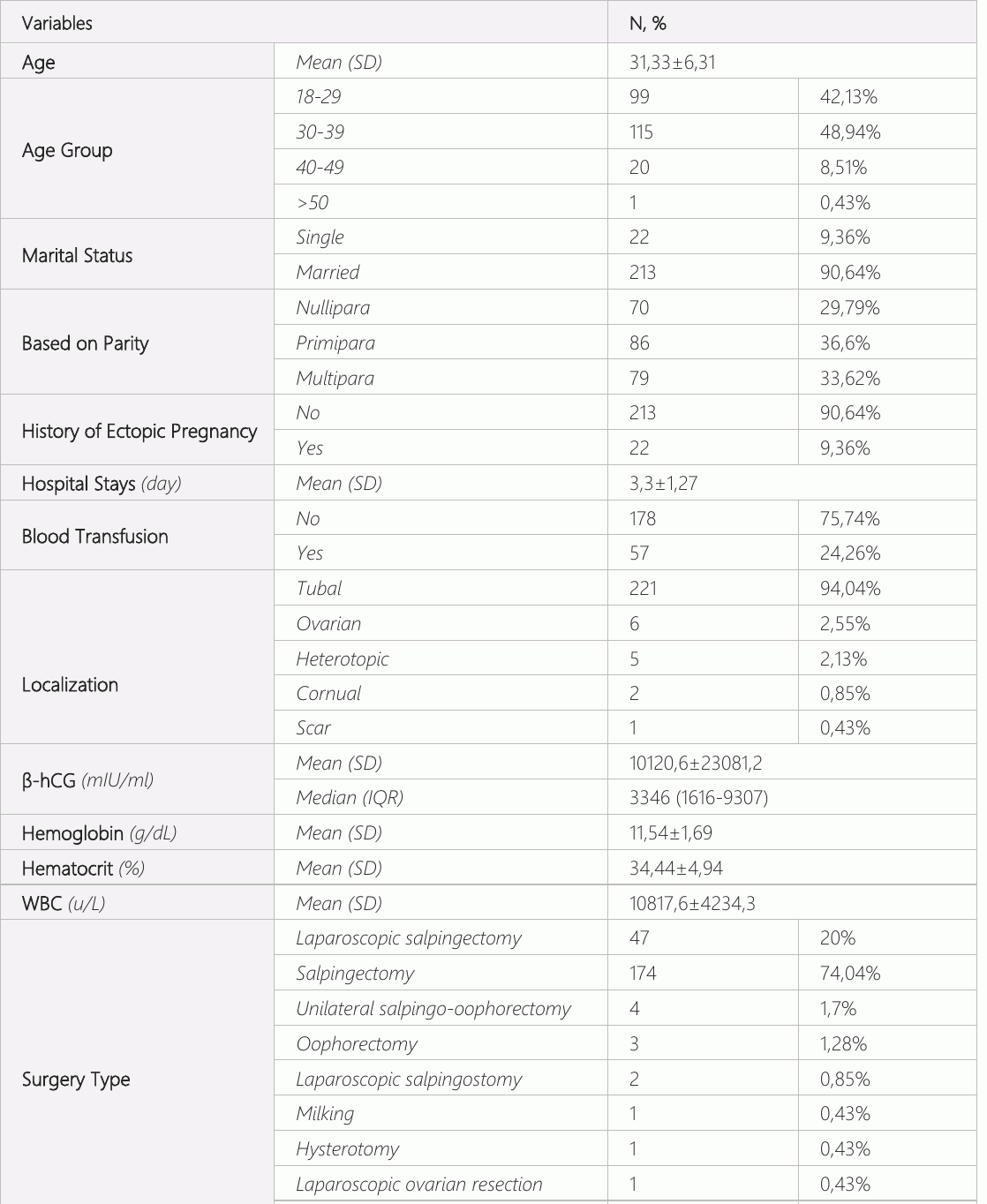
The patients were also analyzed separately according to the diagnoses they received. The characteristics of patients who were operated on due to ruptured ectopic pregnancy are summarized in Table-2. The mean age of the patients was 31.33±6.31 years. A history of previous ectopic pregnancy was present in 9.36% of the patients. Tubal pregnancy was observed most frequently with a rate of 94.04 percent. The mean initial β-hCG was 3346 mIU/ml. Laparotomy and salpingectomy were performed in 74.04% of the patients, and laparoscopic salpingectomy in 20%. Unilateral twin ectopic pregnancy was detected in 1 patient, and 3 patients were followed up in the postoperative intensive care unit.
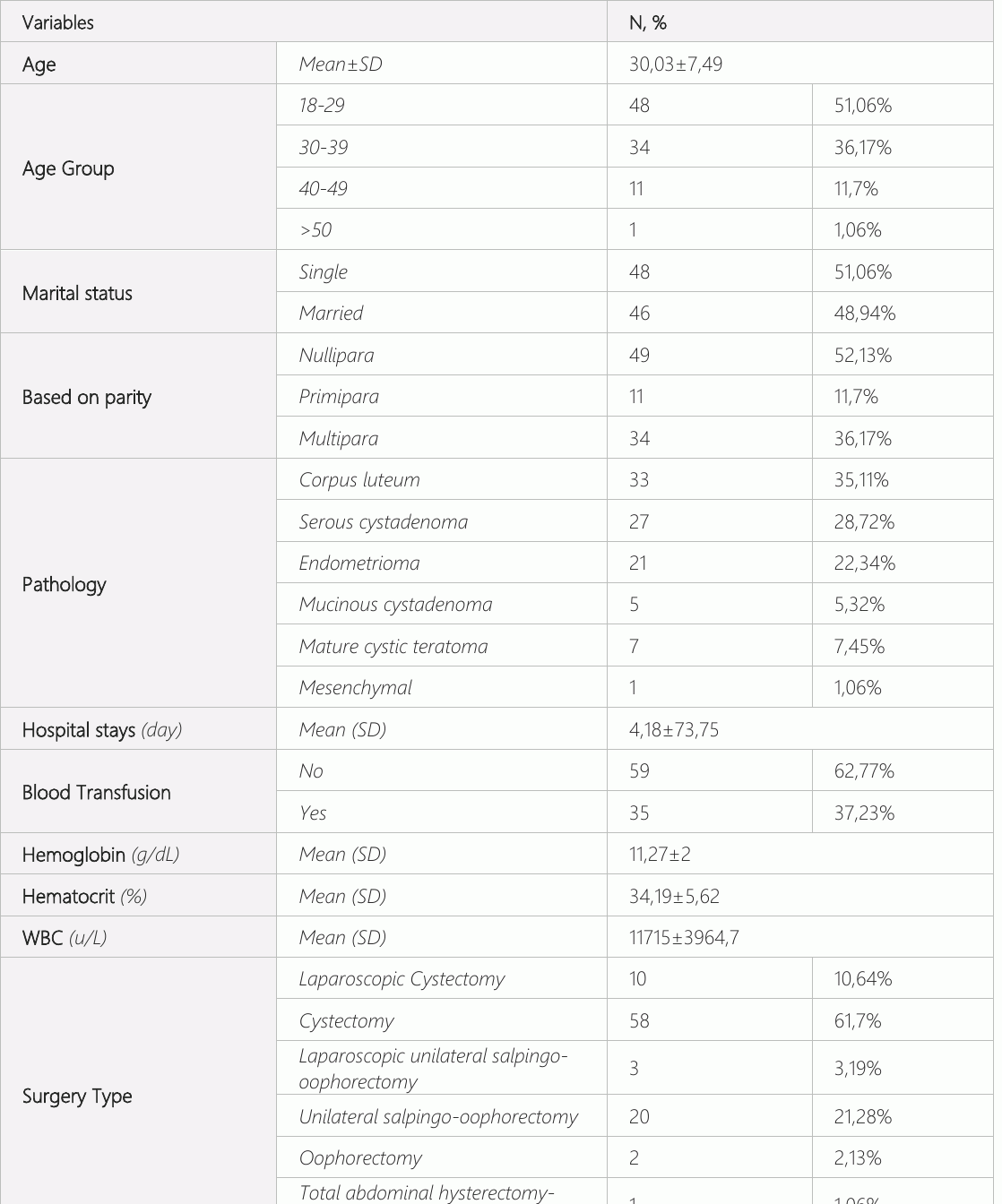
The characteristics of the patients who were operated on for a ruptured ovarian cyst are summarized in Table-3. The mean age of the patients was 30.03±7.49 years. Most frequently (61.70%) cystectomy was performed through laparotomy incision. When the pathologies were examined, most commonly, rupture of the corpus luteum hemorhagicum was observed with a rate of 35.11 percent. One patient required postoperative intensive care. In addition, pregnancy and simultaneous rupture of the ovarian cyst were observed in one.
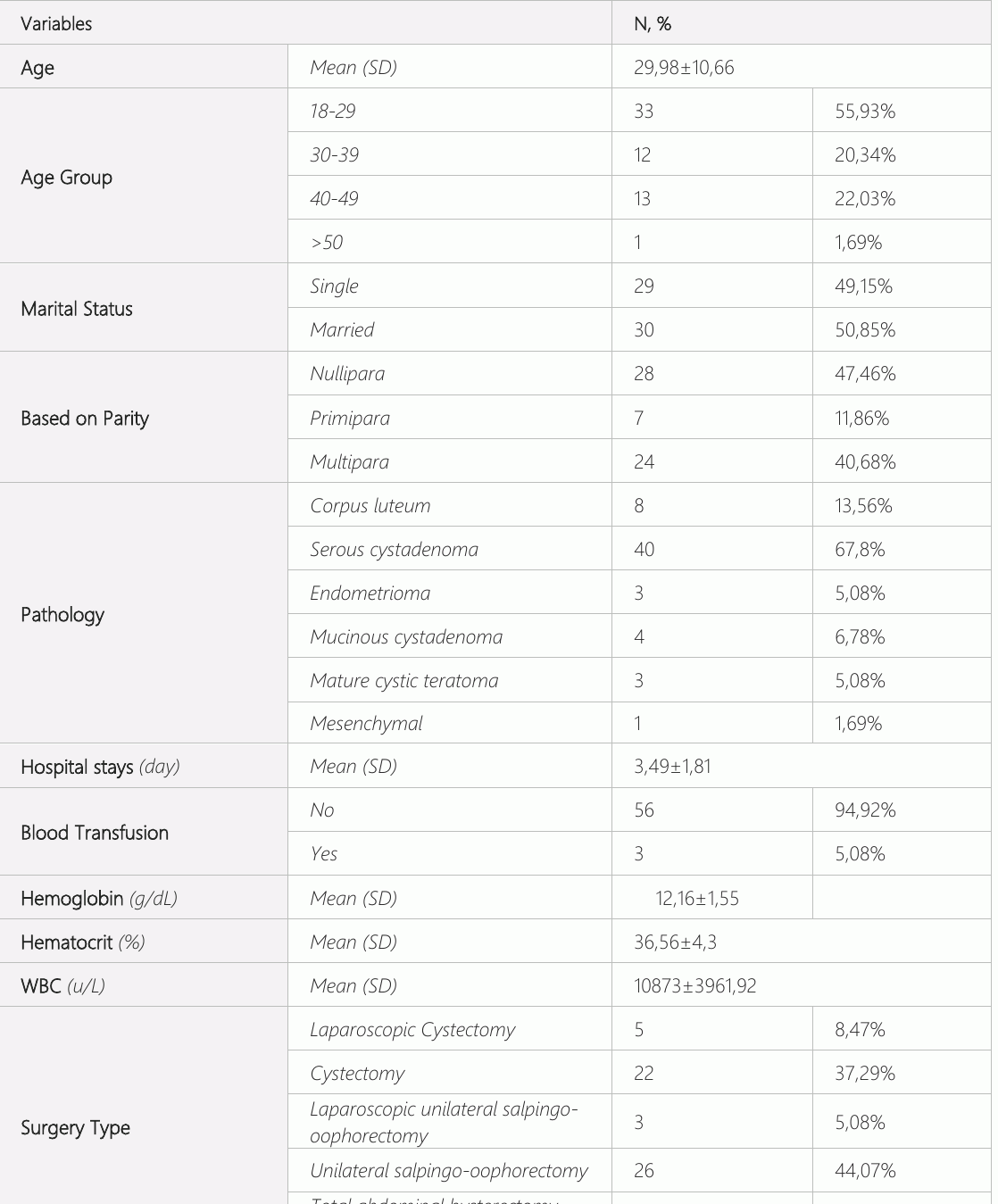
The characteristics of the patients who were operated on for twisted ovarian cysts are summarized in Table-4. The mean age of these patients was 29.98±10.66 years. Unilateral salpigoopherectomy was performed most frequently with a rate of 44.07 percent. When the pathologies were examined, serous cystadenoma was found most frequently with a rate of 67.80 percent.
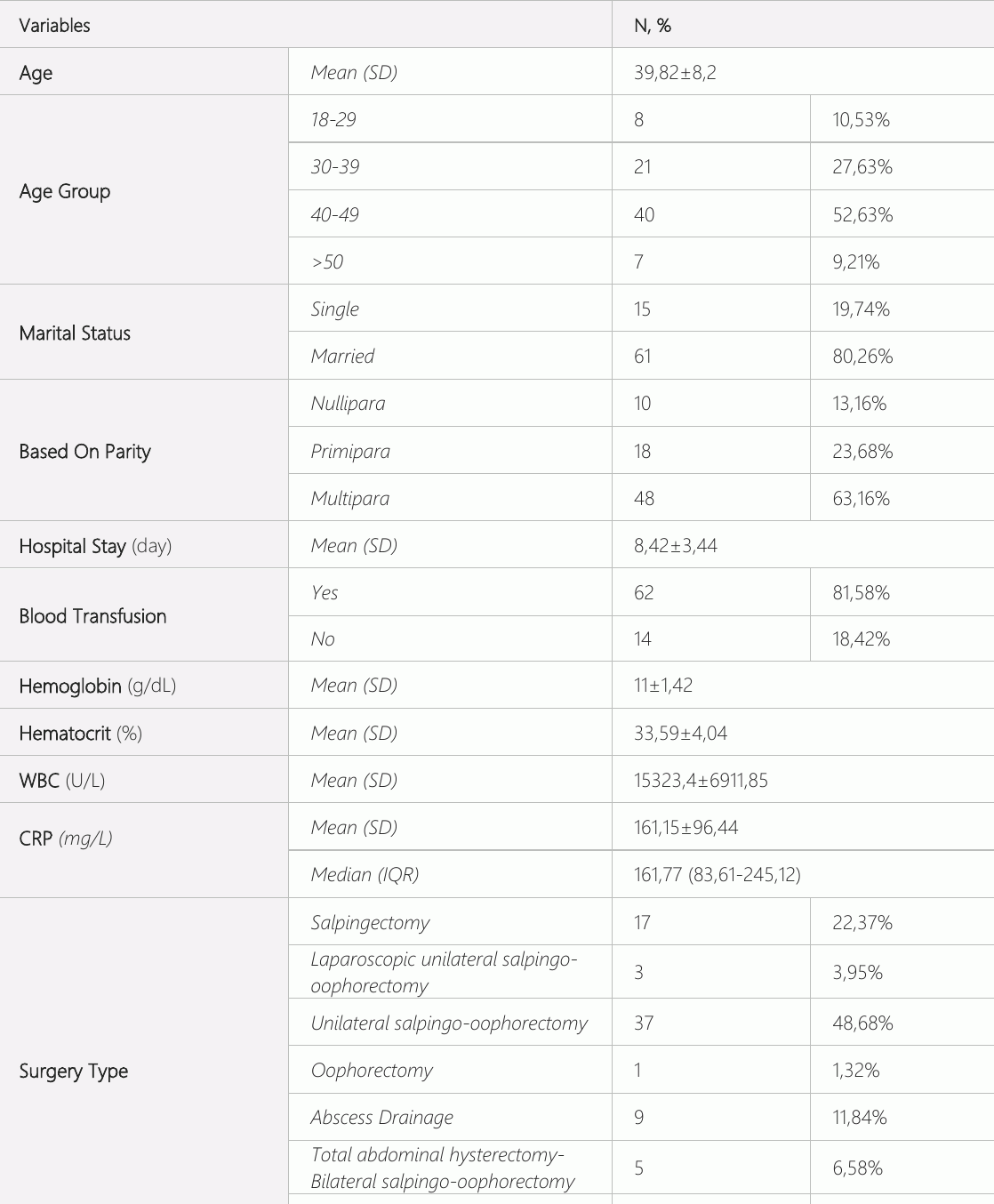
The characteristics of the patients who were operated on for tubaovarian abscesses (TOA) are summarized in Table-5. The mean age of these patients was 39.82±8.2 years, and 52.63% of the patients were between the ages of 40-49 years. Besides, 63.16% of these patients were multiparous. Mean WBC 15323.4 ±6911.85 u/L and CRP 161.77 mg/L (83.61-245.1 mg/L) values were as indicated. Unilateral salpigoopherectomy was performed most frequently in the patients with a rate of 48.68 %, and one patient required intensive care.
The lowest mean age was observed in the ovarian torsion group among all patients, and the highest mean age was noted in the tubaovarian abscess group. In addition, the longest hospital stay (8.42±3.44 days) was recorded in the tubaovarian abscess group.
Discussion
Gynecological emergencies have an important place in admissions to emergency departments. Early diagnosis and treatment both reduce the morbidity and mortality of the patients and are important for preserving their fertility status in the later stages of their lives. In our study, we encountered the most frequently ruptured ectopic pregnancy, followed by a ruptured ovarian cyst in the group of patients who applied to the gynecology emergency department and underwent surgical treatment. Considering the age distribution of the patients, adnexal torsion was seen in the younger patient group, while tubaovarian abscess (TOA) was seen at older ages. Approximately one-third of the patients required blood transfusion.
The hospital stay was observed to be longer in cases with TOA. Salpingectomy was the most common surgical operation performed in all cases. Clinical presentation differs in each patient. Our patients also most frequently had lower abdominal quadrant pain.
In the prospective study of Alouini et al., 205 patients who applied to the emergency department were examined, and 88% of the patients were consulted for abdominal/pelvic or lumbar pain and or metrorrhagia. The mean age of the patients was 31 years (8). In another study, patients were between the ages of 15 and 55 years. The majority (43%) of the patients aged 25-34 years, and most of (92%) of the patients were married (1). In our study, the mean age of the patients was 32.28±8.25 years. Our proportion of patients under 40 years of age in reproductive age was higher. The most common gynecological emergencies were seen in the 18-29 age group. Unlike the literature, 75.43% of our patients were married. In a study by Acharya et al., gynecological emergencies were most common in the age group of 20-29 years. The rate of gynecological emergencies was 23.30% among all surgeries performed. The researchers most commonly detected ectopic pregnancy (70.8%). In their study, twisted/ruptured ovarian cyst was found in 21.66% of the patients (9).
In another study, ruptured ectopic pregnancy (61%), hemoperitoneum and pyoperitoneum (6.26%), twisted ovarian cyst (6.26%) were detected in respective percentages of patients who applied to the clinic (1). In our patients, the rate of emergency gynecological operations among all gynecological operations was 11.47% which was lower relative to other studies. Similar to many studies cited in the literature, most commonly (50.64%) ruptured ectopic pregnancy was found in our patients. Ruptured ovarian cyst, ovarian torsion, tuboovarian abscess were seen less frequently.
In patients presenting with acute pelvic pain, appendicitis and ureteral calculi may mimic gynecological diseases. Gynecological diseases such as endometriosis and uterine fibroids can cause sudden onset lower abdominal quadrant pain. In these patients, differential diagnoses of emergencies should be made (10). In our patient group, at the time of the first admission, transabdominal or transvaginal ultrasonography were performed in each patient. Other diagnostic methods such as Doppler US, CT, or MRI were used in doubtful diagnoses.
Emergency surgery may not be considered in hemodynamically stable patients who are not actively bleeding, without any enlargement in the size of the hemoperitoneum, and no decrease in initial hemoglobin values during follow-up. However, when there is doubt about the diagnosis, diagnostic laparoscopy should be performed. In the study of Beuran et al., 56 patients diagnosed with hemoperitoneum due to ectopic pregnancy and ovarian cyst rupture were examined and the authors stated that laparoscopy can be used safely in patients with extensive intra-abdominal bleeding (7). In our clinic, the rate of emergency laparoscopy was found to be 16.81% among the patients. Salpingectomy was performed in 47.8% of gynecological emergency patients in a study among patients admitted to the emergency gynecology clinic (1, 9). In our study, consistent with the literature, salpingectomy was the most frequently performed surgical intervention in emergency patients with a rate of 41.16 percent. Ectopic pregnancy is most commonly seen in the fallopian tubes. The incidence of implantation outside the fallopian tube is less than 10 percent. Ovarian pregnancy accounts for 0.15-3% of ectopic pregnancies and diagnosis is usually made pathologically (11). Cornual pregnancy is seen in 4% of ectopic pregnancies (2). In our study, tubal, ovarian, corneal ruptured ectopic pregnancies were observed in 94.04%, 2.55 %, and 0,85% of the cases, respectively. Cesarean scar pregnancy is seen at a rate of 4% among ectopic pregnancies (12). In our patient group, scar pregnancy was observed in one (0.43%) case that is at a lower rate than that reported in the literature. Unilateral tubal twin pregnancy is seen in 1/125000 of spontaneous pregnancies (13). Spontaneous twin pregnancy, which is extremely rare, was observed in 1 patient. Heterotopic pregnancy is the simultaneous occurrence of ectopic and pregnancy (14). In our study, heterotopic pregnancy was observed in 2.13% of patients. In the subsequent followups of the patients, intrauterine pregnancies were maintained after appropriate surgical interventions and deliveries were achieved. In a study examining patients who underwent laparotomy for abdominal pain, the incidence of ectopic pregnancy was reported as 65.3 percent (15). In the study of Pradhan et al., only 36 ruptured ectopic pregnancies were observed within 5 years (16). This rate was quite low compared to many studies. In our study, this rate was found to be 9.36 percent.
The risk is reportedly 12.5, and 76.6 times higher when ectopic pregnancies had been previously experienced once and twice, respectively (17). In one study, a history of ectopic pregnancy was reported at a rate of 16.7 percent (16). In our study, this rate was found to be 9.36 percent. There is a strong correlation between serum β-hCG levels and depth of trophoblast infiltration (18). In a study, a better response to medical treatment was obtained when the β-hCG level was less than 2121mlU/ml (19). In another study, the extensive trophoblastic invasion was found at β-hCG concentrations over 6.475 mIU/ml (20). In our study, preoperative β-hCG values were measured for each patient, and the initial β- hCG value was found to be 3346 mIU/ml in cases of ruptured ectopic pregnancy.
The laparoscopic approach should be the surgical method of the first choice in ruptured ectopic pregnancy. It is preferred to open surgery due to shorter hospital stays, shorter operation time, and lesser intraoperative blood loss. Salpingectomy or salpingostomy can be performed when the contralateral tube is intact but the risk of persistent trophoblast and bleeding was found to be higher in salpingostomy (21). Because of these risks, laparoscopic salpingostomy was applied to only 2 patients in our clinic. Exploration by emergency laparotomy is one of the primary methods to be applied surgically in hemodynamically unstable patients and shock. We treated our patients diagnosed with ruptured ectopic pregnancy surgically, either using laparotomy (78.72%) or laparoscopic (21.28%) procedures.
Adnexal torsion may cause necrosis of the ovary or tuba, peritonitis, and a clinical picture that can lead to shock. It is most common in reproductive ages and very rare in the postmenopausal period (22). In our study, it was observed most frequently in the 18-29 age group with a rate of 55.93 percent. It was extremely rare, with a rate of 1.69% over the age of 50.
Huchon et al. determined a pattern in their retrospective study. Five parameters including abdominal pain lasting less than 8 hours after the first admission, vomiting, detection of a cyst larger than 5 cm in the ovary on the US, and absence of leukorrhea or abnormal vaginal bleeding were evaluated and the reliability of this model was determined to be 75% in diagnosing torsion (23). In another study, 7.64% of the patients who applied to the clinic with acute pelvic pain had a twisted ovarian cyst. (1). In the study of Oelsner et al., adnexal torsion was found in 3.5% of benign cystic teratomas (24). In our patient group, the twisted ovarian cyst was detected at a rate of 12,71 percent. Unlike many other studies, the pathological examination of these cysts was also classified and serous cystadenoma was the most common finding with a rate of 67.80 percent. In the past, oophorectomy was performed in all cases due to the possible risk of embolism after ovarian detorsion. However, this approach has been completely abandoned today. One study evaluated 102 cases of ovarian torsion. All cases were treated by detorsion. Follicular development was detected and oocytes could be retrieved during ART treatment in patients who were still necrotic after detorsion but did not undergo oophorectomy (25). In our twisted ovarian group, the most frequently performed operation was detorsion and cystectomy.
Rupture of the ovarian cyst and hemorrhage is usually self-limiting and are seen in functional cysts. Many patients can be followed up without surgery (5, 26). Kim et al. studied 78 cases of ruptured ovarian cyst with hemoperitoneum and they stated low diastolic blood pressure and a large amount of hemoperitoneum suggest the need for surgical intervention (27). In our study group, we operated on the patients with the diagnosis of cyst rupture in whom we detected extensive intra-abdominal bleeding. Publications are stating that the first choice in the rupture of the ovarian cyst is laparoscopic surgery. (5, 28). In our clinic, cystectomy was performed most frequently in patients with ruptured ovarian cysts, with a rate of 72.34 percent. When examined pathologically, the most frequently corpus luteum cyst was found. Treatment of tuboovarian abscess (TOA) should be safe, cost-effective, and efficacious. Surgery in TOA is technically difficult and can lead to complications. Minimally invasive methods such as transvaginal ultrasoundguided drainage of tuboovarian abscesses can also be applied (29). The most common surgical treatment applied to our patients was unilateral salpingo-oophorectomy with a rate of 48.68% and postoperative complications did not develop in any patients. TAH-BSO was applied to our patients with an abscess at a higher rate than other gynecological emergency diseases because these patients were at an advanced age relative to other patient groups and the majority of the patients were multiparous.
In a 5-year retrospective study, a success rate of 96.8% was achieved in the early surgical group and the risk of recurrence of the abscess within 1 year was found to be very low (30). In another study, when the cut-off values for the age of the patient, and the CRP values were accepted as 41.5 years and 143.5 mg/L, respectively, it was reported that above these values an early surgical approach should be preferred in large cases with TOA (4). In our patient group diagnosed with abscess, the mean age was 39.82±8.2 years. Most of the patients were aged 40-49 years and the mean CRP was 161.77 mg/L.
We have acknowledged that this study has some limitations. Data related to socioeconomic status, education status, ethnicity of the patients were not analyzed in this study. In conclusion, ectopic pregnancy was the most common type in patients who underwent emergency gynecological surgery in our study. The most common treatment method applied was salpingectomy. The majority of the patients presented with lower abdomen pain and were of reproductive age. In patients presenting with abdominal pain, the medical history should be taken meticulously, the abdominopelvic examination should be performed, and patients should be evaluated with pregnancy tests and laboratory findings. Our study was conducted with a remarkably higher number of patients. However, we need multicenter prospective studies that will determine the prognosis of patients in the long term.
Declarations
- Author contributions (CRediT)
- All authors contributed equally to all 14 CRediT roles (Conceptualization, Data curation, Formal analysis, Funding acquisition, Investigation, Methodology, Project administration, Resources, Software, Supervision, Validation, Visualization, Writing – original draft, Writing – review & editing).
- Funding
-
Conflict of Interest All authors declared no conflict of interest and no sources of funding.
- Conflicts of interest
- All authors declared no conflict of interest and no sources of funding.
- Ethics approval
- This study was performed in line with the principles of the Declaration of Helsinki. Approval was granted by the Ethics Committee of University of Health Sciences, Prof.
- Data availability
- A data availability statement was not reported in the published version of this article.
References (30)
24 of 30 references are linked to their DOI.
- Pokharel HP, Dahal P, Rai R, Budhathoki S. Surgical emergencies in obstetrics and gynecology in a tertiary care hospital. JNMA J Nepal Med Assoc. 2013; 52(189): 213-6 16 77 Surgical Treatment in Gynecological Emergency Genc et al. DOI Crossref PubMed Google Scholar
- Panelli DM, Phillips CH, Brady PC. Incidence, diagnosis, and management of tubal and nontubal ectopic pregnancies: a review. Fertil Res Pract. 2015;15;1-15 DOI Crossref PubMed Google Scholar
- Poonam, Uprety D, Banerjee B. Ectopic pregnancy - two years review from BPKIHS, Nepal. Kathmandu Univ Med J (KUMJ). 2005;3(4):365-9 PubMed Google Scholar
- Akselim B, Karaşin SS, Demirci A, Üstünyurt E. Can antibiotic treatment failure in tubo-ovarian abscess be predictable? Eur J Obstet Gynecol Reprod Biol. 2021;258: 253-257 DOI Crossref PubMed Google Scholar
- Bottomley C, Bourne T. Diagnosis and management of ovarian cyst accidents. Best Pract Res Clin Obstet Gynaecol. 2009;23(5):711-724 DOI Crossref PubMed Google Scholar
- Wattar B, Rimmer M, Rogozinska E, Macmillian M, Khan KS, Al Wattar BH. Accuracy of imaging modalities for adnexal torsion: a systematic review and meta-analysis. BJOG. 2021;128(1):37-44 DOI Crossref PubMed Google Scholar
- Beuran M, Negoi I, Hostiuc S, Catena F, Sartelli M, Negoi RI, et al. Laparoscopic Approach has Benefits in Gynecological Emergencies - Even for Massive Hemo peritoneum. Chirurgia (Bucur). 2016;111(1):48-53 PubMed Google Scholar
- Alouini S, Mesnard L, Coly S, Dolique M, Lemaire B. Urgences gynécologiques: nature et degré de gravité. J Gynecol Obstet Biol Reprod. 2012;41(1):48-54 DOI Crossref PubMed Google Scholar
- Acharya I, Thapa S. Surgical Emergencies among Gynecological Surgeries in a Tertiary Care Center: A Descriptive Cross-sectional Study. JNMA J Nepal Med Assoc. 2020;58(232):1052-1055 DOI Crossref PubMed Google Scholar
- Knoepp US, Mazza MB, Chong ST, Wasnik AP. MR Imaging of Pelvic Emergencies in Women. Magn Reson Imaging Clin N Am. 2017;25(3):503-519 DOI Crossref PubMed Google Scholar
- Szadok P, Kubiaczyk F, Bajorek A, Suchocki S. Ovarian ectopic pregnancy. Ginekol Pol. 2019;90(12):728 DOI Crossref PubMed Google Scholar
- Maheux-Lacroix S, Li F, Bujold E, Nesbitt-Hawes E, Deans R, Abbott J. Cesarean Scar Pregnancies: A Systematic Review of Treatment Options. J Minim Invasive Gynecol. 2017;24(6):915-925 DOI Crossref PubMed Google Scholar
- Seak CJ, Goh ZNL, Wong AC, Seak JC, Seak CK. Unilateral live twin tubal ectopic pregnancy presenting at 12 weeks of gestation: A case report. Medicine. 2019;98(38):e17229 DOI Crossref PubMed Google Scholar
- Ramalho I, Ferreira I, Marques JP, Carvalho MJ, Lobo A, Rebelo T, et al. Live birth after treatment of a spontaneous ovarian heterotopic pregnancy: A case report. Case Rep Women Health. 2019;10(24):e00144 DOI Crossref PubMed Google Scholar
- Awori MN, Jani PG. Surgical implications of abdominal pain in patients presenting to the Kenyatta National Hospital casualty department with abdominal pain. East Afr Med J. 2005;82(6):307-310 DOI Crossref PubMed Google Scholar
- Pradhan P, Thapamagar SB, Maskey S. A profile of ectopic pregnancy at Nepal medical college teaching hospital. Nepal Med Coll J. 2006;8(4):238-42 PubMed Google Scholar
- Bouyer J, Coste J, Shojaei T, Pouly JL, Fernandez H, Gerbaud L, et al. Risk factors for ectopic pregnancy: a comprehensive analysis based on a large case-control, population- based study in France. Am J Epidemiol. 2003;157(3):185-194 DOI Crossref PubMed Google Scholar
- Elito J Jr, Ferreira DF, Araujo Júnior E, Stavale JN, Camano L. Values of beta-human chorionic gonadotrofin as a risk factor for tubal pregnancy rupture evaluated by histopathology. J Matern Fetal Neonatal Med. 2014;27(6):637-639 PubMed Google Scholar
- Helmy S, Bader Y, Pablik E, Tiringer D, Pils S, Laml T, et al. Cut-off value of initial serum β-hCG level predicting a successful MTX therapy in tubal ectopic pregnancy: a retrospective cohort study. Eur J Obstet Gynecol Reprod Biol. 2014; 179:175-180 DOI Crossref PubMed Google Scholar
- Turgut EN, Celik E, Celik S, Arikan DC, Altuntas H, Leblebici C, et al. Could serum β-hCG levels and gestational age be the indicative factors for the prediction of the degree of trophoblastic invasion into tubal wall in unruptured ampullary pregnancies? Arch Gynecol Obstet. 2013;287(2):323-8 DOI Crossref PubMed Google Scholar
- Ozcan MCH, Wilson JR, Frishman GN. A Systematic Review and Meta -analysis of Surgical Treatment of Ectopic Pregnancy with Salpingectomy versus Salpingostomy. J Minim Invasive Gynecol. 2021;28(3):656-667 DOI Crossref PubMed Google Scholar
- Abdelazim IA, AbuFaza M, Bekmukhambetov Y, Zhurabekova G, Shikanova S. Postmenopausal adnexal torsion: case report. Prz Menopauzalny. 2020;19(1):49-51 PubMed Google Scholar
- Huchon C, Staraci S, Fauconnier A. Adnexal torsion: a predictive score for pre-operative diagnosis. Hum Reprod. 2010;25(9):2276-2280 DOI Crossref PubMed Google Scholar
- Oelsner G, Shashar D. Adnexal torsion. Clin Obstet Gynecol. 2006;49(3):459-463 PubMed Google Scholar
- Oelsner G, Cohen SB, Soriano D, Admon D, Mashiach S, Carp H. Minimal surgery for the twisted ischaemic adnexa can preserve ovarian function. Hum Reprod. 2003;18(12): 2599-2602 DOI Crossref PubMed Google Scholar
- Fiaschetti V, Ricci A, Scarano AL, Liberto V, Citraro D, Arduini S, et al. Hemoperitoneum from corpus luteal cyst rupture: a practical approach in emergency room. Case Rep Emerg Med. 2014:252657 DOI Crossref PubMed Google Scholar
- Kim JH, Lee SM, Lee JH, Jo YR, Moon MH, Shin J, et al. Successful conservative management of ruptured ovarian cysts with hemoperitoneum in healthy women. PLoS One. 2014;9(3):e91171 DOI Crossref PubMed Google Scholar
- Teng SW, Tseng JY, Chang CK, Li CT, Chen YJ, Wang PH. Comparison of laparoscopy and laparotomy in managing hemodynamically stable patients with ruptured corpus luteum with hemoperitoneum. J Am Assoc Gynecol Laparosc. 2003;10(4):474-477 DOI Crossref PubMed Google Scholar
- Granberg S, Gjelland K, Ekerhovd E. The management of pelvic abscess. Best Pract Res Clin Obstet Gynaecol. 2009;23(5):667-678 DOI Crossref PubMed Google Scholar
- Zhu S, Ballard E, Khalil A, Baartz D, Amoako A, Tanaka K. Impact of early surgical management on tubo-ovarian abscesses. J Obstet Gynaecol. 2021;41(7):1097 -1101 DOI Crossref PubMed Google Scholar
Respond to this article
Comments on a published article are welcome as a Letter to the Editor.
Get an e-mail when new articles in your fields are published
Questions to the authors
Questions are moderated: an editor approves each question, the authors answer, and an editor approves the answer before both appear here.
No answered questions yet.
Ask the authors a question
Discussion
Comments are moderated: they appear after the writer confirms the e-mail address and an editor approves them. Each comment carries a conflict-of-interest statement.
No comments yet.
Write a comment
Read the full text
Open the PDF here
Loading the PDF…
If the PDF does not show here, use the download button above.
How to cite this article
Genc S, Ozkan YO. Surgical Treatment in Gynecological Emergency: The Experience of a Tertiary Hospital. Ulutas Med J. 2022;8(1):5-17. doi:10.5455/umj.20220123023926
Genc, S., & Ozkan, Y. O. (2022). Surgical Treatment in Gynecological Emergency: The Experience of a Tertiary Hospital. The Ulutas Medical Journal, 8(1), 5–17. https://doi.org/10.5455/umj.20220123023926
Genc, S. and Ozkan, Y.O. (2022) 'Surgical Treatment in Gynecological Emergency: The Experience of a Tertiary Hospital', The Ulutas Medical Journal, 8(1), pp. 5–17. doi: 10.5455/umj.20220123023926.
@article{umj14145,
  title = {Surgical Treatment in Gynecological Emergency: The Experience of a Tertiary Hospital},
  author = {Genc, Simten and Ozkan, Yagmur Olmez},
  journal = {The Ulutas Medical Journal},
  year = {2022},
  volume = {8},
  number = {1},
  pages = {5--17},
  doi = {10.5455/umj.20220123023926},
  url = {https://www.ulutasmedicaljournal.com/?mno=14145},
  issn = {2149-388X}
}