The Ulutas Medical Journal · ISSN 2149-0430 (print), 2149-388X (online) · https://www.ulutasmedicaljournal.com/?mno=103427
Original Article · Open access
Evaluation of Lipid Profile and Atherogenic Indices of Automobile Workers Before and after Green Tea Supplementation
Also available in: العربية · Türkçe · 中文
- Department of Chemical Pathology, Chukwuemeka Odumegwu Ojukwu University, Awka, Anambra State, Nigeria ROR
- Department of Human Biochemistry, Nnamdi Azikiwe University, Nnewi, Anambra State, Nigeria ROR
- Department of Chemical Pathology, Nnamdi Azikiwe University, Nnewi, Anambra State, Nigeria ROR
Abstract
- Introduction
- The various toxic chemicals automobile workers (AMW) are exposed to may predispose them to some adverse cardiovascular outcomes by alteration of lipids and lipoproteins. However, dietary strategies may be useful in preventing this undesirable outcome. Materials & Methods: The study aimed to assess the lipid profile and atherogenic indices of automobile workers. 78 male subjects aged 18 to 54 years, 33 automobile workers (AMW), and 45 control subjects were recruited for this study. 28 out of the 33 automobile workers received 150 ml of green tea daily for two months. 3ml of fasting blood samples were collected before and after one and two months of intervention. Total cholesterol (TC), high-density lipoprotein cholesterol (HDLc), and triglyceride (TG) were measured enzymatically while low-density lipoprotein cholesterol (LDLc) and atherogenic indices (Castelli's risk index (CRI) 1 and 2, atherogenic coefficient (AC), atherogenic index of plasma (AIP), non-HDLc (nHDLc) were calculated.
- Results
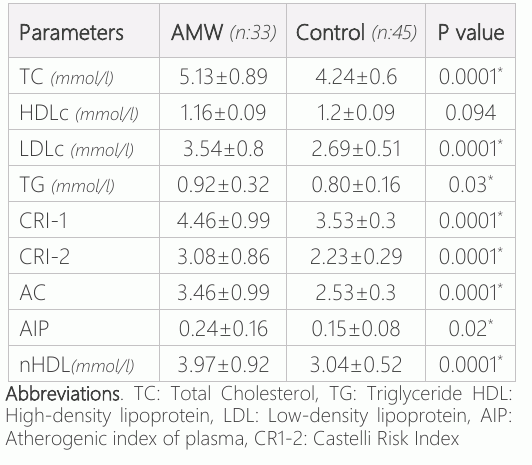
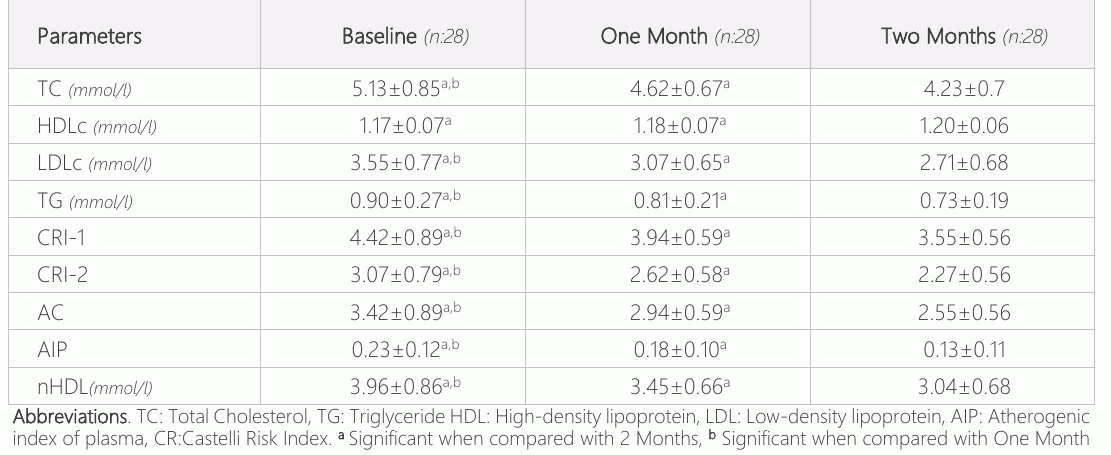
- The median values of TC, LDLc, TG, CRI-1, CRI-2, AC, AIP, and nHDLc were significantly higher in the automobile workers when compared to the control (p<0.05), however, the median HDLc level was not significantly different in both groups (p=0.083). TC, LDLc, TG, CRI-1, CRI-2, AC, AIP, and nHDLc decreased significantly after one and two months of green tea intake whereas HDLc level increased significantly after two months of intake (p<0.05).
- Conclusion
- This study suggests that automobile workers are at higher risk of developing cardiovascular disorders, however, green tea supplements may possess anti-atherogenic properties for attenuating cardiovascular risk in these workers.
Keywords
Full text
Introduction
Automobile workers are group of workers found in the automobile repair workshops including the car mechanics, panel beaters, spray painters, welders and auto electricians. Present in the automobile workshops are significant amounts of toxic substances or chemicals which the workers are exposed to on a daily basis. These toxic chemicals include but are not limited to metal dusts and fumes, polycyclic aromatic hydrocarbons and toxic metals. Exposure to toxic chemicals at workplaces may account for higher cases of the occupational exposure-related conditions including hypertension, cancers, oxidative stress, dyslipidemia, infertility, and more.
Occupational exposure to toxic metals like lead has been shown to alter lipids and lipoprotein levels (1), thus increasing the risk of developing cardiovascular diseases (CVD) which is one of the leading causes of death worldwide. Despite the reported dyslipidemia associated with toxic metal exposure, a number of lipid parameters may be apparently normal leading to flawed rulings. Therefore, for a better representation of atherogenic potential of lipid profile, the lipid parameters have been incorporated as calculated or mathematical fractions of cholesterol ester and triglyceride-rich lipo proteins (2) often referred to as atherogenic indices or lipid ratios. These indices or ratios include Castelli risk index 1 and 2, atherogenic co-efficient and atherogenic index of plasma with CV risk predictor values of >3.5, >3.0, >3.0 and >0.1 respectively as well as non-high density lipoprotein cholesterol (non-HDLc). Green tea made from the plant Camellia sinensis is a commonly consumed beverage which is beneficial to human health including protection against cancer (3), oxidative stress (4), diabetes and hypertension (5) and metal chelating (6) effects. These positive effects of green tea have been linked to its high content of bioactive constituents particularly polyphenols often referred to as catechins. In view of the known adverse health condition associated with occupational exposure as well as the beneficial effect of green tea, it has become necessary to employ dietary strategies aimed at mitigating the undesirable health conditions. This study therefore assessed the lipid profile and atherogenic indices of automobile workers and the subsequent effect of green tea supplementation.
Materials and Methods
Subjects
A total of seventy eight (78) male subjects aged between 18 and 54 years comprised of 33 automobile workers (AMW) and 45 control subjects in Emene, Enugu were randomly enrolled in this study after a written informed consent was obtained. 28 out of the 33 automobile workers received 150ml of green tea (Unilever, Nigeria) daily for a period of two months while the remaining 5 of the automobile workers could not complete the intervention study. The green tea supplement was prepared by soaking two (2) tea bags in freshly boiled water for 5 minutes.
Three milliliters (3ml) of fasting blood samples was collected from all participants before and after one and two months of intervention. The blood samples were dispensed into plain tubes, separated by centrifugation at 3000 rpm for 10 minutes, and sera obtained used for analysis of total cholesterol (TC), high density lipoprotein cholesterol (HDLc) and triglyceride (TG). Apparently healthy non-obese male volunteers aged 18 to 54 years were included in the study whereas those with any history of heart disease or on lipid lowering drugs were excluded from the study. Approval for this study was obtained from Nnamdi Azikiwe University Teaching Hospital Research Ethics Committee (NAUTHREC), and conformed to all the ethical requirements of the Helsinki declaration.
Methods
TC, HDL and TG were determined by enzymatic colorimetric method as described by Roeschlaw et al. (7), Grove (8) and Fossati and Prencipe (9) respectively. LDLc and atherogenic indices were estimated by calculation according to Friedewald et al. (10) and Bhardwaj et al. (11) respectively.
The atherogenic indices were calculated thus; • Castelli’s Risk Index 1 (CRI-1)=TC/HDLc • Castelli’s Risk Index 2 (CRI-2)=LDLc/HDLc • Atherogenic Coefficient (AC)=TC- HDLc/HDLc or nHDLc/HDLc • Atherogenic Index of Plasma (AIP)=Log(TG/HDLc) • Non-HDLc (nHDLc)=TC-HDLc Non-HDL (nHDL) was estimated by calculating the difference between TC and HDL.
Statistical Analysis
Statistical analysis was done using Statistical Package for Social Sciences (SPSS, v 23.0, SPSS Inc, Chicago, IL, USA). Data were tested for normality, and nonormally distributed variables were expressed as median (range). The Mann Whitney U and Wilcoxon tests were used to assess the difference between two unrelated and related variables, and the significance was considered at p<0.05.
Results
The median levels of TC, LDLc, TG, CRI-1, CRI- 2, AC, AIP and nHDLc were significantly higher in the automobile workers when compared to the control (p<0.05), but there was no significant difference in the median HDLc level in both groups (p=0.083) as shown in table 1. In table 2 and figures 1 and 2, the median levels of TC, LDLc, TG, CRI-1, CRI-2, AC, AIP and nHDLc decreased progressively from baseline to two months of green tea intake (p<0.05). The median HDLc level after one month of green tea supplementation did not differ significantly from the baseline value (p=0.202), but increased significantly after two months of supplementation when compared to its values at one month and baseline (p=0.029 and p=0.031 respectively).
Discussion
This study assessed the lipid profile and atherogenic indices of automobile workers and the subsequent effect of green tea supplementation. The automobile workers had markedly elevated levels of total cholesterol, LDLc and TG with normal HDLc. This alteration may be attributed to up-regulation of plasma cholesterol and triglyceride concentrations by toxic metals (12) which these workers are exposed to, possibly by enhancing HMG CoA (3-hydoxy 3-methylglutaryl coenzyme A) reductase activity. The deranged lipids and lipoprotein levels in these workers may as well play a significant role in the progression and development of cardiovascular diseases and atherosclerosis. The findings from this study correspond with the earlier studies of Sharma et al. (13) and Obi-Ezeani et al. (1) who reported similar increase in total cholesterol, LDLc, triglyceride and normal HDLc levels in India and Nigeria respectively. Adejumo et al. (14) however reported lower total cholesterol level in spray painters and lower HDLc levels in car mechanics, battery chargers and spray painters in Benin City.
In addition to the lipid profile parameters, the atherogenic indices CRI-1, CRI-2, AC, AIP and nHDL which can be used in cardiovascular risk assessment beyond the routinely measured lipid profile were also estimated. It was observed that the automobile workers had higher values of these indices which were well above the cut-off values for cardiovascular risk prediction than in the control, and this may point to a higher risk of cardiovascular disorders in the workers. AIP may be useful in predicting atherosclerosis with values of -0.3 to 0.1, 0.1 to 0.24 and >0.24 associated with low, medium and high CV risk respectively (15). The pro-atherogenic nHDLc has also been shown to be a better predictor of CVD than LDLc, and is a valid surrogate to apolipoprotein B100 (Apo-B) (11).
Despite the normal HDLc level in automobile workers, they still had higher CV risk based on the values of the atherogenic indices, which further supports the use of these indices in predicting the risk of developing CV events (11) and effectiveness of therapy (Dobiasova et al., 2011) even when the conventional lipid parameters are supposedly normal. Adejumo et al. (16) however observed lower CRI-1 and 2, AC and AIP in automobile workers in Benin City. In the intervention study, green tea supplement was found to improve lipid parameters as well as atherogenic indices in the automobile workers by reducing total cholesterol, LDLc, Triglyceride, CRI-1 and 2, AC, AIP and nHDLc and increasing HDLc level. Green tea supplementation for one month reduced total cholesterol, LDLc and triglyceride levels, and the values of CRI-1 and 2, AC, AIP and nHDLc, the reductions in these parameters as well as elevated HDLc level were equally observed after two months of green tea intake. This improvement in lipids, lipoprotein fractions and atherogenic indices suggests that green tea has a positive effect on cardiovascular health which may be linked to the ability of green tea catechins to reduce intestinal lipid absorption (17) and enhance fecal excretion (18). Green tea in an in vitro study was reported to reduce cholesterol synthesis by inhibiting HMG-CoA reductase (19) which is the rate limiting enzyme in the mevalonate pathway. Additionally, green tea polyphenols have also been shown to simultaneously inhibit three enzymes (mevalonate kinase, mevalonate diphosphate decarboxylase and farnesyl pyrophosphate synthase) in the mevalonate pathway (MVP) of cholesterol biosynthesis (20). Zhou et al. (21) reported similar reductions in serum levels of total cholesterol, LDLc, triglyceride, and elevated serum level of HDLc after green tea supplementation. However, Senger et al., (22) observed no improvement in lipid profile parameters after green tea supplementation, though this study was on elderly subjects with metabolic syndrome.
The limitation of the study was the small sample size, as only consenting participants were enrolled. Additionally, some participants did not complete the intervention study.
This study therefore suggests that automobile workers are at higher risk of developing cardiovascular disorders, however, green tea supplements may possess anti-atherogenic properties for attenuating cardiovascular risk in automobile workers.
Declarations
- Author contributions (CRediT)
- All authors contributed equally to all 14 CRediT roles (Conceptualization, Data curation, Formal analysis, Funding acquisition, Investigation, Methodology, Project administration, Resources, Software, Supervision, Validation, Visualization, Writing – original draft, Writing – review & editing).
- Funding
-
Funding information was not reported in the published version of this article.
- Conflicts of interest
- The author has declared no conflict of interest for the present article.
- Ethics approval
- Approval for this study was obtained from Nnamdi Azikiwe University Teaching Hospital Research Ethics Committee (NAUTHREC), and conformed to all the ethical requirements of the 1975 Helsinki declaration.
- Data availability
- A data availability statement was not reported in the published version of this article.
References (22)
13 of 22 references are linked to their DOI.
- Obi-Ezeani CN, Dioka CE, Meludu SC, Onuora IJ, Usman SO, Onyema-Iloh OB. Blood pressure and lipid profile in automechanics in relation to lead exposure. Indian J Occup Environ Med 2019;23:28-31 DOI Crossref PubMed Google Scholar
- Agbecha A, Ameh AE. Atherogenic indices and smoking habits in cigarette smokers. Environmental Disease. 2018;3: 38-44 DOI Crossref PubMed Google Scholar
- Yu S, Zhu L, Wang K, Yan Y, He J, Ren Y. Green tea consumption and risk of breast cancer. A systematic review and updated meta-analysis of case-control studies. Medicine. 2019;98(27):e16147 DOI Crossref PubMed Google Scholar
- Ataee R, Ataie A Shahidian M, Gorgi AH. Role of green tea as anti-oxidative stress agent in neurodegenerative diseases. MOJ Toxicol. 2018;4(6):365-366 DOI Crossref PubMed Google Scholar
- Onuora IJ, Meludu SC, Dioka CE, Obi-Ezeani CN, Usman SO. Evaluation of insulin, malondialdehyde and blood pressure in male obese individuals in Nnewi and subsequent effect of green tea supplementation. Asian Journal of Research in Medical and Pharmaceutical Sciences. 2018;3(3):1-7 PubMed Google Scholar
- Obi-Ezeani CN, Dioka CE, Meludu SC, Onuora IJ, Usman SO. Effect of green tea supplementation on blood cadmium and male sex hormone levels in automobile workers in Emene, Enugu State, Nigeria. J Adv Med Med Res 2018;27:1-7 PubMed Google Scholar
- Roeschlaw P, Bernt E, Gruber JW. Enzymatic determination of total cholesterol in serum. J Clin Chem Clin Biochem 1974;12:226-403 PubMed Google Scholar
- Grove TH. Effect of reagent pH on determination of HDL-C by precipitation with sodium-phosphotungstate-magnesium. Clin Chem 1979;25:560 DOI Crossref PubMed Google Scholar
- Fossati P, Prencipe L. Serum triglycerides determined colorimetrically with an enzyme that produces hydrogen peroxide. Clin Chem 1982;28:2077-80 DOI Crossref PubMed Google Scholar
- Friedewald WT, Levy RI, Fredrickson DS. Estimation of the concentration of low-density lipoprotein cholesterol in plasma, without use of the preparative ultracentrifuge. Clin Chem 1972;18:499-502 DOI Crossref PubMed Google Scholar
- Bhardwaj S, Bhattacharjee J, Bhatnagar MK, Iyagi S. Atherogenic index of plasma, Castelli risk index atherogenic co-efficient – new parameters in assessing cardiovascular risk. Int J Pharm Bio Sci. 2013;3:359-364 PubMed Google Scholar
- Ugbaja RN, Onunkwo BO, Omoniyi DA. Lead induced dyslipidemia: The comparative effects of ascorbate and chelation therapy. African Journal of Biotechnology. 2013;12 (15):1845-1852 PubMed Google Scholar
- Sharma SV, Kumar P, Atam V, Verma A, Murthy RC. Lipid profiles with increased blood lead levels: Risk of cardiovascular disease in battery workers of Lucknow City. J Indian Acad Forensic Med 2012;34(4):328-331 DOI Crossref PubMed Google Scholar
- Adejumo BI., Osagie I, Dimkpa U, Emmanuel AM. Lipid profile and atherogenic indices of commercial automobile battery recyclers (battery chargers), automobile mechanics and spray painters in Benin City, Edo State, Nigeria. Nigerian Biomedical Science Journal. 2016;12(2):39-42 Automobile Workers and Green Tea Obi-Ezeani et al. PubMed Google Scholar
- Dobiasova M. AIP -atherogenic index of plasma as a significant predictor of cardiovascular risk: from research to practice. Vnitr Lek. 2006;52(1):64-71 PubMed Google Scholar
- Dobiasova M, Frohlich J, Sedova M, Cheung MC, Brown BG. Cholesterol esterification and atherogenic index of plasma correlate with lipoprotein size and findings on coronary angiography. J Lipid Res. 2011;52:566-571 DOI Crossref PubMed Google Scholar
- Frejnagel S, Wroblewska M. Comparative effect of green tea chokeberry and honeysuckle polyphenols on nutrients and mineral absorption and digestibility in rats. Annals of Nutrition and Metabolism. 2010;56:163-169 DOI Crossref PubMed Google Scholar
- Koo SI, and Noh SK. Green tea as inhibitor of the intestinal absorption of lipids: potential mechanism for its lipid-lowering effect. Journal of Nutritional Biochemistry. 2007; 18(3):179-183 DOI Crossref PubMed Google Scholar
- Singh DK, Banerjee S, Porter TD. Green and black tea extracts inhibit HMG-CoA reductase and activate AMP-kinase to decrease cholesterol synthesis in hepatoma cells. Journal of Nutritional Biochemistry. 2009;20(10):816-822 DOI Crossref PubMed Google Scholar
- Ge H, Liu J, Zhao W, Wang Y, He Q, Wu R, Li D, Xu J. Mechanistic studies for tri-targeted inhibition of enzymes involved in cholesterol biosynthesis by green tea polyphenols. Organic and Bimolecular Chemistry. 2014;12 (27):4941-4951 DOI Crossref PubMed Google Scholar
- Zhou J, Kong C, Hou X, Zhang Z, He F. Green tea effects on the levels of serum glucose and lipid profiles. American Journal of Medical Sciences and Medicine. 2016;4(3):59-62. PubMed Google Scholar
- Senger AE., Schwanke CHA, Gomes I, Vale Gottlieh MG. Effect of green tea (Camellia sinensis) consumption on the components of metabolic syndrome in elderly. Journal of Nutrition Health and Aging. 2012;16:738-742 PubMed Google Scholar
Respond to this article
Comments on a published article are welcome as a Letter to the Editor.
Get an e-mail when new articles in your fields are published
Questions to the authors
Questions are moderated: an editor approves each question, the authors answer, and an editor approves the answer before both appear here.
No answered questions yet.
Ask the authors a question
Discussion
Comments are moderated: they appear after the writer confirms the e-mail address and an editor approves them. Each comment carries a conflict-of-interest statement.
No comments yet.
Write a comment
Tell me when this article is cited
Leave your e-mail address and confirm it. These notices are not being sent yet; your confirmed address is kept for them and used for nothing else.
Read the full text
Open the PDF here
Loading the PDF…
If the PDF does not show here, use the download button above.
How to cite this article
Obi-Ezeani CN, Meludu SC, Dioka EC. Evaluation of Lipid Profile and Atherogenic Indices of Automobile Workers Before and after Green Tea Supplementation. Ulutas Med J. 2020;6(3):119-124. doi:10.5455/umj.20200716093218
Obi-Ezeani, C. N., Meludu, S. C., & Dioka, E. C. (2020). Evaluation of Lipid Profile and Atherogenic Indices of Automobile Workers Before and after Green Tea Supplementation. The Ulutas Medical Journal, 6(3), 119–124. https://doi.org/10.5455/umj.20200716093218
Obi-Ezeani, C.N., Meludu, S.C. and Dioka, E.C. (2020) 'Evaluation of Lipid Profile and Atherogenic Indices of Automobile Workers Before and after Green Tea Supplementation', The Ulutas Medical Journal, 6(3), pp. 119–124. doi: 10.5455/umj.20200716093218.
@article{umj103427,
  title = {Evaluation of Lipid Profile and Atherogenic Indices of Automobile Workers Before and after Green Tea Supplementation},
  author = {Obi-Ezeani, Chikaodili Nwando and Meludu, Samuel Chukwuemeka and Dioka, Emmanuel Chudi},
  journal = {The Ulutas Medical Journal},
  year = {2020},
  volume = {6},
  number = {3},
  pages = {119--124},
  doi = {10.5455/umj.20200716093218},
  url = {https://www.ulutasmedicaljournal.com/?mno=103427},
  issn = {2149-388X}
}