The Ulutas Medical Journal · ISSN 2149-0430 (print), 2149-388X (online) · https://www.ulutasmedicaljournal.com/?mno=58208
Original Article · Open access
Identifying Attitudes of Married Women Between the Ages of 15 and 49 Living in Elazig Province of Turkey Towards Reproductive Health
- Department of Public Health, Fırat University Faculty of Medicine ROR
- Firat University Faculty of Health Sciences, Elazig, TURKEY ROR
Abstract
- Introduction
- Reproductive health affairs have traditionally been associated with fertility; therefore, the focus has been on women, which has a more important role to play in this function. This study was carried out to identify the attitudes of married women towards reproductive health.
- Materials and Methods
- The population was comprised of all 15 to 49-year-old married women registered for the Number 63 Family Practice Center, which was located in Elazig, Turkey. The study was completed with 246 participants who agreed to participate. The data analysis involved mean scores, standard deviation values, numbers and percentages, an independent sample t-test, ANOVA, and Tukey's Honest Significant Difference (HSD).
- Results
- The mean age of the participants was 34.06±7.9 years. The mean score of the participants in the SIRH was 143.49±16.28. Whereas the sub-scale with the highest mean score was seeing a doctor for problems associated with reproductive health (34.92±5.95), the one with the lowest mean score was protection against reproductive cancers and breast cancer (7.19±4.19).
- Conclusion
- The participants had an intermediate mean score in the overall SIRH. To improve their reproductive health, women should be enabled to benefit from primary training opportunities and trained by health care professionals in how to maintain their reproductive health. It is also recommended that reproductive health services should be popularized.
Keywords
Full text
Introduction
Reproductive health affairs have traditionally been associated with fertility; therefore, the focus has been on women, which has a more important role to play in this crucial function. Accordingly, maternal and child health has been attached to more importance.
The perspective underwent a change in the years that followed the 1990s. The notion of reproductive health was first mentioned in the International Conference on Population and Development, with worldwide acceptance. In the conference, states should take all relevant actions, based on the equality of women and men, to make sure that all health care services, including reproductive health services such as family planning and sexual health, should be made universally accessible (1).
The proceedings of the conference were also emphasized in the Fourth World Conference on Women, which was held in Beijing in 1995, and they were incorporated into the action plan. The action plan was mainly focused on the empowerment of women, relationship between development and population, the achievement of gender equality and justice, prevention of violence against women, reproductive health and family planning, and girls, young people and the elderly. The action plan stressed that family planning should be incorporated into reproductive health, a broader concept. It was stipulated that reproductive health services should be accessible to the appropriate age through basic health care services (1–3).
The World Health Organization (WHO) describes reproductive health as “a state of complete physical, mental and social well-being, and not merely the absence of disease or infirmity concerning the reproductive process and functions.” Reproductive health refers to a state in which individuals enjoy a happy and safe sexual life, they retain their ability to reproduce, and they are free to decide whether, when and how frequently they will use this ability of theirs. The term also involves older approaches and concepts such as women reproduction, fertility, maternal and child care, and family planning; furthermore, it is the reflection of the understanding that assigns equal roles to women and men in reproduction and the assessment of its consequences (3–6). According to the WHO, the objective of reproductive health programs is to make sure that individuals can enhance their capacity for healthy, equal, and responsible relationships and sexual life as well as healthy sexual growth and maturity and to ensure that they can implement decisions regarding reproduction safely and healthily. One more objective is to ensure that individuals can protect themselves against disease and infirmity associated with sexuality and reproduction and that they can have access to guidance when necessary (2, 3). Nevertheless, many women around the world are unable to access reproductive health services owing to such reasons as insufficient knowledge about sexuality and health, lack of background education in this respect, inappropriate or insufficient reproductive health services, discriminatory social practices, discrimination against girls and women, and violence against women. This is the fact that reproductive health is of special or even vital importance to women (7). The maintenance of women’s reproductive health is essential for healthy and happy families and, therefore a healthy future. Besides, a risk threatening the woman’s reproductive system will not be limited to that woman; instead, it will have an adverse impact on the next generations as well (8). The risks confronting women about their reproductive health are also increased because subjects concerning reproductive health cannot be talked about with others in a comfortable way and that they have incomplete or wrong knowledge about them (9).
This study was carried out to identify the attitudes of married women in the city center of Elazig, Turkey, towards reproductive health.
Materials and Methods
This descriptive, cross-sectional study was conducted in the province of Elazig, which is located in the southwestern part of the Eastern Anatolia Region of Turkey. Yıldız baglari neighborhood, located in the city center, was preferred in terms of ease of implementation and its low socioeconomic level. The study population consisted of married women aged 15-49 years who were registered to the family medicine clinic in this area. After obtaining the necessary institution permissions to conduct the research, the study was completed with 246 participants who agreed to participate and admitted to the family medicine clinic between October 2011 and March 2012. The data were collected by the researchers using the face-to-face interview method. There were two data collection instruments. The first one was the Personal Information Form, designed by the researchers about the literature and contained questions as to demographics and obstetrics. The second one was the Scale for Identification of the Attitudes of Married Women to the Maintenance of Reproductive Health (SIRH), composed by Demirci (2004), who also tested its validity and reliability.
The scale had 39 items measured with a five-point Likert-type scale (never, rarely, sometimes, usually, and always). The items were loaded under five sub-scales, namely seeing a physcian for problems associated with reproductive health, protection against cancers and breast cancer, general behaviors of the maintenance of reproductive health, protection against genital tract infections, and protection against unwanted pregnancy. Whereas the lowest possible score on the scale was 39, the highest one was 195. Higher scores in the subscales and the overall scale represented more positive behaviors of and attitudes to the maintenance of reproductive health. Before the administration, an informed consent was granted and approved by the Provincial Directorate for Health in Elazığ and the Academic Ethics Committee of Firat University. The data analysis involved numbers, percentages, mean scores, an independent samples t-test, ANOVA, Tukey’s HSD, the Mann-Whitney U test, and the Kruskal Wallis analysis of variance.
Results
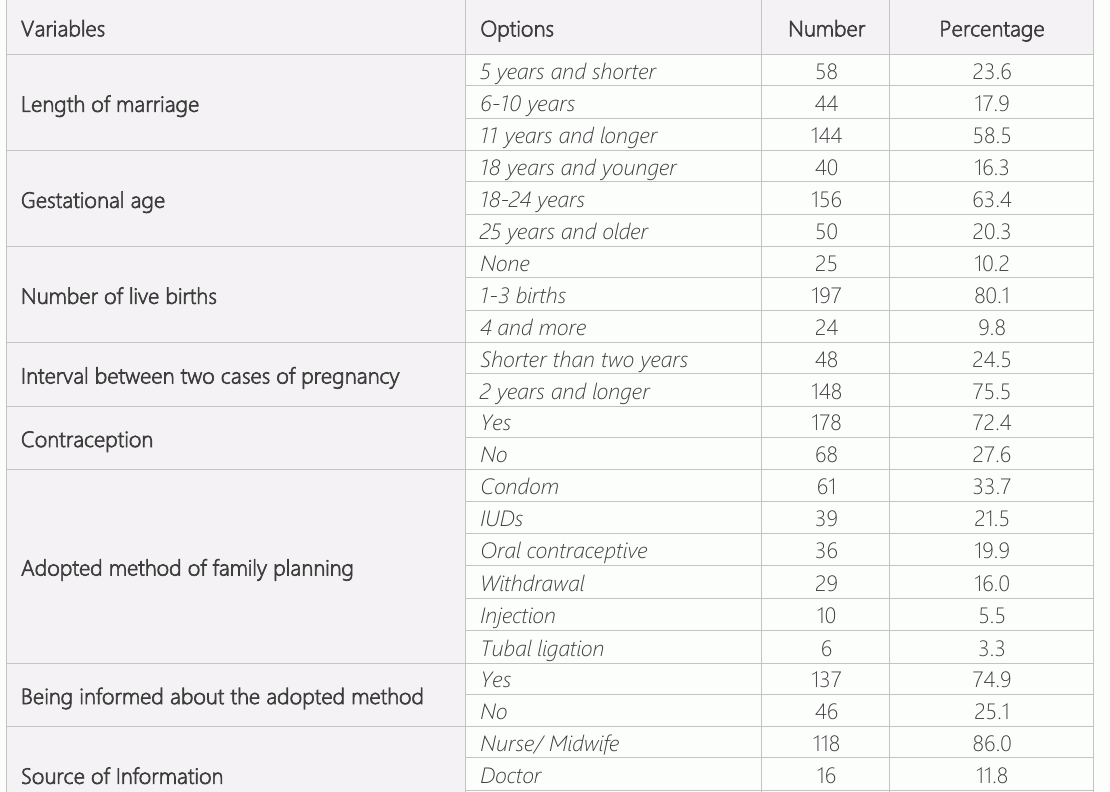
The mean age of the participants was 34.06±7.9 years. The great majority of them were housewives (91.9%), and 38.2% of them were primary school graduates. More than two-thirds of them (71.5%) described their economic status as intermediate (Table-2). Whereas the mean age of marriage was 20.45±3.61 years, the mean gestational age was 21.60±3.74 years. Table-1 shows the distribution of obstetric characteristics of women. Of the participants, 58.5% was married for 11 years or longer. The first pregnancy of 63.4% had between the ages of 18 and 24. Of the women, 80.1% had 1 to 3 live births. Of the participants, 75.5% stated that there were at least two years between the two pregnancies, 72.4% was using contraceptive measures, 84.0% was using one of effective family planning methods, 74.9% was informed about the family planning method used, and 86.0% obtained this information from nurses or midwives.
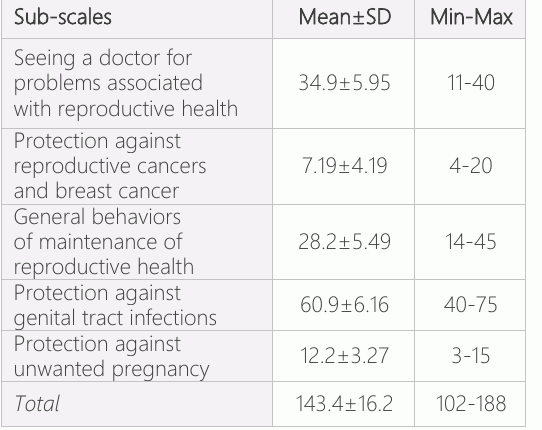
Table-2 presents the distribution of the participants by their mean scores in the SIRH and its sub-scales. The mean total score of women participating in the study was found to be 143.49±16.28 (minimum 102-maximum 188). The distribution of the mean SIRH sub-scale scores of the women included in the study according to some characteristics is shown in reproductive cancers and breast cancer differed significantly depending on occupational status and age (p<0.05). Those participants who were 25 years old or younger had a mean score of 5.05±2.09, which was lower than those of the other groups (p<0.05). The working participants got a higher mean score when compared to the non-working (p<0.05) (Table-3).

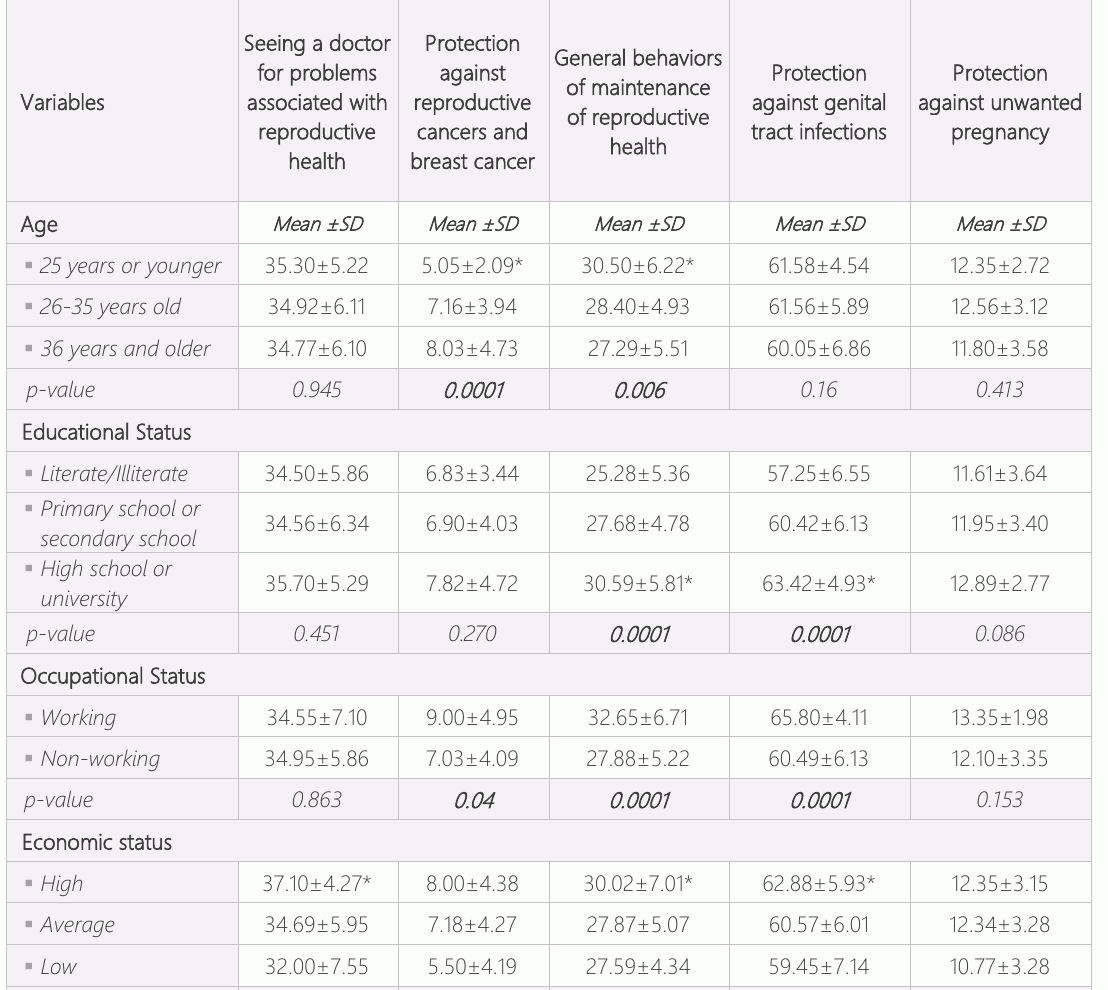
The mean scores in general behaviors of maintenance of reproductive health differed depending on occupational status, educational status, age, and perceptions of economic status (p<0.05). Those participants who were 25 years old or younger, who were high school or university graduates and who perceived their economic status as high, had higher mean scores in the sub-scale, and the discrepancy was significant (p<0.05) (Table-3).
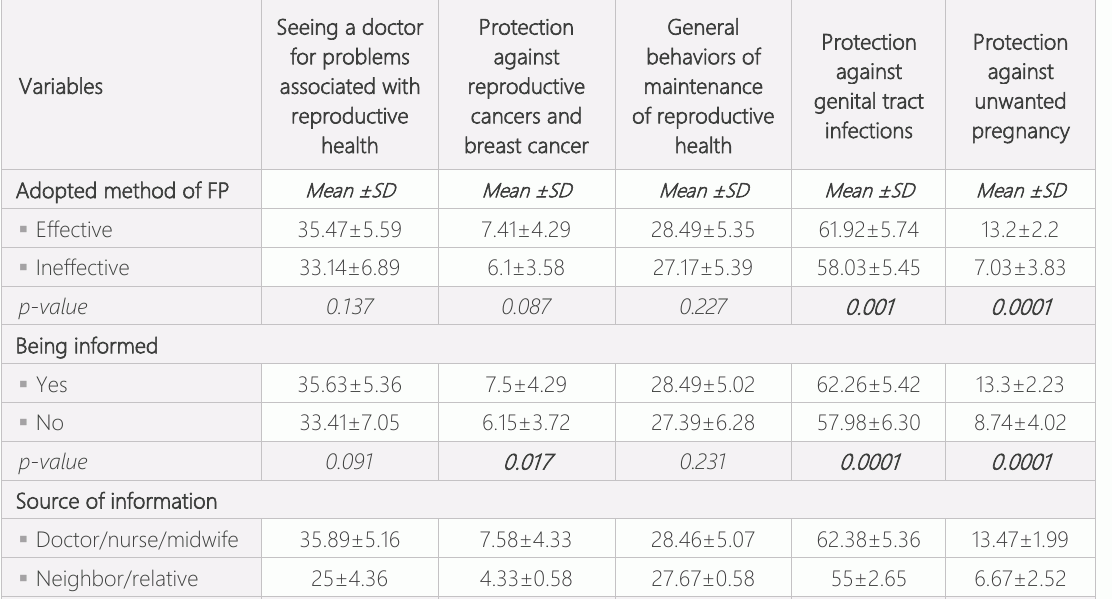
The mean scores in the protection against genital tract infections differed depending on educational status, occupational status, and perceptions of economic status (p<0.05). Those participants who were high school or university graduates, who worked and who perceived their economic status as high had better mean scores in the sub-scale (p<0.05). However, age did not lead to a difference in terms of the mean scores in the sub-scale (p>0.05)(Table-3). The mean score in protection of unwanted pregnancy did not differ depending on age, educational status, occupational status, or perceptions of economic status (Table-3). The distribution of the mean SIRH sub-scale scores according to the information sources and family planning methods used by women are shown in Table-4. Those participants that used an effective method of family planning had higher mean scores in protection against genital tract infections and protection against unwanted pregnancy (p<0.05). Besides, those who reported being informed about the adopted method of family planning got higher mean scores in protection against reproductive cancers and breast cancer, protection against genital tract infections, and protection against unwanted pregnancy (p<0.05). Furthermore, those participants whose source of information was health care professionals had a higher mean score in seeing a doctor for problems associated with reproductive health, protection against genital tract infections, and protection against unwanted pregnancy(p<0.05)(Table-4). Finally, a higher mean score was achieved in the overall SIRH by those participants who were high school or university graduates, who worked, who perceived their economic status as high, who used an effective method of family planning, who were informed about the adopted method of family planning, and whose source of information was health care professionals (p<0.05).
Discussion
The mean age of the participants was 34.06±7.9 years. Similarly, the mean ages of the participants- married women- were 34.4± 5.6 years (10). Moreover, 32.21±9.01 years (11) in two other studies conducted in Samsun and Kayseri, respectively. A review of foreign studies, on the other hand, suggested that the mean ages of married women were 29.49, 32 and 38.09±7.43 years in Ethiopia, India and China respectively (12–14).
The participants of the present study were mostly (38.2%) primary school graduates. A study reported a similar finding carried out in Bingol (Turkey), in which 37% of the women participants were primary school graduates (15). Nevertheless, two studies conducted in two other cities of Turkey, namely Sivas and Tokat, reported that 55.6% and 64.3% of the women participants were primary school graduates (16, 17). A review of foreign studies suggested that married women in Ethiopia and India were primary school graduates by 32.9% and 15.3% respectively (12, 18).
The age of marriage is accepted as significant demographic indicator since it suggests that the woman is at risk of pregnancy. In the present study, the mean age of marriage for the participants was 20.45 years. Likewise, Egri and Golbasi reported that the mean age of marriage for the participants in their study was 18.7 years, and the mean age of marriage for the participants in another study by Sevindik et al. was 19.5 years (17, 19). Similarly, the mean age of marriage for the women participants was 20.71 years in a study carried out by Erbil (20). According to the results of the 2008 Turkey Health and Population Study, the median age of marriage in Turkey was 20.8 years. Furthermore, it was reported that the mean age of marriage for the women participants in a Chinese study was 21.99±1.85 years (14).
The safest age range for pregnancy and delivery is when women are 20 to 29 years old. In the present study, the mean gestational age of the participants was 21.60±3.74 years. The mean gestational ages of women in Aydin and Nigde, two cities of Turkey, were reported to be 22.69±3.72 and 19.7±0.18, respectively (21, 22). First pregnancy and delivery, as well as fourth and more deliveries, are acknowledged to put women at risk of maternal death. In the present study, the mean number of pregnancies that the participants had was 2.61±1.58, whereas the mean number of live births was 1.92±1.14. In another study conducted by Kaya et al., the number of pregnancies was 2.73±1.61 among the participants whereas the number of live births was 2.56±1.48 (10). Also, Dundar et al. reported that the number of deliveries and the number of live births among the participants in a study were 2.1±0.9 and 1.8±0.7 respectively (15). According to the results of the 2008 Turkey Population and Health Study, the fertility rate among Turkish women was 1.70 (23). Nevertheless, the fertility rate among Turkish women was reported to be 2.1 by the 2012 Turkish Health Statistics Yearbook (24). The rate in the present study was quite close to the average across Turkey.
Unwanted pregnancy might pose a threat to women in different ways, the most important of which is to attempt to terminate an unwanted pregnancy through miscarriage. Such attempts, especially those in unsafe environments and by the woman herself, are the primary reason for maternal death. According to the data published by the World Health Organization in 2008, unsafe miscarriage accounted for 13% of maternal deaths and 5 million women were hospitalized every year due to complications associated with unsafe miscarriage (25). In the present study, the number of miscarriage that the participants had was 1.39+0.72. According to the results of the 2008 Turkey Population and Health Study, nevertheless, the number of miscarriage and miscarriage rates was 0.3 and 0.29 respectively among women aged 15 to 49 years old (23). In the present study, 26.8% of the participants had a miscarriage experience. In a foreign study, the prevalence among Chinese women was reported to be 32% (14). In the present study, the mean number of children that the participants wanted to deliver was 2.51±1. Similarly, a study conducted in Iran reported that the number of children that the participants wanted to have was 2.4±1.3 (26). In the present study, the participants had one child, two children, and three children by 25.2%, 38.2% and 16.7% respectively. However, a Chinese study reported prevalence among Chinese women for each category to be 36.8%, 51.2%, and 10.7% respectively (14).
The present study revealed that 73.6% of the participants adopted contraceptive methods. The top three modern contraceptive methods were condoms (33.7%), IUDs (21.5%), and oral contraceptives (19.9%). Similarly, the results of the 2008 Turkey Population and Health Study indicated that the prevalence of contraceptive methods among Turkish women was 73%, and the most common modern methods were IUDs and condoms. As for traditional methods, the most common one was withdrawal (23). That finding of the present study is supported by those of Kaya et al. and Giray et al. (15, 27). According to another clinical study, 80% of Norwegian women use a contemporary contraceptive method and the most common ones are COCs (56%) and condoms (20%) (28). In Ethiopia, however, the prevalence of modern contraceptive methods among married women is 46.9%, and the most common method of family planning is injected contraceptives (62.9%), which is followed by IUDs (14%) and COCs (12). According to an Iranian study, many married women there (28.4%) use natural methods of family planning. Out of the modern methods, the most common ones are oral contraceptives (26.8%), condoms (25.5%), and IUDs (10.1%). In Malaysia, the prevalence of modern methods of family planning among married women is 30% (29), whereas 93.9% of Chinese women use contraceptive methods. The most common modern method in the latter is surgical sterilization (53.1%), which is followed by IUDs (35.4%) and condoms (8.7%) (14). In the present study, the mean score of the participants in the overall SIRH was 143.49. The figure is higher when compared to the ones revealed by Aytac, Kayaci, et al., and Erbil and Goktaslar, which are 124.12, 127.8, and 142.8± 20.73 respectively (30–33). This suggests that the participants in the present study exhibited more positive behaviors regarding the maintenance of reproductive health.
In the present study, the sub-scale that the participants had the greatest mean score in was seeing a doctor for problems associated with reproductive health (34.92±5.95). In contrast, the one with the lowest mean score was protection against reproductive cancers and breast cancer (7.19±4.19). On the other hand, Erbil and Goktaslar reported the mean scores in these two sub-scales to be 32.75±6.25 and 8.82±4.26 respectively (33).
As for the relationship between age and the mean scores in the sub-scales of SIRH, those participants who were 25 years or younger had lower mean score in protection against reproductive cancers and breast cancer. Individuals that have acquired accurate knowledge about attitudes to and behaviors of reproductive health since their adolescence will, as conscious and healthy parents, not only have improved sexual and reproductive health but also have positive influences on the health of new generations that they are to raise (34). Research on young people has suggested that they have insufficient knowledge and practices concerning protection against reproductive cancers and breast cancer and that they need comprehensive training and information in this respect (35–38).
In the present study, higher educational status led to higher scores in general behaviors of maintenance of reproductive health and protection against genital tract infections. According to Sukur, similarly, women tend to get involved in fewer wrong practices regarding their reproductive health as their educational status gets higher (8). Also, Er maintains that educational status significantly affects women’s attitudes towards the maintenance of their reproductive health (34). In another study by Kara, the participants who were university graduates had higher scores in general behaviors of maintenance of reproductive health and protection against genital tract infections (39). These suggest that it is essential to enhance women’s educational status to maintain and enhance reproductive health. In the present study, the working participants had higher mean scores in protection against reproductive cancers, general behaviors of maintenance of reproductive health, breast cancer, and protection against genital tract infections when compared to the non-working participants. The finding implies that women’s reproductive health is positively influenced by not only their higher educational status but also their working for an income-generating job. The finding is supported by another study (39). The present study also attempted to explore the link between economic status and the sub-scales of the SIRH. Those participants who perceived their economic status as high got higher scores in seeing a doctor for problems associated with reproductive health, general behaviors of maintenance of reproductive health, and protection against genital tract infections. The finding suggests that economic status is a decisive factor in the extent to which women benefit from health care services and develop positive health behaviors. In the study by Kara, similarly, the participants with a better income level had a higher mean score in the overall SIRH (39).
Besides, those participants whose source of information was that health care professionals had higher mean scores in seeing a doctor for problems associated with reproductive health, protection against genital tract infections, and protection against unwanted pregnancy. The finding indicates that women put what they have learned about into practice. For the maintenance of reproductive health, it is essential to access reliable information. The risks confronting women about their reproductive health are increased because subjects concerning reproductive health cannot be talked about with others in a comfortable way and that they have incomplete or wrong knowledge about them (9). Nurses play a key role in enabling women to develop positive behaviors of reproductive health and acquiring attitudes that will maintain and heal their reproductive health. It is recommended that nurses/midwives, whether they provide primary care services or work for other health care organizations, should provide women with training and counseling as to the maintenance of reproductive health.
Conclusion
In this study, married women were found to have a good level of attitudes towards reproductive health and their attitudes toward the maintenance of their reproductive health were significantly affected by age, educational status, occupational status, and perceptions of economic status.
In order to have improved reproductive health, women should be enabled to benefit from primary training opportunities. Women with low educational status should be trained, especially by primary care staff, in how to maintain their reproductive health, that early marriage and pregnancy should be prevented, that young people should be provided with widespread counseling regarding maintenance of reproductive health, and that training programs should be held in order to promote women to use modern methods of family planning.
Declarations
- Author contributions (CRediT)
- All authors contributed equally to all 14 CRediT roles (Conceptualization, Data curation, Formal analysis, Funding acquisition, Investigation, Methodology, Project administration, Resources, Software, Supervision, Validation, Visualization, Writing – original draft, Writing – review & editing).
- Funding
-
Funding information was not reported in the published version of this article.
- Conflicts of interest
- The authors have declared no conflict of interest for the present article.
- Ethics approval
- Before the administration, an informed consent was granted and approved by the Provincial Directorate for Health in Elazığ and the Academic Ethics Committee of Firat University.
- Data availability
- A data availability statement was not reported in the published version of this article.
References (39)
6 of 39 references are linked to their DOI.
- Akin A: Inequalities in Women’s Health and Social Gender (Kadın sağlığında Eşitsizlikler ve Toplumsal Cinsiyet) http://bukcam.baskent.edu.tr/index.php?option=com_content &view=article&id=101%3Akadinsagligindaesitsizliklervetoplums alcinsiyet&lang=tr&Itemid=57 (Accessed September 19, 2016) PubMed Google Scholar
- Ozvaris SB, Ertan AB: The Lifelong Approach to Reproductive Health (Üreme Sağlığında Yaşam Boyu Yaklaşımı). http://www. huksam.hacettepe.edu.tr/Turkce/SayfaDosya/ureme_sagligind a_yasam boyu.pdf (Accessed September 19, 2016) PubMed Google Scholar
- Akin A, Ozvaris SB, Ozgulnar N, Dilbaz B, Ozaydin NG (2009). Introduction to Reproductive Health (Üreme Sağlığına Giriş). General Directorate of Maternal and Infant Health and Family Planning. Ankara PubMed Google Scholar
- Akin A, Kocoglu GA: Reproductive Health: International Decisions and Turkish Practices (Üreme Sağlığı Uluslar arası Kararlar ve Türkiye Uygulamaları) http://thb.hacettepe. edu.tr/ arsiv/2002/sayi_3/baslik3.pdf (Accessed September 19, 2016) PubMed Google Scholar
- Karaoz B: Identification of the Needs of Women with Breast Cancer for Reproductive Health (Meme Kanserli Kadınların Üreme Sağlığı Konusundaki Gereksinimlerinin Belirlenmesi). (Master’s Thesis) Adnan Menderes University, Institute of Health Sciences; Turkey; 2008 PubMed Google Scholar
- Reproductive Health. http://www.who.int/topics/reproduc tive_health/en/ (Accessed July 22, 2014) PubMed Google Scholar
- Sahiner G: The Effect of Social Gender and Violence against Women on their Use of Reproductive Health Services (Toplumsal Cinsiyet ve Kadına Karşı Şiddetin Kadınların Üreme Sağlığına İlişkin Hizmetlerden Faydalanmasına Etkisi). (Master’s Thesis). Gulhane Military Medical Academy, Institute of Health Sciences, Turkey; 2007 PubMed Google Scholar
- Er S, Sen S, Taspinar A, Sirin A. Reproductive health-related problems among married women continuing graduate education and associated factors (Lisansüstü eğitime devam eden evli kadınların üreme sağlığı sorunları ve etkileyen faktörler). TAF Preventive Medicine Bulletin 2008;7(3):231-236 PubMed Google Scholar
- Kostu N, Tasci KN. The identification of the attitudes of 15 to 49-year old married women towards the maintenance of reproductive health (15-49 yaş evli kadınların üreme sağlığını koruyucu tutumlarının belirlenmesi). Atatürk University Journal of Anatolia Nursing and Health Sciences 2009;12(1):91-97 PubMed Google Scholar
- Dundar C, Kaynar E, Pesken Y. The use of contraceptive methods among married midwives working for primary health care centers in the center of Samsun (Samsun ili merkez sağlık ocaklarında çalışan evli ebelerin aile planlaması yöntemi kullanma durumları.) Inonu University Journal of Turgut Ozal Medical Center 2005;12(4): 243-246 PubMed Google Scholar
- Nacar M, Cetinkaya F, Ozturk Y. The use of primary health care centers among 15 to 49-year old women in Kayseri and their expectations (Kayseri ilinde 15-49 yaş grubu kadınların sağlık ocağından yaralanma durumları ve beklentileri). STED 2004;13(3): 106-109 PubMed Google Scholar
- Mohammded Abdurrahman, Woldeyohannes, Desalegn; Feleke, Amsalu; et al: Determinants of modern contraceptive utilization among married women of reproductive age group in North Shoa Zone, Amhara Region, Ethiopia. Reproductıve Health, 2014 PubMed Google Scholar
- Bajwa, Sukhwinder Kaur; Bajwa, Sukhminder Jit Singh; Ghai, Gagandeep Kaur; et al: Knowledge, Attitudes, Beliefs, and Perception of the North Indian Population Toward Adoption of Contraceptive Practices. Asıa-Pacıfıc Journal of Publıc Health, 2012;24 (6):1002-1012 DOI Crossref PubMed Google Scholar
- He Dian, Zhang Ying, Ji Ning, et al. A cross-sectional study of contraceptive use among married women living in rural China. International Journal of Gynecology & Obstetrics 2012;118(2):129-132 DOI Crossref PubMed Google Scholar
- Kaya H, Tatli H, Acik Y, Deveci SE. The identification of the use of family planning among 15 to 49-year old women around the Uydukent Primary Health Care Center in Bingol (Bingöl ili Uydukent sağlık ocağı bölgesindeki 15-49 yaş kadınların aile planlaması kullanım düzeyinin belirlenmesi). Firat University Journal of Health Sciences 2008;22(4);185-191 PubMed Google Scholar
- Guler N, Tel H, Tuncay FO. The woman perspective on domestic violence (Kadının aile içinde yaşanan şiddete bakışı). The Cumhuriyet Medical Journal 2005;27(2):51-56 PubMed Google Scholar
- Egri G, Golbasi Z. Traditional postnatal infant care practices among 15 to 49 year old married women (15-49 yaş grubu evli kadınların doğum sonu dönemde bebek bakımına yönelik geleneksel uygulamaları). TAF Preventive Medicine Bulletin 2007;6(5):313-320 PubMed Google Scholar
- Winter A, Stephenson R. Intimate partner violence and symptoms of reproductive tract infections among married Indian women. International Journal of Gynecology & Obstetrics 2013;121(3):218-223 DOI Crossref PubMed Google Scholar
- Sevindik F, Acik Y, Gulbayrak C, Akgun D. Traditional methods known and used by married women in the center of Elazig for voluntary abortion (Elazığ il merkezinde yaşayan evli kadınların istemli düşük yapmak amacıyla uyguladıkları ve bildikleri geleneksel yöntemler). TAF Preventive Medicine Bulletin 2007;6(5):321-324 PubMed Google Scholar
- Erbil N. Prevelance and Risk Factors for Female Sexuel Dysfunction among Turkish Women Attending a Maternity and Gynecology Outpatient Clinic. Sexuality and Disability. 2011;29(4):377-386 DOI Crossref PubMed Google Scholar
- Beser E, Ergin F, Sonmez A. Prenatal care services in the center of Aydin (Aydın il merkezinde doğum öncesi bakım hizmetleri). TAF Preventive Medicine Bulletin 2007;6 (2):137-141 PubMed Google Scholar
- Gilic E, Ceyhan O, Ozer A. Knowledge, attitudes and behaviors regarding family planning among women delivering baby in the Nigde Maternity Hospital (Niğde Doğumevi'nde doğum yapan kadınların aile planlaması konusundaki bilgi tutum ve davranışları). Firat Medical Journal 2009;14(4):237-241 PubMed Google Scholar
- Turkey Population and Health Survey 2008. http://www.hips. hacettepe.edu.tr/TNSA2008-AnaRapor.pdf (Accessed July 22, 2014) PubMed Google Scholar
- Health Statistics Yearbook 2013. http://sbu.saglik.gov.tr/ Ekutuphane/kitaplar/istaturk2012.pdf (Accessed July 22, 2014) PubMed Google Scholar
- World Health Organization: Unsafe Abortion: Global and Regional Estimates of the Incidence of Unsafe Abortion and Associated Mortality in 2008, Geneva, Switzerland: 2011 PubMed Google Scholar
- Motlaq ME, Eslami M, Yazdanpanah M, et al. Contraceptive use and unmet need for family planning in Iran. International Journal of Gynecology & Obstetrics. 2013;121(2):157-161 DOI Crossref PubMed Google Scholar
- Giray H, Keskinoglu P. The use of effective family planning methods among 15 to 49-year old married women admitted to the Isikkent Primary Health Care Center and Associated Factors (Işıkkent Sağlık Ocağı’na Başvuran 15-49 yaş evli kadınların etkili aile planlaması yöntemi kullanımı ve etkileyen etmenler). STED 2006;15(2):23-26 PubMed Google Scholar
- Bratlie, Marte; Aarvold, Trine; Skarn, Elling Skeide; et al. Long-acting reversible contraception for adolescents and young adults–A cross- sectional study of women and general practitioners in Oslo, Norway. European Journal of Contra ception and Reproductive Health Care,2014;19(3):194-202 DOI Crossref PubMed Google Scholar
- Fataneh, Ghadirian; Marjan, Mardani H.; Nasrin, Rezaee; et al. Sexual function in Iranian women using different methods of contraception. Journal Of Clinical Nursing 2013;22(21-22):3016- PubMed Google Scholar
- Najafi, Fatemeh; Rahman, Hejar Abdul; Hanafiah, Muhamad; et al. Emergency contraception: Knowledg e, attitudes and practices among married Malay women staff at a public university in Malaysia. Southeast Asian Journal of Tropical Medicine and Public Health 2012;43(6):1512-1520 PubMed Google Scholar
- Aytac A The Evaluation of Reproductive Health Behaviors among Women and Diagnosis Made through the Vaginal Discharge Assessment Form (VDAF) (Kadınlarda Üreme Sağlığı Davranışlarının ve Geliştirilen Vajinal Akıntı Tanılama Formu (VATF) ile Konulan Tanı Sonucunun Değerlendirilmesi). (Master’s Thesis) Marmara University, Institute of Health Sciences, Turkey; 2007 PubMed Google Scholar
- Kayaci M, Demirci H, Ozbasaran F. The Identification of Reproductive Health-Related Problems among Married Women in Rural Areas and Associated Factors (Kırsal Alanda Yaşayan Evli Kadınların Üreme Sağlığı Sorunları ve Etkileyen Faktörlerin İncelenmesi.) The 5 th International Congress on Reproductive Health and Family Planning 5, Congress Proceedings. 19–22 April 2007, Ankara., Turkey; 265–266 PubMed Google Scholar
- Erbil N, Goktaslar Z. The identification of the attitudes of married women towards the maintenance of reproductive health and associated factors. Turkiye Klinikleri Journal of Gynecology and Obstetrics 2010;20(5):295-303 PubMed Google Scholar
- Sukur N. A Study on the Effects of the Attitudes of Women to the Maintenance of Reproductive Health on the Frequency of Vaginal Douches (Kadınların Üreme Sağlığını Koruyucu Tutumlarının Vajinal Duş Yapma Durumuna Etkisinin İncelenmesi). (Master’s Thesis) Halic University, Institute of Health Sciences, Turkey; 2012 PubMed Google Scholar
- Pinar G, Topuz S, Dogan N, Algier L. Knowledge and practices regarding cervix cancer and its prevention among first grade female students at Baskent University (Başkent üniversitesi birinci sınıfta okuyan kız öğrencilerin serviks kanseri ve korunmaya yönelik bilgi ve uygulamaları). The Turkish Journal of Gynecologic Oncology 2009;3:66-73 PubMed Google Scholar
- Ozsaran Z, Demirci S, Aras AB A. Survey of knowledge levels about HPV vaccine among students of medicine (Tıp Fakültesi öğrencileri arasında HPV aşısı bilgi düzeyini değerlendiren anket çalışması). The Turkish Journal of Gynecologic Oncology 2011;2:40-44 PubMed Google Scholar
- Onsuz F, Topuzoglu A, Bilgi Z, Yilmaz M, Amuk N, Fahridin F. The Evaluation of Knowledge about and Attitudes to HPV Vaccine among Medical Students with Internship in Gynecology and Obstetrics in a Medical Faculty (Bir Tıp fakültesinde kadın hastalıkları ve doğum stajını yapmış öğrencilerin HPV aşısı hakkında bilgi düzeyleri ve Tutumlarının Değerlendirilmesi.) TAF Preventive Medicine Bulletin, 2011;10(5): 557-564 PubMed Google Scholar
- Aslan A, Temiz M, Yigit Y, Can R, Canbolant E, Yigit F. Knowledge, attitudes and behaviors regarding breast cancer among nursing students (Hemşirelik Yüksekokulu öğrencilerinin meme kanseri hakkında bilgi tutum ve davranışları.) TAF Preventive Medicine Bulletin 2007;6(3):193-198 PubMed Google Scholar
- Kara H. Knowledge, Attitudes and Behaviors Regarding Reproductive Health and Reproductive Rights among Married Women. (Evli Kadınların Üreme sağlığı ve Üreme Hakları Konusunda Bilgi Tutum ve Davranışlarının Değerlendirilmesi). Master’s Thesis. Halic University Institute of Health Sciences, Turkey; 2013 PubMed Google Scholar
Respond to this article
Comments on a published article are welcome as a Letter to the Editor.
Get an e-mail when new articles in your fields are published
Questions to the authors
Questions are moderated: an editor approves each question, the authors answer, and an editor approves the answer before both appear here.
No answered questions yet.
Ask the authors a question
Discussion
Comments are moderated: they appear after the writer confirms the e-mail address and an editor approves them. Each comment carries a conflict-of-interest statement.
No comments yet.
Write a comment
Read the full text
Open the PDF here
Loading the PDF…
If the PDF does not show here, use the download button above.
How to cite this article
Oguzoncul AF, Celebi E. Identifying Attitudes of Married Women Between the Ages of 15 and 49 Living in Elazig Province of Turkey Towards Reproductive Health. Ulutas Med J. 2019;5(4):262-273. doi:10.5455/umj.20190723031403
Oguzoncul, A. F., & Celebi, E. (2019). Identifying Attitudes of Married Women Between the Ages of 15 and 49 Living in Elazig Province of Turkey Towards Reproductive Health. The Ulutas Medical Journal, 5(4), 262–273. https://doi.org/10.5455/umj.20190723031403
Oguzoncul, A.F. and Celebi, E. (2019) 'Identifying Attitudes of Married Women Between the Ages of 15 and 49 Living in Elazig Province of Turkey Towards Reproductive Health', The Ulutas Medical Journal, 5(4), pp. 262–273. doi: 10.5455/umj.20190723031403.