The Ulutas Medical Journal · ISSN 2149-0430 (print), 2149-388X (online) · https://www.ulutasmedicaljournal.com/?mno=48894
Original Article · Open access
Effects of Vitamin E and Selenium-yeast on Cognitive Performance in Pregnant Dams Using Percentage Alternation and Discrimination Index Determinants
Also available in: العربية · Türkçe · 中文
- Physiology, Basic Medical Sciences, College of Medicine and Health Sciences, Baze University, Abuja ROR
- Physiology, Basic Medical Sciences, College of Medicine and Health Sciences, University of Nigeria ROR
- Medicine, Maitama District Hospital, Abuja
Abstract
- Introduction
- Oxidative stress has been a hallmark in cognitive disorders; there is a need to mitigate it and a suitable model for cognitive assessment in rodents. This study investigates the effects of Vitamin E and Selenium yeast on the cognitive performance of pregnant dams using percentage alternation and discrimination index determinants.
- Materials and Methods
- Thirty-five Wistar rats were used for this study and grouped into seven (n=5); group 1 (non-pregnant), group 2 (pregnant), group 3 (pregnant + received vitamin E; 100 mg/kg/day) group 4 (pregnant + received selenium-yeast; 0.4 mg/kg/day), group 5 (pregnant + received yeast; 50 mg/kg/day) group 6 (pregnant + received selenium; 0.25 mg/kg/day) and group 7 (pregnant + received vitamin E; 100 mg/kg/day + selenium-yeast; 0.4 mg/kg/day). Discrimination index was evaluated using novel object recognition, apparatus, while percentage alternation was evaluated using Y-maze on day 19.
- Results
- Percentage alternation increased in group 1 and antioxidants treated groups respectively compared to group 2 (p˂0.05). Discrimination index significantly increased in group 1 and antioxidants treated groups compared to group 2 (p˂0.05).
- Conclusion
- The percentage alternation and discrimination index show promising results in the cognitive assessment of pregnant dams. Antioxidant molecules such as vitamin E and selenium-yeast potentiate the indices of cognitive improvement.
Keywords
Full text
Introduction
Percentage alternation and discrimination index are two age-long cognitive determinants used in translational memory research (1). DI is derived from the novel object recognition (NOR) paradigm used in the evaluation of rodents’ ability to differentiate between old and new items in an open-field box (2). Failure to present novelty preference indicates a rodent's lack of discriminately ability (3). This assumption is because animals have the instinct to identify the newest object based on memory strength rather than unnecessary classification based on new criteria (4). However, since the NOR, task relies entirely on the innate ability of the animal predisposition toward explaining novelty, some schools of thought suggest biases may play a role in determining its final metric (5). Therefore, the use of a confirmatory cognition test like the percentage alternation is vital in correcting the impression of bias and is a vital behavioral study in rodents (6). Percentage alternation is been evaluated using a Y-maze apparatus test; alternation indicates sequential entries into all the arms which are also called a triad (7). Since animals have a strong tendency toward entering a preferred side rotationally (8). This test was observed to provide higher credibility when the study involves pregnant rodents (9). Pregnancy has been observed to be a physiological stress paradigm; hence may induce oxidative damage (10). Oxidative damage has been observed to alter the physiological mechanisms, and hence result in organ damage (11). Oxidative damage has been observed to alter cognitive performance (11, 12). A study has shown the role of selenium yeast in cognitive improvement in pregnant dams (13). However, selenium yeast is a water-soluble antioxidant and may lack the penetrating ability inside the hydrophobic portion of the cells towards improving peroxisomes activity. Hence the use of dual antioxidants may play a vital role in mitigating such effects, especially vitamin-E which is a fat-soluble antioxidant; it could protect the hydrophilic portion of the neuronal cells (12). While selenium yeasts a water-soluble antioxidant; may protect the hydrophobic portion of the nerve cells (14). These may mitigate the oxidative stress that induces cognitive alteration in the behavioral test paradigm in rodents (15). However, to the best of the literature search, no study has conducted a dual behavioral cognitive study on pregnant dams using NOR and Y-maze along with the administration of antioxidants vitamin E and selenium yeast. Hence this study may correct the biases experienced using behavioral cognitive study model and possibly ameliorate pregnancy-induced oxidative stress damage associated with cognition.
The present study aims to investigate the effects of vitamin E and selenium yeast on the percentage alternation and discrimination index of pregnant dams.
Materials and Methods
Ethical Statement
Forty-five Wistar rats of both sexes were purchased from the Faculty of Veterinary Medicine, University of Abuja. The animals were housed for two weeks for acclimatization in the animal house of the Department of Physiology, Baze University, under standard temperature before the commencement of study and mating. The study protocol was approved by the ethical committee of the Department of Physiology, Baze University, with the ethical number (BUAEC0023).
Antioxidant Preparation
The selenium yeast was manufactured by Mason Vitamins, Miami Lakes. Selenium used was manufactured by Bactolae Pharmaceutical Inc, USA. Yeast tablets were manufactured by Kunimed Pharmacchem Ltd, Adelanwe Street, Valley Estate, Ikeja, Lagos, Nigeria. Vitamin E (Alpha-tocopherol) was purchased from H- Medix, Gwarimpa Estate, Abuja. Selenium, selenium yeast, and yeast were reconstituted with distilled water, while vitamin E was given in its aqueous form. All administration was by an oral gavage.
Study Design
Thirty-five female Wistar rats (30 Pregnant and five non-pregnant) were grouped into seven groups (n:5). Pregnancy was confirmed by the presence of a vaginal plug, which was checked during the early hours of each day; the first day of the appearance was tagged pregnancy day 0 (PD0). The administration of selenium, vitamin E, yeast, selenium-yeast, and vitamin E commenced on pregnancy day 3 and lasted for 15 days. Selenium and yeast were reconstituted with distilled water, while vitamin E was given in its aqueous form.
▪ Group I (negative control): Non-pregnant + received 1 mL/kg of distilled water ▪ Group II (positive control): Pregnant + received 1 mL/kg of distilled water via oral ▪ Group III: Pregnant + received vitamin E; 100 mg/kg/day ▪ Group IV: Pregnant + received selenium; 0.4 mg/kg of selenium yeast ▪ Group V: Pregnant + received 50 mg/kg of yeast ▪ Group VI; Pregnant + received 0.25 mg/Kg of selenium ▪ Group VII: Pregnant + received selenium-yeast; 0.4 mg/kg + vitamin E; 100 mg/kg/day
Test for Cognitive Response Learning and memory are indices of cognition. The test for learning and memory was conducted on Day 19 of pregnancy on the dams using Y-maze and Novel object recognition test (NORT).
Y-maze Test
Y-Maze is a behavioral test for measuring the willingness of rodents to explore new environments (16). Rodents typically prefer to investigate a new arm of the maze rather than returning to the one they previously visited. Many parts of the brain like the hippocampus, septum, basal forebrain, and prefrontal cortex, are involved in this task (17). The Y-shaped maze has three arms at a 120° angle from each other (50x50x50 cm). In this study, the working memory was assessed based on the existing protocols from previous literature with little modification (18). The rats were placed at the center of the maze and were allowed to freely explore the three arms for 5 mins. The number of times the rats entered each arm was counted; this is when all four limbs are inside the arm. Over the course of multiple arm entries, the subject should show a tendency to enter a less recently visited arm. The number of arm entries and the number of triads or alternations (a triad when it visited all 3 arms consecutively) were used to calculate the percentage alternation (measure of working memory). The percentage alternation (%) is calculated as (number of alternation/number of arms entered-2) x 100 according to the method of (19). If a rat scored significantly above 50% alternations, these indicate a functional working memory. Note, that after each trial, the Y-maze was cleaned with 75 % ethanol which prevented olfactory cues.
Novel Object Recognition Test
Novel Object Recognition (NORT) is used to evaluate cognition, particularly recognition memory, in rodent models of CNS disorders. This test is based on the spontaneous tendency of rodents to spend more time exploring a novel object than a familiar one. The choice to explore the novel object reflects the use of learning and recognition memory (20).
The Novel Object Recognition task was conducted based on the protocols of previous studies (21, 22) with slight modification using an open field box with a dimension (50x50x50 cm), along with two different objects.
The test was divided into three (3) phases: 1) Familiarization phase (the animal is free to explore the space with no objects present), with 5 minutes to habituate.
2) Training phase (two similar objects were introduced into the open field) 3) Testing phase (a new object was introduced instead of the familiar object).
On the test day, the rats were placed in the test box, and after 5-min of habituation, two objects were introduced in two corners (approximately 20 cm apart from each other). The time spent exploring each object was recorded during the subsequent 5 min period (defined as the training session). After a waiting period of 15 mins, the rats were placed in the test box once again, and within an interval of 5 mins, an object was reintroduced, in which one of the familiar objects used in the previous training session was replaced with a novel object. The time spent exploring each object was recorded during the subsequent 5 min period (defined as the test session). Exploration is when an animal sniffs, bites, or faces an object. The total exploration time of the familiar and novel objects was used to calculate the discrimination index. The discrimination index is an index of measures of discrimination between the familiar and the novel objects corrected for exploratory activity. It is calculated as (time spent on the novel object − time spent on the familiar object)/ (time spent on novel object + time spent on the familiar object). The discrimination index ranges from −1 to 1, with −1 indicating a complete preference for the familiar object, 0 indicating no preference for either object, and 1 indicating a complete preference for the novel object.
Statistical Analysis
Data obtained from this study are expressed in mean (± SEM). And the values of p<0.05 are considered significant. The difference between the mean was obtained using a one-way analysis of variance (ANOVA) followed by a post-hoc test (Tukey’s). GraphPad Prism 8 (San Diego, California, USA) is the statistical use.
% (n
io 60 atn er lt 40 A ge tan 20 ce er
Results
Apparatus
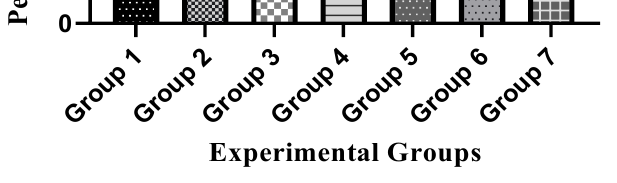
A percentage alternation above 50% is an indicator of spatial memory retention and below 50% indicates spatial memory deficit. Figure 1, shows a significant increase (p˂0.05) in percentage alternation in group 1 (58.7±4.362) compared to group 2 (24.33±2.404); this may imply a deficit in spatial memory. However, there is a significant (p˂0.005) increase in the percentage alternation in the antioxidants administered in groups 3 (52.1±2.42), group 4(50.3±2.42), group 5 (51±4.93), group 6 (53±2.08) and group 7 (56.3±1.8) compared to group 2. Among antioxidant groups, group 7 (56.3±1.8) display better spatial memory retention, although not significant (p˂ 0.05).
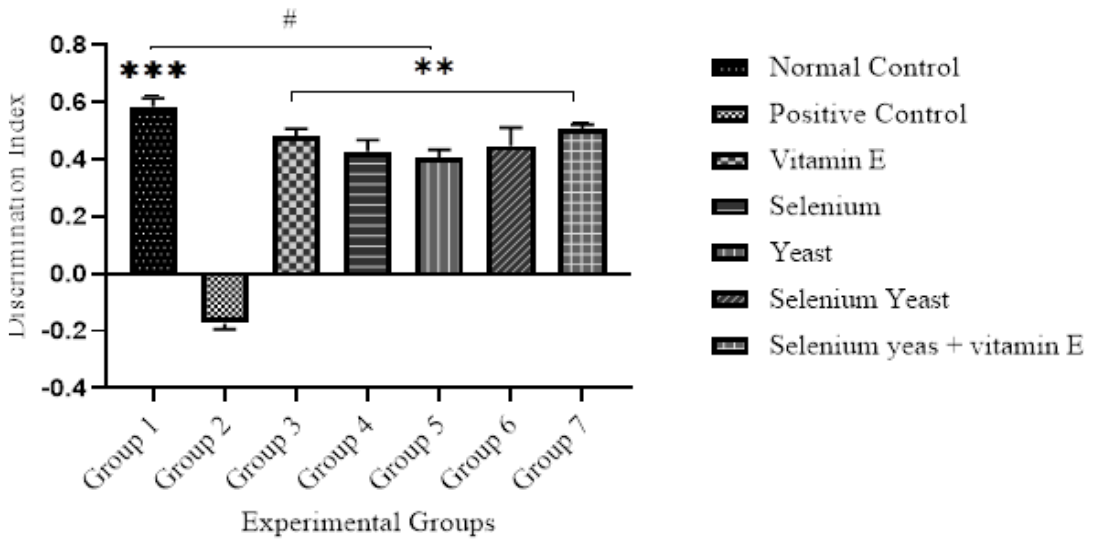
Discrimination index (DI), ranges from −1, 0 to 1, with −1 indicating a complete preference for a familiar object, 0 indicating no preference for either object, and 1 indicating a complete
Normal Control Positive Control Vitamin E Selenium Vitamin E Selenium yeast Selenium yeast + vitamin E reference for the novel object recognition (NORT), since rodents naturally want to explore new things, hence scoring 1 indicates retentive memory. Figure 2 shows a significant (p˂0.05) increase in DI in group 1 compared to group 2. Also, there is an increase in DI values in the antioxidants administered groups compared to group 2 (p˂0.05). Although, this increase varies among groups with group 7 showing a better improvement on NORT; despite not being significant (p˂0.05), but could indicate a role of combined antioxidants compound over a single antioxidant compound.
Discussion
This study evaluated the effects of vitamin E and selenium yeast on pregnant dams using DI and PA determinants. In this study, cognition was evaluated from the values obtained from DI using NORT and PA using the Y-maze apparatus. The NORT evaluates spatial memory in rodents, it is derived from the mathematical expression: (time spent on a novel object − time spent on the familiar object)/ (time spent on novel object +time spent on the familiar object). The discrimination index ranges from −1 to 1, with −1 indicating a complete preference for the familiar object, 0 indicating no preference for either object, and 1 indicating a complete preference for the novel object (20).
The DI decreases in the positive control compared to the negative control in PD; this decrease in DI further elucidates the postulation that prenatal stress alters cognition as described in previous studies (23, 24). However, antioxidants administered groups show an increase in mean DI, especially in group 7; the increase in DI in group 7 might be due to the synergic action of vitamin E and selenium yeast as a key protectorate of lipid membrane against peroxidation that may result from imbalance from the exercitation of glutamate-calcium- ROS in the hippocampus and prefrontal cortex of the brain (24). The Y-maze test evaluates cognition by the mean percentage alternation, which is obtained from the number of arms entering and triad (sequential entering into each arm). The percentage alternation decreases in the positive control group compared to the negative control, the decrease in percentage alternation is a confirmation of findings that link prenatal oxidative stress with cognitive impairments (25, 26). However, in the antioxidant administered groups, the mean percentage alternation increases, improvement in the mean percentage alternation point to the protective role of antioxidants against oxidative stress-induced cognitive impairments which is along with the following findings (27, 28).
Cognitive assessment in the study is exclusively behavioral, with no use of the biochemical and molecular model in the confirmation of possible changes observed.
Conclusion
Pregnancy decreases cognitive performance in dams as seen by decreased values in percentage alternation and discrimination index determinant when compared with non-dams. However, pregnant dams administered with antioxidants vitamins, selenium, yeast, or selenium-yeast show improved performance in discrimination index and percentage alternation indicators of cognitive performance.
Declarations
- Author contributions (CRediT)
- All authors contributed equally to all 14 CRediT roles (Conceptualization, Data curation, Formal analysis, Funding acquisition, Investigation, Methodology, Project administration, Resources, Software, Supervision, Validation, Visualization, Writing – original draft, Writing – review & editing).
- Funding
-
Funding information was not reported in the published version of this article.
- Conflicts of interest
- All authors declare no conflict of interest
- Ethics approval
- The study protocol was approved by the ethical committee of the Department of Physiology, Baze University, with the ethical number (BUAEC0023).
- Data availability
- A data availability statement was not reported in the published version of this article.
References (28)
26 of 28 references are linked to their DOI.
- Mody PH, Dos Santos NL, Lenert ME, Barron LR, Nottingham BA, Burton MD. The role of cap-dependent translation in aged-related changes in neuroimmunity and affective behaviors. Neurobiol Aging. 2021;1;98:173-84 DOI Crossref PubMed Google Scholar
- Carton L, Niot C, Kyheng M, Petrault M, Laloux C, Potey C, L et al. Lack of direct involvement of a diazepam long-term treatment in the occurrence of irreversible cognitive impairment: a pre-clinical approach. Transl. psychiatry. 2021;3;11(1):1-0 DOI Crossref PubMed Google Scholar
- Seillier A, Giuffrida A. Disruption of social cognition in the sub-chronic PCP rat model of schizophrenia: possible involvement of the endocannabinoid system. Eur Neuropsychopharm. 2016;26(2):298-309 DOI Crossref PubMed Google Scholar
- Kumar AA. Semantic memory: A review of methods, models, and current challenges. Psychon. Bull. Rev. 2021;28(1):40-80 DOI Crossref PubMed Google Scholar
- Šimić G, Tkalčić M, Vukić V, Mulc D, Španić E, Šagud M, et al. Understanding emotions: Origins and roles of the amygdala. Biomol. 2021;11(6):823 DOI Crossref PubMed Google Scholar
- Kipp BT, Nunes PT, Savage LM. Sex differences in cholinergic circuits and behavioral disruptions following chronic ethanol exposure with and without thiamine deficiency. Alcoh. Clin. Exp. Res. 2021;45(5):1013-27 DOI Crossref PubMed Google Scholar
- Cleal M, Fontana BD, Ranson DC, McBride SD, Swinny JD, Redhead ES, et al. The Free-movement pattern Y-maze: A cross-species measure of working memory and executive function. Behav. Res. Meth. 2021;53(2):536-57 DOI Crossref PubMed Google Scholar
- Liu Chung Ming C, Sesperez K, Ben-Sefer E, Arpon D, McGrath K, McClements L, et al. Considerations to model heart disease in women with preeclampsia and cardiovascular disease. Cells. 2021; 10(4):899 DOI Crossref PubMed Google Scholar
- Wachholz GE, do Amaral Gomes J, Boquett JA, Vianna FS, Schuler-Faccini L, Fraga LR. Molecular mechanisms of Zika virus teratogenesis from animal studies: a systematic review protocol. Syst. Rev. 2021;10(1):1-7 DOI Crossref PubMed Google Scholar
- Guerby P, Tasta O, Swiader A, Pont F, Bujold E, Parant O, et al. Role of oxidative stress in the dysfunction of the placental endothelial nitric oxide synthase in preeclampsia. Red. Biol. 2021;40:101861 DOI Crossref PubMed Google Scholar
- Perluigi M, Di Domenico F, Barone E, Butterfield DA. mTOR in Alzheimer disease and its earlier stages: Links to oxidative damage in the progression of this dementing disorder. Free Rad. Biol. Med. 2021;169:382-96 DOI Crossref PubMed Google Scholar
- Gómez X, Sanon S, Zambrano K, Asquel S, Bassantes M, Morales JE, et al. Key points for the development of antioxidant cocktails to prevent cellular stress and damage caused by reactive oxygen species (ROS) during manned space missions. Microgravity. 2021;7(1):1-9 DOI Crossref PubMed Google Scholar
- Ochayi OM, Anyaehie B, Iyare E, Haruna DU, Ivang, AE. Effect of Selenium-yeast on Cognitive Performance on Pregnant Dams Exposed to Noise Stress. Annu Res Rev Biol. 2022;69-74 DOI Crossref PubMed Google Scholar
- Zhang J, Zhou H, Li H, Ying Z, Liu X. Research progress on separation of selenoproteins/Se-enriched peptides and their physiological activities. Food Funct. 2021; 12(4):1390-401 DOI Crossref PubMed Google Scholar
- Abdulmajeed WI, Sulieman HB, Zubayr MO, Imam A, Amin A, Biliaminu SA, et al. Honey prevents neurobehavioural deficit and oxidative stress induced by lead acetate exposure in male Wistar rats-a preliminary study. Metab. Brain Dis. 2016; 31(1):37-44 DOI Crossref PubMed Google Scholar
- Kilari EK, Rao LS, Sreemanthula S, Kola PK. Anti-stress and nootropic activity of aqueous extract of Piper longum fruit, estimated by noninvasive biomarkers and Y-maze test in rodents. Environ Exp Biol. 2015;13:25-31 PubMed Google Scholar
- Hammond R, Nelson D, Gibbs RB. GPR30 co-localizes with cholinergic neurons in the basal forebrain and enhances potassium-stimulated acetylcholine release in the hippocampus. Psychoneuroendocrinology. 2011;36(2):182-92 DOI Crossref PubMed Google Scholar
- Ciubotariu D, Lupușoru RV, Luca E, Mititelu-Tarțău L, Lupușoru CE. Experimental research showing the reduction of naloxone-place aversion by oral zinc administration in rats. Biol. Trace Elem Res. 2017;180(1):127-34 DOI Crossref PubMed Google Scholar
- Jiang XM, Hu JH, Wang LL, Ma C, Wang X, Liu XL. Ulinastatin alleviates neurological deficiencies evoked by transient cerebral ischemia via improving autophagy, Nrf-2-ARE and apoptosis signals in hippocampus. Physiol. Res. 2018;67(4): 637-46 DOI Crossref PubMed Google Scholar
- Brivio I, Bruggisser S, Maltoni F, Moutafis R, Plehn T, Vryonidou E, et al. O new physics, where art thou? A global search in the top sector. J. High Energy Phys. 2020(2):1-47 92 77 Vitamin E and Selenium-yeast Ochayi et al. DOI Crossref PubMed Google Scholar
- Kheirkhah M, Yan Z, Nagai Y, Marsiglio F. First-and second-order topological superconductivity and temperature-driven topological phase transitions in the extended Hubbard model with spin-orbit coupling. Phys. Rev. Lett. 2020;125(1):017001 DOI Crossref PubMed Google Scholar
- Fedosov A, Lampinen A, Odom W, Huang EM. A Dozen Stickers on a Mailbox: Physical Encounters and Digital Interactions in a Local Sharing Community. Proceedings of the ACM on Human-Computer Interaction. 2021;4:1-23 DOI Crossref PubMed Google Scholar
- Huizink AC, De Rooij SR. Prenatal stress and models explaining risk for psychopathology revisited: Generic vulnerability and divergent pathways. Dev. Psychopath. 2018; 30(3):1041-62 DOI Crossref PubMed Google Scholar
- Darnaudery M, Maccari S. Epigenetic programming of the stress response in male and female rats by prenatal restraint stress. Brain Res. Rev. 2008;57(2):571-85 DOI Crossref PubMed Google Scholar
- Yu C, Pan S, Zhang J, Li X, Niu Y. Ferulic acid exerts Nrf2-dependent protection against prenatal lead exposure-induced cognitive impairment in offspring mice. J. Nutr. Biochem. 2021;91:108603 DOI Crossref PubMed Google Scholar
- Safarpour S, Zabihi E, Ghasemi-Kasman M, Nosratiyan N, Feizi F. Prenatal and breastfeeding exposure to low dose of diethylhexyl phthalate induces behavioral deficits and exacerbates oxidative stress in rat hippocampus. Food Chem. Toxicol. 2021;154:112322 DOI Crossref PubMed Google Scholar
- Rafiei S, Ravasi AA, Gaeini AA. The Effect of Eight-week Swimming Exercise and Gallic Acid on Hippocampal BDNF and Oxidative Stress Parameters in Trimethyltin Induced Cognitive deficits. Jorjani Biomed. J. 2021;9(1):55-68 PubMed Google Scholar
- Kumar M, Arora P, Sandhir R. Hydrogen sulfide reverses LPS-induced behavioral deficits by suppressing microglial activation and promoting M2 polarization. J. Neuroimmune Pharmacol. 2021; 16(2):483-99 DOI Crossref PubMed Google Scholar
Respond to this article
Comments on a published article are welcome as a Letter to the Editor.
Get an e-mail when new articles in your fields are published
Questions to the authors
Questions are moderated: an editor approves each question, the authors answer, and an editor approves the answer before both appear here.
No answered questions yet.
Ask the authors a question
Discussion
Comments are moderated: they appear after the writer confirms the e-mail address and an editor approves them. Each comment carries a conflict-of-interest statement.
No comments yet.
Write a comment
Read the full text
Open the PDF here
Loading the PDF…
If the PDF does not show here, use the download button above.
How to cite this article
Ochayi OM, Anyaehie B, Iyare E, Murtala N. Effects of Vitamin E and Selenium-yeast on Cognitive Performance in Pregnant Dams Using Percentage Alternation and Discrimination Index Determinants. Ulutas Med J. 2022;8(3):86-92. doi:10.5455/umj.20220526102156
Ochayi, O. M., Anyaehie, B., Iyare, E., & Murtala, N. (2022). Effects of Vitamin E and Selenium-yeast on Cognitive Performance in Pregnant Dams Using Percentage Alternation and Discrimination Index Determinants. The Ulutas Medical Journal, 8(3), 86–92. https://doi.org/10.5455/umj.20220526102156
Ochayi, O.M. et al. (2022) 'Effects of Vitamin E and Selenium-yeast on Cognitive Performance in Pregnant Dams Using Percentage Alternation and Discrimination Index Determinants', The Ulutas Medical Journal, 8(3), pp. 86–92. doi: 10.5455/umj.20220526102156.
@article{umj48894,
  title = {Effects of Vitamin E and Selenium-yeast on Cognitive Performance in Pregnant Dams Using Percentage Alternation and Discrimination Index Determinants},
  author = {Ochayi, Okwute Michael and Anyaehie, Bond and Iyare, Eghosa and Murtala, Ngabea},
  journal = {The Ulutas Medical Journal},
  year = {2022},
  volume = {8},
  number = {3},
  pages = {86--92},
  doi = {10.5455/umj.20220526102156},
  url = {https://www.ulutasmedicaljournal.com/?mno=48894},
  issn = {2149-388X}
}