The Ulutas Medical Journal · ISSN 2149-0430 (مطبوع), 2149-388X (إلكتروني) · https://www.ulutasmedicaljournal.com/?mno=85807
تقرير حالة · وصول مفتوح
DRESS Syndrome Associated with Elevated Liver Enzyme and Acute Kidney Injury after Allopurinol Use
ترجمة آلية للعنوان والملخص والنص الكامل. الأصل الإنجليزي
- Ankara Yildirim Beyazit Universitesi, Ankara City Hospital, Internal Medicine Department, Ankara, Turkey ROR
- Ministry of Health Ankara City Hospital, Internal Medicine Department, Ankara, Turkey ROR
- Ministry of Health Ankara City Hospital, Pathology Department, Ankara, Turkey ROR
الملخص
إن رد فعل المخدرات بالأعراض الإيسوفية والأعراض النظامية هو رد فعل نادر، يحتمل أن يكون مهددا للحياة، وحساسية شديدة بسبب المخدرات، يشمل انفجار الجلد، والشذوذ الرئوي (النسيب الرئوي واللمفوسية غير المألوفة)، واللايمفيدنو، والاشتراك في الأجهزة الداخلية (الاحترام والكلي والرئة). Moreover, retrospective studies have reported a mortality rate between 5% and 10%. In this paper, a case of DRESS with renal and hepatic organ involvement developing two weeks after the use of allopurinol which is among the most common drugs for DRESS will be presented.
الكلمات المفتاحية
النص الكامل
ترجمة آلية للنص الكامل؛ النسخة المعتمدة هي الأصل الإنجليزي. الأصل الإنجليزي
مقدمة
رد فعل المخدرات بالأعراض الإيسوفية والأعراض النظامية نادرة جدا، يحتمل أن تكون مهددة للحياة، وتفاعل الحساسية المفرطة بسبب المخدرات، بما في ذلك انفجار الجلد، والشذوذ الرئوي (السيلي الرئوي والنسيج اللمفاوي غير المألوف)، والمرض البديهي، والاشتراك داخلي للكائنات العضوية (الفير والكيدني والرئة)(1–3)ويتميز نظام " ديريس " ببطء طويل (2-8 أسابيع) بين تعرض المخدرات والإصابة بالأمراض، وهو مسار مطوّل مع انتكاسات متكررة على الرغم من توقف المخدرات المذنبة، وارتباط متكرر بإعادة تنشيط عدوى فيروسات العشب البشري المتأخرة. (4–6)The most frequently reported causes are anti-epileptics (e.g. carbamazepine, lamotrigine, phenytoin, and phenobarbital) and allopurinol (7)The incidence of DRESS is unknown. وقدرت دراسة متوقعة مدتها سبع سنوات في السكان عموما في غرب الهند أن معدل الإصابة يبلغ 0.9/100.000 سنويا (8)وفي هذا التقرير، قُدمت حالة متلازمة الـ ديريس بعد استخدام الأوروبيرينول.
عرض الحالة
A 63-year-old patient with chronic renal disease applied to emergency service with the spill completed in all bodies after allopurinol and calcitriol used in 2 weeks. وفي الفحص الفيزيائي للمريض، تقاس درجة حرارة الجسم بـ 39 درجة مئوية، وقد حُدِّد طفح جلدي مختلط من الرأس والعنق والثوراكس والبطن والتطرف. ١,٥ مليغرام/لتر )٣,٩( و٣,٢٠٠ ١ ميغاغرام/لتر )١,٩( و٣٨٢/لتر )٣٠٠-٣٥( و٣٤/لتر: ٣,٠/لتر )٣٥٠/لتر(
وكانت الاختبارات التسلسلية (Cytomegalovirus, Epstein - Barr, human immunodeficiency virus, hepatitis a, b, and c, toxoplasma, HSV, and rubella) وأجهزة التهاب الكبد الوبائي (الجسيم النووي المضاد للفيروسات الدقيقة " Iver-kidney " وكشفت الهيمنة على النيوترفولية، وتفريغ النيوتروفيل، والاضطرابات العصبية، والاضطرابات البوكيلوسيتوسية في الانتشار البري. سيروم كرولوبلاسمين، إي جي جي - أ - إم، ومستويات النحاس المصل طبيعية. لم يكن هناك استنساخ في الدم والبول وثقافات الحلق وباستثناء الصف الأول من التهاب الكبد وانخفاض أبعاد الكلى، لم تحدد النتائج المرضية في صورة البطن. وقد شوهدت عُدد الليمف التفاعلية في منطقتين مختلفتين في الولايات المتحدة الأمريكية المتقطعة. وأُجري خزعة جلدية من الطفح الجلدي للمريض. وقد فُسرت نتيجة الأمراض على أنها رد فعل على المخدرات (الشكلان 1 و 2).
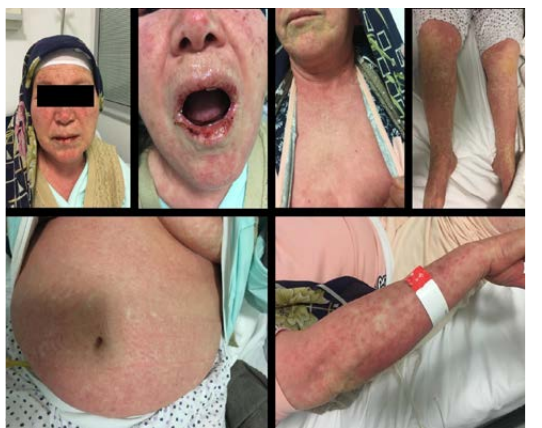
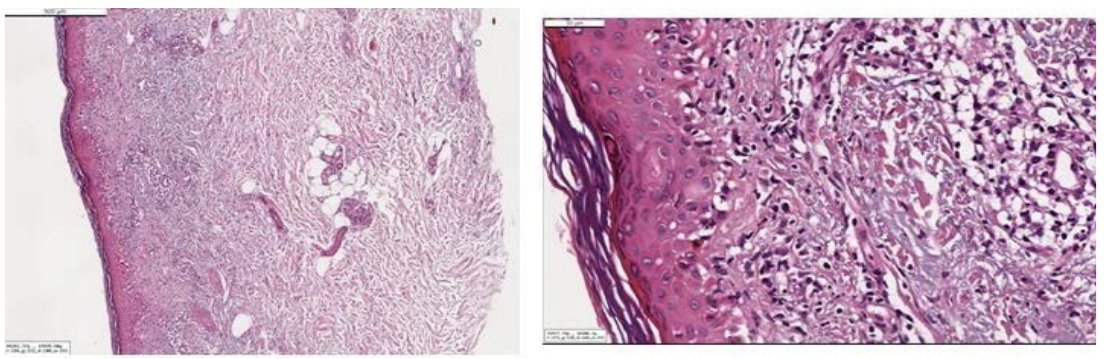
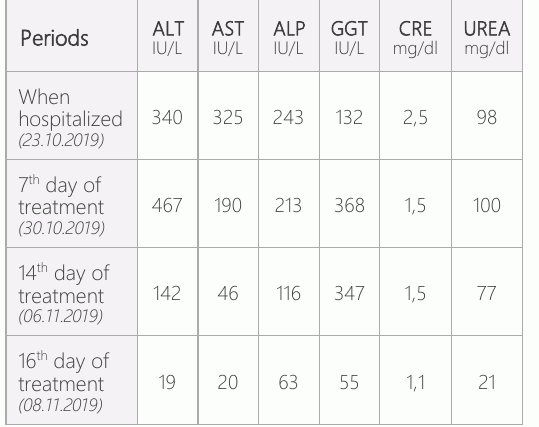
وطبق نظام للترميز على المريض لتشخيص متلازمة الـ دي. وفي نظام الترميز، تكون درجة حرارة الجسم أعلى من 38.5 درجة مئوية، ومرض اللمفادي أعلى من 1 سنتيمتر في منطقتين مختلفتين (العنقية الواحدة)، وطفح جلدي يغطي أكثر من 50 في المائة من مساحة الجسم، والإيديما الوجهي +بورا، ونتائج طفح جلدي في أحيائيات الجلد، والقضاء على خلل الكبد والكلي وغير ذلك من الأسباب البديلة. DRESS syndrome secondary to the use of allopurinol was diagnosed. وأوقفت معالجة اللوبرينول. وبدأت معالجة ميثيل بريدنيسولون في 40 ملغم/يوم. وانخفضت مستويات الكبد والكروتين للمريض بعد المنشطات. تم اكتشاف التراجع في طفح الجسد ويبين الجدول 1 الانخفاض في قيم المصل الأمينوترفيرا والكراتينين. After creatinine returned to basal rates, normalization of aminotransferase enzymes and rash regression, the cortico steroid dose was decreased gradually and discontinued and the patient was discharged.
المناقشة
وكما هو الحال في حالتنا، يشتبه في أن تشخيص الـ ديريس في مريض تلقى علاجا جديدا للمخدرات في الأسبوعين الماضيين الستة، ويعرض أعراضا ونتائج مثل طفح جلدي (التشويش أو الانتشار، الازدهار، الارتطام، التسلل، الندوات اللمفاوية، الحمى [38 درجة مئوية - 40 درجة مئوية (100-104 درجة ف)]، وميلاداما الوجه. وتشمل العقاقير الشديدة الخطورة التي تسبب هذه المتلازمة لاموتوريجين، والفينيتوين، والأوروبيرينول، والولفاسالازين، والسلفاماثوكسازول، والفانكورسين، والدبسون، وكربامازيبين، والمينوكتين. To help clinicians while diagnosing DRESS or making differential diagnoses, the registry of severe cutaneous adverse reaction has developed a scoring system based on clinical characteristics, the extent of skin involvement, organ involvement, and clinical course (9)ويصنف نظام إدارة السجلات والمحفوظات على أنه محدد ومحتمل وممكن (الجدول 2).
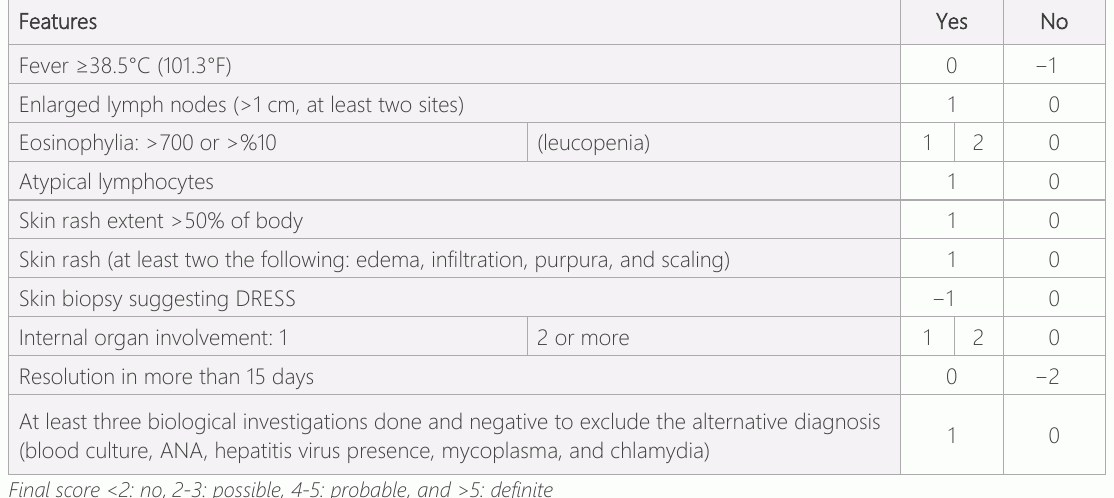
نادراً ما يمكن تشخيص الـ ديريس بدون " د " (لا سبب للمخدرات)، بدون " صاد " (لم يكن هناك طفح جلدي في حالتين من الحالات الـ 176 في الأدب)، بدون " هـ " (لم تكن النـوعية موجودة في 10 في المائة - 50 في المائة من الحالات)، وحتى بدون أعراض نظامية (9).
(SJS/TEN) التي ينظر فيها في التشخيص التفاضلي يبدأ من 4 إلى 28 يوما بعد التعرض للطب. More than 90% of SJS/TEN cases include at least two sites: erosions and severe mucosal involvement with hemorrhage, whereas mucosal involvement is seen in 50% of patients with DRESS, generally includes one region (mostly the mouth or pharynx), and does not develop erosion. Eosinophilia and atypical lymphocytosis are not observed in SJS/TEN, whereas leukopenia is common and lymphopenia is almost constant. With DRESS, fever, rash, lymphadenopathy, and abnormal liver enzymes, it can imitate adults still a disease, but generally, eosinophilia is not present in the still disease. وبالإضافة إلى ذلك، يُنظر إلى الـ ديريس عادة بعد أسبوعين إلى ستة أسابيع من التعرض للمخدرات المشبوهة التي تسبب هذه المتلازمة، ومن المرجح أن ينظر إلى اللمفوسية غير المألوفة أكثر من غرانوليوكيتوس. وبالنسبة إلى هذا المريض، تم التشخيص التفاضلي بعدم تقديم التهاب المفاصل والفهراليا، والأعراض التي تحدث بعد أسبوعين من تعاطي المخدرات، والطفح الجلدي الذي يختلف عن متلازمة ستيل (اللون المالي، والمناظير غير الجراحي، والطفح الجلدي على الجسم أو الضجيج في فترات الحمى). The pathology result of skin biopsy was interpreted as a drug reaction. وفيما يتعلق بالعلاج الأساسي لنظام رصد الأرض، يوصى بخفض المخدرات المسؤولة. وبالإضافة إلى ذلك، نوصي بألا تستخدم العقاقير الجديدة للمرضى الذين يشتبه في أنهم مرضى من مرضى الـ دي.
ويوصى بمعاملة الكويكبات المتوسطة أو العالية الجرعة عندما يكون الكبد (ثلاثة أو أكثر من القيم العليا للمناورات) والكلية (1.5 مرة من مستويات الكبريتين العليا، والهيماتوريا، والبروتينوريا) حاضرا (مثلا، 0.5-2 ملغم من بريدنيسولون أو ما يعادلها من بريدنيسولون). وتدار المنشطات النظامية إلى أن يتم تطبيع البارامترات المختبرية وتقدم الرعاية الطبية للمرضى وتخفض المعالجة تدريجيا لمدة ٨-١٢ أسبوعا. وقد يؤدي التخفيض السريع إلى تكرار ذلك. وبالنسبة للمريض، يُنظر إلى تطبيع البارامترات المختبرية وإلى سلامة المريض السريرية بعد معالجة المنشطات. Cyclosporine could be a second step treatment for patients having DRESS and severe organ involvement, and there was no response to corticosteroids. There are several reports on the rapid response of patients with DRESS with organ involvement with oral cyclosporine treatment (10, 11)المصابون بالعدوى داخل المستنقعات مفيدة لبعض المرضى وليس للآخرين (12, 13)- لا يوصى بمعاملة الشركة في انتظار أدلة أفضل. In this case, DRESS syndrome secondary to exposure to allopurinol which is frequently used in first step health services is presented. DRESS is suspected when maculopapular rash developed, especially after the drug use, and forwarding patients to the upper center should be considered for systemic steroid treatment.
الإقرارات
- مساهمات المؤلفين (CRediT)
- ساهم جميع المؤلفين بالتساوي في جميع أدوار CRediT الأربعة عشر (Conceptualization, Data curation, Formal analysis, Funding acquisition, Investigation, Methodology, Project administration, Resources, Software, Supervision, Validation, Visualization, Writing – original draft, Writing – review & editing).
- التمويل
-
Funding information was not reported in the published version of this article.
- تضارب المصالح
- The authors declare that they have no conflict of interests.
- الموافقة الأخلاقية
- Ethics approval details were not reported in the published version of this article.
- إتاحة البيانات
- A data availability statement was not reported in the published version of this article.
المراجع (13)
10 من أصل 13 مرجعًا مرتبطة بمعرّف DOI.
- Bocquet H, Bagot M, Roujeau JC. Drug-induced pseudo lymphoma and drug hypersensitivity syndrome (drug rash with eosinophilia and systemic symptoms: dress). Semin Cutan Med Surg 1996; -15(4):250–7 DOI Crossref PubMed Google Scholar
- Husain Z, Reddy BY, Schwartz RA. Dress syndrome: part I. Clinical perspectives. J Am Acad Dermatol 2013;68(5):693.e1 –14 PubMed Google Scholar
- Husain Z, Reddy BY, Schwartz RA Dress syndrome: part II. Management and therapeutics. J Am Acad Dermatol 2013; 68(5):709.e1–9 PubMed Google Scholar
- Cacoub P, Musette P, Descamps V, Meyer O, Speirs C, et al. The dress syndrome: a literature review. Am J Med 2011; 124(7):588–97. Epub 2011 may 17 DOI Crossref PubMed Google Scholar
- Chen YC, Chiu HC, Chu CY. Drug reaction with eosinophilia and systemic symptoms: a retrospective study of 60 cases. Arch Dermatol 2010; 146(12):1373– 9 DOI Crossref PubMed Google Scholar
- Shiohara T, Inaoka M, Kano Y. Drug-induced hypersensitivity syndrome (dihs): a reaction induced by a complex interplay among herpesviruses and antiviral and antidrug immune responses. Allergol Int 2006;55(1):1–8 DOI Crossref PubMed Google Scholar
- Kardaun SH, Sekula P, Valeyrie-allanore L, Liss Y, Chu CY, Creamer D, et al. Drug reaction with eosinophilia and systemic symptoms (dress): an original multisystem adverse drug reaction. Results from the prospective regiscar study. Br J Dermatol 2013;169(5):1071–80 DOI Crossref PubMed Google Scholar
- Muller P, Dubreil P, Mahéa A, Lamaury I, Salzer B, Deloumeaux J, et al. Drug hypersensitivity syndrome in a West - Indian population. Eur J Dermatol 2003;13(5):478– 81 PubMed Google Scholar
- Kardaun SH, Sidoroff A, Valeyrie-allanore L, Halevy S, Davidovici BB, Mockenhaupt M, et al. Variability in the clinical pattern of cutaneous side-effects of drugs with systemic symptoms: does a dress syndrome really exist? Br J Dermatol 2007;156(3):609–11 DOI Crossref PubMed Google Scholar
- Zuliani E, Zwahlen H, Gilliet F, Marone C. Vancomycin-induced hypersensitivity reaction with acute renal failure: resolution following cyclosporine treatment. Clin Nephrol 2005; 64(2):155– 8 DOI Crossref PubMed Google Scholar
- Kirchhof MG, Wong A, Dutz JP. Cyclosporine treatment of drug-induced hypersensitivity syndrome. JAMA Dermatol 2016; 152(11):1254–7 DOI Crossref PubMed Google Scholar
- Joly P, Janela B, Tetart F, Rogez S, Picard D, D'incan M, et al. Poor benefit/risk balance of intravenous immunoglobulins in dress. Arch Dermatol 2012;148(4):543–4 DOI Crossref PubMed Google Scholar
- Singer EM, Wanat KA, Rosenbach MA. A case of recalcitrant dress syndrome with multiple autoimmune sequelae treated with intravenous immunoglobulins. JAMA Dermatol 2013;149 (4):494–5 DOI Crossref PubMed Google Scholar
اقرأ النص الكامل
افتح ملف PDF هنا
جارٍ تحميل ملف PDF…
إذا لم يظهر ملف PDF هنا، استخدم زر التنزيل أعلاه.
كيف تقتبس هذه المقالة
Enli SA, Gemcioglu E, Kiran M. DRESS Syndrome Associated with Elevated Liver Enzyme and Acute Kidney Injury after Allopurinol Use. Ulutas Med J. 2020;6(1):44-48. doi:10.5455/umj.20200207110845
Enli, S. A., Gemcioglu, E., & Kiran, M. (2020). DRESS Syndrome Associated with Elevated Liver Enzyme and Acute Kidney Injury after Allopurinol Use. The Ulutas Medical Journal, 6(1), 44–48. https://doi.org/10.5455/umj.20200207110845
Enli, S.A., Gemcioglu, E. and Kiran, M. (2020) 'DRESS Syndrome Associated with Elevated Liver Enzyme and Acute Kidney Injury after Allopurinol Use', The Ulutas Medical Journal, 6(1), pp. 44–48. doi: 10.5455/umj.20200207110845.