The Ulutas Medical Journal · ISSN 2149-0430 (مطبوع), 2149-388X (إلكتروني) · https://www.ulutasmedicaljournal.com/?mno=292623
بحث أصلي · وصول مفتوح
متلازمة الأورميات الحرارية: تجربة المركز الوحيد
ترجمة آلية للعنوان والملخص والنص الكامل. الأصل الإنجليزي
- Cumhuriyet University, Medical School, Department of Nephrology, Sivas, Turkey ROR
- Cumhuriyet University, Medical School, Department of Hematology, Sivas, Turkey ROR
الملخص
- Introduction
- Hemolytic uremic syndrome (HUS) is a clinical syndrome characterized by non-immune microangiopathic hemolytic anemia, thrombocytopenia, and acute renal failure. وفي هذه الدراسة، استهدفنا تقييم المرضى الذين تم تشخيصهم في عيادتنا.
- Method
- Patients who were diagnosed with HUS as clinic and laboratory between August 2012 and October 2017 were included in our nephrology clinic. Biochemistry, haemogram, ANA, anti-Ds DNA, p-ANCA, c-ANCA, anti-GBM antibody, C3, C4 of patients were studied. In some cases, ADAMTS13 was studied and renal biopsy was performed. وتم استعراض الخصائص الديمغرافية وعياداتنا ومعالجات حالاتنا. النتائج: بلغ مجموع المرضى المسجلين في الدراسة 18 مريضا، وكان متوسط عمر المرضى 48.3 (21-82) و10 من الحالات من الإناث و8 من الحالات من الذكور. Among the etiologic causes of HUS in patients; the complement factor B mutation, complement factor H polymorphism, breast cancer, herbal medicine, infections and idiopathic were detected. تم الكشف عن غلوبونفورني في 6 حالات من الخزعة الكلوية. الخلاصة: تم الحصول على إعادة التشغيل السريري والمختبري في 13 مريضا. الفشل الكلوي في المرحلة النهائية تطور في 3 من مرضانا.
الكلمات المفتاحية
النص الكامل
ترجمة آلية للنص الكامل؛ النسخة المنشورة الرسمية هي الأصل الإنجليزي. الأصل الإنجليزي
مقدمة
إن متلازمة الأورام الوبائية الحرارية هي متلازمة متلازمة تتميز بفقر الدم الوبائي الميكروبولوجيا، وهرمونات العظام، وثالث الفشل الكلوي الحاد. It is defined as being Incomplete HUS, acute renal failure, thrombocytopenia or microangiopathic hemolytic anaemia (1)تقليدياً، يُصنف على أنه إسهال إيجابي HUS (D+HUS) وإسهال غير نمطي سلبي HUS (AHUS). Entero-hemorrhagic E. coli (EHEC) is responsible for 90% of child HUS cases. The incidence was reported as 2-3 for every 100,000 children. وعادة ما تكون HUS، المعروفة باسم الأغذية المحمولة، واحدة في كل 000 100 شخص في السنة، بينما تبلغ 6 في البالغين دون سن الخامسة، وهي واحدة في البالغين. Although HUS is rarely reported, it has been reported to have epidemics. It is known that these outbreaks originate from the food that is transmitted by animal feces. وفي الآونة الأخيرة، يوجد في ألمانيا و 15 بلدا أوروبيا وباء معروف للأغذية (2–5).
Some cases of aHUS in children are associated withethyl malonic aciduria (6)الإلتهاب الرئوي المتفشي (7)التي تنتج في أغلب الأحيان إنزيم النيورامينيدا (خمسة في المائة من حالات الإصابة بفيروس نقص المناعة البشرية في الأطفال)، قد تتطور نتيجة للإصابة بفيروس نقص المناعة البشرية/الإيدز(1) (8):: في صفوف البالغين، يمكن أن يتطوّر التهاب الجراثيم الناجم عن الإصابة بفيروس نقص المناعة البشرية، والسرطان، والمخدرات [العقاقير العلاجية الكيماوية، وعقاقير الكالسينيورين (الأعاصير، والتكروليموس)، ومسببات الاختلال (البوليموس، وأيلوليموس)، وعوامل النمو الرئوي الناعم، وعوامل مضادة للدم الفموجة، وأمراض أخرى (9).
المواد والطرائق
A total of 18 patients who were diagnosed with HUS as clinic and laboratory between August 2012 and October 2017 were included in our Nephrology clinic. وقد ظهرت في جميع الحالات المدرجة في الدراسة أمراض فقر الدم الوبائية الوبائية الوبائية الوبائية، ومرض النزيف الوبائي (LDH)، وارتكلوتشيت، وتفسخ العظام، والفشل الكلوي الحاد.
In patients, serum creatinine, blood urea nitrogen, electrolytes, LDH, liver enzymes, bilirubin, hemogram, reticulocyte, direct Coombs test, peripheral spread, anti-neutrophil cytoplasmic anti-neutrophil membrane antiglomerular basement membrane antibody, anti nuclear antidouble وبالإضافة إلى ذلك، تم أيضا فحص العلامات الفيروسية. In cases of diarrhea, EHEC antigen was examined. وأُجريت عمليات جراحية في الأحياء المستأجرة في المرضى الذين يتلقون خزعة الكلى. ولوحظ حدوث تحول جيني في ثلاث حالات.
النتائج
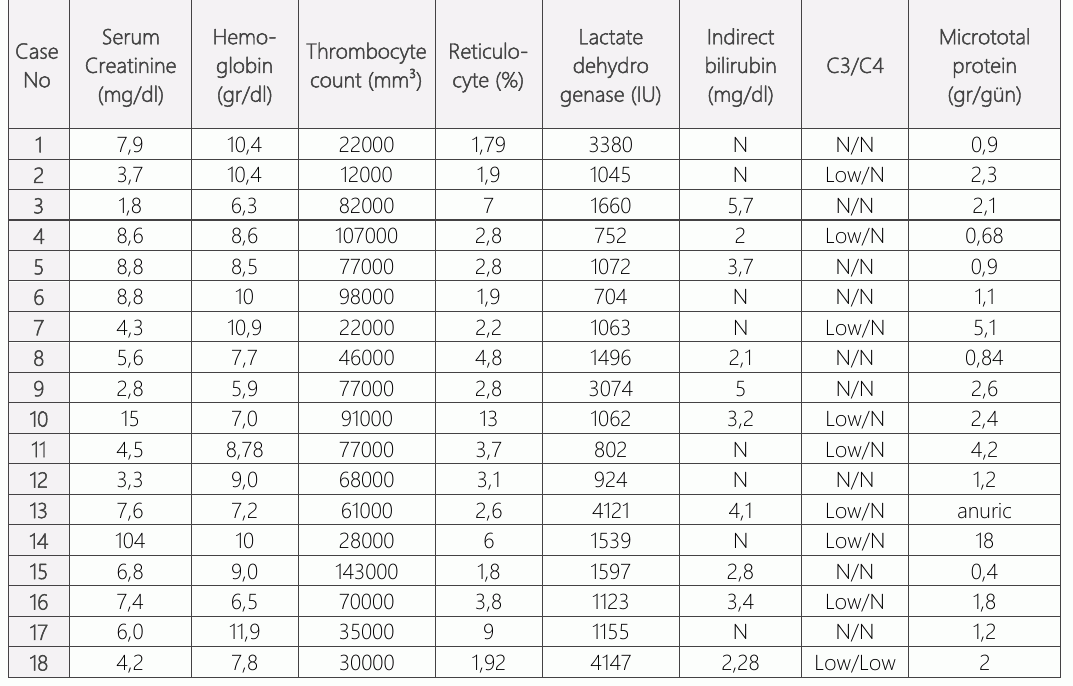
وكان ما مجموعه 18 مريضا مسجلين في الدراسة، وكان متوسط عمر المرضى 48.3 (21-82) و10 من الحالات من الإناث و8 من الحالات من الذكور. وكشفت في جميع الحالات عن أضرار كلية حادة، وفقر الدم الوبائي الميكروغرامي، ومرض التفسخ الحراري. ولا يمكن اكتشاف النتائج العصبية في أي من حالاتنا. ولم تنتج اللجنة في أي من الحالات حالات الإسهال (9 حالات). There were fever in five cases, jaundice in 8 cases, and nausea-vomiting complaint in 10 cases. In all cases, there were schistocytes in the peripheral spread. وكان اختبار الكومبس سلبياً في جميع المرضى، وتبين أن مستويات الهبتوغلوبلين منخفضة في المرضى الستة الذين تم فحصهم، وكان المعهد الوطني للبحث والتطوير في حدود طبيعية لجميع الأمراض غير التهاب الكبد الحاد. وكانت الأوتوماتيكيات، والأدوية المضادة للنيتروبل، والعقاقير الديمبرانية المضادة للدبابات، والعقاقير المضادة للطوابق السفلية، سلبية في جميع المرضى، وكانت المضادات النووية إيجابية في حالتين، وكان الحمض النووي المضاد للضبابات سالبا. وقد تم العمل في 13 قضية على 8 قضايا وتم تحديدها بالقيم العادية. وقد وردت البيانات المختبرية للمرضى في الجدول 1، ومن الناحية المنهجية، تم في إحدى الحالات استخلاص أنواع السالمونيلا، وهي حالة نشأت أثناء وباء السلمونيلا، ولكن لم يكن هناك إنجاب. In one case, Escherichia coli (E. Coli) derived both in blood and urine, in one case E. Coli derived in urine and in one case E. Coli derived in blood, and in one case E. Coli derived in gaita culture. وفي إحدى الحالات، كانت هناك قصة عن استخدام الطب العشبي لفقدان الوزن. In one case, there was a gemcitabine usage story for breast cancer. وفي ثلاث حالات، لوحظ حدوث تحول مكمل. In one case, complement factor B heterozygous mutation, complement factor H polymorphism was detected in a case with acute cholecystitis. In the other case, no mutation was detected. كان تأثير قضايانا الأخرى غير واضح
وشملت المعاملة تبادل البلازما، والتحلل الحراري، والتحليل الرئوي، والحصار على أجهزة استقبال الأنغوتين، ودعم السوائل والكهرباء. استبدال "إريثروسيت" كان ضرورياً في 68.7% من قضايانا HD and plasma exchange for 6 cases, only HD for 8 cases, only plasma exchange for one case, in one case only liquid electrolyte treatment and ES replacement were performed.
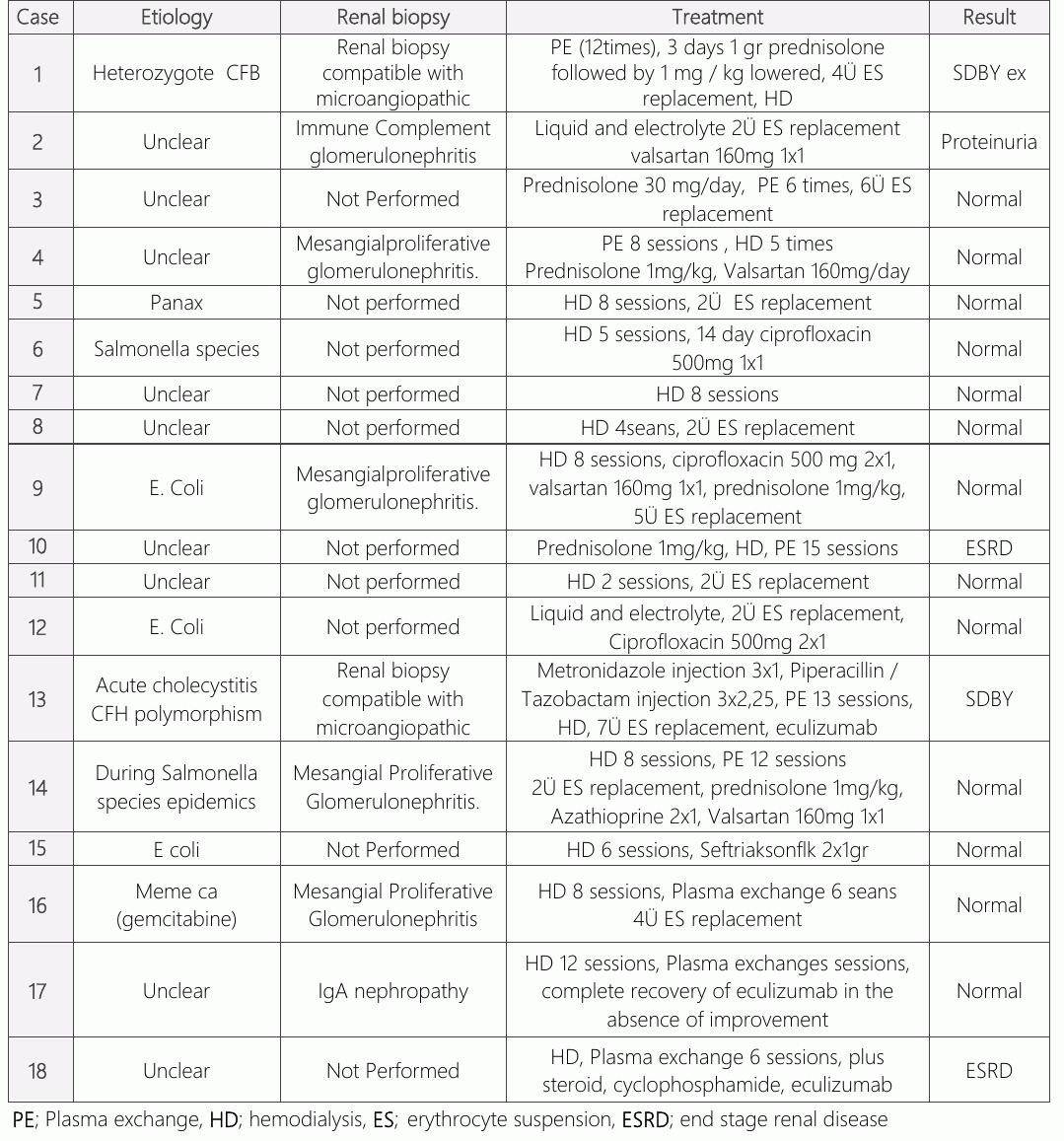
In our three cases, end stage renal failure (ESRD) developed. In the presence of complement factor H polymorphism, treatment with eculizumab was initiated. ESRD developed in the patient with complement factor B heterozygous mutation. The patient died before the end of mutation (at 6 months of HD program). وترد في الجدول 2 الثغرات النقابية ونُهج العلاج ونتائج المرضى. تم علاج ثلاثة مرضى بالإيكوليزومب أحد هؤلاء المرضى كان (إيه آر دي)، كان في 4 أشهر برنامج (إتش دي) وبدئ المريض في معالجة العوامل المكملة لتعددية المورفولوجيا والهجمات المتكررة. وبعد العلاج، لم يُهاجم مريضنا مرة أخرى، وكانت هناك زيادة في حجم البول، ولكن البيوت البشرية استمرت. In one case HD was continued with ESRD. In another case, complete recovery was observed after treatment with eculizumab.
المناقشة
HUSand thrombotic thrombocytopenic purpura are characterized primarily by endo-thelial damage followed by thrombosis, microangiopathic hemolytic anaemia, and thrombocytopenia andmultiorgan failure. HUS is divided into 3 types; 1 It is associated with diarrhea and is associated with infections, is defined as D (+) HUS, (except HUS due to severe disseminated infection caused by streptocci), twocomplement abnormalities or atypical HUS (aHUS), which is associated with a factor ADAMTS13 deficiency at same time, 3-HUS with norud systemic conditions (5)وفي الواقع، فإن الثلاثة جميعا هي التغييرات في نظام تكملة الأمراض الأساسية. وفي هذا النظام، يؤدي التفعيل غير الخاضع للمراقبة للنظام المكمِّل إلى حدوث اضطرابات نفسية واضطرابات في الأوعية الدموية الدقيقة. It was found in different strains, although it was generated by E.coli 0157/H7. In the E coli outbreak that produced Shiga toxin in Germany between May and June 2011, approximately one-fourth of the symptomatic cases developed HUS and 89% of the cases were adults. Another strain was responsible for this like Enteroaggregating E. coli O104: H4 producing Shiga toxin (10)(سالمونيلا) نادراً ما تسبب (هوس) وقد عُزلت أنواع الشيغيلا في 7 حالات، والسالمونيلا غير العتيفية في 9 حالات، والكولي في 11 حالة في 73 حالة من حالات HUS (1980-1989) التي جُمعت في الهند في 9 سنوات. وقد عُزلت أنواع الشيغيلا في 7 حالات، والسالمونيلا غير العتيفية في 9 حالات، والكولي في 11 حالة في 73 حالة من حالات HUS (1980-1989) التي جُمعت في الهند في 9 سنوات. ومن بين هذه الحالات، كان لدى 50 منها خزعة من الكلى؛ وكشفت الزخرفة الشقية في 20 (11)- في ثقافة غايتا في إحدى حالاتنا نوع السالمونيلا المشتقة وفي حالة واحدة، في مدينتنا، تطورت أثناء تفشي أنواع السالمونيلا.
aHUS develops as the result of uncontrolled activation of the alternative complement route. وترتبط المحركات في الزينة المكملة للجينات بالعامل H3، المكمل للمعامل باء (CFH)، المكمل للمعامل الأول (CFI)، وبروتين المفاعلات الوسيطة (MCP) بمؤسسة HUS، وتشير التقديرات إلى أن 60 في المائة من الحالات التي تنطوي على استخدام الهيدروجينات (HUS) ناتجة عن تحولات في هذه الجينات (12, 13)- تؤدي هذه الطفرة إلى التكملة المفرطة للتنشيط والاختلال المستمر الذي يؤدي إلى تآكل النظام التكميلي تدريجيا. وهي تؤدي دوراً هاماً في تكملة التنظيم، مما يحول دون تفعيله. إن طفرة الطفرة المهوية أو الهضمية تؤدي إلى نشاط مكمّل غير متحكم فيه مما يؤدي إلى إلحاق ضرر بالأعضاء المستهدفة (14, 15)بالإضافة إلى أن الأمراض المعدية يمكن أن تؤدي إلى انتشار فيروس نقص المناعة البشرية (16)ولوحظ حدوث طفرة جينية في 3 حالات؛ وكشفت في حالة واحدة عن حدوث طفرة في مركبات الكربون الكلورية فلورية، وبوليمورفيا في كل من هذه الحالات.
The association of HUS with glomerulonephritis is rarely reported. The association of glomerulopathy and thrombotic microangiopathy, lupus nephritis, membranous GN, membranoliferative GN, antiglomerular basement membrane, anti-neutrophil cytoplasmic antibody relation pauci-immun crescentic GN and post infectious GN were defined. وإلى جانب ذلك، تم تحديد التكتل الجزيئي المحوري، والإيغا، وجيم-3، المعالم ذات الصلة بنظام HUS. (17–20).
In children having HUS related with Shiga-toxin producing E.Coli, the disease usually heals spontaneously. ويحدث العلاج العفوي في غضون أسبوعين. وقد أدى التشخيص المبكر والعلاج المبكر للفشل الكلوي الحاد، وارتفاع ضغط الدم، وفقر الدم والكهرباء إلى انخفاض كبير في الوفيات في السنوات الأخيرة. In a meta-analysis that blends the results of twenty studies, it was emphasized that antibiotic treatment was not necessary because antibiotic use did not increase the development of HUS and would not change the course of colitis and it is extremely rare in the bacteraemia Shiga-toxin releasing E.Coli 0157/H7 infection (10)ومن جهة أخرى، يُشار إلى الإصابة بمرض الدوديستريا من نوع 1 بسبب تواتر البكتريوم، وقد يسبب التحلل والوفاة عندما لا يُعالج بمضادات حيوية مناسبة. وينبغي عدم إعطاء عوامل مكافحة الحركة كعناصر بكتيرية وتكسينات تحول دون القضاء عليها بواسطة غايتا، بل تزيد من احتمال حدوثها. In adults with Shiga toxin-associated HUS, it was determined that plasma exchange significantly reduced mortality and ESRD rates in uncontrolled studies. In addition to comparing the results of two studies involving Shiga toxin-associated HUS cases with and without plasma exchange. Plasma exchange in HUS related with Shiga toxin releasing E.Coli 0157:H7 has been shown to reduce mortality in adults. ولهذا السبب، لم يُبيَّن أن ضخ البلازما واستبدالها بدراسة عشوائية متوقعة قد خفضت معدلات الوفيات ومعدلات الإصابة بفيروس نقص المناعة البشرية، ولكن ينبغي أن يُنفَّذ ضخ البلازما وتبادلها، لا سيما في حالة المرضى الذين يعانون من إعاقة شديدة في الكلى وضلوع الجهاز العصبي المركزي (21) - وفي حالاتنا، تم التحقق من الزرع الكهربائي السائل وتقديم الدعم له. معظم مرضاؤنا بحاجة لتعليق الريشوت In severe cases (8cases) plasma exchange was performed and prednisolone was started, followed by thrombocytopenia and LDH. تحسنا في جميع الحالات. ESRD developed in 4 cases. إلى جانب ذلك، المرضى في HD الحاجة تم أخذهم في HD. وأصدرت الجمعية الألمانية لعلم النيفرولوجيا توصية علاجية وأوصت بإلغاء المضادات الحيوية. In severe HUS cases, administration of eculizumab, anti-C5 monoclonal antibody to the human, which inhibits terminal complement activation, is recommended (22)- كتل إكوليزومب من طراز C5 عن طريق منع كل من تكوين C5b-9 وإنتاج مادة الأنافيلاتوكسين C5a. ويُمنح العلاج الإكوليزومبي في إطار يتراوح بين 600 و900 ملغم في الأسبوع في بداية الأمر لدى الكبار. 900-1200 mg was given every 2 weeks to maintain treatment. In conclusion, there are many etiologic factors that cause typical and / or atypical HUS. ومن بين هذه الأمراض، يمكن أن تؤدي العدوى إلى انتشار فيروس نقص المناعة البشرية مع التسبب في الإصابة بمرض الإيدز. في حالاتنا، تم اكتشاف العدوى في 5 مرضى وأُكتشفت جمعية HUS وGglomerulonephritis في 6 حالات. In the treatment of patients, supportive treatment and underlying etiologic factor should be removed first. In patients who do not recover with supportive care, treatment with eculizumab needs.
الإقرارات
- مساهمات المؤلفين (CRediT)
- ساهم جميع المؤلفين بالتساوي في جميع أدوار CRediT الأربعة عشر (Conceptualization, Data curation, Formal analysis, Funding acquisition, Investigation, Methodology, Project administration, Resources, Software, Supervision, Validation, Visualization, Writing – original draft, Writing – review & editing).
- التمويل
-
Funding information was not reported in the published version of this article.
- تضارب المصالح
- The authors have no conflict of interest.
- الموافقة الأخلاقية
- Compliance with Ethical Standards Ethical approval: The Ethics Committee of Cumhuriyet University, Faculty of Medicine approved the present study.
- إتاحة البيانات
- A data availability statement was not reported in the published version of this article.
المراجع (22)
17 من أصل 22 مرجعًا مرتبطة بمعرّف DOI.
- Amirlak I, Amirlak B. Haemolytic uraemic syndrome: An overview. Nephrology 2006;11:213–218. PubMed Google Scholar
- Canpolat N. Hemolytic uremic syndrome. Turk Pediatri Ars. 2015; 50: 73-82. DOI Crossref PubMed Google Scholar
- Noris M, Remuzzi G. Hemolytic uremic syndrome. J Am Soc Nephrol. 2005; 16: 1035–1050. DOI Crossref PubMed Google Scholar
- Blaser MJ. Deconstructing a lethal food borne epidemic. N Engl J Med. 2011; 365: 1835-1836. PubMed Google Scholar
- Salvadori M, Bertoni E. Update on haemolytic uremic syndrome: Diagnostic and therapeutic recommendations. World J Nephrol 2013; 2(3): 56-76. DOI Crossref PubMed Google Scholar
- Sharma AP, Greenberg CR, Prasad AN, Prasad C. Hemolytic uremic syndrome (HUS) secondary to cobalamin C (cblC) disorder. Pediatr Nephrol 2007;22:2097-2103. DOI Crossref PubMed Google Scholar
- Waters AM, Kerecuk L, Luk D, Haq MR, Fitzpatrick MM, Gilbert RD, et al. Hemolytic uremic syndrome associated with invasive pneumococcal disease: the United kingdom experience. J Pediatr. 2007;151:140-144. DOI Crossref PubMed Google Scholar
- Allen U, Licht C. Pandemic H1N1 influenza A infectionand (atypical) HUS more than just another trigger? Pediatr Nephrol. 2011;26:3-5. DOI Crossref PubMed Google Scholar
- Besbas N, Karpman D, Landau D, Loirat C, Proesmans W, Remuzzi G, et al. A classification of haemolytic uremic syndrome and thrombotic thrombocytopenic purpura and related disorders. Kidney Int. 2006;70(3):423-431. DOI Crossref PubMed Google Scholar
- Frank C, Werber D, Cramer JP, Askar M, Faber M, an der Heiden M, et al. Epidemic profile of Shiga-toxin- producing Escherichia coli O104:H4 outbreak in Germany. N Engl J Med. 2011;365: 1771-1780. DOI Crossref PubMed Google Scholar
- Srivastava RN, Moudgil A, Bagga A, Vasudev AS. Hemolytic uremic syndrome in children in northern India. Pediatr Nephrol. 1991;3:284-288. DOI Crossref PubMed Google Scholar
- Noris M, Remuzzi G. “Genetic abnormalities of complement regulators in haemolytic uremic syndrome: how do they affect patient management?” Nature Clinical Practice Nephrology. 2005;1:2–3. DOI Crossref PubMed Google Scholar
- Kavanagh D and Goodship T. “Genetics and complement in atypical HUS,” Pediatric Nephrology. 2010;25:2431–2442. DOI Crossref PubMed Google Scholar
- Botto M, Kirschfink M, Macor P, Pickering MC, Würzner R, Tedesco F. Complement in human disease: Lessons from complement deficiencies. Mol Immunol. 2009;46:2774-2783. Hemolytic Uremic Syndrome Huzmeli, et al. DOI Crossref PubMed Google Scholar
- Pettigrew HD, Teuber SS, Gershwin ME. Clinical significance of complement deficiencies. Ann N Y Acad Sci. 2009;1173: 108-123. DOI Crossref PubMed Google Scholar
- Noris M, Caprioli J, Bresin E, Mossali C, Pianetti G, Gamba S, et al. Relative role of genetic complement abnormalities in sporadic and familial aHUS and their impact on clinical phenotype. Clin J Am Soc Nephrol. 2010;5:1844-1859. DOI Crossref PubMed Google Scholar
- Chang A, Kowalewska J, Smith KD, Nicosia RF, Alpers CE. A clinicopathologic study of thrombotic microangiopathy in the setting of IgA nephropathy. Clin Nephrol. 2006;66:397-404. DOI Crossref PubMed Google Scholar
- Zheng XL, Sadler JE. Pathogenesis of thrombotic micro angiopathies. Annu Rev Pathol 2008;3:249-277. PubMed Google Scholar
- Morita S, Sakai T, Okamoto N, Funabiki A, Okada Y, Hasegawa Y, et al. Hemolytic uremic syndrome associated with immunglobulin A nephropathy: a case report and review of cases of haemolytic uremic syndrome with glomerular disease. Int Med 1999;38:495-499. DOI Crossref PubMed Google Scholar
- Servais A, Frémeaux-Bacchi V, Lequintrec M, Salomon R, Blouin J, Knebelmann B, et al. Primary glomerulonephritis with isolated C3 deposits: a new entity which shares common genetic risk factors with haemolytic uraemic syndrome. J Med Genet 2007;44:193-199. DOI Crossref PubMed Google Scholar
- Safdar N, Said A, Gangnon RE, Maki DG. Risk of haemolytic uremic syndrome after anti- biotic treatment of Escherichia coli O157: H7 enteritis. JAMA. 2002;288:996-1001. PubMed Google Scholar
- Advice of the German Society of Nephrology on the use of Ecilizumab during the 2011 EHEC HUS outbreak 2011. http://www.dgfn.eu/aktuell/ehec-informationen/fuer-das-fachpublikum/advice-on-the-useof-ecilizumab.html. PubMed Google Scholar
اقرأ النص الكامل
افتح ملف PDF هنا
جارٍ تحميل ملف PDF…
إذا لم يظهر ملف PDF هنا، استخدم زر التنزيل أعلاه.
كيف تقتبس هذه المقالة
Huzmeli C, Terzi H, Candan F, Timucin M, Seker A, Sencan M, et al. Hemolytic Uremic Syndrome: Single Centre Experience. Ulutas Med J. 2018;4(1):12-18. doi:10.5455/umj.20180304114653
Huzmeli, C., Terzi, H., Candan, F., Timucin, M., Seker, A., Sencan, M., & Kayatas, M. (2018). Hemolytic Uremic Syndrome: Single Centre Experience. The Ulutas Medical Journal, 4(1), 12–18. https://doi.org/10.5455/umj.20180304114653
Huzmeli, C. et al. (2018) 'Hemolytic Uremic Syndrome: Single Centre Experience', The Ulutas Medical Journal, 4(1), pp. 12–18. doi: 10.5455/umj.20180304114653.