The Ulutas Medical Journal · ISSN 2149-0430 (print), 2149-388X (online) · https://www.ulutasmedicaljournal.com/?mno=24503
Original Article · Open access
Impact of Refresher Training on Knowledge Regarding Tuberculosis among Health Workers of West Bengal
- Department of Pulmonary Medicine, College of Medicine and JNM Hospital, WBUHS, Kalyani ROR
- Department of Community Medicine, College of Medicine and JNM Hospital, WBUHS, Kalyani ROR
Abstract
- Background
- Tuberculosis(TB) is one of the leading causes of morbidity and mortality in India. Peripheral health workers in rural areas come in contact with TB suspects regularly during their home visits. The success of the Revised National Tuberculosis Control Programme (RNTCP) depends largely upon the involvement of these workers particularly Auxiliary Nurse Midwives (ANMs).
- Materials and Methods
- All the ANMs and Health Assistants attached to a block primary health center (BPHC) of West Bengal were called for a refresher training on tuberculosis and RNTCP. Medical Officer - Tuberculosis Unit of the area impacted the training along with Senior Treatment Supervisor (STS) and Senior Tuberculosis Laboratory Supervisor (STLS) of the concerned Tuberculosis Unit (TU). The training was of one full day duration and conducted at the BPHC. The resource persons told them about the diagnosis and management of TB cases according to RNTCP guidelines. A pre-test questionnaire having 20 multiple choice and true/ false type questions were given to the participants. The same questionnaire was given to them after the training. The score of post-tests was compared with the pre-test questionnaire.
- Results
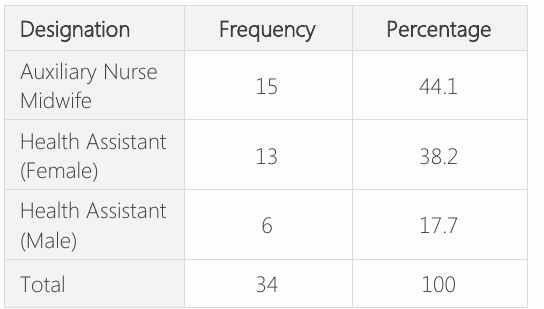
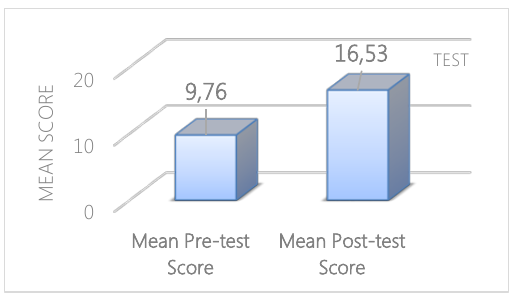
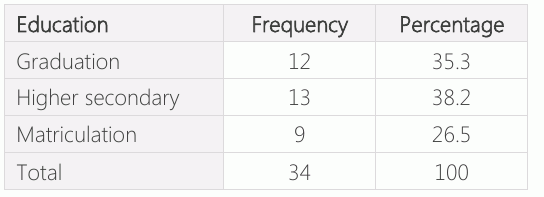
- In total 34 health workers participated in the training. 44.1% of the participants were ANM and 38.2% were Health Assistants (Female). Rest were Health Assistants (Male). The mean (SD) duration of their service was 17.79 (1.8) years. 35.3% of them had a graduate degree. The mean (SD) post-test score was significantly better than the mean (SD) pre-test score, 16.53 (1.73) vs 9.76 (1.71). There was a significant improvement in score for 12 questions.
- Conclusion
- With time the knowledge regarding TB and RNTCP is fading in health workers. Regular refresher training is required for the health workers to remain updated about tuberculosis.
Keywords
Full text
Introduction
Tuberculosis (TB) is the most important public health problem of India. According to the Global TB report 2018 released by the World Health Organization (WHO), an estimated 2.74 million new TB cases emerged in India that is nearly a quarter of all new cases detected in 2017 (1). It is a contagious disease caused by bacterium Mycobacterium tuberculosis (MTB). It can affect any part of the body, though lungs are the most commonly affected organs. Of all forms of TB, pulmonary TB is most important as diagnosing it early and treating it appropriately will prevent the spread of disease. The mode of transmission of TB is through air. Infected persons with active TB spread the bacteria when they cough indiscriminately, spit, speak, or sneeze (2). In most of the cases the bacteria simply rest in the body without causing any symptom to the individual when it is called the latent tuberculosis (3). About 10% of these latently infected TB individuals go on to develop active TB disease (4). The classic symptoms of active or re-activated TB are chronic cough with sputum, night sweats, fever, and weight loss (5). Symptoms also depend upon the body part affected. National guideline recommend prompt initiation of treatment with more than one effective antibiotic to the diagnosed TB cases. Cases of antibiotic resistant tuberculosis is on rise due to rampant use of inappropriate TB regimen over the years.
At any given point of time, one-third of the humanity is infected with tuberculosis bacilli. Data from the annual rate of infections (ARI) studies shows that about 1.5% of the population are infected with TB bacilli each year in India (6). In 2016, there were more than 10 million cases of active TB worldwide and 1.3 million deaths were caused by TB (7). Only HIV beats TB in causing maximum number of deaths due to an infectious organism. Most of the deaths occurred in 22 developing countries of which India, China, Indonesia, Pakistan, and the Philippines accounted for more than 50% deaths. The number of new cases and deaths are decreasing but not at the satisfactory rate. The Government of India has made the tuberculosis a notifiable disease in a gazette notification in May 2012 (8).
India is the highest TB burden country in the world and accounts for nearly one fourth of global burden of tuberculosis (9). In India every five minutes two person dies of TB which can be prevented by empowering communities and strengthening health systems. TB control programme was started in India way back in 1962 as the National Tuberculosis Control Programme. The programme was reviewed in 1992 and a Revised National Tuberculosis Control Programme (RNTCP) was started in 1992. The RNTCP covered the entire country in 2006 (10).
World Health Organization recognizes the importance of tuberculosis-related knowledge surveys in advocacy, communication, and social mobilization strategy planning. Information, Education, and Communication (IEC) are an integral to the TB control program to create awareness among public, health care providers, and policy makers. The aims of the present study are to find out the gaps in the current knowledge of the auxiliary nurse midwives (ANMs), and health assistants, the frontline health worker of the community regarding the tuberculosis care and to see the improvement in their knowledge after giving them refresher training related to TB care.
Materials and Methods
Kalyani is a sub-divisional town in the Nadia district of West Bengal. The district tuberculosis office is situated in the Krishnanagar town. The district has 26 tuberculosis units. Since Kalyani and Gayeshpur municipalities are close by they have a common tuberculosis unit. Near to Kalyani town is a block named Haringhata. It has a rural hospital named Haringhata Block Primary Health Centre (BPHC). This BPHC has three Primary Health Centres (PHCs) and 30 sub – centres. Each sub-centre is manned by two Auxiliary Nurse Midwives (ANMs). These ANMs are supposed to be the first care providers for the rural population. They provide basic medical care to the villagers. They also guide Accredited Social Health Activists (ASHAs) workers which are the grassroot health workers residing in the villages. These ANMs also act as Directly Observed Therapy – Short Course (DOTS) provider giving TB medicines to the diagnosed patients. They are also supposed to give injectable drugs to TB patients. The health assistants (HA) supervise the work of ANMs. There is a health assistant supervising the work of five to six ANMs. All ANMs and HAs were called at the BPHC for the refresher training on RNTCP technical and operation guidelines 2016. The chest physician of the medical college and medical officer in charge of the tuberculosis imparted a full day training to them. Training was in the form of workshop. The faculty members made PowerPoint presentations. They also cited real examples of TB cases. Trainers were shown different drug blister packs by Senior Treatment Supervisor (STS) and Senior Tuberculosis Laboratory Super visor (STLS) of the tuberculosis unit. Different register and forms were also shown to them. Participants had an opportunity to fill the dummy forms. A questionnaire in the form of pre-test and post-test was administered to them before and at the end of the training to assess their knowledge about tuberculosis. The questionnaire had 20 questions related to identifying presumptive TB cases, diagnosis and treatment of TB cases. The questions were of the level of ANMs only. The questions were either true / false or Multiple Choice Questions (MCQs) type. Their education and duration of service were also noted. The study was conducted after obtaining written informed consent of the study participants. All of them were given liberty to leave any question or not answer at all. The questionnaire was anonymous, and no personal data were collected. The collected data of 34 study participants were entered in Microsoft Excel 2016. The data were then transferred to IBM Statistical Package for the Social Sciences SPSS® software, version 22 (SPSS Inc., Chicago, IL, USA). Paired T-test was used to see the difference in mean score of pre-and post-test questionnaire. P value of <0.05 was considered statistically significant. All tests were two tailed. The study was conducted in July 2018.
Results
In total 34 health workers participated in the training. 44.1% of the participants were ANM and 38.2% were Health Assistants (Female) (Table-1). Rest were Health Assistants (Male). The mean (Standard Deviation) duration of their service was 17.79 (1.8) years. 35.3% of them had a graduation degree (table 2). Only one respondent could tell all the indications for sputum for Acid Fast Bacilli (AFB) examination for presumptive TB patients. 35% of respondent could correctly say what is a new case according to RNTCP guidelines. Respondents could not answer correctly questions with negative or double negative phrases like only two respondents answered correctly this question: false statement about intermittent regimen of DOTS.
Only four respondents were aware of the chemoprophylaxis for children. Only 2 and 4 participants could answer correctly about the retrieval action for missed dose and side effects of anti – tuberculosis drugs respectively. The mean post-test score was significantly better than the mean (Standard Deviation) pre-test score, 16.53 (1.73) vs 9.76 (1.71) (Figure-1). Answers were given correct by all participants in the post – test: Contraindicated anti-TB drug in pregnancy, schedule of follow up sputum smear examination for the new case of TB, stoppage of anti TB drug if jaundice develops and best method of prevention of TB. There was significant improvement in the score of 12 questions out of 20 in post – test questionnaire.
Discussion
In this cross-sectional study to assess the knowledge about the tuberculosis in frontline workers of different sub – centres of a block primary health centre in West Bengal, we found poor knowledge about the basic things related to TB care.
Despite working for many years, the health workers had inadequate knowledge. Their knowledge increased significantly after training. There was more than 69% improvement in their performance after refresher training. Similar studies have been conducted at various places in different cadres of health staff like medical students. In a study to assess the knowledge of tuberculosis and its management practices amongst postgraduate medical students in Pune authors found significant improvement in knowledge after RNTCP Training (Pre-test: 10. 25, Post-test: 14.36)(10). In the present study the improvement in mean score was around 7. In a survey amongst qualified doctors authors found out that 60% had knowledge of national tuberculosis programme regimen (11). PS Wu et al conducted a study in public health and DOTS workers and they found improvement in knowledge regarding tuberculosis from pre-test to post- test (12). surveyed. In a study amongst medical students, authors found that 64% participants correctly specified RNTCP objectives in pre-test, while in post-test, it was more than 93.1%. Similarly, in pre-test, 66% participants thought that family member can be a DOTS provider, while during post-test, 93% participants realized that DOTS should not be given by family member. Nowadays however family member can become DOTS provider. They concluded that sensitization workshops increase knowledge of tuberculosis amongst the medical students (13).
The limitations of the study are its small sample size and validity of questionnaire. This type of study has not been done though in frontline heath workers. The success of RNTCP depends on the performance of ASHAs, ANMs and health assistants in the rural areas. TB control programme is very dynamic in our country. The guidelines keep on changing every often. It is not easy for an overburdened health worker to keep abreast with latest changes. Refresher trainings are need of the day. Regular training improves the knowledge of the health care workers. These trainings should be planned well
Declarations
- Author contributions (CRediT)
- All authors contributed equally to all 14 CRediT roles (Conceptualization, Data curation, Formal analysis, Funding acquisition, Investigation, Methodology, Project administration, Resources, Software, Supervision, Validation, Visualization, Writing – original draft, Writing – review & editing).
- Funding
-
Funding information was not reported in the published version of this article.
- Conflicts of interest
- The authors declare that there is no conflict of interests regarding publication of this paper.
- Ethics approval
- Ethics approval details were not reported in the published version of this article.
- Data availability
- A data availability statement was not reported in the published version of this article.
References (13)
5 of 13 references are linked to their DOI.
- Global tuberculosis report 2018. World Health Organization. PubMed Google Scholar
- Mechanisms of mycobacterial transmission: how does Mycobacterium tuberculosis enter and escape from the human host. Future Microbiol. 2016;11(12):1503-1506 PubMed Google Scholar
- Dean E. Schraufnagel. “Latent Tuberculosis Infection” Is a Term That Should Go Dormant, and the Significance of Latent Tuberculosis Should Be Rethought. Annals of the American Thoracic Society 2016; 13(5):593-594 DOI Crossref PubMed Google Scholar
- Tuberculosis Infection and Latent Tuberculosis. Tuberc Respir Dis (Seoul). 2016;79(4):201-206 PubMed Google Scholar
- Loren G. Miller, Steven M. Asch, Emily I. Yu, Laura Knowles, Lillian Gelberg, Paul Davidson; A Population-Based Survey of Tuberculosis Symptoms: How Atypical Are Atypical Presentations? Clinical Infectious Diseases, Volume 30, Issue 2, 1 February 2000, Pages 293–299 DOI Crossref PubMed Google Scholar
- Chadha VK1, Kumar P, Jagannatha PS, Vaidyanathan PS, Unnikrishnan KP. Average annual risk of tuberculous infection in India. Int J Tuberc Lung Dis. 2005 Jan;9(1):116-8 PubMed Google Scholar
- Global Tuberculosis Report 2017. World Health Organization. PubMed Google Scholar
- Sarabjit Singh Chadha, Sharath Burugina Nagaraja, Archana Trivedi, Sachi Satapathy, Devendrappa N M and Karuna Devi Sagili. Mandatory TB notification in Mysore city, India: Have we heard the private practitioner’s plea? BMC Health Services Research 2017;17:1 DOI Crossref PubMed Google Scholar
- L S Chauhan. RNTCP: Past, Present and Future of TB Control Programme in India. J. Commun. Dis. 2006; 38 (3):191-203 PubMed Google Scholar
- Rahul R Bogam, Sunil M Sagare. Knowledge of tuberculosis and its management practices amongst postgraduate medical students in Pune city. National Journal of Community Medicine 2011: 2(1): 52-59 PubMed Google Scholar
- A Vijaya Raman, VK Chadha et al. A study of knowledge, Attitude and Practices of Medical Practitioners Regarding Tuberculosis and Its Control in a Backward Area of South India. NTI Bulletin 2000; 36/1&2:3-7 PubMed Google Scholar
- PS Wu, Pesus Chou, et al. Assessment of Changes in Knowledge and Stigmatization Following Tuberculosis Training Workshop in Taiwan. J formos Med Assoc 2009; 108:377-85 DOI Crossref PubMed Google Scholar
- Giri PA, Phalke DB. Impact of sensitization workshop on knowledge regarding tuberculosis among final year medical students. Int J Med Public Health 2013;3:100-2 DOI Crossref PubMed Google Scholar
Respond to this article
Comments on a published article are welcome as a Letter to the Editor.
Get an e-mail when new articles in your fields are published
Read the full text
Open the PDF here
Loading the PDF…
If the PDF does not show here, use the download button above.
How to cite this article
Halder I, Singh R. Impact of Refresher Training on Knowledge Regarding Tuberculosis among Health Workers of West Bengal. Ulutas Med J. 2019;5(1):14-18. doi:10.5455/umj.20190104122056
Halder, I., & Singh, R. (2019). Impact of Refresher Training on Knowledge Regarding Tuberculosis among Health Workers of West Bengal. The Ulutas Medical Journal, 5(1), 14–18. https://doi.org/10.5455/umj.20190104122056
Halder, I. and Singh, R. (2019) 'Impact of Refresher Training on Knowledge Regarding Tuberculosis among Health Workers of West Bengal', The Ulutas Medical Journal, 5(1), pp. 14–18. doi: 10.5455/umj.20190104122056.