The Ulutas Medical Journal · ISSN 2149-0430 (印刷版), 2149-388X (在线版) · https://www.ulutasmedicaljournal.com/?mno=301628
原创研究 · 开放获取
补充营养和母乳喂养
标题、摘要和全文为机器翻译。 英文原文
- Mustafa Kemal University, Department of Pediatrics, Hatay, Turkey ROR
- Mustafa Kemal University, Department of Pediatric Surgery, Hatay, Turkey ROR
- 开放获取
- CC BY-NC 4.0
- ORCID
- 资助
- 伦理批准
- 数据可用性
摘要
背景:罗塔病毒是导致急性胃肠炎的最常见原因,原因是严重的痢疾和相关住院以及婴儿死亡,特别是在发达国家和发展中国家的婴儿阶段。 这项研究的目的是追溯性地确定经诊断患有急性胃肠炎而入院的婴儿的轮状病毒的频率、季节分布和营养关系。 材料与方法:在2016年10月至2018年3月期间经急性胃肠炎诊断后入院的383名婴儿,在大便中接受轮状病毒抗原检查. 结果: 383名婴儿的平均学习年龄为8.2个月。 41.8%的患者为女性(n:160),58.2%为男性(n:223)。 凳子标本检查时,共检测出33.68%(n:129)的轮状病毒抗原,共383例. 在检测到的129例轮状病毒抗原中,41.9%为女性(n:54),58.1%为男性(n:75). 讨论:我们认为应该把轮状病毒作为急性痢疾的致病剂,特别是在冬季和春季的婴儿中。 这样就可以防止不必要的和昂贵的调查和治疗。 此外,只有头180天进行母乳喂养,才能减少婴儿期轮状病毒腹泻的频率。 关键词:母乳喂养、补充营养、婴儿、轮状病毒
关键词
全文
全文为机器翻译;以英文原文为准。 英文原文
导言
急性胃肠炎是儿童发病率和死亡率高的第二常见原因。 罗塔病毒是导致急性胃肠炎的最常见原因,原因是严重痢疾和相关住院以及婴儿死亡,特别是在发达国家和发展中国家的婴儿阶段。 (1–3)每年共有760 000名五岁以下儿童因急性腹泻而丧生。 其中,有45.3万人依靠轮状病毒.
罗塔病毒发生在温带气候区,通常发生在秋季至春季. 无血和急性水性痢疾常伴有呕吐和发烧. 会导致婴儿严重脱水 (4)。 。 。
在任何治疗方案都不足的所有发展中国家,罗塔病毒造成死亡率,发达国家的发病率和经济损失也造成死亡率 (2, 5)在欧洲,平均有70万名五岁以下儿童因轮状病毒引起的严重胃肠炎而入院,据报告约有90 000名儿童因严重脱水而住院,造成大规模经济损失 (6)。 。 。
罗塔病毒感染发生在全年热带地区,但季节性分布在我国等温带气候区,冬季和早春更常见. (7)。 。 。
病毒性胃肠炎的检测对疾病的流行病学和监测十分重要。 本次研究的目的是追溯性地确定我国医院确诊急性胃肠炎的婴儿的轮状病毒的频率、季节分布和营养关系。
材料和方法
2016年10月至2018年3月,在穆斯塔法·凯末尔大学医学院小儿科和疾病系,有383名经急性胃肠炎诊断后入院并接受肠道病毒抗原检查的婴儿入院学习. 所有病人都根据年龄、性别、季节分布、临床和实验室调查结果、母乳喂养的继续、补充食物的开始年龄、粪便中轮状病毒抗原检查和住院时间等情况进行了追溯分析。 5个月以下和24个月以上的儿童、慢性和免疫妥协病例以及在粪便中发生血液和寄生虫的情况均排除在外。 印度GenxBio的Rota/Adeno病毒快速测试卡(英语:Rota/Adeno virus Rapid Test Card)用于研究在无菌封闭容器中采集的新鲜凳子标本中的轮状病毒抗原。
结果
383名婴儿的平均学习年龄为8.2个月。 41.8%的患者为女性(n:160),58.2%为男性(n:223)。 凳子标本检查时,共检测出33.68%(n:129)的轮状病毒抗原,共383例. 在检测到的129例轮状病毒抗原中,41.9%为女性(n:54),58.1%为男性(n:75). 在11月,12月,1月,2月,3月,至少7月和8月,最常发现罗塔病毒感染. 在冬季的几个月里,经常出现罗塔病毒感染(46.3%)。
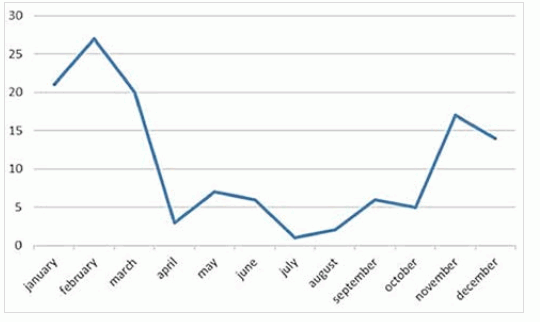
患者的临床表现为发烧,恶心,呕吐,腹泻,脱水和口腔喂养障碍. 在病理学实验室的发现中,检测到了血球贫血和缺血症。 轮状病毒阳性病例的平均钠值为131.1 mmol/L,平均钾值为3.12,轮状病毒阴性胃肠炎的平均钠值为136.4 mmol/L,平均钾值为4.1 mmol/L.
轮状病毒阴性患者补充营养的平均起始年龄为5.9个月,轮状病毒阳性患者补充营养的平均起始年龄为3.7个月。 研究中确定继续母乳喂养的病例有312例(81.4%)。 经测定,83例(64.3%)的轮状病毒阳性病例继续母乳喂养。 在早期开始补充营养的团体中,轮状病毒的频率和住院时间较长。 在头6个月只喂奶的婴儿中,轮状病毒阳性率为18.2%,在喂奶+配方奶的婴儿中,为31.4%。
89例(%68.9)轮状病毒阳性病例不满1岁,轮状病毒在我们的研究中最常出现在7-12个月的儿童身上。 在这项研究中,轮状病毒阳性病例的治疗时间为15.2天,轮状病毒阴性病例的治疗时间为8.1天。
86名(66%)患者接受了抗生素治疗,他们被家庭实践者发现对轮状病毒抗原呈阳性,在儿科急诊部,但没有发现临床改进。
讨论情况
急性胃肠炎是造成婴儿发病率和死亡率的主要原因之一,是全世界最常见的感染。 (3, 8–10)...急性胃肠炎的毒剂,病毒位列世界第一. 罗塔病毒是儿童病毒性胃肠炎最常见的原因. 它导致世界各地住院治疗,并导致极高的社会经济成本。 在文献中,有200万5岁以下儿童因轮状病毒胃肠炎而入院,其中52.7万人已经失踪. (1, 9, 11–13)在我国各地区进行的研究中,发现轮状病毒的频率在9.9%至39.8%之间。(14–17)据世界卫生组织(世卫组织)报告,世界其他地区的轮状病毒发病率为:美国5-25%,欧洲20-40%,亚洲30-50%,非洲10-65%。 (18)我们的研究发现,383名急性胃肠炎患者中有129人与轮状病毒有关。 发现罗塔病毒抗原阳性为33.68%,与立体类似. 全年热带地区都可能遇到罗塔病毒感染. 在我国等有温带气候的地区,季节性分布,通常出现在秋季,冬季和春季. (19, 20)在调查我国轮状病毒感染频率的许多研究中,据报轮状病毒在冬季的频率较高。 (21, 22)在我们的研究中,与文献相似的是,轮状病毒感染在冬季比其他季节更频繁。 罗塔病毒是一种有恶性传播的疾病.
临床上,它可以引起发热,呕吐,急性水性及无血性痢疾,并在孵化12-72小时后脱水. 特别是在2岁以下儿童中,情况更为严重。 (19) 我们的研究人口包括发烧、呕吐、急性水性、无血痢疾和脱水发现的病人。 用于在凳子中检测病毒的电显微镜,通过酶免疫测定或乳胶蛋白检测进行抗原检测,在凳子中培育病毒是病毒胃肠炎的确定诊断方法. 乳胶蛋白检测是检测大便中轮状病毒抗原的常见诊断检测. (23, 24). 在我们的研究中,使用了乳胶激素检测,33.68%的患者是轮状病毒抗原阳性. 研究表明,在轮状病毒发病率方面,性别分布没有差别,有研究表明,轮状病毒在女孩中更为常见。 (16, 25, 26)在我们的研究中,41.9%的案件是女性(n:54),58.1%的案件是男性(n:75)。 与文献不同,发现轮状病毒感染的男孩略高于女孩。 其原因可能是早期开始配方奶母,以便有地域文化原因的男孩更好地发展。
文献中曾报道,轮状病毒引起的痢疾比其他痢疾制剂导致更严重的临床症状,住院时间更长. 一项研究报告称,在3个月到18岁之间,住院时间为轮状病毒引起的腹泻5天。 (27, 28). 在我们的研究中,轮状病毒抗原阴性患者的住院时间为8.1天,轮状病毒抗原阳性患者的住院时间为15.2天。 与文献类似,发现轮状病毒相关病例住院时间较长. 我们的研究可以归因于我们的案件是2岁以下最频繁和最严重的疾病。
土耳其人口和健康调查(TNSA)的研究表明,经常观察到配方奶母和其他液体配方奶母早起。 在TNSA-2013年,12%的婴儿在6个月前开始补充营养,而在TNSA-2008年,这一比例为8%。 (29)我们的研究中罗塔病毒阳性病例始于补充营养3.7个月,而罗塔病毒阴性病例为5.9个月。
我们的研究结果与关于多年来补充营养的起始率增加的文献是一致的。 经确定,该研究中所有病人中有312人(81.4%)继续母乳喂养。 经确定,有83例(64.3%)的轮状病毒阳性病例继续母乳喂养。 头6个月只母乳喂养的婴儿的轮状病毒阳性率为18.2%,而母乳喂养+配方奶粉的婴儿为31.4%。 这一结果表明,早期开始补充营养可以提高轮状病毒感染的频率,仅在头六个月进行母乳喂养也可以减少轮状病毒感染的频率。 此外,父母应意识到,在头180天,婴儿只需要母乳喂养。 造成大多数儿童胃肠炎的轮状病毒感染的发生率在发展中国家和发达国家都很高。 在治疗和后续行动中,确定病例中的病原剂极为重要。 也可以防止使用抗生素 (7, 14)86名(66%)患者被家庭实践者发现对轮状病毒抗原呈阳性,并在儿科急诊部门接受了不必要的抗生素治疗,但没有发现临床改进。
最后,在我们的研究和文献中的其他研究中,我们可以说,轮状病毒是童年时期急性腹泻最常见的原因. 不幸地,对于我国婴儿时期的痢疾病原学研究不足. 在婴儿中,营养是福利最重要的指标,急性胃肠炎迅速恶化。 因此,抗生素治疗从经验上开始,其效果是父母的焦虑. 由于不必要的抗生素疗法,急性病毒性胃肠炎的治疗费用大增,实际上只需要支持性治疗. 此外,我们的研究支持这样的观点:在头6个月里只喂母乳喂养可以减少轮状病毒感染的频率。 为此,必须让父母认识到,婴儿只有前180天才应继续母乳喂养。
我们认为,应该把轮状病毒作为急性痢疾的致病剂,特别是在冬季和春季婴儿中。 这样就可以防止不必要的和昂贵的调查和治疗。 此外,只有头180天进行母乳喂养,才能减少婴儿期轮状病毒腹泻的频率。
声明
- 作者贡献(CRediT)
- 所有作者对全部 14 项 CRediT 角色贡献均等(Conceptualization, Data curation, Formal analysis, Funding acquisition, Investigation, Methodology, Project administration, Resources, Software, Supervision, Validation, Visualization, Writing – original draft, Writing – review & editing)。
- 资助
-
Funding information was not reported in the published version of this article.
- 利益冲突
- The authors declare that they have no conflict of interest in the current study.
- 伦理批准
- Ethics approval details were not reported in the published version of this article.
- 数据可用性
- A data availability statement was not reported in the published version of this article.
参考文献 (29)
29 条参考文献中有 12 条已链接 DOI。
- Barbhuiya, NI, et al. Incidence and clinical profile of rotaviral infection among children below 5 years of age admitted with acute diarrhea in a tertiary care hospital of Tripura. Indian Journal of Child Health, 2018;5(2). DOI Crossref PubMed Google Scholar
- Kurugöl Z. and Salman N. Rotavirus infeksiyonları ve aşıları. ANKEM, 2008;22(3):160 -70. PubMed Google Scholar
- Bekdaş M, et al. Acute gastroenteritis during childhood in Bolu, Turkey: 3 years of experience. 2013, GJMEDPH. PubMed Google Scholar
- Hiçer S et al. Incidence assessment of rotavirus and adeno virus associated acute gastroenteritis cases in early child hood. Infez Med, 2011. 19(2):113-9. PubMed Google Scholar
- Bozdayi G et al. Diversity of human rotavirus G9 among children in Turkey. Journal of medical virology, 2008: 80(4): 733-740. DOI Crossref PubMed Google Scholar
- Soriano- Gabarró M et al. Burden of rotavirus disease in European Union countries. The Pediatric infectious disease journal, 2006;25(1):7 -11. DOI Crossref PubMed Google Scholar
- Elliott EJ. Acute gastroenteritis in children. British Medical Journal, 2007;334(7583): 35. DOI Crossref PubMed Google Scholar
- Kosek M, C. Bern, R.L. Guerrant. The global burden of diarrhoeal disease, as estimated from studies published between 1992 and 2000. Bulletin of the World Health Organization, 2003;81:197-204. PubMed Google Scholar
- Guarino A et al. European Society for Pediatric Gastro enterology, Hepatology, and Nutrition/European Society for Pediatric Infectious Diseases evidence-based guidelines for the management of acute gastroenteritis in children in Europe: update 2014. Journal of pediatric gastroenterology and nutrition, 2014;59(1):132-152. DOI Crossref PubMed Google Scholar
- Guarino A et al. European Society for Paediatric Gastro enterology, Hepatology, and Nutrition/European Society for Paediatric Infectious Diseases evidence-based guidelines for the management of acute gastroenteritis in children in Europe: executive summary. Journal of pediatric gastro enterology and nutrition, 2008; 46(5):619-621. DOI Crossref PubMed Google Scholar
- Regagnon C et al. Rapid diagnosis of rotavirus infections: comparative prospective study of two techniques for antigen detection in stool. Pathologie-biologie, 2006;54(6):343 -346. PubMed Google Scholar
- Rodriguez-Baez N et al. Astrovirus, adenovirus, and rotavirus in hospitalized children: prevalence and association with gastroenteritis. Journal of pediatric gastroenterology and nutrition, 2002;35(1):64-68. DOI Crossref PubMed Google Scholar
- Enweronu- Laryea CC et al. Prevalence of severe acute rotavirus gastroenteritis and intussusceptions in Ghanaian children under 5 years of age. The Journal of Infection in Developing Countries, 2011;6(02):148-155. DOI Crossref PubMed Google Scholar
- Biçer S et al. Çocuk Acil Servisinde Saptanan Rotavirus Gastro enteriti Olgulannın Sıklığı. Journal of Pediatric Infection/ Cocuk Enfeksiyon Dergisi, 2008;2(3). PubMed Google Scholar
- Kurugol Z et al. Rotavirus gastroenteritis among children under five years of age in Izmir, Turkey. Turkish Journal of Pediatrics, 2003;45(4):290 -294. DOI Crossref PubMed Google Scholar
- Akıncı N et al. Akut gastroenteritli çocuklarda adenovirus ve rotavirus. J Pediatr Inf, 2007;1(3):98-101. PubMed Google Scholar
- Gürbüz F, Tezer H, Sayli TR, Akut gastroenterit nedeniyle hastaneye yatan hastalarda etkenler ve klinik bulgular: Epidemiyolojik çalışma. Türkiye Çocuk Hastalıkları Dergisi, 2010;4(4). PubMed Google Scholar
- Organization, WH. Global Rotavirus Information and Surveillance Bulletin, Vol: 3. 2011, WHO Press, Geneva. PubMed Google Scholar
- Bicer S et al. Frequency of gastroenteritis in pediatric emergency department/Cocuk acil servisinde saptanan rotavirus gastroenteriti olgularinin sikligi. Journal of Pediatric Infection, 2008;96-100. PubMed Google Scholar
- İlktaç M. Akut gastroenteritli çocuklarda rotavirus sikliğinin araştirilmasi ve rotavirus sezonunun takibi: beş yillik sonuçlarin değerlendirilmesi. Ankem Derg, 2012;26(1): 25-29. PubMed Google Scholar
- Yüksel P et al. Çocukluk yaş grubu gastroenteritlerinde rota virus antijen pozitifliğinin değerlendirilmesi. Klimik Derg, 2011;24(1):48-51. PubMed Google Scholar
- Inci, A, Kurtoglu M, Baysal B. Bir Eğitim Ve Araştirma Hastanesinde Rotavirus Gastro-Enteriti Prevalansinin Araştirilmasi. İnfeksiyon Dergisi (Turkish Journal of Infection), 2009;23(2):79-82. PubMed Google Scholar
- Tünger O. Akut gastroenteritli çocuklarda rotavirus ve adeno virus tip, 1997;40: 41. PubMed Google Scholar
- Yaman A et al. İshalli çocuklarda rotavirüs prevalansının ELISA ve Lateks aglütinasyon metodu ile araştırılması. İnfeksion Derg, 1997;11(3):279-281. PubMed Google Scholar
- Şimşek Y et al. Çocuklarda Akut Gastroenteritte Rotavirüs Sıklığı ve Serotip Özellikleri. Turkiye Klinikleri Journal of Pediatrics, 2007;16(3):165 -170. PubMed Google Scholar
- Öner N et al. Trakya bölgesinde hastaneye yatan ishalli çocuklarda infeksiyon etkenleri diğer bölgelerden farklılık gösteriyor mu. The Journal of the Child, 2003;3:13-15. PubMed Google Scholar
- Lee BP et al. Nonmedical costs associated with rotavirus disease requiring hospitalization. The Pediatric infectious disease journal, 2005;24(11):9 84-988. DOI Crossref PubMed Google Scholar
- Chen SY et al. Molecular epidemiology and clinical manifestations of viral gastroenteritis in hospitalized pediatric patients in Northern Taiwan. Journal of clinical microbiology, 2007; 45(6):2054-2057. DOI Crossref PubMed Google Scholar
- Kahraman F, Gül SS. Türkiye’de Çocuk Yoksulluğu: Gaziantep Üzerine Bir Araştirma. Hitit Üniversitesi Sosyal Bilimler Enstitüsü Dergisi, 2015;8(1). DOI Crossref PubMed Google Scholar
阅读全文
在此打开 PDF
正在加载 PDF…
若 PDF 未在此显示,请使用上方的下载按钮。
如何引用本文
EL C, Celikkaya ME. Complementary Nutrition and Breastfeeding In Rotavirus Diarrhea. Ulutas Med J. 2018;4(2):97-102. doi:10.5455/umj.20180611124118
EL, C., & Celikkaya, M. E. (2018). Complementary Nutrition and Breastfeeding In Rotavirus Diarrhea. The Ulutas Medical Journal, 4(2), 97–102. https://doi.org/10.5455/umj.20180611124118
EL, C. and Celikkaya, M.E. (2018) 'Complementary Nutrition and Breastfeeding In Rotavirus Diarrhea', The Ulutas Medical Journal, 4(2), pp. 97–102. doi: 10.5455/umj.20180611124118.