The Ulutas Medical Journal · ISSN 2149-0430 (مطبوع), 2149-388X (إلكتروني) · https://www.ulutasmedicaljournal.com/?mno=19124
مقالة أصلية · وصول مفتوح
Strabismus in Pediatric Age: A single Center Experience in Turkey
ترجمة آلية للعنوان والملخص والنص الكامل. الأصل الإنجليزي
- Special Internal Medicine Clinic, Adana, Turkey
- Department of Ophthalmology, Adana Ortadogu Hospital, Adana, Turkey ROR
الملخص
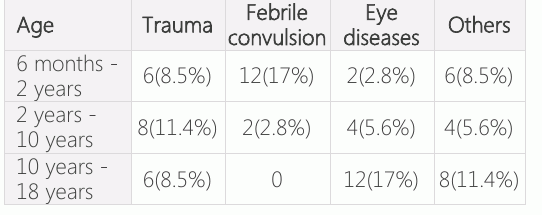
معلومات أساسية: إن " سترابيزوس " حالة سريرية لا تتواءم فيها العيون مع بعضها البعض بشكل مناسب. ولم تكشف بعد الأسباب والأنواع الشائعة وانتشار السلالة. The study aimed to investigate the prevalence, etiology, and the most common types of strabismus in Turkish children. المواد والأساليب: وكانت هذه دراسة متوقعة أجريت من نيسان/أبريل 2014 وتموز/يوليه 2018 في عيادتنا لعلم الشيخوخة. A total of 70 children with strabismus between 6 months - 18 years of age included in this study. All patients below 6 months and above 18 years were excluded from this study. وقد أُخذ تاريخ مفصل للشكاوى والولادة والمشاكل الإنمائية. وقد أجري الفحص المتعلق بالإجهاد نتيجة للاختبار السري، واختبار الغطاء البديل، واختبار هيرشبرغ. النتائج: حضر ما مجموعه 800 3 طفل عيادة لدينا خلال فترة الدراسة. وكان مجموع عدد الأطفال الذين يعانون من السلالة 70 طفلا. ومن ثم، بلغ معدل انتشار السلالة 1.84 في المائة، في صفوف الفتيان 0.84 في المائة، وفي الفتيات 1 في المائة. In children between 6 months - 2 years of age, 6 (8.5%) children had trauma, 12 (17.2%) had a febrile convulsion, and 2 (2.8%) had eye diseases. In children between 2 - 10 years of age, 8 (11.4%) children had trauma, 2 (2.8%) had a febrile convulsion, 4 (5.6%) had eye diseases. In children between 10-18 years of age, 6(8.5%) children had trauma, and 12 (17.2%) had eye diseases. الاستنتاج: يؤدي تشنج الرشوة دورا أساسيا في السلالة حتى السنتين الأوليين. وتسود الصدمة في السلالة بعد سنتين من العمر. أمراض العين تبرز في السلالة في الأعمار المتقدمة.
الكلمات المفتاحية
النص الكامل
ترجمة آلية للنص الكامل؛ النسخة المعتمدة هي الأصل الإنجليزي. الأصل الإنجليزي
مقدمة
(سترابيزوس) حالة سريرية لا تتواءم فيها العينان بشكل سليم ويسمى أيضا ب " السكوت " . ومن الناحية الفيزيولوجية، عندما تركز أعيننا على جسم ما، فإنها متوائمة مع بعضها البعض بحيث يتداخل الفؤوس البصرية دائما مع الجسم الذي ينظر إليه. وهكذا، يمكننا أن نرى الأشياء بوضوح ودقيق. وإذا كان الطفل مصاباً بالإجهاد، يمكن أيضاً النظر إلى العواطف الشاذة، والرؤية المزدوجة، والرؤية السيئة، أو مشاكل الوضع غير الطبيعي للرأس. ويكتسي تشخيص السلالة في سن مبكرة أهمية حيوية. ومع تقدم العمر، تصبح المعاملة أكثر صعوبة. In infants who have strabismus, visual acuity may not develop properly (1, 2)وبالإضافة إلى ذلك، كثيراً ما يعاني الأطفال والمراهقين الذين يعانون من السلالة من عواقب نفسية واجتماعية وعاطفية مختلفة. ولهذا السبب، ينبغي تشخيص الأطفال المصابين بالإجهاد وعلاجهم لمنع العاهات البصرية والمشاكل النفسية.
أهم أسباب السلالة هي انخفاض وزن المواليد والولادة (2–4)وقد تكون العوامل الأخرى ذات الطابع الحساسي (2, 4) خطأ رجعي (5)الربو (2)شلل الدماغ، نزيف داخلي (6)سن الوالدين، التدخين أثناء الحمل (7, 8)منخفض (9)التعاطف مع ما قبل الزواج (10, 11)وتقديم المساعدة (12).
The causes, common types, and prevalence of strabismus have not been revealed precisely in Turkish children. In the pediatric age group, the causes, common types, and prevalence of strabismus should be investigated in order to make early diagnosis and treatment. In this context, this study aimed to examine the strabismus and related conditions from six months to 18.years-old children and to determine the types, prevalence, etiology, age, and gender distribution of strabismus.
المواد والأساليب
وأجريت هذه الدراسة عقب إعلان هلسنكي ووافقت عليها لجنة الأخلاقيات في مستشفى مدينة أدانا في أدانا في تركيا. وقبل الفحص، تم الحصول على موافقة مستنيرة من والدي جميع الأطفال.
A total of 3800 children between 6 months and 18 years admitted to our ophthalmology clinic between April 2014 and July 2018. وكان سبعون من الأطفال يبلغون ٠٠٣٨ طفل مصابين بالإجهاد وأدرجوا في الدراسة. All patients below six months and above 18 years were excluded from this study. وقد أُخذ تاريخ مفصل للشكاوى والولادة والمشاكل الإنمائية.
وقُيِّمت المرضى من أجل النضوج البصري، سواء عن بعد أو عن طريق الرؤية المتقاربة مع العين العارية، فضلاً عن النضوج البصري الأفضل. وتم أيضاً فحص الصندوق بمصباح ممزق باستخدام التصفيق. وقد أجري الفحص المتعلق بالإجهاد نتيجة للاختبار السري، واختبار الغطاء البديل، واختبار هيرشبرغ. إذا كشف المريض عن التهاب الكبد، استعمل اختبار تغطية النشوة المتناوبة لقياس الزاوية الحبارية في النوبات. In patients with refractive error, strabismus examination was performed after the refractive error was corrected.
وقد صنف " سترابيزوس " تبعاً للانحراف عن منصب رئيسي مثل الإسوتروبيا، والخصوبة، والمتلازمة (الانحراف الكتابي). The patients were investigated according to the following criteria: gender, age, etiology, family history, strabismus type, and refractive error (myopia, hypermetropia).
النتائج
وكان 70 طفلا (1.84 في المائة) مصابين بالإجهاد. وكان 32 طفلا (45.7 في المائة) من الذكور و 38 طفلا (54.3 في المائة) من الإناث. وكانت نسبة انتشار السلالة بين الفتيان 0.84 في المائة، وكانت نسبة الفتيات 1 في المائة.
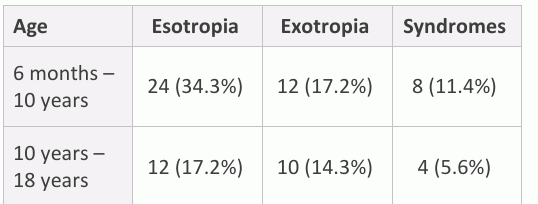
وكشفت الإصابة بمرض الإسوتروبيا في 24 طفلا (34.3 في المائة) وفي 12 طفلا (17.2 في المائة) وفي 8 أطفال (11.4 في المائة) بين 6 أشهر و 10 سنوات. Esotropia was found in 12(17.2%), as exotropia in 10 (14.3%) patients, and syndrome in 4(5.6%) between 10-18 years (Table-1).
The etiology of strabismus was divided into three age groups: 6 months-2 years,2-10 years, and 10-18 years. In the six months-2-years age group, 6 (8.5%) children had trauma, 12 (17.2%) had a febrile convulsion, 2(2.8%) had eye diseases, and 6 (8.5%) had other causes. In the 2-10 years group, 8 (11.4%) children had trauma, 2(2.8%) children had febrile convulsion, 4(5.6%) children had ophthalmologic diseases, and 4 (5.6%) children had other causes. In the 10-18 years age group, 6(8.5%) children had trauma, 12 (17.2%) had eye diseases, and 8 (11.4%) had other causes (Table-2).
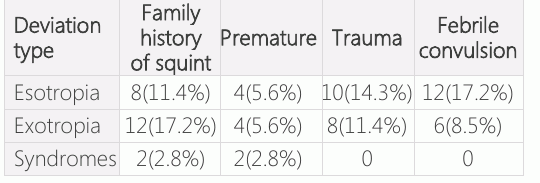
وكان لدى ثمانية (11.4 في المائة) من المرضى المصابين بمرض الإسوتروبيا تاريخ عائلي، و4 مرضى (5.6 في المائة) يعانون من الصدمة، و10 مرضى (14.3 في المائة) أصيبوا بصدمة، و12(17 في المائة) أصيبوا بتشويش فيزيج. وكان لدى 12 (17 في المائة) من المرضى المصابين بفقدان الرحم تاريخاً عائلياً، وكان 4 (5.6 في المائة) مصابين بداء الصدمة، وكان 8 (11.4 في المائة) مصابين بصدمات، وكان 6 منهم (8.5 في المائة) مصابين بتشويش فيث. وبالإضافة إلى ذلك، كان لدى 2 (28 في المائة) من المرضى المصابين بمتلازمة نقص المناعة المكتسب (الإيدز) تاريخ أسري من السلالة، وكان اثنان (2.8 في المائة) مصابين بداء الصدمة (الجدول 3).
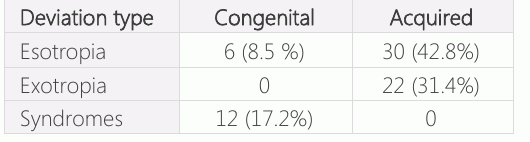
وكان ستة أطفال (8.5 في المائة) من الأطفال المصابين بالإجهاد الخلقي مصابين بالمرض، وكان 12 (17.2 في المائة) مصابين بمتلازمة. 30 (42.8 في المائة) من الأطفال المصابين بداء السلال الديكي، وكان 22 (31.4 في المائة) مصابين بالطفرات (الجدول 4).
54 (77.1 في المائة) من المرضى تعرضوا لخطأ رجعي. وكان 22 (31.4 في المائة) من الأطفال مصابين بفقدان الدم، و32 (45.7 في المائة) مصابين بارتفاع ضغط الدم.
المناقشة
وفقاً لدراستنا، كانت نسبة انتشار السلالة 1.84 في المائة. In other countries, the prevalence of strabismus was found as 4.3% in England, 1.9% in Africa, 1.28% in Japan, and 4.6% in Finlan (6)- تبين أن نسبة انتشار السلب في دراستنا تبلغ 0.84 في المائة بين الفتيان و 1 في المائة في الفتيات. In the study of Graham, strabismus prevalence was 7.3% in boys and 6.9% in girls. وتظهر هذه الدراسات تفاوتا كبيرا في معدلات الانتشار في مختلف البلدان. وقد تكون الفئات العمرية للأطفال مفيدة في هذه الحالة.
In the current study, esotropia was found in 51.5% of children with strabismus, exotropia in 31.5% of children, and syndrome in 17% of children. This context suggests that esotropia may be the most common type of strabismus in Turkish children. This finding was similar to the study of Matsuo et al., which reported that exotropia and esotropia were the most common type of strabismus in 86.220 pre-school children (13) On the other hand, Attada et al. reported that esotropia was more common in 3-10 years group while exotropia was more common in 11-16 years group (6)- أفيد بأن حالة الإجهاد في الأطفال تنطوي على عدة عوامل خطر. وأشار ريمالي وآخرون إلى أن خطر الإجهاد يزداد مع انخفاض وزن المواليد وتدخين الأمهات أثناء الحمل. وبالإضافة إلى ذلك، أظهروا أن سن الأم هي أيضا عامل خطر كبير. (15)- وفي دراسة أخرى، تم التحقيق في تاريخ أسري من البقعة كعامل خطر. In this study, a family history of squint was presented in 28% of children (16)The writing committee for the multi-ethnic pediatric eye disease study groups and the Baltimore pediatric eye disease study groups declared that esotropia was associated with prematurity, smoke during pregnancy, anisometropia, and hyperopia while exotropia was associated with prematurity, smoke during pregnancy, family history of strabismus, female sex, and astigmatism (14)ومن منظور آخر، أفاد راشيل وآخرون بأن كثافة ومدة التعرض لضوء الشمس قد تكون مرتبطة بالإجهاد.
In the present study, 31.4% of the patients had a family history of squint, 14% had prematurity, 25.7% had trauma, and 25.7% had a febrile convulsion. When the etiological factors were examined, febrile convulsion was seen in the foreground in early ages. الصدمة كانت منتشرة في السلالة بعد عامين أمراض العين أصبحت بارزة في الأعمار المتقدمة
وأظهرت الدراسات السابقة أن الإسبوتات السكنية هي أكثر أنواع التعابير شيوعاً. (6)وأفادت غراهام وموهني بأن التكتروبولوجيا السكنية أكثر شيوعاً من الأوعية غير السكنية (18, 19)واقترحوا أن تكون الأعراض التغذوية، والخصائص المتقطعة، والأورام الخبيثة التي اكتسبت غير السكنية هي أكثر الأشكال شيوعاً للإجهاد. In the study of Chia et al., 53% had accommodative esotropia, and 23% had congenital esotropia (20)- وفي دراستنا، كان 25.7 في المائة مصابا بالإجهاد الخلقي، وكان 74.2 في المائة منهم قد اكتسبوا السلالة. 8.5 في المائة من السلالة الخلقية هي الإسوتوروبيا، و 17.2 في المائة تتعلق بمتلازمة خلقية. 42.8% of acquired strabismus was esotropia, and 31.4% was exotropia.
In our study, 77.1% of children with strabismus had a refractive error. 31.4% of children had myopia, and 45.7% had hypermetropia. In the study of Attada, 52.4% of the patients had refractive errors, 30.4% was myopia, and 22% was hypermetropia. وقد تستدعي هذه النتائج إجراء فحص سنوي لجميع الأطفال. وينبغي فحص الأطفال الذين يصممون على أن يصابوا بمرض بصري بصورة أكثر تواترا لمنع التقدم.
This study investigated strabismus and related conditions in Turkish children with a different point of view. ومن شأن التشخيص المبكر والعلاج المناسب للإجهاد أن يقلل بدرجة كبيرة من عبء المرض. In this context, regular school or community-based screening of children should be necessary for early diagnosis and management of strabismus in pediatric ages. For example, a comprehensive health investigation, including eye examination, may be performed before starting primary school.
الإقرارات
- مساهمات المؤلفين (CRediT)
- ساهم جميع المؤلفين بالتساوي في جميع أدوار CRediT الأربعة عشر (Conceptualization, Data curation, Formal analysis, Funding acquisition, Investigation, Methodology, Project administration, Resources, Software, Supervision, Validation, Visualization, Writing – original draft, Writing – review & editing).
- التمويل
-
Funding information was not reported in the published version of this article.
- تضارب المصالح
- None of the authors has a conflict of interest with the present article.
- الموافقة الأخلاقية
- This study was performed following the Declaration of Helsinki and was approved by the Ethics Committee of Adana City Hospital in Adana in Turkey.
- إتاحة البيانات
- A data availability statement was not reported in the published version of this article.
المراجع (20)
12 من أصل 20 مرجعًا مرتبطة بمعرّف DOI.
- Robaei D, Rose KA, Kifley A, Cosstick M, Ip JM, Mitchell P. Factors associated with childhood strabismus: findings from a population-based study. Ophtha lmology. 2006;113 (7):1146– 1153 DOI Crossref PubMed Google Scholar
- Repka MX, Summers CG, Palmer EA, Dobson V, Tung B, Davis B. The incidence of ophthalmologic interventions in children with birth weights less than 1251 grams. Results through 5 1/2 years. Cryotherapy for retinopathy of prematurity cooperative group. Ophthalmology. 1998;105 (9):1621–1627 DOI Crossref PubMed Google Scholar
- Schalij-Delfos NE, de Graaf ME, Treffers WF, Engel J, Cats BP. Long term follow up of premature infants: detection of strabismus, amblyopia, and refractive errors. J Ophthalmol. 2000;84(9):963– 967 DOI Crossref PubMed Google Scholar
- Cotter SA, Varma R, Tarczy-Hornoch K, McKean-Cowdin R, Lin J, Wen G, Wei J, Borchert M, Azen SP, Torres M, et al. Risk factors associated with childhood strabismus: the multi-ethnic pediatric eye disease and Baltimore pediatric eye disease studies. Ophthalmology. 2011;118(11):2251–2261 DOI Crossref PubMed Google Scholar
- Holmstrom G, Rydberg A, Larsson E. Prevalence and development of strabismus in 10-year-old premature children: a population-based study. J Pediatr Ophthalmol Strabismus. 2006;43(6):346– 352 DOI Crossref PubMed Google Scholar
- Attada TR. Deepika M, Laxmi S. Strabismus in paediatric age (3-16 year): a clinical study. Int J Res Med Sci 2016;4:1903-9. DOI Crossref PubMed Google Scholar
- Chew E, Remaley NA, Tamboli A, Zhao J, Podgor MJ, Klebanoff M. Risk factors for esotropia and exotropia. Arch Ophthalmol. 1994;112(10):1349–1355 DOI Crossref PubMed Google Scholar
- Hakim RB, Tielsch JM. Maternal cigarette smoking during pregnancy. A risk factor for childhood strabismus. Arch Ophthalmol. 1992;110(10):1459–1462 DOI Crossref PubMed Google Scholar
- Mohney BG, Erie JC, Hodge DO, Jacobsen SJ. Congenital esotropia in Olmsted County, Minnesota. Ophthalmology. 1998;105(5):846–850 PubMed Google Scholar
- O'Connor AR, Stephenson TJ, Johnson A, Tobin MJ, Ratib S, Fielder AR. Strabismus in children of birth weight less than 1701 g. Arch Ophthalmol. 2002;120(6):767– 773 DOI Crossref PubMed Google Scholar
- Bremer DL, Palmer EA, Fellows RR, Baker JD, Hardy RJ, Tung B, Rogers GL. Strabismus in premature infants in the first year of life. Cryotherapy for retinopathy of prematurity cooperative group. Arch Ophthalmol. 1998;116(3):329– 333 DOI Crossref PubMed Google Scholar
- Pathai S, Cumberland PM, Rahi JS. Prevalence of and early-life influences on childhood strabismus: findings from the millennium cohort study. Arch Pediatr Adolesc Med. 2010;164(3):250–257 DOI Crossref PubMed Google Scholar
- Matsuo T, Matsuo C. Comparison of prevalence rates of strabismus and amblyopia in Japanese elementary school children between the years 2003 and 2005. Acta Medica Okayama. 2007;61(6):329– 334 DOI Crossref PubMed Google Scholar
- Cotter SA, Varma R, Tarczy-Hornoch K, McKean- Cowdin R, Lin J, Wen G, et al. Borchert Met Joint writing committee for Multi ethnic Pediatric Eye disease study and the Baltimore paediatric eye disease study groups Ophthalmology. 2011; 118(11):2251-61 PubMed Google Scholar
- Remaley NA, Tamboli A, Zhao J, Podgor MJ, Klebanoff M. Risk factors for esotropia and exotropia. Arch Ophthalmol. 1994;112(10):1349-55 PubMed Google Scholar
- Cass EE. Divergent strabismus. Br J Ophthalmol. 1937;21(10): 538-559 PubMed Google Scholar
- Rachael H, Jenkins DB. Demographic variations in the prevalence and management of exotropia. Am Orthopt J. 1992;42:82 PubMed Google Scholar
- Graham PA. Epidemiology of Strabismus Brit J Ophthalmol. 1974;58(3):224-31 PubMed Google Scholar
- Mohney BG. Common forms of childhood strabismus in an incidence report. Am J Ophthalmol. 2007;144(3):465-7 PubMed Google Scholar
- Chia A, Roy L, Seenyen L, Comitant Horizontal Straismus: an Asian perspective Br J Ophthalmol. 2007;91(10):1337-40 PubMed Google Scholar
اقرأ النص الكامل
افتح ملف PDF هنا
جارٍ تحميل ملف PDF…
إذا لم يظهر ملف PDF هنا، استخدم زر التنزيل أعلاه.
كيف تقتبس هذه المقالة
Babakhani E, Babakhani E. Strabismus in Pediatric Age: A Single Center Experience in Turkey. Ulutas Med J. 2019;5(3):184-188. doi:10.5455/umj.20191127100430
Babakhani, E., & Babakhani, E. (2019). Strabismus in Pediatric Age: A Single Center Experience in Turkey. The Ulutas Medical Journal, 5(3), 184–188. https://doi.org/10.5455/umj.20191127100430
Babakhani, E. and Babakhani, E. (2019) 'Strabismus in Pediatric Age: A Single Center Experience in Turkey', The Ulutas Medical Journal, 5(3), pp. 184–188. doi: 10.5455/umj.20191127100430.