The Ulutas Medical Journal · ISSN 2149-0430 (مطبوع), 2149-388X (إلكتروني) · https://www.ulutasmedicaljournal.com/?mno=16646
تقرير حالة · وصول مفتوح
Splenic Infarction Due to Sickle Cell Trait while visitinging a Hill Station
ترجمة آلية للعنوان والملخص والنص الكامل. الأصل الإنجليزي
- Department of Internal medicine, Iqraa international hospital and research centre, Calicut, Kerala, India.
- Department of Radiology, Iqraa international hospital and research centre, Calicut, Kerala, India.
- Department of Pathology, Iqraa international hospital and research centre, Calicut, Kerala, India.
- Department of Psychiatry, Iqraa International Hospital and Research Centre, Calicut.
الملخص
- Background
- Sickle-cell trait (SCT) is a common genetic abnormality in the Indian population. وعلى الرغم من أن SCT هو إلى حد كبير خلل حميمي، فإنه نادرا ما يكون موجودا بمضاعفات مثل الارتشاء النضالي.
- Case Presentation
- Here, we report the case of a 27-year-old Muslim male developed acute left upper quadrant abdominal pain and constipation while visiting a hill station, Ooty (Tamil Nadu, India). The patient had a history of similar complaint while visiting the same hill station while he was a student and was hospitalized and treated as acute gastritis. He also gave a history of abdominal pain while traveling in the airplane to Qatar where he works. الاستنتاج: أصيب مريضنا بنوبات متعددة من ألم البطن بينما كان يطير ويزور محطة التل، ولكن تشخيص SCT لم يشتبه فيه بسبب الأسباب المذكورة أعلاه. غير أنه من المهم جداً تقييم المرضى الذين يعانون من ألم بطني متكرر في ارتفاعات أعلى بالنسبة لـ " SCT " حيث يمكن أن يؤدي ذلك إلى تشخيصه المبكر للزراعة النباتية وبدء الإدارة المناسبة في الوقت المناسب، مما قد يؤدي إلى تشخيص جيد.
الكلمات المفتاحية
النص الكامل
ترجمة آلية للنص الكامل؛ النسخة المعتمدة هي الأصل الإنجليزي. الأصل الإنجليزي
مقدمة
مرض الخلايا الشائكة هو حالة دم استجمام ذاتي أكثر شيوعا بين السكان المنحدرين من أصل أفريقي وعربي وهندي (1)- سمات الخلايا المتحركة هي شكل هزيل من المرض، الذي هو في الغالب خلل حميمي. However, SCT has been occasionally associated with several complications such as renal medullary cancer, splenic infarction, renal papillary necrosis, hematuria, exertional rhabdomyolysis,exercise-related death, venous thromboembolism, beat, priapism and osteonecrosis (2, 3)وأظهرت الدراسات أن المرضى المصابين بمرض الاختناق SCT معرضون بدرجة أكبر لخطر الإصابة بالعدوى، لا سيما عندما يتعرضون لارتفاعات عالية (4).
In India, SCD is seen mainly in the tribal belts of central India (5)وفي تقرير الحالة هذا، نصف شاباً مسلماً صحياً غير عشوائياً من جنوب الهند له صفات خلية مزرية ولا عوامل مخاطرة متبادلة تطورت تلقائياً في أثناء زيارة محطة تلة.
عرض الحالة
A 27-year-old Muslim male developed acute left upper quadrant abdominal pain and constipation while visiting a hill station, Ooty (Tamil Nadu, India). وكان لديه أيضا حمى قبل يومين. He was hospitalized in a local hospital and treated as acute gastritis. The investigations have done there are unavailable. قدم إلى المستشفى بعد يومين مع استمرار الألم البطني الشديد. لم يكن لديه مرض طبي معروف The patient had a history of similar complaint while visiting the same hill station while he was a student and was hospitalized and treated as acute gastritis. He also gave a history of abdominal pain while traveling in the airplane to Qatar where he works. لم يكن هناك تاريخ في أي إساءة استعمال للمواد ولم يكن هناك تاريخ عائلي لأي مرض طبي أو جراحي هام. عند الفحص، كانت حيويته طبيعية. كان هناك رقعة صغيرة في الربع الأيسر من البطن His blood investigations revealed leukocytosis with neutrophil predominance (85%), elevated C reactive protein and ESR. Ultrasonography of abdomen found hepatomegaly with grade one fatty liver and splenomegaly with a predominantly hypoechoic spleen. وأظهرت نسبة مئوية متفاوتة من البطن والحوض زراعاً من الطحالب شملت نحو 90 في المائة من البيرينشيما (انظر الشكل 1).
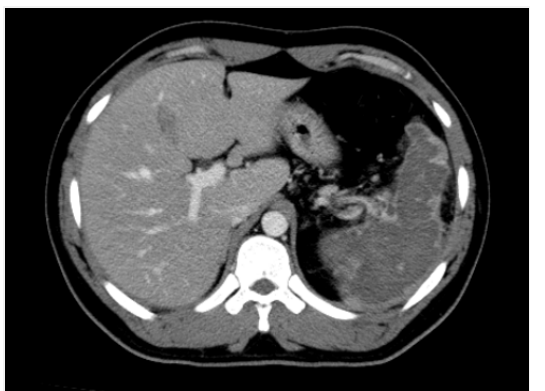
وأظهر الإلتهاب الكهروفوري بنسبة 39.3 في المائة HbS إلى جانب نسبة 51.2 في المائة طبيعية من Hb. His Hb was normal, and the sickling test was positive. وبالنظر إلى الصورة السريرية ونتائج التحقيق، فقد تم تشخيصه على أنه مشتت حاد مع سمات الخلايا المريضة. He was managed with intravenous antibiotics, proton pump inhibitors, laxatives, antiemetics, intravenous liquids and other supportive measures. ثقافته وحساسيته كانا عقيمين وتحسّن المريض بشكل عرضي مع العلاج المذكور أعلاه وسُرح في اليوم التالي.
المناقشة
تقع مقطورة سيكل في حوالي 300 مليون شخص في جميع أنحاء العالم (6)The 20 million people of India are known to suffer from sickle cell disease and is seen mainly in the tribal belts of central India (5)كما أن الأمراض المنقولة عن طريق الاتصال الجنسي شائعة بين السكان القبليين في جنوب الهند، وتشير التجربة السريرية إلى وجودها بين السكان الآخرين، بمن فيهم المسلمون. (7)غير أنه لا توجد محاولات منهجية لدراسة مدى انتشار الأمراض غير المعدية/الأمراض التي تنتقل بالاتصال الجنسي بين السكان غير القبائل في جنوب الهند. مريضنا ينتمي إلى السكان المسلمين غير القبائل في جنوب الهند. ومن التاريخ المتاح، ربما كان لديه عدة حلقات من الارتباك الطفيف، التي لم يتم اكتشافها على الأرجح بسبب انعدام الشك السريري.
ويتكون الهيموغلوبين العادي من مزيج من سلاسل البروتين من 2 غلوغبين بسلسلتين من سلاسل غلوبين وهيمي. Whereas, the SCT is characterized by the inheritance of a normal hemoglobin gene (HbA) from one parent and an abnormal mutated beta-globin gene, the sickle hemoglobin gene (HbS), from the other parent (8)وعلى النقيض من الأمراض المنقولة جنسياً، لا تحدث زيادة في مرض الخلايا الحمراء وتعددها إلا في الأشعة المقطعية تحت نقص النسيج الحاد، وزيادة الازدحام أو الجفاف، والدرجة متناسبة مع تركيز HbS. In higher altitude, the alveolar partial pressure of oxygen (pO2) can drop significantly resulting in polymerization and deformability of the HbS molecule resulting in sickling, which clinically manifests as vasoocclusive, sequestration, hemolytic and aplastic crises (9).
While splenic infarction is more commonly seen in patients with SCA, there are few case reports of splenic infarcts in SCT patients, mainly in adults exposed to high altitudes, usually 10,000 feet (about 3,000 m), with or without robust exercise (4)موريشيما وآخرون وصفوا حالة أنثى أمريكية أفريقية تبلغ من العمر 41 عاماً ولديها تاريخ من الإدمان على المشروبات الكحولية التي تطورت في الزراعة النباتية بعد تسلق جبل فوجي بسبب SCT (4)ووصفت شركة Abeysekera et al حالة مماثلة لذكر سريلانكي يحمل صفائح خلية غير مكتشفة مزروعة بالطحالب الكثيفة مع صدمات في الوريد الطفيف بعد التعرض للارتفاع (10)- ووصفت غوبتا وآخرون حالة شاب هندي يبلغ من العمر 21 عاماً، والذي تطور في زراعة الطحالب أثناء التسلق (للمرة الأولى) في ناندا ديفي، غارهوال هيمالايا (أوتاراكاند)، مع ارتفاع يبلغ 5025 متراً فوق مستوى سطح البحر بسبب عدم الكشف عن SCT (11).
There are reports of splenic infarction in patients with SCT at relatively lower altitudes also. A past study by Seegars and Brettt reported the case of an 18.year-old woman with sickle cell trait with no other co-morbid risk factors for hypoxemia or vascular injury, who had developed splenic infarction while residing near sea level (2)كما استعرض أصحاب البلاغ الأدبيات السابقة ووجدوا 12 حالة من حالات الإصابة بالعدوى الوهنية المنخفضة في المرضى الذين يعانون من سمة مرضية؛ ومن بينها سبعة حالات من الأوبئة مثل إساءة استعمال المخدرات غير المشروعة، والمرض الرئوي الذي يعاني من نقص في الدم، والجراحة المتاخمة للطحال، والاضطرابات الوبائية الأخرى، والعدوى التي تتسبب في زيادة الطحال التي يحتمل أن تؤدي إلى انتشارها (2)- زار مريضنا أوتي، وهي محطة تلة تقع وسط تلال نيلغيري على ارتفاع 240 2 مترا فوق سطح البحر في ولاية تاميل نادو جنوبي الهند، وتطورت انتشار الطحالب بينما لم تكن لديها عوامل مخاطر أخرى غير متعمدة بسبب نقص الدم أو الإصابة بالوعائية.
A case of SCT with splenic infarction with abdominal pain can be a clinically confusing situation as it is usually self-limiting and clinically indistinguishable from other intra-abdominal conditions. أصيب مريضنا بنوبات متعددة من ألم البطن بينما كان يطير ويزور محطة التل، ولكن تشخيص SCT لم يشتبه فيه بسبب الأسباب المذكورة أعلاه. غير أنه من الضروري تقييم المرضى الذين يعانون من ألم بطني متكرر في ارتفاعات أعلى بالنسبة لـ SCT حيث يمكن أن يؤدي ذلك إلى تشخيصه المبكر للزراعة النباتية وبدء الإدارة المناسبة في الوقت المناسب، مما قد يؤدي إلى تشخيص جيد.
الإقرارات
- مساهمات المؤلفين (CRediT)
- ساهم جميع المؤلفين بالتساوي في جميع أدوار CRediT الأربعة عشر (Conceptualization, Data curation, Formal analysis, Funding acquisition, Investigation, Methodology, Project administration, Resources, Software, Supervision, Validation, Visualization, Writing – original draft, Writing – review & editing).
- التمويل
-
Funding information was not reported in the published version of this article.
- تضارب المصالح
- The authors declared no conflict of interest with the present article.
- الموافقة الأخلاقية
- Ethics approval details were not reported in the published version of this article.
- إتاحة البيانات
- A data availability statement was not reported in the published version of this article.
المراجع (11)
8 من أصل 11 مرجعًا مرتبطة بمعرّف DOI.
- Serjeant GR, Ghosh K, Patel J. Sickle cell disease in India: A perspective. Indian J Med Res 2016;143(1):21-4 DOI Crossref PubMed Google Scholar
- Seegars MB, Brett AS. Splenic infarction associated with sickle cell trait at low altitude. Hematology 2015;20(10):607-9 DOI Crossref PubMed Google Scholar
- Tsaras G, Owusu-Ansah A, Boateng FO, Amoateng-Adjepong Y. Complications Associated with Sickle Cell Trait: A Brief Narrative Review. Am J Med 2009;122(6):507 -512 DOI Crossref PubMed Google Scholar
- Morishima A, Schofer JM, Pelletier P, McKee JM. Images in emergency medicine: splenic infarction due to sickle cell trait after climbing mt. Fuji. West J Emerg Med 2008;9(3):179 PubMed Google Scholar
- Kar B, Satapathy RK, Kulozik AE, Kulozik M, Sir S, Serjeant BE, et al. Sickle Cell Disease in Orissa state, India. Lancet 1986;2:1198-201 DOI Crossref PubMed Google Scholar
- World Health Organization. Sickle cell anemia. Report by the secretariat. 59th World Health, Assembly, 2006 PubMed Google Scholar
- Colah R, Mukherjee M, Ghosh K. Sickle cell disease in India. Curr Opin Hematol 2014;21:215–23 DOI Crossref PubMed Google Scholar
- Ashley-Koch A, Yang Q, Olney RS. Sickle hemoglobin (HbS) allele and sickle cell disease: a HUGE Review. Am J Epidemiol 2000;151: 839-845 DOI Crossref PubMed Google Scholar
- Harkness DR. Sickle cell trait revisited. Am J Med 1989;87: 30N–4N PubMed Google Scholar
- Abeysekera WY, de Silva WD, Pinnaduwa SS, Banagala AS. Acute massive splenic infarction with splenic vein thrombosis following altitude exposure of a Sri Lankan male with undetected sickle cell trait. High Alt Med Biol 2012;13(4):288-90. doi: 10.1089/ham.2012.1038 DOI Crossref PubMed Google Scholar
- Gupta M, Lehl SS, Singh K, Singh R. Acute splenic infarction in a hiker with previously unrecognised sickle cell trait. BMJ Case Rep 2013;2013:bcr2013008931 DOI Crossref PubMed Google Scholar
اقرأ النص الكامل
افتح ملف PDF هنا
جارٍ تحميل ملف PDF…
إذا لم يظهر ملف PDF هنا، استخدم زر التنزيل أعلاه.
كيف تقتبس هذه المقالة
Moideen S, Manoj PB, Hameed S, Khader A, Uvais N. Splenic Infarction Due to Sickle Cell Trait while Visiting a Hill Station. Ulutas Med J. 2019;5(1):103-106. doi:10.5455/umj.20191111060811
Moideen, S., Manoj, P. B., Hameed, S., Khader, A., & Uvais, N. (2019). Splenic Infarction Due to Sickle Cell Trait while Visiting a Hill Station. The Ulutas Medical Journal, 5(1), 103–106. https://doi.org/10.5455/umj.20191111060811
Moideen, S. et al. (2019) 'Splenic Infarction Due to Sickle Cell Trait while Visiting a Hill Station', The Ulutas Medical Journal, 5(1), pp. 103–106. doi: 10.5455/umj.20191111060811.