The Ulutas Medical Journal · ISSN 2149-0430 (مطبوع), 2149-388X (إلكتروني) · https://www.ulutasmedicaljournal.com/?mno=133517
مقالة مراجعة · وصول مفتوح
Profoundal Effects of Microcystin-LR Induced Cardiotoxicity in Mammals
ترجمة آلية للعنوان والملخص والنص الكامل. الأصل الإنجليزي
- Biochemistry Laboratory, Department of Zoology, Dr. Harisingh Gour Vishwavidyalaya, Sagar, Madhya Pradesh, India-470003 ROR
الملخص
وقد أثار التكرار وتغير المناخ تذبذباً مسموعاً بالسموم السيانية، التي أصبحت مشكلة عالمية في الصحة العامة. The most dangerous cyanotoxin found in water bodies is microcystin (MC), a byproduct of cyanobacterial metabolism. وتشير عدة دراسات إلى أنه بالإضافة إلى الكبد، قد يكون القلب جهازاً مستهدفاً آخر لتسمم بروميد الميثيل. وتشير البحوث الأخيرة إلى وجود صلة واضحة بين تعرض الماجستير والسمية القلبية، مما يشكل خطراً على صحة القلب والأوعية الدموية البشرية. ويمكن أن يتأثر نظام القلب والأوعية الدموية، الذي يشمل جميع الأنسجة والزنزانات والدم والأنسجة الدموية في القلب، تأثراً لا يطاق بمركبات الكربون المتعددة الكلورية فلورية، مما يؤدي إلى هيكل و/أو وظيفة نظام القلب والأوعية الدموية الشاذة. This review concludes that MC cardiotoxicity may be linked to protein phosphatase suppression and the contractile unit, generation of contractile force, the role of intercellular junction proteins, and the role of the angiotensin signaling pathway in cardiomyocytes.
الكلمات المفتاحية
النص الكامل
ترجمة آلية للنص الكامل؛ النسخة المعتمدة هي الأصل الإنجليزي. الأصل الإنجليزي
مقدمة
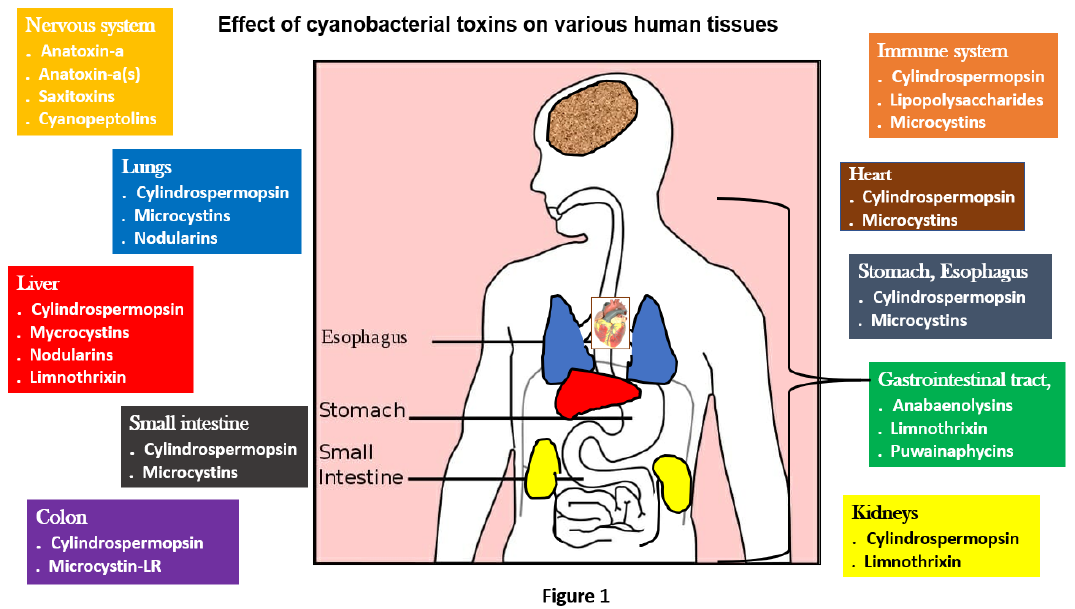
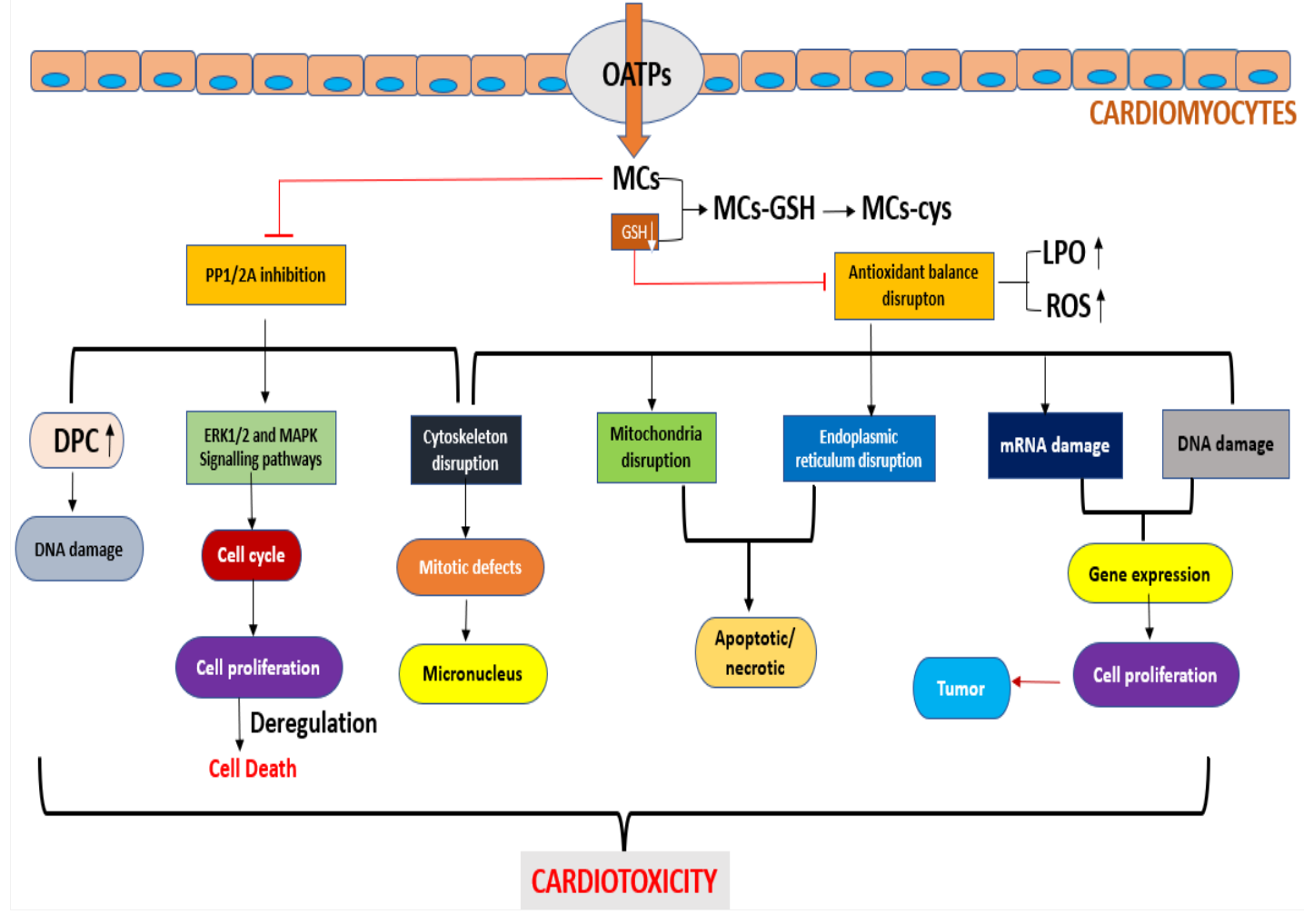
لدى شركة سيانوبكتوريا تاريخ تطوري طويل سمح بتطوير تكيفات واستراتيجيات متنوعة تجعلها ناجحة في العديد من النظم الإيكولوجية في جميع أنحاء العالم (1)وتتيح هذه التكييفات للأنواع السيانوية أن تتفوق على أنواع أخرى من الطحالب، وأن تهيمن على تراكمات الفولطون في ظروف معينة، مما يؤدي إلى تذبذب الطحالب الضارة (CyanoHABs). وتوجد البكتيريا في أجساد المياه العذبة والمزدهرة والبحرية في جميع أنحاء العالم. وتنتج السموم (السيانوتوكسينات) بعض أنواع البكتيريا، وتبين أنها ضارة بالعديد من الأنسجة، بما في ذلك القلب (الشكل 1). Microcystins (MCs) are thought to be the most frequent and harmful of these cyanotoxins (2)- تركز السميات السيانوتية في الكائنات الحية المائية وتنتقل سلسلة الأغذية عبر مختلف المستويات الغذائية، مما يسبب مشاكل صحية للبشر والحيوانات (3)- إن ميكروستينات الباتيد المتحركة هي الأكثر شيوعاً وتشتت على نطاق واسع وتسمم بشكل مفرط وتحدي القضاء على السموم السيانوتية عن طريق البلورات السمية السيانوية. Microcystis, Anabaena, Anabaenopsis, Oscillatoria and Nostoc produce MCs, a familyofcyclic heptapeptide cyanotoxins (4)- أدى التحول في الأحماض الأمينو، وتسلسل البلازميد، والهيدروكسيل، والأوبئة والسمية إلى تحديد أكثر من 100 ميغاهيرتز (5)9 - إن الأرجينينية الدقيقة هي أكثر أفراد أسرة MC ووفرا وسما، حيث يوجد ما بين 46 و 99.8 في المائة من مجموع عدد الميكروستين في المياه الطبيعية في هذه الأشكال الدقيقة. ويشكل حل المياه، والاستقرار في المياه المعزولة أو الملطخة والمستقرة حتى عند درجات حرارة تصل إلى 300 درجة مئوية جميع خصائص MC-LR. وضعت منظمة الصحة العالمية حدا مؤقتا قدره 1 ميكروغرام/لتر في مياه الشرب والحمام للبشر (6) (أ) عن طريق منع فوسفات البروتين 1 و2 ألف، تعمل شركات MCs على أنها توكسينات الكبد ومروجات الأورام (2)- ربط تثبيط الفوسفات البروتيني بسمية النسيج والأورام التي ترتبط بالتهاب الغازي وسرطان الخلايا الكبدية وسرطان الرئة وفشل الكلى وأمراض القلب والأوعية الدموية وأمراض الطحال (7–9)تزايد انتشار الأورام السمية الناجمة عن التخدير والتلوث السيانوتوكسيني في الموائل المائية في جميع أنحاء العالم (10)- يمكن للبشر أن يتواصلوا مع أطباء متعددين. وتشمل هذه المواد استهلاك المياه الملوثة، والاتصال، والتنفس، وأكل الأغذية الملوَّثة، وأخذ المكملات التغذوية المحتوية على الطحالب، وتلقي تحلل الدم (11).
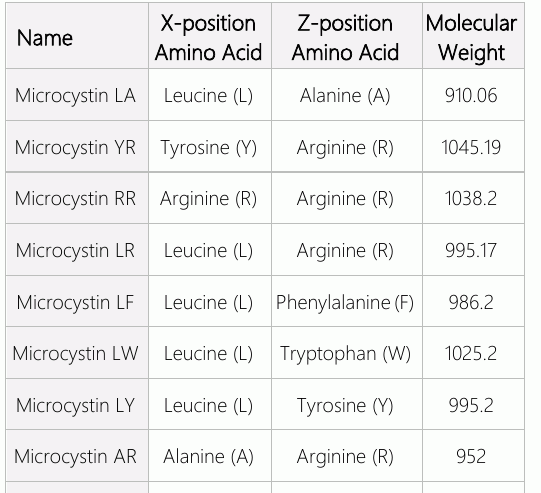
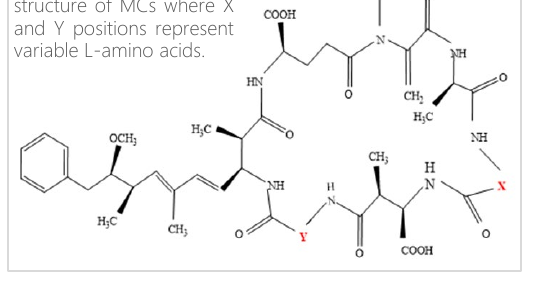
(مايكسيستن) واحد من أكثر السينوتوكسينات دراسة ميكروستين هو جزيئات دوجية مع سبعة أحماض آمينية مرتبطة بالبستيد، مع حمض الأمينو الطرفي (12)ومن المرجح أن يكون أحد أكثر المتغيرات خطورة في الميكروستين - لار (MC-LR). Protein phosphatases 1 and 2A (PP1 and PP2A) bind to the catalytic core of serine/threonine protein phosphatases (13)بروميد الميثيل سم من البلازما الأحادية التقلبات وأكثر من 100 شكل مختلف (14)- يتم تنظيم سبعة أحماض من الأمينو في حلقة في هيكل 1000 Da لمركبات الكربون المتعددة الكلورية فلورية، لكل منها سلسلة جانبية متميزة (المجموعة المعنية بالتنمية والتنمية). The name of each variety is derived from two changeable positions that are invariably filled by L-amino acids (e.g. L-leucine and L-arginine in the case of MC-LR). The polarity of the variations varies; such as MC-LF (with phenylalanine) and MC-LW (with tryptophan), contain hydrophobic amino acid residues, whereas MC-LR is more hydrophilic (15)ويُعزى العديد من متغيرات ميغاواط إلى تغيرات حمض الأمينو في الموقعين العاشر والعام، على النحو المبين في الشكل 2. متغيرات ميغاواط هي الأكثر انتشاراً، ويتضمن كل منها مزيجاً متميزاً من الللوسين (ل)، والأرغين (ر) والطيوران (Y) (الجدول 1) (16)The Adda moiety is essential for MC activity and is found in all variants (17)بروميد الميثيل يسبب السمية بسبب إعاقة فوسفات البروتين (PP1) وفوسفات البروتين (PP2A) (18)In animals and humans, MCs have been found to cause hepatotoxicity (19)غير أن هناك أدلة على أن بروميد الميثيل يؤثر على العقيد، والرئة، والقلب، والدم، والخصيتين، والكلية (20–24).
وحدة تقلص القلب
قدرة القلب على الضخ بشكل مستمر دون انقطاع، والتناوب بين الاسترخاء (الدستور) والتعاقد (النظام)، تسمح له بأداء وظيفته المتمثلة في الحفاظ على التداول المستمر للدم من خلال نظام الأوعية الدموية (النظام) (25)The Cardiomyocytes, which make up 30% of the myocardium cells, together with cardiac fibroblasts, endothelial cells and pericytes, are closely coincidehronized, which allows them to contract in this rhythm. نظراً لضخامة حجمها، يُعتقد أن القلبيات تشكل حوالي 85 في المائة من حجم البطاقة بينما تشكل 30 في المائة فقط من أنواع الخلايا (26)خلايا العضلات المتخصصة المعروفة باسم القلبيات مصنوعة من ألغاز الرشوة التي تتضمن أنماطاً مكررة من العواطف المعروفة باسم الأسهم المكوّنات الرئيسية للسارك هي خيوط قوية وخيوط عمل رقيق، التي تتقلص طول الأسهم من خلال التغلّب على بعضها البعض. هذا هو الأساس الذي يقوم عليه الاختصار المنسق المتعدد الأسهم الذي يسبّب السخرية في العقد، الذي هو جزء من فرضية التآكل في العضلات (27).
تكوين القوة المتعاقد عليها: الانكماش التصاعدي
تمتلك أجهزة القلب شبكة عالية التخصص من طراز T-Tubular تتيح إمكانية المرور داخل الخلية والمساعدة في Ca2+ الدخول عبر طراز L-type Ca2+ القنوات (LTCC) التي فتحت بسبب زعزعة الاحتكار. نتائج فتح البقايا السارقية تؤدي إلى إطلاق أكبر بكثير من (كا)2+ في الزنزانة عندما يتم تشغيل أجهزة الاستقبال الخاصة بالريواندين من خلال كا2+ ملزم (28)The procedure known as calcium-induced calcium release (CICR) causes a sharp rise in free cytosolic Ca2+تنشط المعجزات وتتسبب بقلب العقد (29)التروبون الخبيث الذي أطلقته في البداية بسبب (كا)2+ مُلزِم بالتروبن سي، الذي يسبب تحولاً حساساً، يكشف عن الألياف العملية والمواقع المُلزِمة. بعد تحلل الهيدروليكي للشركة يمكن لرؤوس الأليوان السميكة أن تخلق جسراً عبر المواقع الملزمة للمواقع الرقيقة وتنفّذ الانكماشات القوية عن طريق الإنزلاق بين بعضها البعض وتقليص الأسهم القلب يمكن أن يحمّل بالدم عندما يهدأ القلب خلال مرحلة الديستول (28)Ca2+ detaches from troponinin C and is either removed from the cell by sodium-calcium exchangers (NCX) that exchange one Ca2+ ثلاث أيونات صوديوم (نا+) أو أعيد تركيبها في ريكوبلاسميك عن طريق ريكوبلاسميك2+ATPase (SERCA). التهدئة القلبية والتشكيلات المتقاطعة مُثبطة بانخفاض في الحر2+ (30) أي اختلالات في العملية الصارمة التنظيم من قِبَل الإلتهاب القلبي الذي ينطوي على حركة متناسقة للأيونية، إطلاق الكالسيوم، تشكيلة العجائب، يمكن أن تضعف قدرة القلب على ضخ الدم في جميع أنحاء الجسم عن طريق التسبب في اضطرابات في انكماش القلب والصدمة القلبية. Most myocardial ECM proteins are produced by cardiac fibroblast cells, which are also essential for remodeling the heart and maintaining the extracellular fisheries (ECM). (فيبروبلاست) يمكن أن تؤثر على النبضات القلبية حيث أنها قريبة من القلبيات ولديها القدرة على تغيير تركيبة ECM (31).
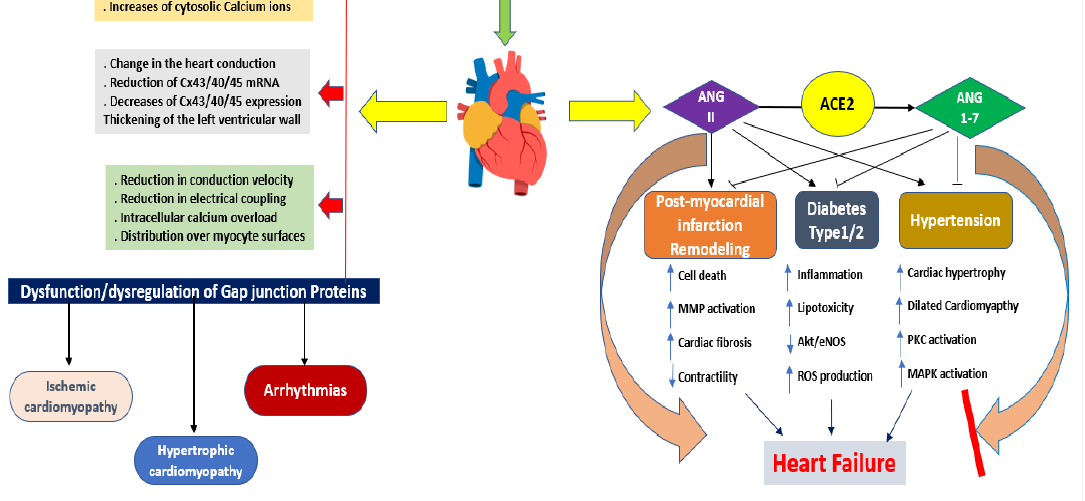
وعقب تلف الأنسجة، قد تشارك الألياف القلبية أيضا في تلقي إشارات الاستغاثة من القلبيات القريبة والرد عليها. وتلبي معظم المطالب الأيضية المرتفعة للسيارات الخلايا الجلدية المصغرة للقلب عن طريق تزويدها بالمغذيات والأكسجين. (32)وتشمل المهام الأخرى لخلايا أمراض القلب تشجيع الاتصالات بين الخلايا، وتيسير تسخين الخلايا ومنع تطوير ثرومبوس (33)- من شأن أي إصابة أن تؤثر سلبا على التقلص القلبي لأن إمدادات الأكسجين والمغذيات ومكونات الإشارة البيولوجية إلى القلبيات سوف تضعف بسبب المهمة الحاسمة التي تنطوي عليها خلايا القلب المجهرية. The researchers thoroughly investigated effects of continuous exposure to MC-LR on the rat cardiac tissues where chronic exposure to MC- LR is likely to pose risk to heartعضلات. Histopathological experiments revealed cytoskeletal changes, including expansion of the cardiomyocytes, loss of cell cross-striations, fibrosis, and atypical nuclei (34)وبالإضافة إلى ذلك، تؤدي إدارة MC-LR إلى توسيع نطاق استخدام القلبيات، والألياف العضلية المتحللة، مصحوبة بتحليل الأوعية الدموية، والنواة الفارغة في قلب الجرذان (35)وقد تأكدت هذه النتائج في أنسجة القلب البشري - الوبائي، حيث يرتبط الفشل الاصطناعي " الشذوذ الخلوي " . (36)- إن القلب ودور بروتينات التقاطع بين الخلايا هوموتيبيك (الوصلات بين نفس النوع من الخلايا) والروابط الوراثية تحدث في مقاطع الثغرة، وهي نوع كبير من الاتصالات المتقاطعة التي توجد على كل من القلبيومي وخلايا الدعم. Gap junctions act as channels in all human cells that come into contact with one another, allowing ions and small molecules to be transferred directly between cells (37)- إن الوزن الجزيئي الذي يقل عن 1 كيلو ديا يجعل المركبات قابلة للتداول عبر قنوات ربط الفجوة. نوع الكونكسين وشحنة الجزيئات المشابهة تحدد مدى انتشار المادة وتؤدي مقاطعات الغاب دوراً حاسماً في القلب لأن الجهاز يتطلب نقلاً سريعاً للأكسجين والمغذيات من الكائنات المجهرية إلى القلب (38):: إنشاء قنوات للتدفق الحالي المتقطع، مما يسمح بالتشغيل المنسّق المحتمل للعمل. إن البروتينات الزائفة لعائلة كونسينكسين ضرورية للبث السريع للنبضات الكهربائية. Cx43, Cx40 and Cx45 are the main connexins expressed in cardiac myocytes, with Cx43 being the most prevalent (39)نظراً لارتفاع معدل دوران Cx43 في القلب، قد يكون رصد تردي Cx43 استراتيجية لمكافحة الاتصال الزائف بالفجوة في الجهاز سواء في الولايات الصحية أو المرضية (40)The most prevalent gap junction protein in cardiomyocytes is connexin-43 (Cx43) and the propagation of normal action potentials depends on its existence (41)In several cardiac disorders, connexin molecules that create gap junction channels, are depleted or relocated from intercalated discs to lateral cell boundaries. وقد يكون هناك اضطراب في عملية الانتشار المحتملة، وقد يتطور الرثيميس من العيوب في الاتصالات الزائفة بين القلبيات القريبة لأن النشاط الكهربائي المنسق ضروري لنشاط التقلص المتزامن للقلب. تم ربط الإلتهاب الاصطناعي والوفاة الجديدة المفاجئة بالطفرة Cx43 (42)(ب) يُعزى إعادة تشكيل نظام الغاب إلى ميكروستين، بسبب تغير عدد وتوزيع مقاطع الثغرة في القلب المرضي (الشكل 3) (43) The Cx43-containing spots moved to lateral cell borders, altering gap junction distribution in end-to-end intercalated discs. وعادة، والهيدروميكية، وفلوريد الفلزات اليسرى ذات بقع متساوية في الحجم، في حين أن القلوب المرضية أظهرت أقل بنسبة 40 في المائة من Cx43 (44)ويبدو أن التأقلم الأفقي للفرق الفاصل يمثل سمة رئيسية من سمات البطيخ العاطل التي تؤدي إلى انخفاض بنسبة تتراوح بين 30 في المائة و 40 في المائة في منطقة انقطاع الفجوة لكل وحدة من وحدات تحديد الهوية. The MC-LR effect is thought to be responsible for the expansionment of intercellular gaps observed in mammals, which disrupts microtubules, microfilaments and cytokeratin medium filaments (45)- التفاعل بين MC مع فوسفات البروتين يسمح بالكشف عن عضلات القلب. The injections of MC are the fundamental processes, and based on the perplexing levels of cardiotoxicity that are displayed, they can provide information regarding whether a problem is involved (46).
Figu ca
ويؤدي أكسيد النيتريك دوراً هاماً في فيزياء القلب التي تنظمها بدورها مادة أكسيد النيزيمي. وينظم أكسيد النيتريك القلبي وظائف الأوعية الدموية والقلبية من خلال بدء التشغيل الإيجابي (زيادة القدرة على العمل بالبطاقات القلبية)، مما يؤدي إلى تغيير في القلب المائي2+ الحركات، التشرّد، التسريع في التهدئة القلبية والسيطرة على الأيض القلبي (47)- هذه السلاسل غير المتجانسة تعمل معا لتعديل الأثر حسب الحاجة بزيادة/تخفيض مستوياتها. الفشل القلبي يأتي من تعطيل الخلايا بفقدان هذا التوازن عن طريق الإفراط في عدم الصلاحية (48)- ارتبط ارتفاع مستوى النيتروجين في الأنسجة بتكرار الشحوم. The elevated LDH in MC-LR-treatedanimal may be attributed to energy blockage in the electron transport chain, since NO permanently inhibits complexes I-III and cyto-C-oxidase of the mitochondrial electron transport chain, reducing cellular respiration and ATP synthesis (49).
دور ممر الإشارة في القلب
The primary set of cell surface receptors that play a significant role in cardiac signalling is the G-protein coupled receptors (GPCR). وتشمل هذه المراكز مُستقبِل الأنغوتينين، ومُستقبِلات أدرينيرجية ألفا وبيتا، ومُستقبِلات ET1B. الإشارة التي توسّطها هذه المستقبِلات يمكن أن تغيّر النبرة الوعائية، القوة المتشابكة ومعدل القلب (50)(أ) أكياس سيرين/تريونين، والكائنات البروتينية الكبيرة التي تضيف مجموعات الفوسفات إلى مخلفات حامض الأمينو المراحيض أو الثريونين، مسؤولة عن معظم عمليات نقل الإشارات في الخلايا الإيكورية، وتتسبب في تغيير مطابق في البروتين (51)- إن قنوات الكالسيوم التي تعتمد على فولتاج والتي كانت فوسفورية أقل مستوى من مستوى الكواليس العكوسة (C2+)، مما يجعل من الصعب على جدران السفن أن تتعاقد معها (52)phosphatases Protein remove phosphate groups from their target proteins, reducing signal transduction through modulating kinase pathways (53)2 - يشجع الأنغيوتينسين الثاني نشاط الفوسفوريباس جيم (PLC) بملزمة ATR1 في خلايا القلب والأوعية الدموية. هذا النشاط الإنزيمي يُزيل الهيدرولوريد المغناطيسي (1, 4, 5)- trisphosphate (IP3) and diacylglycerol (DAG). "كلاهما من "كا2+ ويرفع هؤلاء الرسولون الثانيون مستويات وقناة البروتين جيم، حيث تُعد البروتينات الفوسفورية، مما يؤدي إلى رد فعل بيولوجي رداً على المطهر. ATR1 and ATR2 are 2 subtypes of angiotensin receptors (ATR), which are involved in this signalling pathway, and mediate the response of cardiac cells to angiotensin II. وللأنغيوتنسين الثاني دور حاسم في نظام القلب والأوعية الدموية لأنه ينظم التغيرات الدقيقة في تدفق الدم والنبرة الوعائية، ويحافظ على ما يكفي من ازدهار الأعضاء. الآثار السلبية للأنجيوتينسين الثاني، مثل ارتفاع ضغط الدم وارتفاع ضغط القلب، يمكن أن تنبثق عن النشاط المطول للمفاعل ATR1 (54)- إن تداخل هذه الإشارة هو هدف صيدلي معترف به نظرا لعوامل الانجيل الثاني الناجمة عن النظام القلبي والوعائي )الشكل ٣(. مساعد في معالجة إخفاقات القلب الازدحام لأنها يمكن أن توقف إعادة هيكلة القلب وتقليص ضغط الدم عن طريق منع استيعاب الأنجيوتين الثاني إلى نظام ATR1 (55)الأدلة تدعم أنّ (إرتكس) و (جي بي آر) المعبرون عنهما في خلايا نظام القلب والأوعية الدموية يمكن أن يتبادلا بعضهما البعض ومن خلال آلية فريدة للإشارات تُعرف باسم التحول، يمكن للتحالف العالمي من أجل الديمقراطية أن يقود آلية نقل الإشارات التي تستخدمها أجهزة استرجاع عوامل النمو لمهامها. Angiotensin II can directly stimulate the expansion of cardiomyocytes by trans activating the EGFR, which sets off particular transduction pathways that control the expression of the hyperactive genes.
Distribution " metabolism of MC-LR in the heart according to reports, cardiomyocytes, which make up around 40% of cardiac cell volume is particularly high in mitochondria (56).
وقد أظهرت دراسات عديدة أن سلاسل الإمداد المتعددة يمكن أن تؤدي إلى اختلال في الإجهاد الأكسجيني الميدوشندري، مما يؤدي إلى تسلل النيوترفول إلى الأنسجة، ويزيد من إنتاج البساتين، وينتج وسيطات سامية كبيرة، مما يعزز الشيخوخة في الخلايا ويموت في نهاية المطاف. (57)وأثناء التعرض، يمكن لمركبات الكربون المتعددة الكلورية فلورية أن تدخل خلايا مختلفة عن طريق الأنيون العضوي الذي ينقل البوليبيدات (OATP) (58)ويمكن ترجمة أسرة جينات مكتب المدعي العام إلى جميع الأجهزة تقريبا (20)وبالرغم من أن بعض جينات مكتب المدعي العام قد أُعرب عنها بصورة أكثر تواتراً في أنسجة معينة أو حتى على أساس انتقائي (59) ونسيج القلب ليس استثناء (60)وقد تبين أن الأنسجة القلبية تعبر عن عدة أسر من جينات مكتب المدعي العام، بما في ذلك OATP4A1, OATP2A1, OATP2B1 and OATP3A1 (61)ويدل ذلك على أنه يمكن تسليم مركبات الكربون الهيدروكلورية فلورية إلى خلايا أنسجة القلب والتركيز عليها، وربما يشكل ذلك تهديداً لتلك الخلايا. However, the methods by which MCs reach cardiomyocytes remain to be investigated (62)وعلاوة على ذلك، تدخل شركات النقل المتعدد الوسائط الخلية بعد درجة ارتطام الدم، وأنواع الناقلين من طراز OATP، ومستويات التعبير عنها (63).
وتتمثل السمة الأكثر بروزاً للشبكة في مرونتها الأيضية للعديد من المهاجر، مثل التغيرات في النضج والتجويع. In long-term pathological situations, the heart is also capable of remodeling metabolic pathways, which modifies myocardial enthalpies and contractile performance (64)(ج) الجلوتاثيون (GSH) هو جزيء مسبب للانحلال الذاتي يقوم بدور هام في تسمم المادة الكيميائية في الثدييات والأنواع المائية على حد سواء. GSH pre-treatment was found to attenuate the harmful effects of MCs in mice in a previous investigation (65, 66)M-LR-Cys and microcystins-glutathione conjugates (MC-LR- GSH) were discovered in the hearts of mice and rats (67).
السمية القلبية الناجمة عن MC-LR في الثدييات
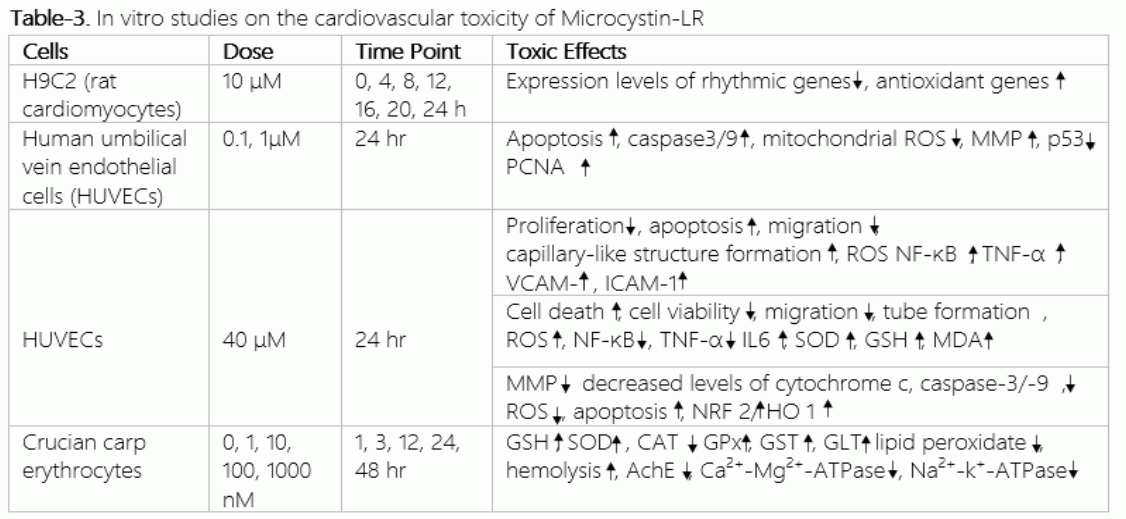
نظام القلب والأوعية الدموية هو شبكة من الشرايين والعروق التي يضخ القلب من خلالها الدم. وتتكون مختلف أنواع الخلايا من القلب الذي تكون فيه أمراض القلب والأوعية الدموية هي الخلايا الرئيسية والأعضاء التي تتأثر بالتسمم من MC-LR. والسمية القلبية ناجمة عن ارتفاع تركيز المادة MC-LR، مما يؤدي إلى التكتل الكبدي والتغيرات في الخلايا ووفاة الخلايا (68)خلايا القلب والأشعة فوق البنفسجية (MC-LR) التي تلحق أضراراً بعد مرور 24 ساعة على التعرض، مما يتسبب كذلك في أمراض ذات صلة بالإجهاد البشري (69)يمكن أن يتعرض البشر لأوكسينات السيانوت بطرق مختلفة، ولكن التعرض الفموي هو الأكثر تضررا، ولا سيما من جراء شرب المياه أو أكل الأغذية الملوَّثة. (70)- يعتقد أن التفاعل بين الوراثة والبيئة وآثارها على العمليات المنتظمة لنظام القلب والأوعية الدموية عامل يسهم إسهاما كبيرا في أمراض القلب والأوعية الدموية. وأظهرت دراسات عديدة أن سلاسل الإمداد المتعددة يمكن أن تضر بنظام القلب والأوعية الدموية في الهواء وفي الهواء، على النحو المبين في الجدولين 2 و 3. It has been shown that acute exposure to MCs causes disruption of the cytoskeleton and dysfunction of the mitochondria. ويمكن أن تسبب الأمراض المعدية انكماش القلب والنسيج في البالغين وتتسبب مباشرة في تشوه القلب في اليرقات. MCs can influence different aspects of cardiomyocytes, including their shape, cell development and apoptosis, cytoskeleton and rhythm, ultra structure, oxidative stress, membrane potential and mitochondrial respiratory chain enzyme activity (71)عندما يسافر ميغاواط عبر مجرى الدم ويسلمون إلى القلب، يمكن أن يسببوا ضرراً في القلب.
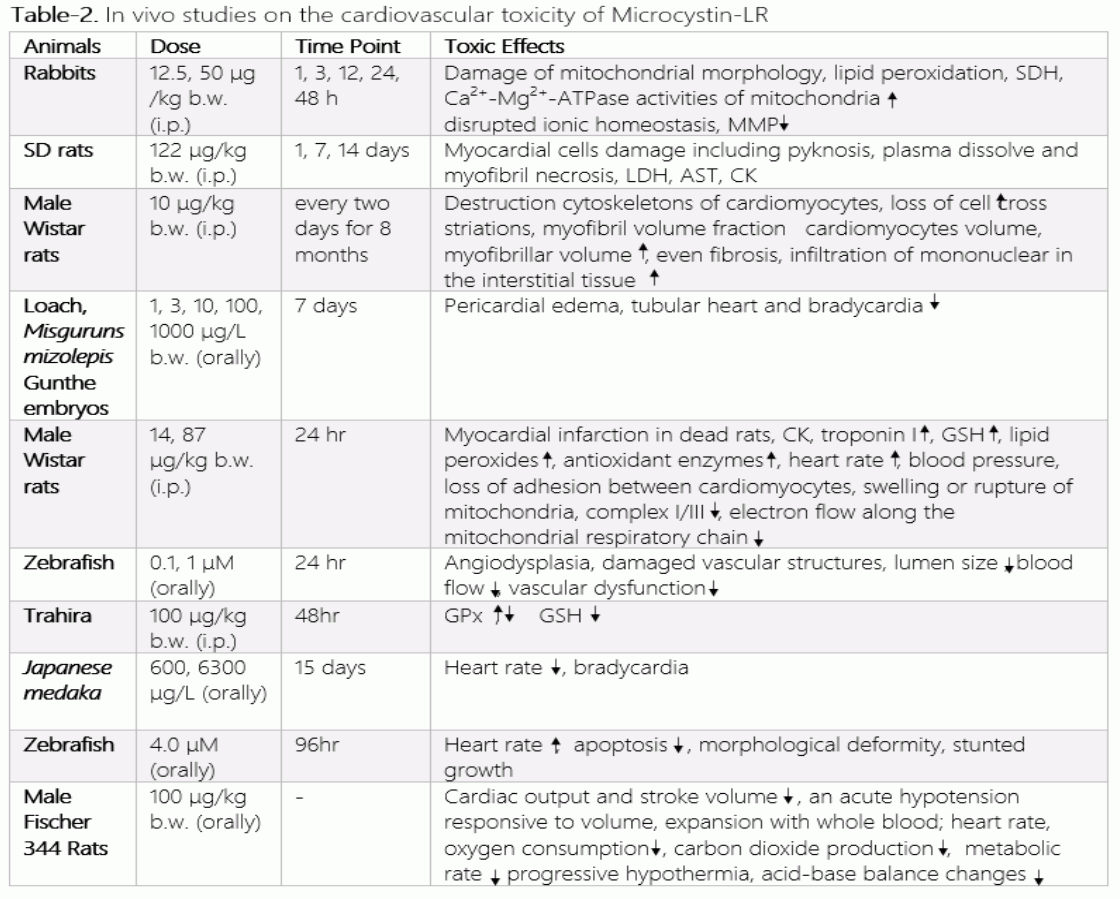
وتشمل التعديلات الفيزيائية التي تحدثها سلاسل الإمداد المتوسطة تناقص حجم السكتة القلبية والناتج القلبي، وتقليص الاستجابة للتوسع في حجم الدم بأكمله، وانخفاض ضغط الدم ومعدل القلب، وانخفاض استهلاك الأوكسجين، وتوظيف تخزين الدم في البنكرياس والوبائي (72)وقد يؤدي ذلك إلى أمراض مختلفة تشمل التوقيف القلبي والصدمة الافتراضية والافتراض. الخلايا المنبعثة للثدييات هي وسطاء حاسمين في التوازن الديناميكي المزهري لأنهم يتحكمون في التقسيم الخلوي، وتجديد الأوعية الدموية، وضوء الأوسمة الوعائية، والاستجابة الاستفزازية، والنشاط اللوحاتي (73)- عندما يتم إنتاج كميات ضخمة من ميغاواط، يتم توليد كمية كبيرة من البروتين في أغطية الدم، مما يتسبب في زيادة الضغط على الطرف الآخر. وعلاوة على ذلك، اكتشف أن المعقدين الأول والثالث من انزيمات سلسلة التنفس قد تم قمعها، مما يدل على أن سلسلة النقل الكهربائية التي تعمل بالموجات المسكونية قد أعاقت. ولوحظت زيادة في مستويات أكسيد الدهون، والتعديلات الوبائية في القلب المغناطيسي، ونشاط التطعيم المغناطيسي. The mitochondrial electron transport chain was further impacted by the inhibition of nicotinamide adenine dinucleotide dehydrogenase (NADH). Furthermore, MCs might change the functions of the Ca2+- Mg2+-ATPase in mitochondria, disrupting the ion homeostasis and may leading to the loss of mitochondrial membrane potential (MMP) and ultimately succeededing in elevating the mitochondria of cardiac cells (74)The two effects of cardiotoxicity are reduced heart energy requirements and abnormalities in the mitochondria. Mitochondrial dysfunction in cardiac cells was reported in rats injected with MC-LR and decreased heart rate in zebrafish larvae exposed to MC-LR was associated with the accumulation of reactive oxygen species and apoptosis in the heart (75, 76).
الآلية المحتملة لعمل لجنة الهدنة العسكرية
ويشترك في امتصاص MC-LR بشكل خاص، كما أن التباين في تعبيرها عن الأنسجة العضوية هو ما يؤدي إلى عدم توازن التعاطي عبر الجسم. According to previous studies, by employing omics technologies, the suppression of solubility and highly conserved protein serine/threonine phosphatase is largely accepted cellular/molecular processing mode of action of MC toxicity generated by the toxin in mammals and fishes (77)1 (PP1) و2A (PP2A) يعرقلها أساساً مركبان متعددان، مما يتسبب في تعطيل التوازن الدينامي في التعبير عن البروتينات التنظيمية وتحفيز بروتيناتهما في المجرى السفلي، فضلاً عن إعادة تنظيم الخلايا (78)(ب) آلية عمل محتملة لمركبات الكربون المتعددة الكلورية فلورية هي إعاقة فوسفات البروتين، مما يؤدي إلى ارتفاع الفوسفوري للبروتينات الخلوية. ويمكن أن يؤدي التعرض لمركبات الكربون المتعددة الكلورية فلورية أيضاً إلى الإفراط في إنتاج أنواع الأكسجين الرجعية، مما يؤدي إلى أضرار مأمومة. There is mounting evidence to support the hypothesis that Microcystins (MCs) are genotoxic because they cause damage to DNA which would indicate that mitochondria play a significant role as key mediators in the apoptosis resulting in the deregulation of cell cycle and mitosis (Figure 4) (79)- في زنزانات الثدييات، ينظم برنامج الحماية الشخصية التعبير عن الجينات والإشارات الخلوية ونمو الخلايا وتقسيم الخلايا (80)(أ) وفقاً للدراسات، PP1 و PP2A dephosphorylate a variety of targeted proteins, including Cav1.2 and ATP-sensitive Na+/K+ channels, to control contractility (81)تحسين تنظيم الوحدة الفرعية من طراز PP2A-A أو الاستعاضة عن التوسع في استخدام البطيخ أو سداسي فلوريد الكبريت (82).
خاتمة
The human health risk is correlated with MC exposure pathways and dosages. كما أن استهلاك الأغذية الملوثة والمكملات الغذائية الطحالب هي أيضاً أساليب التعرض، إلى جانب الاتصال بالجسم، والتنفس، والتخريب، والمياه الملوثة بالشرب. However, it is emphasized that drinking polluted water and coming into contact with MCs cause the majority of exposure.
وللمايكروستين تأثير سلبي على الكبد الذي هو جهاز مستهدف رئيسي، وكذلك على أجهزة أخرى مثل الجهاز الهضمي، والأدمغة، والكلية، والقلب، والنظام التنفسي، والنظام الإنجابي عن طريق قمع PPP1، و PP2A، والإجهاد الأوكسي. OATP channels transports MCs into cells, where they concentrate in primary target organs and tissues. MCs have the ability to suppress the activities of PP1 and PP2A, which results in the dephosphorylation of transcription factors, hence affecting cytoskeleton tissue, gene expression, cell death and CVD. كما أن فقدان القدرة على البقاء في الزنزانة وزيادة عدد السكان، إلى جانب ارتفاع مستوى الإجهاد الأوكسجيني والترددات الرجعية في خلايا الدم والزنزانات الدهنية الوعائية، قد يشكلان أيضاً سبباً للتعرُّض لمركبات الكربون الكلورية فلورية. In addition of having a direct impact on the cardiovascular system, MCs can also cause CVD indirectly by damaging the liver, kidneys and gastrointestinal system. To combat the cardiotoxicity of MC-LR and to close the research gap, a standardized animal model strategy is required to explore both the chronic and acute toxic effects of MC-LR to provideقناع evidence of cardiotoxicity. بما أنه لا يوجد الكثير من المعلومات عن تأثيرات السمية القلبية لـ MC-LR، دور المضاعفات القلبية لا يزال غير واضح. This means that more research needs to be done that focuses solely on the cardiotoxic effect of MC-LR.
الإقرارات
- مساهمات المؤلفين (CRediT)
- ساهم جميع المؤلفين بالتساوي في جميع أدوار CRediT الأربعة عشر (Conceptualization, Data curation, Formal analysis, Funding acquisition, Investigation, Methodology, Project administration, Resources, Software, Supervision, Validation, Visualization, Writing – original draft, Writing – review & editing).
- التمويل
-
This work was financially supported by a project from DST- SERB CRG/2018/003780 sanctioned to RKK.
- تضارب المصالح
- The authors do not have any relevant conflicts of interest.
- الموافقة الأخلاقية
- Ethics committee approval was not required for this article, as it is based on previously published literature and does not involve human participants, patient data or animals.
- إتاحة البيانات
- Data sharing is not applicable to this article as no new data were created or analysed in this study.
المراجع (82)
75 من أصل 82 مرجعًا مرتبطة بمعرّف DOI.
- Paerl HW, Paul VJ. Climate change: links to global expansion of harmful cyanobacteria. Water Res. 2012;46(5):1349-1363 DOI Crossref PubMed Google Scholar
- Wang Q, Xie P, Chen J, Liang G. Distribution of microcystins in various organs (heart, liver, intestine, gonad, brain, kidney and lung) of Wistar rat via intravenous injection. Toxicon. 2008;52(6):721-727 DOI Crossref PubMed Google Scholar
- Florczyk M, Lakomiak A, Wozny M, Brzuzan P. Neurotoxicity of cyanobacterial toxins. Environ Biotechnol. 2014;10 DOI Crossref PubMed Google Scholar
- Puddick J, Prinsep MR, Wood SA, Kaufononga SA, Cary SC, Hamilton DP. High levels of structural diversity observed in microcystins from Microcystis CAWBG11 and characterization of six new microcystin congeners. Mar Drugs. 2014;12(11):5372- DOI Crossref PubMed Google Scholar
- Cao L, Massey IY, Feng H, Yang F. A review of cardiovascular toxicity of microcystins. Toxins. 2019;11(9):507 DOI Crossref PubMed Google Scholar
- Wei H, Yang F, Wang Y, Zhou Y, Yan Y, Liang G, Yin L, Pu Y. Electrospun polymer nanofibres as solid-phase extraction sorbents for extraction and quantification of microcystins. Environ Technol. 2015;36(21):2796-2802 DOI Crossref PubMed Google Scholar
- Miller TR, Xiong A, Deeds JR, Stutts WL, Samdal IA, Lovberg KE, Miles CO. Microcystin toxins at potentially hazardous levels in algal dietary supplements revealed by a combination of bioassay, Immunoassay and Mass Spectrometric Methods. J Agr Food Chem. 2020;68(30):8016-8025 DOI Crossref PubMed Google Scholar
- Zegura B. An overview of the mechanisms of microcystin-LR genotoxicity and potential carcinogenicity. Mini Rev Med Chem. 2016;16(13):1042-1062 DOI Crossref PubMed Google Scholar
- Tokodi N, Drobac D, Meriluoto J, Lujic J, Marinovic Z, Vazic T, Lazic G, Petrovic T. Cyanobacterial effects in Lake Ludos, Serbia-Is preservation of a degraded aquatic ecosystem justified? Sci Total Environ. 2018; 635: 1047-1062 DOI Crossref PubMed Google Scholar
- Merel S, Walker D, Chicana R, Snyder S, Baures E, Thomas O. State of knowledge and concerns on cyanobacterial blooms and cyanotoxins. Environ Int. 2013; 59: 303-327 DOI Crossref PubMed Google Scholar
- Melaram R. Microcystins and daily sunlight: Predictors of chronic liver disease and cirrhosis mortality. J Environ Sci. 2019;3(3):379-388 DOI Crossref PubMed Google Scholar
- Meneely JP, Elliott CT. Microcystins: measuring human exposure and the impact on human health. Biomarkers. 2013;18(8):639-649 DOI Crossref PubMed Google Scholar
- Welten RD, Meneely JP, Elliott CT. A comparative review of the effect of Microcystin-LR on the proteome. Expos Health. 2019; 12: 1-19 DOI Crossref PubMed Google Scholar
- Feurstein D, Stemmer K, Kleinteich J, Speicher T, Dietrich DR. Microcystin congener-and concentration-dependent induction of murine neuron apoptosis and neurite degeneration. Toxicol Sci. 2011;124(2):424-431 DOI Crossref PubMed Google Scholar
- Vesterkvist PS, Misiorek JO, Spoof LE, Toivola DM, Meriluoto JA. Comparative cellular toxicity of hydrophilic and hydrophobic microcystins on Caco-2 cells. Toxins. 2012;4(11):1008-1023 DOI Crossref PubMed Google Scholar
- Puerto M, Pichardo S, Jos A, Camean AM. Comparison of the toxicity induced by microcystin-RR and microcystin-YR in differentiated and undifferentiated Caco-2 cells. Toxicon. 2009;54(2):161-169 DOI Crossref PubMed Google Scholar
- Song W, Rein K, Cruz Ad1, O'Shea K. Ultrasonically-induced degradation of Microcystin LR and RR: Identification of by products and effect of environmental factors. Adv Exp Med Biol. 2008; 619: 305 PubMed Google Scholar
- Xu S, Yi X, Liu W, Zhang C, Massey IY, Yang F, Tian L. A review of nephrotoxicity of Microcystins. Toxins. 2020;12(11):693 103 77 Effect of MC-LR on the Heart of Mammals Roshni Rajpoot & Raj Kumar Koiri DOI Crossref PubMed Google Scholar
- Yang F, Wen C, Zheng S, Yang S, Chen J, Feng X. Involvement of MAPK/ERK1/2 pathway in microcystin-induced microfilament reorganization in HL7702 hepatocytes. J Toxicol Env Heal A. 2018;81(21):1135-1141 DOI Crossref PubMed Google Scholar
- Cao L, Huang F, Massey IY, Wen C, Zheng S, Xu S, Yang F. Effects of microcystin-LR on the microstructure and inflammation-related factors of jejunum in mice. Toxins. 2019;11(9):482 DOI Crossref PubMed Google Scholar
- Li X, Xu L, Zhou W, Zhao Q, Wang Y. Chronic exposure to microcystin-LR affected mitochondrial DNA maintenance and caused pathological changes of lung tissue in mice. Environ Pollut. 2016; 210: 48-56 DOI Crossref PubMed Google Scholar
- Hinojosa M, Gutierrez-Praena D, Prieto A, et al. Neuro toxicity induced by microcystins and cylindrospermopsin: A review. Sci Total Environ. 2019;668:547-565 PubMed Google Scholar
- Liu Y, Yang M, Zheng L, Nguyen H, Ni L, Song S, Sui Y. Antioxidant responses of triangle sail mussel Hyriopsis cumingii exposed to toxic Microcystis aeruginosa and thermal stress. Sci Total Environ. 2020; 743: 140754 DOI Crossref PubMed Google Scholar
- Massey IY, Wu P, Wei J, Luo J, Ding P, Wei H, Yang F. A mini-review on detection methods of microcystins. Toxins. 2020;12(10):641 DOI Crossref PubMed Google Scholar
- Alexander W. Branko furst's radical alternative: Is the heart moved by the blood, rather than vice Versa? P & T. 2017; 42(1):33-39 PubMed Google Scholar
- Guo Y, Pu WT. Cardiomyocyte maturation: New phase in development. Circ Res. 2020;126(8):1086-1106 PubMed Google Scholar
- Squire J. The actin-myosin interaction in muscle: Background and overview. Int J Mol Sci. 2019; 20: 5715 PubMed Google Scholar
- Ishii S, Oyama K, Shintani SA, Kobirumaki-Shimozawa F, Ishiwata SI, Fukuda N. Thermal activation of thin filaments in striated muscle. Front Physiol. 2020; 11: 278 DOI Crossref PubMed Google Scholar
- Rios E. Calcium-induced release of calcium in muscle: 50 years of work and the emerging consensus. J Gen Physiol. 2018;150(4):521-537 DOI Crossref PubMed Google Scholar
- Van Meer BJ, Krotenberg A, Sala L, Davis RP, Eschenhagen T, Denning C, Tertoolen LG, Mummery CL. Simultaneous measurement of excitation -contraction coupling parameters identifies mechanisms underlying contractile responses of hiPSC-derived cardiomyocytes. Nat commun. 2019;10(1):1-9 DOI Crossref PubMed Google Scholar
- Baudino TA, Carver W, Giles W, Borg TK. Cardiac fibroblasts: friend or foe? Am J Physiol-Heart C. 2006;291(3):H1015-H1026 DOI Crossref PubMed Google Scholar
- Talman V, Kivela R. Cardiomyocyte-endothelial cell interactions in cardiac remodeling and regeneration. Front Cardiovasc Med. 2018; 5: 101 DOI Crossref PubMed Google Scholar
- Jourde-Chiche N, Fakhouri F, Dou L, Bellien J, Burtey S, Frimat M, Jarrot PA, Kaplanski G, Le Quintrec M, Pernin V. Endothelium structure and function in kidney health and disease. Nat Rev Nephrol. 2019;15(2):87-108 DOI Crossref PubMed Google Scholar
- Milutinovic A, Zorc Pleskovic R, Petrovic D, Zorc M, Suput D. Microcystin-LR induces alterations in heart muscle. Folia Biol. 2006; 52: 116-118 DOI Crossref PubMed Google Scholar
- Zhang H, Zhang J, Chen Y, Zhu Y, 2007. Influence of intracellular Ca2+, mitochondria membrane potential, reactive oxygen species, and intracellular ATP on the mechanism of microcystin‐LR induced apoptosis in Carassius auratus lymphocytes in vitro. Environ. Toxicol. 2007; 22: 559-564 DOI Crossref PubMed Google Scholar
- Chen QM, Tu VC, Purdom S, Wood J, Dilley T, 2001. Molecular mechanisms of cardiac hypertrophy induced by toxicants. Cardiovasc. Toxicol. 2001; 1: 267-283 DOI Crossref PubMed Google Scholar
- Goodenough DA, Paul DL. Gap junctions. Csh Perspect Biol. 2009;1(1): a002576 PubMed Google Scholar
- Wang Y, Wang C, Ma J. Role of cardiac endothelial cell-derived MicroRNAs in cardiac remodeling. Discov Med. 2019; 28(152): 95-105 PubMed Google Scholar
- Severs NJ, Bruce AF, Dupont E, Rothery S. Remodelling of gap junctions and connexin expression in diseased myocardium. Cardiovasc Res. 2008;80(1):9-19 DOI Crossref PubMed Google Scholar
- Bacova BS, Vinczenzova C, Zurmanova J, Kasparova D, Knezl V, Benova TE, Pavelka S, Soukup T, Tribulova N. Altered thyroid status affects myocardial expression of connexin -43 and susceptibility of rat heart to malignant arrhythmias that can be partially normalized by red palm oil intake. Histochem Cell Biol. 2017;147(1):63-73 DOI Crossref PubMed Google Scholar
- Delmar M, Makita N. Cardiac connexins, mutations and arrhythmias. Curr Opin Cardiol. 2012;27(3):236-241 DOI Crossref PubMed Google Scholar
- Van Norstrand DW, Asimaki A, Rubinos C, Dolmatova E, Srinivas M, Tester DJ, Saffitz JE, Duffy HS, Ackerman MJ. Connexin43 mutation causes heterogeneous gap junction loss and sudden infant death. Circulation. 2012;125(3):474-481 DOI Crossref PubMed Google Scholar
- Jeong MH, Kim HJ, Pyun JH, Choi KS, Lee DI, Solhjoo S, O'Rourke B, Tomaselli GF, Jeong DS, Cho H. Cdon deficiency causes cardiac remodeling through hyperactivation of WNT/β-catenin signaling. P Natl A Sci. 2017;114(8): E1345-E1354 DOI Crossref PubMed Google Scholar
- Kontaridis MI, Geladari EV, Geladari CV. Structural alterations in the hypertensive heart disease result in intercalated disc remodeling and arrhythmias. In: Hypertension and Cardiovascular Disease. Springer. 2016 DOI Crossref PubMed Google Scholar
- Zhou M, Tu WW, Xu J. Mechanisms of microcystin-LR-induced cytoskeletal disruption in animal cells. Toxicon. 2015; 101: 92-100 DOI Crossref PubMed Google Scholar
- Alosman M, Cao L, Massey IY, Yang F., 2021. The lethal effects and determinants of microcystin-LR on heart: A mini review. Toxin Rev. 2021; 40: 517-526 DOI Crossref PubMed Google Scholar
- Sztormowska-Achranowicz K, Jankowski Z, Kocic I. Protective effect of nicotinamide and L-arginine against monocrotaline-induced pulmonary hypertension in rats: gender dependence. Pharmacol Rep. 2020;72(5):1334-1346 DOI Crossref PubMed Google Scholar
- Ziolo MT, Kohr MJ, Wang H. Nitric oxide signalling and the regulation of myocardial function. J Mol Cell Cardiol. 2008;45(5):625-632 DOI Crossref PubMed Google Scholar
- Lone Y, Bhide M, Koiri RK. Amelioratory effect of coenzyme Q10 on potential human carcinogen Microcystin-LR induced toxicity in mice. Food Chem. Toxicol. 2017; 176-185 DOI Crossref PubMed Google Scholar
- Bencivenga L, Liccardo D, Napolitano C, Visaggi L, Rengo G, Leosco D. β-adrenergic receptor signaling and heart failure: From Bench to Bedside. Heart Fail Clin. 2019;15(3):409-419 104 77 Effect of MC-LR on the Heart of Mammals Roshni Rajpoot & Raj Kumar Koiri DOI Crossref PubMed Google Scholar
- Bononi A, Agnoletto C, De Marchi E, Marchi S, Patergnani S, Bonora M, Giorgi C, Missiroli S, Poletti F, Rimessi A, Pinton P. Protein kinases and phosphatases in the control of cell fate. Enzyme Res. 2011;329098 DOI Crossref PubMed Google Scholar
- Chasseigneaux S, Moraca Y, Cochois-Guegan V, Boulay AC, Gilbert A, Le Crom S, Blugeon C, Firmo C, Cisternino S, Laplanche JL. Isolation and differential transcriptome of vascular smooth muscle cells and mid-capillary pericytes from the rat brain. Sci Rep. 2018;8(1):1-12 DOI Crossref PubMed Google Scholar
- Wheeler-Jones CP. Cell signalling in the cardiovascular system: an overview. Heart. 2005;91(10):1366-1374 DOI Crossref PubMed Google Scholar
- Mehta PK, Griendling KK. Angiotensin II cell signaling: physiological and pathological effects in the cardiovascular system. Am J Physiol Cell Physiol. 2007;292(1):C82-C97 DOI Crossref PubMed Google Scholar
- Barreras A, Gurk-Turner C. Angiotensin II receptor blockers. Proceedings (Baylor University Medical Cn). 2003;16(1):123-126 DOI Crossref PubMed Google Scholar
- Varga I, Kyselovic J, Galfiova P, Danisovic L. The non-cardiomyocyte cells of the heart. Their possible roles in exercise- induced cardiac regeneration and remodeling. In: Exercise for Cardiovascular Disease Prevention and Treatment. Springer. 2017 DOI Crossref PubMed Google Scholar
- Zhang J, Xie Y, Fan Q, Wang C. Effects of karanjin on dimethylhydrazine induced colon carcinoma and aberrant crypt foci are facilitated by alteration of the p53/Bcl2/BAX pathway for apoptosis. Biotech Histochem. 2020:1-11 DOI Crossref PubMed Google Scholar
- Steiner K, Zimmermann L, Hagenbuch B, Dietrich D. Zebrafish Oatp- mediated transport of microcystin congeners. Arch Toxicol. 2016;90(5):1129-1139 DOI Crossref PubMed Google Scholar
- Li TT, An JX, Xu JY, Tuo BG. Overview of organic anion transporters and organic anion transporter polypeptides and their roles in the liver. World J Clin Cases. 2019;7(23):3915 DOI Crossref PubMed Google Scholar
- Moraes JG, Behura SK, Geary TW, Spencer TE. Analysis of the uterine lumen in fertility-classified heifers: I. Glucose, prostaglandins, and lipids. Biol Reprod. 2020;102(2):456-474 DOI Crossref PubMed Google Scholar
- Bakos E, Tusnady GE, Nemet O, Patik I, Magyar C, Nemeth K, Kele P, Ozvegy-Laczka C. Synergistic transport of a fluorescent coumarin probe marks coumarins as pharmacological modulators of Organic anion-transporting polypeptide, OATP3A1. Biochem Pharmacol. 2020; 182: 114250. DOI Crossref PubMed Google Scholar
- Foss AJ, Aubel MT, Gallagher B, Mettee N, Miller A, Fogelson SB. Diagnosing microcystin intoxication of canines: Clinicopathological indications, pathological characteristics, and analytical detection in postmortem and antemortem samples. Toxins. 2019;11(8):456 DOI Crossref PubMed Google Scholar
- Valerio E, Barreiros S, Rodrigues S, Turkina MV, Vasconcelos VM, Campos A: New insights in Saccharomyces cerevisiae response to the cyanotoxin Microcystin-LR, revealed by proteomics and gene expression. Toxins. 2020;12(10):667 DOI Crossref PubMed Google Scholar
- Kolwicz Jr SC, Purohit S, Tian R. Cardiac metabolism and its interactions with contraction, growth, and survival of cardiomyocytes. Circ. Res. 2013; 113: 603-616 DOI Crossref PubMed Google Scholar
- Guzman- Guillen R, Puerto M, Gutierrez-Praena D, Prieto AI, Pichardo S, Jos A, Campos A, Vasconcelos V, Camean AM. Potential use of chemoprotectants against the toxic effects of cyanotoxins: A review. Toxins. 2017;9(6):17 DOI Crossref PubMed Google Scholar
- Hermansky S, Stohs S, Eldeen Z, Roche VF, Mereish K. Evaluation of potential chemoprotectants against microcystin‐ LR hepatotoxicity in mice. J Appl Toxicol. 1991;11(1):65-73 DOI Crossref PubMed Google Scholar
- Buckingham M, Meilhac S, Zaffran S. Building the mammalian heart from two sources of myocardial cells. Nat Rev Genet. 2005;6(11):826-835 DOI Crossref PubMed Google Scholar
- McLellan NL, Manderville RA: Toxic mechanisms of microcystins in mammals. Toxicol Res. 2017;6(4):391-405 DOI Crossref PubMed Google Scholar
- Martins ND, Colvara WA, et al. Microcystin-LR: how it affects the cardio-respiratory responses to hypoxia in Nile tilapia, Oreochromis niloticus. Chemosphere. 2011;84(1): 154-159 DOI Crossref PubMed Google Scholar
- Funari E, Testai E. Human health risk assessment related to cyanotoxins exposure. Crit Rev Toxicol. 2008; 38: 97-125 DOI Crossref PubMed Google Scholar
- Vecoli C, Pulignani S, Foffa I, Grazia Andreassi M. Congenital heart disease: the crossroads of genetics, epigenetics and environment. Curr genomics. 2014; 15: 390-399 DOI Crossref PubMed Google Scholar
- Lone Y, Bhide M, Koiri RK. Amelioratory effect of coenzyme Q10 on potential human carcinogen microcystin-LR induced toxicity in mice. Food Chem Toxicol. 2017; 102: 176-185 DOI Crossref PubMed Google Scholar
- Curry FRE, Adamson RH. Vascular permeability modulation at the cell, microvessel, or whole organ level: towards closing gaps in our knowledge. Cardiovasc Res. 2010;87(2):218-229 DOI Crossref PubMed Google Scholar
- Liu Y, Song L, Li X, Liu T. The toxic effects of microcystin-LR on embryo-larval and juvenile development of loach, Misguruns mizolepis Gunthe. Toxicon. 2002;40(4):395-399 DOI Crossref PubMed Google Scholar
- Diez-Quijada Jimenez L, Medrano Padial C, Llana Ruiz-Cabello M, Catunescu GM, Moyano Salvago R, Risalde Md1A, Camean Fernandez AM, Jos Gallego AM. Cylindrospermopsin - microcystin-LR combinations may induce genotoxic and histopathological damage in rats. Toxins. 2020; 12: 348 DOI Crossref PubMed Google Scholar
- Zeng C, Sun H, Xie P, Wang J, Zhang G, Chen N, Yan W, Li G. The role of apoptosis in MCLR-induced developmental toxicity in zebrafish embryos. Aquat Toxicol. 2014;149:25-32 DOI Crossref PubMed Google Scholar
- Buratti FM, Manganelli M, Vichi S, Stefanelli M, Scardala S, et al. Cyanotoxins: producing organisms, occurrence, toxicity, mechanism of action and human health toxicological risk evaluation. Arch Toxicol. 2017;91(3):1049-1130 DOI Crossref PubMed Google Scholar
- Massey IY, Yang F, Ding Z, Yang S, Guo J, l-Osman M, Kamegni RB, Zeng W. Exposure routes and health effects of microcystins on animals and humans: A mini-review. Toxicon. 2018; 151: 156-162 DOI Crossref PubMed Google Scholar
- Chen L, Xie P. Mechanisms of microcystin -induced cytotoxicity and apoptosis. Mini Rev Med Chem. 2016;16(13): 1018-1031 DOI Crossref PubMed Google Scholar
- Samarasimhareddy M, Mayer D, Metanis N, Veprintsev D, Hurevich M, Friedler A. A targeted approach for the synthesis of multi- phosphorylated peptides: a tool for studying the role of phosphorylation patterns in proteins. Org Biomol Chem. 2019;17(42):9284-9290 DOI Crossref PubMed Google Scholar
- Heijman J, Ghezelbash S, Wehrens XH, Dobrev D. Serine/threonine phosphatases in atrial fibrillation. J Mol Cell Cardiol. 2017; 103:110-120 105 77 Effect of MC-LR on the Heart of Mammals Roshni Rajpoot & Raj Kumar Koiri DOI Crossref PubMed Google Scholar
- Gergs U, Kirchhefer U, Bergmann F, Kunstler B, Miblinger N, Au B, Mahnkopf M, Wache H, Neumann J. Characterization of stressed transgenic mice overexpressing H2-histamine receptors in the heart. J Pharmacol Exp Ther. 2020;374(3):479- DOI Crossref PubMed Google Scholar
اقرأ النص الكامل
افتح ملف PDF هنا
جارٍ تحميل ملف PDF…
إذا لم يظهر ملف PDF هنا، استخدم زر التنزيل أعلاه.
كيف تقتبس هذه المقالة
Rajpoot R, Koiri RK. Profoundal Effects of Microcystin-LR Induced Cardiotoxicity in Mammals. Ulutas Med J. 2023;9(2):92-105. doi:10.5455/umj.20221222071638
Rajpoot, R., & Koiri, R. K. (2023). Profoundal Effects of Microcystin-LR Induced Cardiotoxicity in Mammals. The Ulutas Medical Journal, 9(2), 92–105. https://doi.org/10.5455/umj.20221222071638
Rajpoot, R. and Koiri, R.K. (2023) 'Profoundal Effects of Microcystin-LR Induced Cardiotoxicity in Mammals', The Ulutas Medical Journal, 9(2), pp. 92–105. doi: 10.5455/umj.20221222071638.