The Ulutas Medical Journal · ISSN 2149-0430 (print), 2149-388X (online) · https://www.ulutasmedicaljournal.com/?mno=32637
Original Article · Open access
Variability of Findings Due to Seasonal Alterations and Number of Attacks in Warm-Type Autoimmune Hemolytic Anemia
- Ankara Numune Training and Research Hospital ROR
Abstract
- Background
- In this study, an examination of the variability of findings due to seasonal alterations and variability of the number of attacks in warm-type autoimmune hemolytic anemia (AIHA) was aimed.
- Method
- Patients over 18 years of age who were admitted to Ankara Numune Training and Research Hospital between 2009 and 2017 and were diagnosed with warm-type AIHA were included in this retrospective study. For statistical evaluation, SPSS 20 for Windows was used. For comparison of categorical data, chi-square and Fisher exact chi-square tests were used.
- Results
- The study population comprised of 52 patients. The age range of the patients was 19-89 years, with a median of 45.5 years. Among the patients, the number of attacks was 1 in 63.5% (n=33), 2 in 15.4% (n=8), and 3 in 21.2% (n=11). The type of AIHA was the warm type in all of the patients. In regard to the season during which attacks were experienced, it was determined to be winter in 26.9% (n=14), autumn in 17.3% (n=9), summer in 38.5% (n=20), and spring in 17.3% (n=9) of the patients. The rate of attacks was determined to be higher during winter in the patient group with a number of attacks of 2 or more and during summer and autumn in the patient group with the number of attacks of 1 (p=0.030).
- Conclusion
- It was determined that, while the rate of patients who experienced only 1 AIHA attack increased during the summer and autumn seasons, attacks occurred most commonly during winter in patients with more than 1 attack.
Keywords
Full text
Introduction
Autoimmune hemolytic anemia (AIHA) is a disease characterized by the shortening of the lifespan of erythrocytes due to destruction through production of antibodies directed against the patient’s own erythrocytes, anemia, and jaundice. There is an abnormal immune response in autoimmune hemolytic diseases, which turns the patient’s own erythrocytes into targets of his or her own immune system. The incidence of AIHA is 1-3 in 100,000 in Western countries and its prevalence is 17/100,000 (1, 2). AIHA associated with warm antibodies is generally idiopathic. Apart from that, viral infections, collagen tissue disorders such as systemic lupus (SLE), medications, diseases associated with immunodeficiency, lympho-proliferative diseases, blood transfusion, and allogenic stem cell transplantation are factors blamed in its etiology (3).
Autoimmune hemolytic disorders have some differences regarding the binding of antibodies to antigens. The binding of some antibodies at body temperature and of some antibodies at lower temperatures led to the differentiation of warm (37°C) and cold (<37°C) antibodies. Antiglobulin (Coombs) tests are of two types: direct tests and indirect tests. Bound antibodies and/or complements on a patient’s erythrocytes are investigated in the direct Antiglobulin test and free antibodies in a patient’s serum are investigated in indirect Antiglobulin test (4, 5). Of AIHA cases, 70% are warm-type AIHA, caused by IgG antibodies and generally causing extravascular hemolysis. Warm antibodies are formed against Rh antigens. In more than 90% of the patients, a positive result with anti-IgG, anti-C3, or both is revealed in direct or indirect Coombs tests. In the cold type, antibodies generally cause intravascular hemolysis, as they show their effects via complements, and these antibodies are generally of the IgM class (6, 7). IgG can bind to erythrocyte surface antigen and the Fc receptor of cytotoxic cells. When complement is combined with an antibody, the third and fourth elements of the complement system bind to the erythrocyte membrane covalently and simultaneously to complement receptor on cytotoxic cells. This interaction may result in phagocytosis and lead to formation of spherocytes due to reduction of erythrocyte surface-to-volume ratio through partial or complete destruction of erythrocytes (8, 9). Presentation in patients with AIHA is variable and depends on findings due to anemia, rate of development of anemia, compensative capacity of bone marrow, disease activity, and accompanying diseases. Paleness and jaundice are at the forefront in physical examination and splenomegaly may be detected. In the laboratory, reticulocyte count, serum lactate dehydrogenase, and indirect bilirubin levels are determined to be elevated and serum haptoglobin level is markedly decreased. In peripheral blood smears, spherocytosis and polychromatophilic erythrocytes are generally observed (10, 11).
Corticosteroids are included in the first-line treatment of warm-type AIHA and 70%-80% of the patients respond to the treatment. In the case of failure to respond or recurrence, splenectomy is considered. Patients have used multiple treatment modalities who are steroid-resistant or are found to respond to rituximab treatment by 45%-90%. Rituximab treatment combined with splenectomy has come into consideration (12, 13).
In studies conducted with patients with multiple sclerosis, SLE, type 1 diabetes mellitus, inflammatory bowel disease, and rheumatoid arthritis, disease incidence, presentation, and prognosis are shown to differ by seasons (14–20).
This study was planned since there has been no study on the seasonal association of warm-type AIHA that occurs by formation of antibodies against autoantigens and on how this association influences the course of the disease.
Materials and Methods
Patients over 18 years of age who were admitted to Ankara Numune Training and Research Hospital between 2009 and 2017 and were diagnosed with warm-type AIHA were included in this retrospective study.
Patients with cold-type and other AIHAs, patients under 18 years of age, and those with other autoimmune diseases were not included in the study. All of the patients included in the study were patients admitted from the Central Anatolian Region of Turkey. The demographical data of all patients, their treatments, laboratory data, and time of AIHA attacks were recorded. Approval from the Ankara Numune Training and Research Hospital ethics committee was obtained.
Statistical Analysis
Statistical evaluation was performed using SPSS 20 for Windows (IBM SPSS Inc., Armonk, NY, USA). Normal distribution of the data was evaluated by the Kolmogorov-Smirnov test. Numerical variables exhibiting normal distribution were represented as mean± standard deviation and numerical variables that did not exhibit normal distribution were represented as median (min-max). Categorical variables were represented as count and percentage. For determination of variables differing between attack number groups, ANOVA testing (post hoc: Bonferroni-corrected Student t-test) was used for numerical variables exhibiting normal distribution and Kruskal- Wallis test (post hoc: Bonferroni-corrected Mann-Whitney U test) was used for numerical variables that did not show normal distribution. For comparison of categorical variables, chi-square and Fisher exact chi-square tests were used. The association between numerical variables was evaluated using Pearson and Spearman correlation. In statistical analyses, p<0.05 was considered to be significant.
Results
The study population comprised a total of 52 patients, 32 being female (61.5%) and 20 being male (38.5%). The age range of the patients was 19-89 years, with a median of 45.5 years. Among the patients, the number of attacks was 1 in 63.5% (n=33), was 2 in 15.4% ( =8), and n was 3 in 21.2% (n=11). The type of AIHA was the warm type in all of the patients. Regarding the season during which attacks were experienced, it was determined to be winter in 26.9% (n=14), autumn in 17.3% ( =9), summer n in 38.5% (n=20), and spring in 17.3% ( =9) of n the patients.
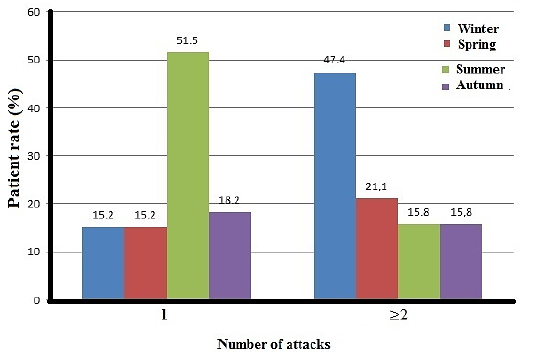
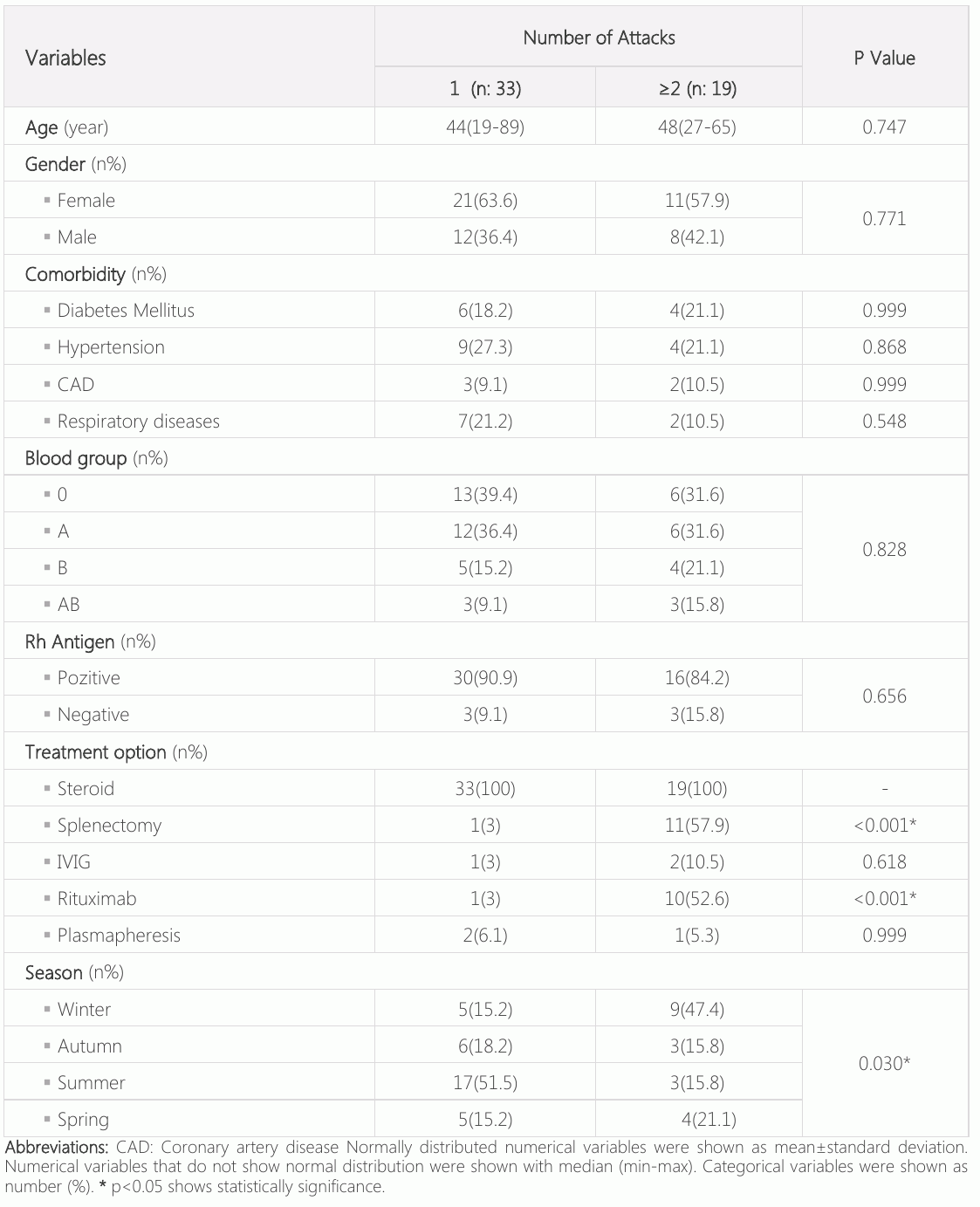
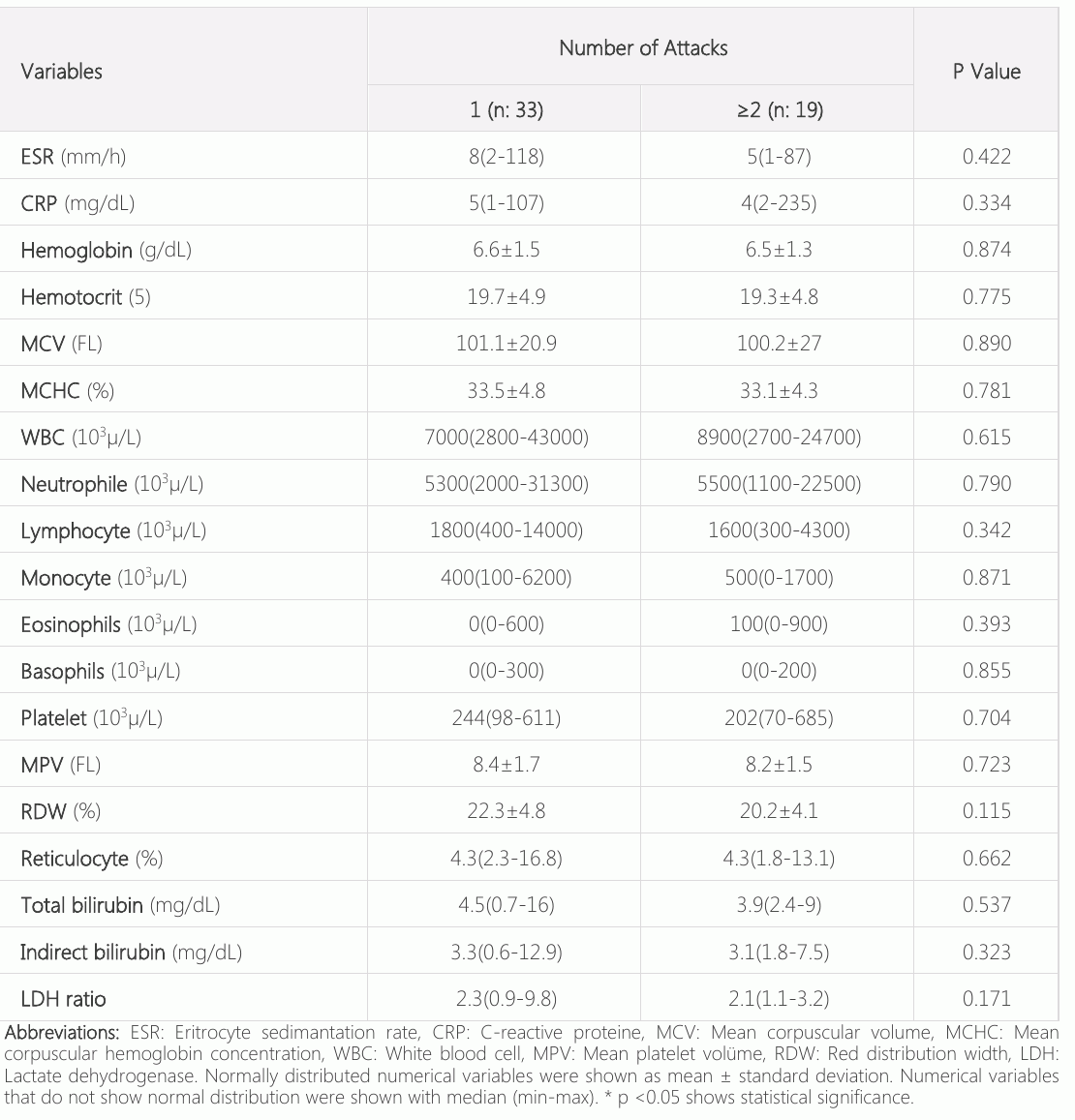
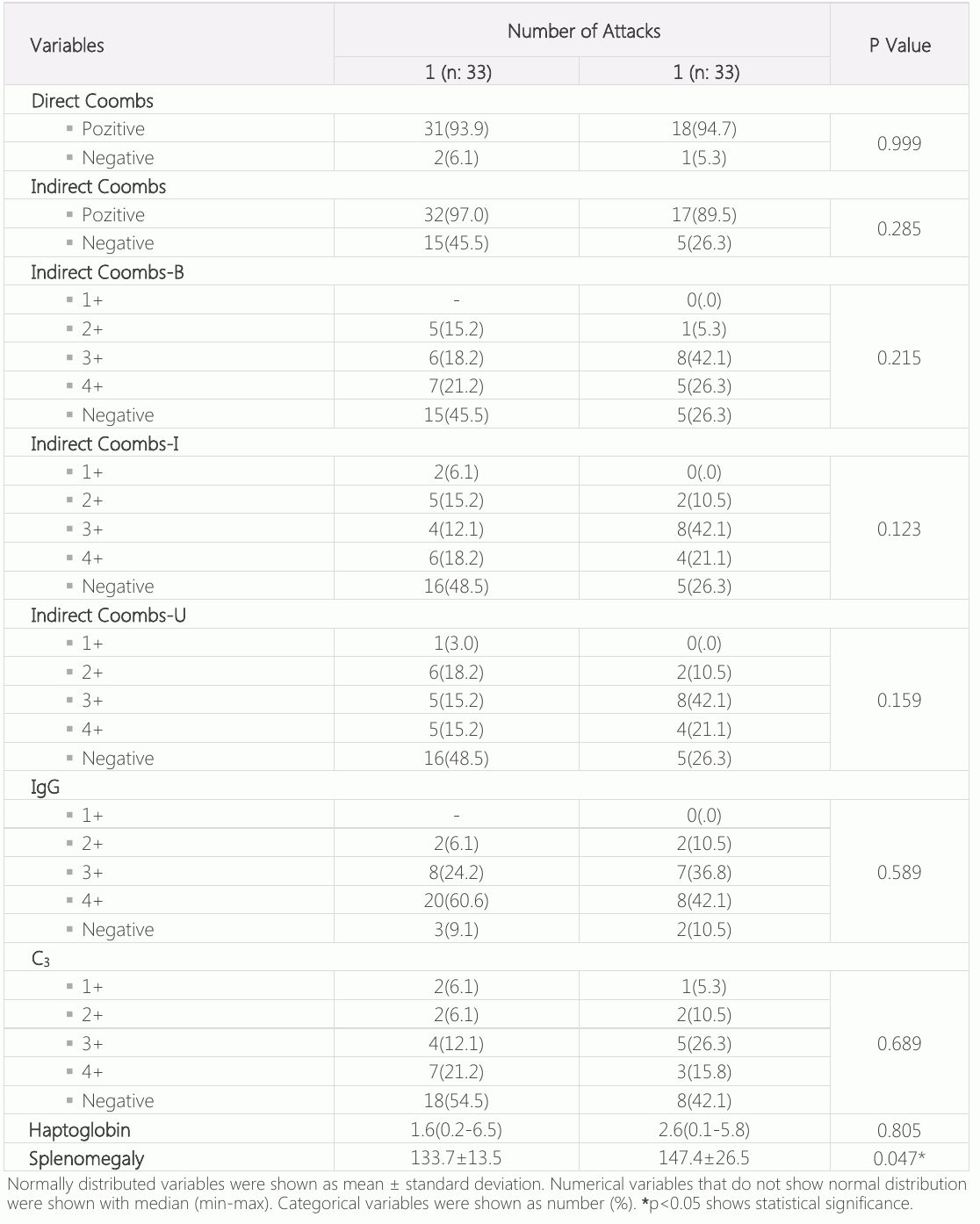
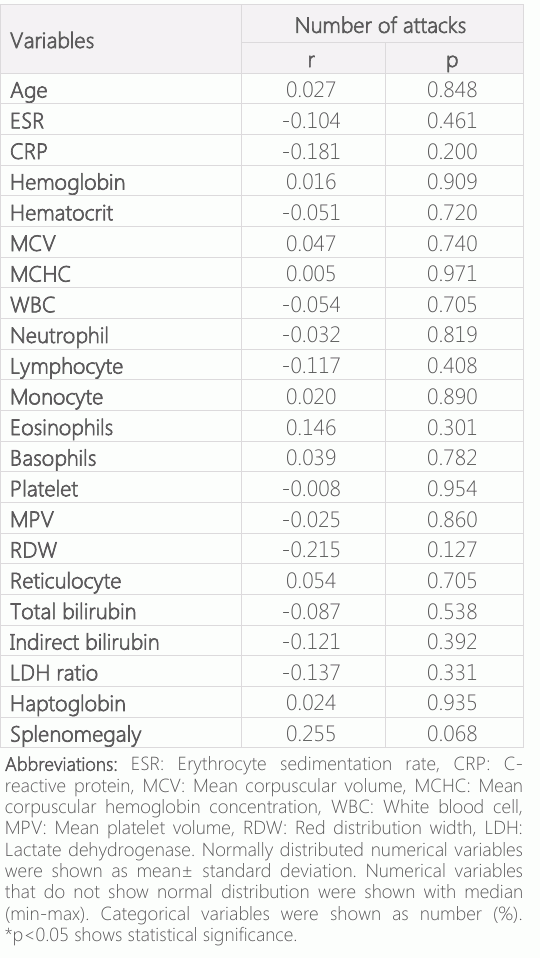
Mean age, sex distribution, comorbidity distribution, blood group distribution, and Rh rates did not differ between the group with number of attacks of 2 or more and the group with number of attacks of 1. All of the patients were found to be receiving steroid treatments. Splenectomy rate and the ratio of the patients who received rituximab were determined to be higher among the patients with number of attacks of 2 or more (p<0.001 and <0.001, p respectively). Although the ratio of those who received intravenous immunoglobulin was higher in the group with number of attacks of 2 or more, this showed no statistical significance (p>0.05)(Table-1). The incidence rate of having an attack during the winter season was higher in the patient group with number of attacks of 2 or more compared to the other attack group; in the patient group with number of attacks of 1, however, the incidence rate of having an attack during the summer and autumn was determined to be higher (p=0.03)(Figure-1). No significant difference was determined between patients’ laboratory findings and the attack groups (Table-2). Median splenomegaly rate was determined to be higher among patients with number of attacks of 2 or more compared to the patients with number of attacks of 1 (p=0.047). No significant difference was determined between other hematological findings and number of attacks (Table-3). No significant correlation was determined between number of attacks and age and laboratory findings (Table-4).
Discussion
Our objective in this retrospective study was to investigate the association of warm-type AIHA and its course with the seasons; this association had not been investigated previously. As the conclusion of our study, while the ratio of patients who had experienced only one AIHA attack was observed to increase during summer and autumn seasons, patients with more than 1 attack were determined to have their attacks arise most commonly during the winter season. Another obtained result was that the patients with more than one attack were resistant to steroid treatment and they were patients who needed splenectomy and rituximab treatment more commonly.
The first type of immune destruction of erythrocytes is cell-mediated and the second one is complement-mediated intravascular hemolysis. Cell-mediated immune destruction of antibody-coated erythrocytes is performed by macrophages and monocytes. These cells have a cell surface receptor for the Fc portion of IgG and have antigenic receptors presenting on active C3. Cellular immune destruction takes place via these receptors. Neutrophils and lymphocytes have such receptors.
Macrophages have Fc receptors for IgG1 and IgG3 molecules. IgG-coated erythrocytes are destructed in this way and 70%-75% of the autoantibodies destructed in warm-type AIHA are IgG. Phagocytosis and antibody-mediated cytotoxicity are important Fc receptor-dependent modes of the important antibody-coated material. Two types of C3 receptors have been identified in macrophages: CR1 and CR3. While adhesion of C3b-coated erythrocytes takes place via the CR1 receptor, adhesion of CR3 triggers phagocytosis. The main region for capturing and phagocytizing C3b-coated erythrocytes is the liver. In warm-type AIHA, a complement-induced immuno globulin class is present on the erythrocyte membranes. When more than one class or subclass of immunoglobulins is present on the erythrocyte membrane, complement-mediated intravascular hemolysis occurs (6–9).
When we reviewed studies investigating seasonal association of autoimmune diseases, we observed that autoantibody levels were shown to be elevated during winter months in autoimmune disease-associate type-1 diabetes mellitus patients. It was demonstrated that, in rheumatoid arthritis patients, relapses increased during the summer season in those patients with rheumatoid factor positivity. In Behçet’s disease, activation of intestinal Behçet’s disease was found to be increased during autumn and spring. In another study on idiopathic thrombocytopenic purpura (ITP), it was observed to be more common during autumn and spring months. In this study, we did not include patients with cold-type autoimmune diseases whose number of attacks would be more due to the cold weather of winter. Additionally, we excluded patients with another autoimmune disease, such as SLE, who were likely to experience an autoimmune hemolytic anemia attack due to exacerbation of the disease (16, 18, 21).
The fact that climate changes play an important role in the pathogenesis of auto immune diseases was mentioned above. In the pathogenesis of ITP, T cell-mediated immune mechanisms that allow formation of antibodies against the GPIIb/IIIa and GPIb/IX, which are thrombocyte surface antigens responsible for destruction of thrombocytes, were blamed. In T cell-associated mechanisms, impairment of the Th-1/Th2 ratio and oligoclonal T cell expansion are also responsible. The increased number of AIHA attacks during summer and autumn may be associated with increased allergenic pollens. These allergens may increase the destruction of erythrocytes by leading to complement activation via B or T cell-mediated immune regulation. This has been demonstrated in studies in which seasonal associations of these autoimmune diseases with allergic diseases were investigated (22–24).
In a study on SLE, it was shown that SLE findings increased during summer and autumn and autoantibody levels were elevated during these seasons. The severity of cellular immunity-associated destruction of erythrocytes depends mainly on the macrophage function. In SLE, reticuloendothelial function may be diminished by the clearing of immune complexes. Hypo complementemia is common in SLE and it leads to hemolysis via chronic activation of the complement pathway. DAT positivity may be due to accumulation of immune complexes on the erythrocyte surface. The spleen is important in clearing such coated cells. We thought that the increase in incidence of AIHA during summer and autumn may occur as a result of increased complement and macrophage activations, which may also cause activation of the other autoimmune diseases mentioned above (17, 18).
Viral infections may trigger warm-type AIHA; alterations on the erythrocyte membrane due to viral antigens, “auto”-antigens formed against the altered antigens, or cross-reactivity of antiviral antibodies with membrane antigens have been blamed. However, is formation of immune complexes between a virus and specific antibodies and secondary accumulation of these complexes on red blood cell surfaces, leading to immune destruction. The influenza virus has been blamed in the pathogenesis of ITP as a responsible agent for a long time, as it causes thrombocyte autoantibodies (25, 26). Frequent exposure of the patients with more than one attack in our study to viral infectious agents during the winter season causes progressive inflammation and autoimmunity, leading to an increase in T cell response. Immune disorders that occur because of this increase in T cell response may explain why patients experience more than one AIHA attack and why they are more resistant to treatment. This association was mentioned in another study on autoimmune diseases (27).
Collection of the patients from one region, being a single-center study, failure to test the genetic predisposition of the patients to allergens, and failure to detect infectious agents during attack periods are the limitations of our study.
Although seasonal association of other auto immune diseases has been revealed, this is the first study in which the seasonal association of warm-type AIHA is revealed. However, concerning disease, randomized, prospective, multi-center studies in which patients’ genetic predisposition and auto antibody levels are determined are needed.
Declarations
- Author contributions (CRediT)
- All authors contributed equally to all 14 CRediT roles (Conceptualization, Data curation, Formal analysis, Funding acquisition, Investigation, Methodology, Project administration, Resources, Software, Supervision, Validation, Visualization, Writing – original draft, Writing – review & editing).
- Funding
-
Funding information was not reported in the published version of this article.
- Conflicts of interest
- The authors declare that they have no competing interests.
- Ethics approval
- Approval from the Ankara Numune Training and Research Hospital ethics committee was obtained.
- Data availability
- A data availability statement was not reported in the published version of this article.
References (27)
20 of 27 references are linked to their DOI.
- Barcellini W, Fattizzo B, Zaninoni A, et al. Clinical heterogeneity and predictors of outcome in primary auto immune hemolytic anemia: a GIMEMA study of 308 patients. Blood 2014;124:2930-6 DOI Crossref PubMed Google Scholar
- Petz LD, Garratty G. Immune hemolytic anemias. 2nd ed. Philadelphia, PA: Churchill Livingstone, 2004 PubMed Google Scholar
- Gehrs BC, Friedberg RC. Autoi mmune hemolyticanemia. Am J Hematol 2002;69:258-71 PubMed Google Scholar
- Sokol RJ, Hewitt S, Booker DJ, Stamps R. Enzyme linked direct antiglobulin tests in patients with autoimmune haemolysis. J Clin Pathol. 1985;38:912 –4 DOI Crossref PubMed Google Scholar
- Lynen R, Krone O, Legler TJ, Köhler M, Mayr WR. A newly developed gel centrifugation test for quantification of RBC-bound IgG antibodies and their subclasses IgG1 and IgG3: Comparison with flow cytometry. Transfusion. 2002;42:612– 8 DOI Crossref PubMed Google Scholar
- Sokol RJ, Hewitt S, Stamps BK. Autoimmune haemolysis: An 18- year study of 865 cases referred to a regional transfusion centre. Br Med J (ClinResEd) 1981;282:2023– 7 DOI Crossref PubMed Google Scholar
- Petz LD, Garratty G. New York: Churchill Livingstone; 1980. AcquiredImmuneHemolyticAnemias PubMed Google Scholar
- Engelfriet CP, Overbeeke MA, von dem Borne AE. Auto immune hemolytic anemia. Semin Hematol. 1992;29:3–12 PubMed Google Scholar
- Garratty G. Factors affecting the pathogenicity of red cell auto and alloantibodies. In: Nance SJ, editor. Immune Destruction of Red Blood Cells. Arlington, VA: American Association of Blood Banks; 1989. p. 109 PubMed Google Scholar
- Ness PM, Shirey RS, Thoman SK, Buck SA. The differentiation of delayed serologic and delayed hemolytic transfusion reactions: Incidence, long-term serologic findings, and clinical significance. Transfusion. 1990;30:688– 93 DOI Crossref PubMed Google Scholar
- Barcellini W, Revelli N, Imperiali FG, et al. Comparison of traditional methods and mitogen- stimulated direct antiglobulin test for detection of anti-red blood cell autoimmunity. Int J Hematol 2010;91:762-9 DOI Crossref PubMed Google Scholar
- Valesini G, Gerardi MC, Iannuccelli C, Pacucci VA, Pendolino M, Shoenfeld Y. Citrullination and autoimmunity, Autoimmun. Rev. 14 (6) (2015) 490-497 DOI Crossref PubMed Google Scholar
- Medeot M, Zaja F, Vianelli N et al. Rituximab therapy in adult patients with relapsedor refractory immune thrombocytopenic purpura: long- termfollow-upresults. Eur J Haematol 2008; 81: 165– 9 DOI Crossref PubMed Google Scholar
- Sokol RJ, Hewitt S, Stamps BK. Autoimmune hemolysis: Mixed warm and cold antibody type. Acta Haematol. 1983;69:266– 74 PubMed Google Scholar
- O’Connor BM, Clifford JS, Lawrence WD, Logue GL. Alpha-interferon for severe cold agglutinin disease. Ann Intern Med. 1989;111:255–6 DOI Crossref PubMed Google Scholar
- Frieri M, Stampfl H. Systemic lupus erythematosus and atherosclerosis: review of the literature, Auto immun. Rev. 15 (1) (2016) 16 -21 DOI Crossref PubMed Google Scholar
- Duarte-Garcia A, Fang H. Seasonal variation in the activity of systemic lupus erythematosus, J. Rheumatol. 39 (7) (2012) 1392-1398 DOI Crossref PubMed Google Scholar
- Kimpimaki T, Kupila A, Hamalainen AM et al. The first signs of beta-cell auto immunity appear in infancy in genetically susceptible children from the general population: the Finnish Type 1 Diabetes Prediction and Prevention Study, J. Clin. Endocrinol. Metabol. 86 (10) (2001) 4782-4788 DOI Crossref PubMed Google Scholar
- Parfitt AM, Gallagher JC, Heaney RP, Johnston CC, Neer R, Whedon GD. Vitamin D and bone health in the elderly, Am. J. Clin. Nutr. 36 (5 Suppl) (1982) 1014-1031 DOI Crossref PubMed Google Scholar
- Rozin A, Balbir-Gurman A, Schapira D. Seasonal distribution of relapse onset in rheumatoid arthritis and spondylo arthropathy: the possible effect of the solar factor, Clin. Exp. Rheumatol. 21 (2) (2003) 161-169 PubMed Google Scholar
- Tombak A, Boztepe B, Tiftik N, Cömert M, Salim O, Aydın K, Gürkan E, Yücel OK, Saydam G, Sungur MA. Seasonal Association of Immune Thrombocytopenia in Adults. Balkan Med J. 2015 Oct;32(4):347-51 DOI Crossref PubMed Google Scholar
- Kashiwagi H, Tomiyama Y. Pathophysiology and management of primary immune thrombocytopenia. Int J Hematol 2013;98:24-33 DOI Crossref PubMed Google Scholar
- Olsson B, Andersson PO, Jernas M, Jacobsson S, Carlsson B, Carlsson LM, et al.T-cell-mediated cytotoxicity toward platelets in chronic idiopathic thrombocytopenic purpura. Nat Med 2003;9:1123-4 DOI Crossref PubMed Google Scholar
- Sakakura M, Wada H, Tawara I, Nobori T, Sugiyama T, Sagawa N, et al. Reduced Cd4 + Cd25 + T cells in patients Warm-Type Autoimmune Hemolytic Anemia Ucar et al. with idiopathic thrombocytopenic purpura. Thromb Res 2007;120:187-93 DOI Crossref PubMed Google Scholar
- Moulis G, Palmaro A, Montastruc JL, Godeau B, Lapeyre-Mestre M, Sailler L. Epidemiology of incident immune thrombocytopenia: a nationwide population- based study in France. Blood 2014;124:3308-15 DOI Crossref PubMed Google Scholar
- Moulis G, Sommet A, Sailler L, Lapeyre-Mestre M, Montastruc JL; French Association Of Pharmacovigilance Centers. Drug-induced immune thrombocytopenia: a descriptive survey in the French Pharmaco Vigilance database. Platelets 2012;23:490-4 DOI Crossref PubMed Google Scholar
- Pedullá M, Fierro V, Papacciuolo V, Alfano R, Ruocco E. Atopy as a risk factor for thyroid autoimmunity in children affected with atopic dermatitis. J Eur Acad Dermatol Venereol 2014;28:1057-60 DOI Crossref PubMed Google Scholar
Read the full text
Open the PDF here
Loading the PDF…
If the PDF does not show here, use the download button above.
How to cite this article
Ucar MA, Dagdas S, Ceran F, Falay M, Ozet G. Variability of Findings Due to Seasonal Alterations and Number of Attacks in Warm-Type Autoimmune Hemolytic Anemia. Ulutas Med J. 2019;5(2):119-128. doi:10.5455/umj.20190220020542
Ucar, M. A., Dagdas, S., Ceran, F., Falay, M., & Ozet, G. (2019). Variability of Findings Due to Seasonal Alterations and Number of Attacks in Warm-Type Autoimmune Hemolytic Anemia. The Ulutas Medical Journal, 5(2), 119–128. https://doi.org/10.5455/umj.20190220020542
Ucar, M.A. et al. (2019) 'Variability of Findings Due to Seasonal Alterations and Number of Attacks in Warm-Type Autoimmune Hemolytic Anemia', The Ulutas Medical Journal, 5(2), pp. 119–128. doi: 10.5455/umj.20190220020542.