The Ulutas Medical Journal · ISSN 2149-0430 (print), 2149-388X (online) · https://www.ulutasmedicaljournal.com/?mno=136244
Original Article · Open access
Functional Exercise Capacity, Fatigue and Peripheral Muscle Strength in Patients with Obstructive Sleep Apnea Syndrome and Controls
- Mustafa Kemal University, Faculty of Health Sciences, Department of Physiotherapy and Rehabilitation, Hatay, Turkey ROR
- Mustafa Kemal University, Tayfur Ata Sökmen Faculty of Medicine, Department of Chest Diseases, Hatay, Turkey ROR
Abstract
- Introduction
- This Physical impairment in obstructive sleep apnea syndrome (OSAS) patients are still unclear. This study compared functional exercise capacity, dyspnea, fatigue, physical activity, quality of life, and respiratory and peripheral muscle strength in patients with OSAS and controls.
- Materials and Methods
- Twelve patients with OSAS and 24 controls were included. Functional exercise capacity [6-minute walking test (6-MWT)], dyspnea, peripheral muscle strength, fatigue, physical activity, quality of life, respiratory muscle strength, and excessive daytime sleepiness [The Epworth Sleepiness Scale (ESS)] were evaluated.
- Results
- The 6-MWT, physical activity level, peripheral muscle strength, and quality of life were lower; the level of fatigue and dyspnea were increased in patients with OSAS than in controls (p<0.05). Inspiratory and expiratory muscle strength were similar in patients with OSAS and controls (p>0.05). ESS was correlated with fatigue (p=0.036, r=0.608) and MMRC (p=0.018, r=0.665).
- Conclusion
- Patients had reduced functional exercise capacity, physical activity level, quality of life, peripheral muscle strength, and increased perception of fatigue and dyspnea than healthy controls. Cardiac rehabilitation programs should be added to the management of OSAS.
Keywords
Full text
Introduction
Obstructive Sleep Apnea Syndrome (OSAS), defined by recurrent obstruction of the upper airway, results in a reduction or complete cessation of airflow despite respiratory effort during sleep (1). OSAS, a widespread sleep-disordered breathing form, is thought to affect one billion of the 7.3 billion people globally between the ages of 30 and 69 and is becoming more common (2).
Asphyxia brought on by airway blockage can result in increased inspiratory effort and fatigue of the inspiratory muscles. Compared to healthy controls, an inquiry with severe OSAS showed decreased peripheral and inspiratory muscle strength and higher inspiratory muscle fatigue (3, 4). OSAS can cause dyspnea, lower extremity weakness, respiratory muscle dysfunction, and a lack of motivation. These problems are associated with changes in skeletal muscle energy metabolism that affect physical exercise performance (5, 6). For instance, patients with OSAS have lower functional exercise capacity than healthy controls. This loss is associated with the severity of the disease as measured by the Apnea- Hypopnea Index (AHI) (5). In OSAS, complaints of fatigue, exhaustion, or lack of energy may be just as significant as those of sleepiness, and women report the symptoms more frequently than men. Even after controlling for body mass index (BMI), age, gender, and comorbidities, people with OSAS often experience subjective suffering and a generally low quality of life. Also, these situations can result in physical inactivity and severe sleep apnea (7–9). Patients with sleep apnea may find it challenging to maintain regular exercise routine due partly to weariness, daytime sleepiness, and a lack of psychological motivation (10).
Research has indicated that exercise capacity, respiratory system and peripheral muscle strength were affected in patients with OSAS (3–10). However, the clinical impact on OSAS patients’ functional exercise capacity, physical activity status, quality of life, and respiratory and peripheral muscle strength have not been wholly compared with healthy in any studies. This multidimensional assessment of OSAS's impact is critical for regulating appropriate physiotherapy programs. The study was designed to compare functional exercise capacity, fatigue, dyspnea, physical activity, quality of life, and respiratory and peripheral muscle strength in OSAS and control.
Materials and Methods
Study Design & Ethical Statement
Twelve patients with OSAS referred to the department from February 2020 to March 2020 were included. Patients and 24 individuals were compared. Inclusion criteria were age between 18-70 years, diagnosed with OSAS. Patients with musculoskeletal problem, acute infection, unstable hypertension, neurological disorders, pregnant or breastfeeding were excluded. The Ethics Committee of the University approved the study (No:2020/16). Patients and controls provided informed consent under the principles of the Helsinki Declaration.
Functional exercise capacity was assessed by 6- minute walking test (6-MWT) according to the guideline. Individuals were instructed to walk in a 30-meter unobstructed corridor at average speed. Two tests were performed, with at least 30 minutes between them. The most significant distance was recorded. A percentage of predicted values was used (11, 12).
A hand-held dynamometer (JTECH Power Track Commander, Baltimore, MD, USA) was used to evaluate lower (quadriceps femoris, hip flexors) and upper (shoulder abductors) muscle strength. According to the reference values, the percentage of the predicted value was calculated (13). Hand-grip strength was assessed with an analog hand dynamometer (PowerTrack II, JTECH Medical, Midvale, Utah, USA). Evaluations were performed 3 times, and the highest value was used for comparison (14). A mouth pressure device (MicroMedical Micro RPM, England) was used to assess respiratory muscle strength [maximal inspiratory and expiratory pressure (MIP, MEP)] according to guideline (15). Reference values were calculated for comparison (16). Fatigue was identified with the fatigue severity scale (FSS). The scale has nine items that are scored 0-7. The highest score is 63. Severe fatigue was defined according to the scores over 36 (17). The modified Medical Research Council (MMRC) dyspnea scale was used for identifying dyspnea severity. The severity of dyspnea was graded from 0 to 4 (18). Charlson Comorbidity Index (CCI) was utilized to determine the level of comorbidity. The index includes 19 medical conditions. Mortality risk increases with an increasing total score (19).
Physical activity level was identified with the International Physical Activity Questionnaire (IPAQ) short form. The questionnaire contains information about sedentary activity, walking time, moderate and vigorous-intensity activity (20). The Short Form 36 (SF-36) questionnaire identified the quality of life. There are eight subscales of the questionnaire. Higher values (scores vary from 0-100) show better health (21). Excessive daytime sleepiness was evaluated with the Epworth Sleepiness Scale. A score >10 indicates excessive daytime sleepiness (22, 23).
Statistical Analyze
The SPSS v20.0 statistical analysis program (Armonk, NY: IBM Corp.) was performed. To determine data normality, the Shapiro-Wilk and Kolmogorov-Smirnov test were used. Student's t-test or Mann-Whitney U was used to compare two groups’ parameters for quantitative data. Data were expressed as mean (±standard deviation), mean difference, and 95%CI for normally quantitative data, and student's t-test was used to compare. The Mann–Whitney U was used to compare non-normal quantitative data expressed as the median (IQR). The chi-square test was used to compare qualitative data such as sex and smoking status. Pearson's and Spearman's rank correlation coefficients were used to calculating correlations between ESS and other parameters. The significance level was determined as a p<0.05. A sample size analysis was performed with G*Power software. Based on the MIP results of a prior study, at least nine individuals were calculated for each group to detect a value of 0.05 with an effect size of 1.29 and 80% power (4).
Results
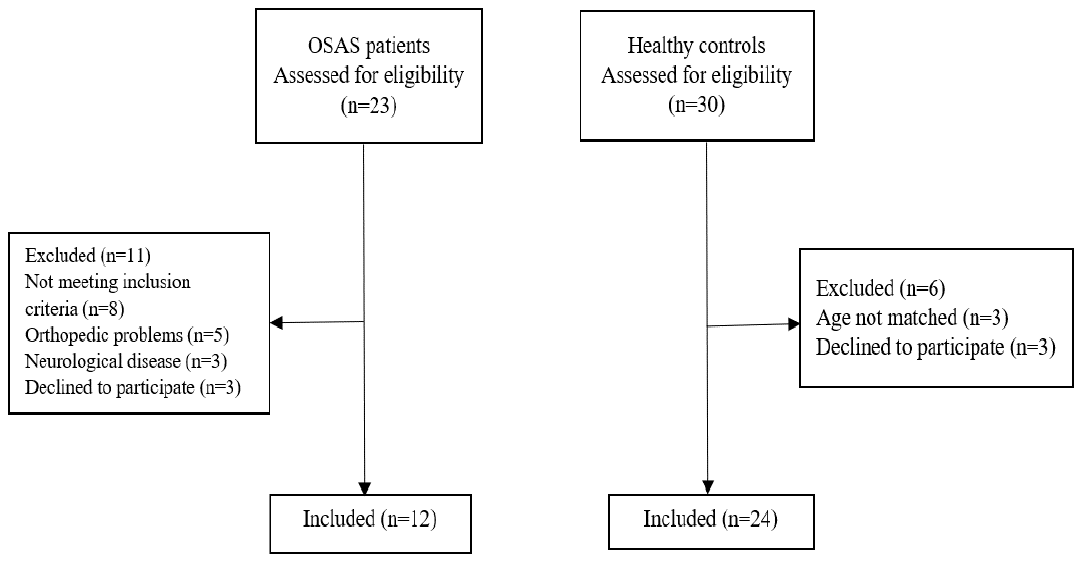
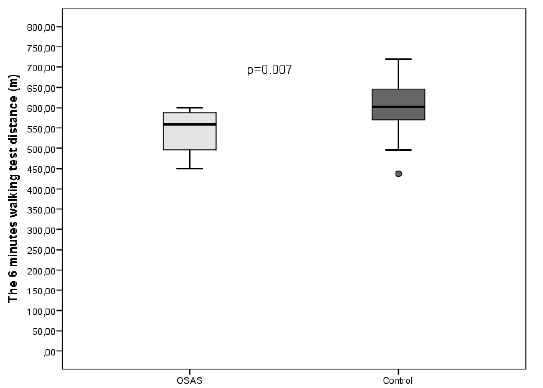
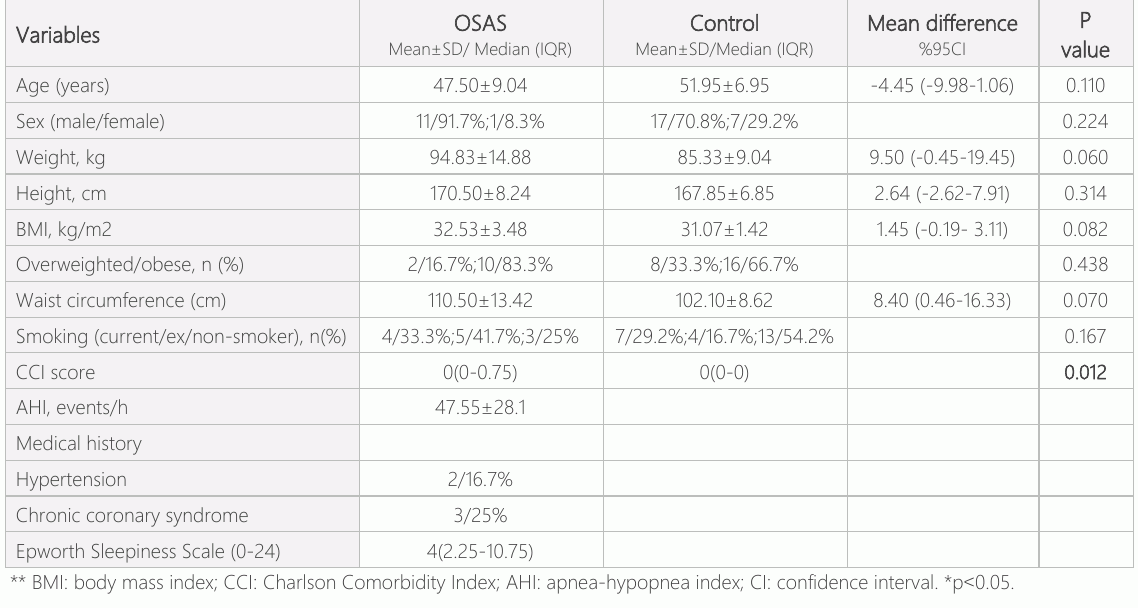
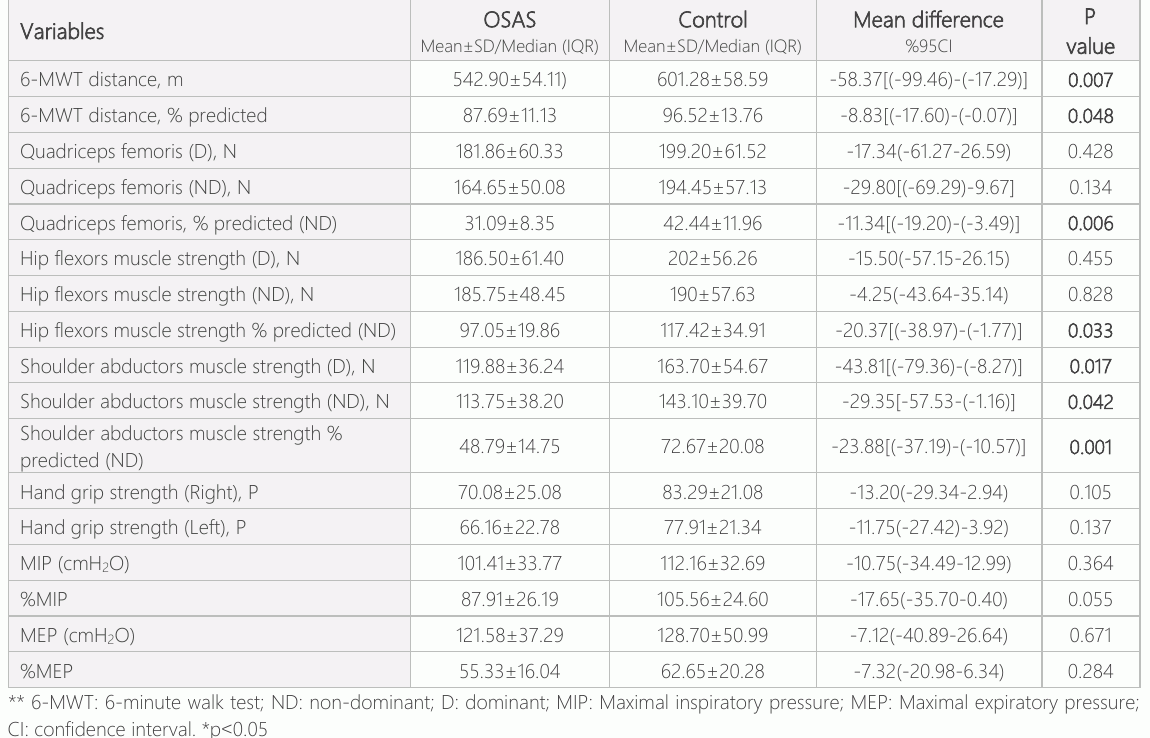
Twelve patients with OSAS and 24 gender and age-matched healthy controls were compared (Fig-1).The clinical & demographic characteristic were similar in groups (p>0.05); the CCI score was higher in patients than controls (p=0.012) (Table-1). 4 patients (33.3%) reported excessive daytime sleepiness. Of 12 patients evaluated, 4 (33.3%) had moderate OSAS, and 8 (66.7%) had severe OSAS. 6-MWT distance (p=0.007) (Figure-2), 6-MWT% (p=0.048), % predicted quadriceps femoris (p=0.006), % predicted hip flexors muscle strength (p=0.033), dominate (p=0.017) and non-dominate(p=0.042) shoulder abductors muscle strength, and % predicted shoulder abductors muscle strength (p=0.001) were significantly lower in patients than in controls (Table 2, p<0.05).
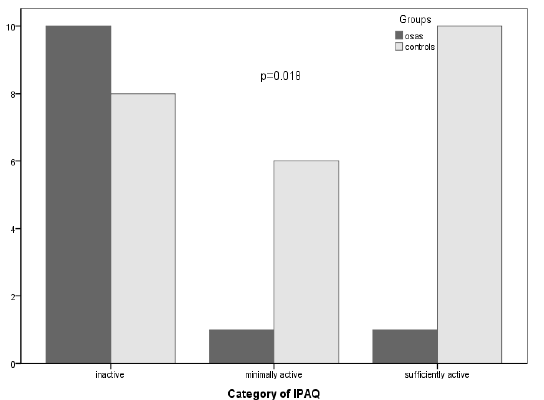
The FSS (p=0.003) and MMRC (p=0.001) scores were higher, SF-36 physical functioning (p<0.001), role limitations due to physical health (p=0.012) subscales, IPAQ walking (p=0.005) and total physical activity (p<0.001) scores were lower in patients than in controls (Table 3, p<0.05). Ten (83.3%) patients were inactive, 1 (8.3%) was minimally active, and 1 (8.3%) was sufficiently active, while 10 (42.7%) of the controls were sufficiently active, 6 (25%) were minimally active, 8 (33.3%) were inactive (p= 0.018) (Fig-3). Six(50%) patients reported severe fatigue. ESS was correlated with fatigue (p= 0.036, r=0.608) and MMRC (p=0.018, r=0.665).
Discussion
The present study finds that 1) functional exercise capacity, level of physical activity, quality of life, and peripheral muscle strength are decreased; 2) fatigue and dyspnea levels are increased in patients with OSAS compared to controls; and 3) increased fatigue and dyspnea are correlated with excessive daytime sleepiness in patients.
Exercise capacity was decreased in patients with OSAS. Also, this decrease was considered multifactorial and related to obesity, physical inactivity, and cardiovascular diseases (24, 25). A reduction in exercise capacity was shown in obese patients with OSAS (25). On the other hand, another study stated no difference in exercise capacity between normal-weight patients with OSAS and controls (26). However, their following study showed that exercise tolerance differs in obese and non-obese individuals regardless of the presence of OSAS (27). In the present study, functional exercise capacity was lower in overweight and obese patients with OSAS than in the overweight and obese controls. Physical inactivity and reduced muscle strength might cause a decrease in exercise capacity. To control obesity related to OSAS, aerobic exercise training should be applied in rehabilitation programs.
Results about peripheral muscle performance are conflicting. A study showed quadriceps femoris muscle strength was decreased in patients with OSAS compared to controls (4). The other research stated similar lower extremity and hand-grip muscle strengths between OSAS, COPD, and controls. Shoulder abductor muscle strength was reduced in COPD patients than in OSAS and controls (2). In the current study, upper and lower muscle strength was decreased in patients with OSAS than in controls. As with peripheral muscle strength results, the results are variable in respiratory muscle strength in OSAS. A study showed a decline in MIP (4); on the other hand, another study stated a similarity in MIP and MEP between OSAS, COPD patients, and controls (3). In the current study, MIP and MEP were similar in patients with OSAS and controls. Physical inactivity may be related to a decrease in muscle strength. More research is needed to identify factors affecting muscle weakness. A recent study stated that patients with OSAS had more significant dyspnea during exercise. They noted that this increased dyspnea perception might be due to pulmonary gas exchange abnormalities and increased systemic vascular stiffness (28). In the current study, patients with OSAS had higher dyspnea levels during daily activities. Also, dyspnea was related to excessive daytime sleepiness. Interventions that may diminish and control dyspnea, such as yoga, should be recommended for patients with OSAS. Studies reported severe fatigue in approximately 61% of the patients with OSAS (7, 29). Also, fatigue was related to excessive daytime sleepiness (7). In the current study, 50% of the patients reported severe fatigue related to excessive daytime sleepiness, similar to the literature. Poor sleep quality and increased fatigue perception might be associated with daytime sleepiness (7); therefore, interventions to reduce fatigue, such as physical activity, may be effective in breaking this vicious circle.
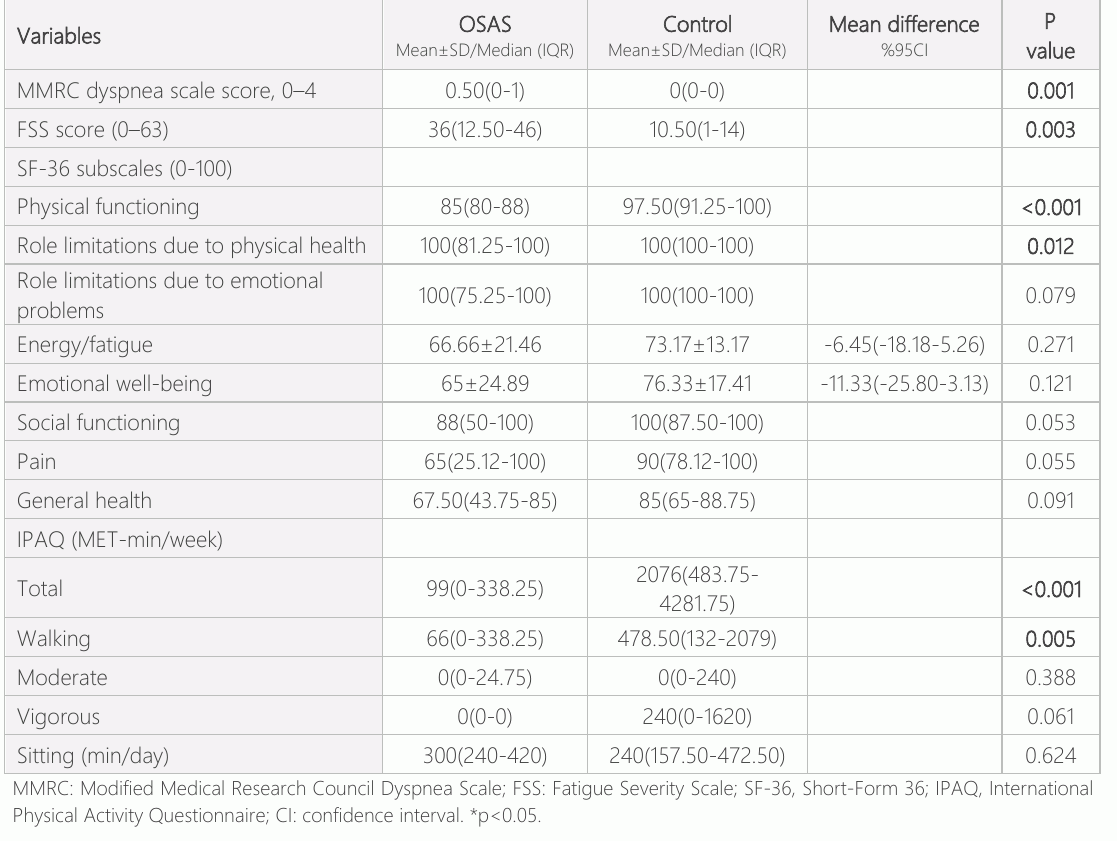
Impairment in quality of life was shown in patients with OSAS (7, 30, 31). Poor quality of life was correlated with physical functioning, ESS score (30), and rarely OSAS severity (7). In the current study, patients' physical functioning and role limitations were lower due to physical health sub-parameters. Also, other parameters were lower, although there was no difference. Reduced physical activity levels may be a source of poor quality of life.
Physical inactivity increased OSAS (9). A study showed that 15% of patients with OSAS walked over 10,000 steps per day (32). Another study stated that 19% of the patients were sufficiently active (7). In the current study, only 8.3% of the patients were adequately active. To reduce the severity of OSAS and its adverse effects, physical activity counselling should be included in the management of OSAS.
The study has some limitations. Exercise capacity was assessed with the 6-MWT (11). Due to technical problems, a cardiopulmonary exercise test was not conducted, but it should be used in future studies. Secondly, physical activity was assessed using a questionnaire. Although the IPAQ is a practical, standardized, cost-effective questionnaire (20), new studies should use accelerometers. Thirdly, the sample size was small; therefore, the current study's findings cannot be generalized.
Conclusion
In conclusion, exercise capacity quality of life is impaired, physical activity level, lower and upper extremity muscle strength are decreased, fatigue and dyspnea levels are increased, and increased fatigue and dyspnea are correlated with excessive daytime sleepiness in patients with OSAS. New studies are needed to improve outcomes for patients with OSAS. Cardiac rehabilitation programs should include exercise training and physical activity counselling.
Declarations
- Author contributions (CRediT)
- All authors contributed equally to all 14 CRediT roles (Conceptualization, Data curation, Formal analysis, Funding acquisition, Investigation, Methodology, Project administration, Resources, Software, Supervision, Validation, Visualization, Writing – original draft, Writing – review & editing).
- Funding
-
Funding information was not reported in the published version of this article.
- Conflicts of interest
- The authors declare no conflict of interest.
- Ethics approval
- The Ethics Committee of the University approved the study (No:2020/16).
- Data availability
- A data availability statement was not reported in the published version of this article.
References (32)
26 of 32 references are linked to their DOI.
- Memon J, Manganaro SN. Obstructive Sleep-disordered Breathing. [Updated 2022 Aug 8]. In: StatPearls [Internet]. Treasure Island (FL): StatPearls Publishing; 2022. PubMed Google Scholar
- Lyons MM, Bhatt NY, Pack AI, Magalang UJ. Global burden of sleep-disordered breathing and its implications. Respirology 2020;25(7):690-702. DOI Crossref PubMed Google Scholar
- Kütükcü EÇ, Çalışkan H, Kılıç K, Yağlı NV, Ertürk,N, Sağlam M, et al. A Comparison of Respiratory Functions, Functional Capacity and Quality of Sleep in Patients with OSAS and COPD Compared to Healthy Controls. J Turk Sleep Med 2020;2:49-56. PubMed Google Scholar
- Chien MY, Wu YT, Lee PL, Chang YJ, Yang PC. Inspiratory muscle dysfunction in patients with severe obstructive sleep apnoea. Eur Respir J 2010;35(2):373-80. DOI Crossref PubMed Google Scholar
- Beitler JR, Awad KM, Bakker JP, Edwards BA, DeYoung P, Djonlagic I, et al. Obstructive sleep apnea is associated with impaired exercise capacity: a cross-sectional study. J Clin Sleep Med 2014;10(11):1199-204. DOI Crossref PubMed Google Scholar
- Quadri F, Boni E, Pini L, Bottone D, Venturoli N, Corda L, et al. Exercise tolerance in obstructive sleep apnea-hypopnea (OSAH), before and after CPAP treatment: Effects of autonomic dysfunction improvement. Respir Physiol Neurobiol 2017;236:51-56. DOI Crossref PubMed Google Scholar
- Çaliskan H, Erturk N, Kutukcu EC, Arikan H, Yagli NV, Saglam M, et al. The relationship between the physical activity level and fatigue perception, quality of life and psychological status in patients with obstructive sleep apnea syndrome. J Turk Sleep Med 2019;6:1-6. PubMed Google Scholar
- Hong S, Dimsdale JE. Physical activity and perception of energy and fatigue in obstructive sleep apnea. Med Sci Sports Exerc 2003;35(7):1088-92. DOI Crossref PubMed Google Scholar
- Simpson L, McArdle N, Eastwood PR, Ward KL, Cooper MN, Wilson AC, et al. Physical Inactivity Is Associated with Moderate-Severe Obstructive Sleep Apnea. J Clin Sleep Med 2015;11(10):1091-9. DOI Crossref PubMed Google Scholar
- Basta M, Lin HM, Pejovic S, Sarrigiannidis A, Bixler E, Vgontzas AN. Lack of regular exercise, depression, and degree of apnea are predictors of excessive daytime sleepiness in patients with sleep apnea: sex differences. J Clin Sleep Med 2008;4(1):19-25. DOI Crossref PubMed Google Scholar
- ATS Committee on Proficiency Standards for Clinical Pulmonary Function Laboratories. ATS statement: guidelines for the six-minute walk test. Am J Respir Crit Care Med 2002;166(1):111-117. DOI Crossref PubMed Google Scholar
- Troosters T, Gosselink R, Decramer M. Six minute walking distance in healthy elderly subjects. Eur Respir J 1999;14: 270-274. DOI Crossref PubMed Google Scholar
- Bohannon RW. Reference values for extremity muscle strength obtained by hand-held dynamometry from adults aged 20 to 79 years. Arch Phys Med Rehabil 1997;78(1):26-32. DOI Crossref PubMed Google Scholar
- Schmidt RT, Toews JV. Grip strength as measured by the Jamar dynamometer. Arch Phys Med Rehabil 1970;51(6):321-7. 117 77 Obstructive Sleep Apnea Syndrome Katayıfçı et al. PubMed Google Scholar
- Laveneziana P, Albuquerque A, Aliverti A, Babb T, Barreiro E, Dres M, et al (2019) ERS statement on respiratory muscle testing at rest and during exercise. Eur Respir J 53(6):1801214. DOI Crossref PubMed Google Scholar
- Black LF, Hyatt RE. Maximal respiratory pressures: normal values and relationship to age and sex. Am Rev Respir Dis 1969;99(5):696-702. PubMed Google Scholar
- Armutlu K, Korkmaz NC, Keser I, Sumbuloglu V, Akbiyik DI, Guney Z, et al. The validity and reliability of the Fatigue Severity Scale in Turkish multiple sclerosis patients. Int J Rehabil Res 2007;30(1):81-85. DOI Crossref PubMed Google Scholar
- Mahler DA, Wells CK. Evaluation of clinical methods for rating dyspnea. Chest 1988;93(3):580-586. DOI Crossref PubMed Google Scholar
- Charlson ME, Pompei P, Ales KL, MacKenzie CR. A new method of classifying prognostic comorbidity in longitudinal studies: development and validation. J Chronic Dis 1987;40: 373–83. DOI Crossref PubMed Google Scholar
- Saglam M, Arikan H, Savci S, Inal-Ince D, Bosnak-Guclu M, Karabulut E, et al. International physical activity questionnaire: reliability and validity of the Turkish version. Percept Mot Skills 2010;111(1):278-84. DOI Crossref PubMed Google Scholar
- Kocyigit H, Aydemir O, Fisek G, Ölmez N, Memiş A. Validity and reliability of Turkish version of Short form 36: A study of a patients with rheumatoid disorder. Journal of Drug and Therapy (in Turkish.) 1999;12: 102– 106. PubMed Google Scholar
- Izci B, Ardic S, Firat H, Sahin A, Altinors M, Karacan I. Reliability and validity studies of the Turkish version of the Epworth Sleepiness Scale. Sleep Breath 2008; 12(2):161-8. DOI Crossref PubMed Google Scholar
- Johns MW: A new method for measuring daytime sleepiness: The Epworth Sleepiness Scale. Sleep 1991; 14(6):540–5. DOI Crossref PubMed Google Scholar
- Ucok K, Aycicek A, Sezer M, Genc A, Akkaya M, Caglar V, et al. Aerobic and anaerobic exercise capacities in obstructive sleep apnea and associations with subcutaneous fat distributions. Lung 2009;187(1):29-36. DOI Crossref PubMed Google Scholar
- Carvalho TMDCS, Soares AF, Climaco DCS, Secundo IV, Lima AMJ. Correlation of lung function and respiratory muscle strength with functional exercise capacity in obese individuals with obstructive sleep apnea syndrome. J Bras Pneumol 2018;44(4):279-284. DOI Crossref PubMed Google Scholar
- Rizzi CF, Cintra F, Risso T, Pulz C, Tufi k S, de Paola A, et al. Exercise capacity and obstructive sleep apnea in lean subjects. Chest 2010;137(1):109 -14. DOI Crossref PubMed Google Scholar
- Rizzi CF, Cintra F, Mello-Fujita L, Rios LF, Mendonca ET, Feres MC, et al. Does obstructive sleep apnea impair the cardiopulmonary response to exercise? Sleep 2013;36(4):547-53. DOI Crossref PubMed Google Scholar
- Elbehairy AF, Geneidy NM, Elhoshy MS, Elsanhoury D, Elfeky MK, Abd-Elhameed A, et al. Exercise Intolerance in Untreated OSA: Role of Pulmonary Gas Exchange and Systemic Vascular Abnormalities. Chest 2022: S0012-3692(22)03897-1. DOI Crossref PubMed Google Scholar
- Chervin RD. Sleepiness, fatigue, tiredness, and lack of energy in obstructive sleep apnea. Chest 2000;118(2): 372-9. DOI Crossref PubMed Google Scholar
- Asghari A, Mohammadi F, Kamrava SK, Jalessi M, Farhadi M. Evaluation of quality of life in patients with obstructive sleep apnea. Eur Arch Otorhinolaryngol 2013;270:1131-6 DOI Crossref PubMed Google Scholar
- Smith IE, Shneerson JM. Is the SF 36 sensitive to sleep disruption? A study in subjects with sleep apnoea. J Sleep Re. 1995;4(3):183-188. DOI Crossref PubMed Google Scholar
- Verwimp J, Ameye L, Bruyneel M. Correlation between sleep parameters, physical activity and quality of life in somnolent moderate to severe obstructive sleep apnea adult patients. Sleep Breath 2013;17(3):1039-46. DOI Crossref PubMed Google Scholar
Read the full text
Open the PDF here
Loading the PDF…
If the PDF does not show here, use the download button above.
How to cite this article
Katayifci N, Huzmeli I, Dikmen N. Functional Exercise Capacity, Fatigue and Peripheral Muscle Strength in Patients with Obstructive Sleep Apnea Syndrome and Controls. Ulutas Med J. 2023;9(3):110-117. doi:10.5455/umj.20230103043212
Katayifci, N., Huzmeli, I., & Dikmen, N. (2023). Functional Exercise Capacity, Fatigue and Peripheral Muscle Strength in Patients with Obstructive Sleep Apnea Syndrome and Controls. The Ulutas Medical Journal, 9(3), 110–117. https://doi.org/10.5455/umj.20230103043212
Katayifci, N., Huzmeli, I. and Dikmen, N. (2023) 'Functional Exercise Capacity, Fatigue and Peripheral Muscle Strength in Patients with Obstructive Sleep Apnea Syndrome and Controls', The Ulutas Medical Journal, 9(3), pp. 110–117. doi: 10.5455/umj.20230103043212.