Sleep apnoea takes a toll on the legs and lungs, not just on sleep
Patients walked less, moved less and tired faster than healthy peers in a small comparison.
Obstructive sleep apnoea is known for loud snoring and daytime drowsiness. Its effect on everyday physical fitness gets less attention.
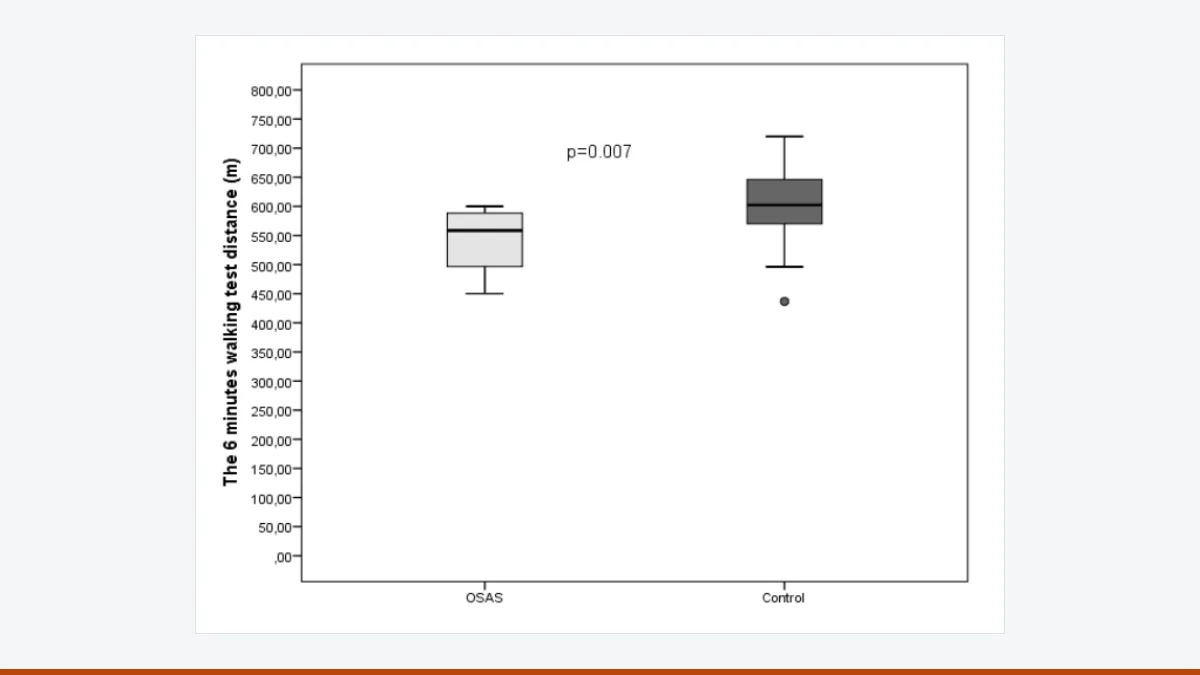
A study in The Ulutas Medical Journal tested 12 patients with the condition against 24 healthy people of similar age and sex. Everyone did a six-minute walk test and was assessed for muscle strength, activity levels, fatigue, breathlessness and quality of life.
Patients covered noticeably less ground in six minutes. Their thigh, hip and shoulder muscles were weaker, they scored worse on physical quality of life, and 10 of the 12 were inactive. Fatigue and breathlessness were greater, although breathing-muscle strength matched the controls.
The authors suggest that rehabilitation programmes deserve a place in sleep apnoea care, alongside treating the night-time breathing problem.
Caveat: with only 12 patients, the study is small, and its design cannot show which came first, the apnoea or the low fitness.
Source: Nihan Katayifci et al. Functional Exercise Capacity, Fatigue and Peripheral Muscle Strength in Patients with Obstructive Sleep Apnea Syndrome and Controls. Ulutas Med J 2023. doi:10.5455/umj.20230103043212.
Image: Figure 2 of the article, CC BY-NC 4.0.