The Ulutas Medical Journal · ISSN 2149-0430 (مطبوع), 2149-388X (إلكتروني) · https://www.ulutasmedicaljournal.com/?mno=268878
مقالة مراجعة · وصول مفتوح
دور مصنع النمو الاصطناعي والتحول إلى عوامل النمو بيتا في القلب
ترجمة آلية للعنوان والملخص والنص الكامل. الأصل الإنجليزي
- Biochemistry Lab, Department of Zoology, Dr. Harisingh Gour Central University, Sagar - 470003, Madhya Pradesh, India ROR
الملخص
وسرطان الخلايا الكبدية هو أحد أكثر الأورام الخبيثة شيوعاً والسبب الرئيسي للوفاة في جميع أنحاء العالم. وقد أفيد بأن جينات تومور، وإشارات من ورم الستروما، والخلايا المسببة للالتهابات، والناقصات، قد تحولت إلى مسببات للمرض. ويمثل عامل النمو المستمر للثدييات عاملاً شاملاً ينظم انتشار الخلايا، وقابليتها للدموع، ويؤدي دوراً هاماً في الأورام المسببة للمرض من خلال أجهزة الاستقبال المختلفة. كما أن الاسطوانات التنظيمية المتعددة الوظائف التي تحوّل عامل النمو بيتا تتحكم في انتشار الخلايا، والتمييز، وإنتاج المصفوفة الخلوية، والبقاء/أو انتشار العديد من الخلايا. ومن خلال رفع مستوى التحول الوبائي - المتوسطي، يؤدي التحول في معامل النمو بيتا إلى خلق بيئة مصغرة مؤاتية لنمو خلايا الورم. وبحسب مرحلة تقدم السرطان، يمكن لها إما أن تبدأ في تطوير الورم أو التقدم أو التجزئة أو أن تعمل كقمع ورم. وفي هذا الاستعراض، بُذلت محاولة لتحديد دور معامل النمو الاصطناعي الشامل وتحويل عامل النمو بيتا في تطوير ودرجة الإصابة بالسرطان الخلوي.
الكلمات المفتاحية
النص الكامل
ترجمة آلية للنص الكامل؛ النسخة المنشورة الرسمية هي الأصل الإنجليزي. الأصل الإنجليزي
مقدمة
تم الإبلاغ عن الإصابة بالسرطان الكبدي باعتباره السرطان السابع الأكثر شيوعا في جميع أنحاء العالم والسبب الرئيسي الثالث للوفيات المرتبطة بالسرطان (1)ولوحظ ارتفاع معدل الوفيات في المرضى المصابين بمرض الإيدز بسبب عدم وجود خيارات علاج فعالة، لا سيما في المراحل المتقدمة. وعلى الرغم من أن الجراحة والتجمع الدائري يمكن أن يحققا رقابة طويلة الأجل على المرضى المصابين بمرض السرطان المبكر، فإن معدلات التكرار مرتفعة (حوالي 50 في المائة في 3 سنوات)(2)وفضلاً عن ذلك، وبسبب الطبيعة غير المستقرة في أوائل البلدان الفقيرة المثقلة بالديون، وانعدام الوعي، وضعف استراتيجيات الفرز، يوجد معظم المرضى (حوالي 80 في المائة) مصابين بأمراض متقدمة أو لا يمكن اكتشافها (3).
وتشمل العوامل الماثلة للإصابة بالأمراض الكبدية المزمنة، وفيروس التهاب الكبد، والكحولية. وبُدئ النظر عن سبب حدوث تسرب الكبد كأحد عوامل الخطر الرئيسية في تطوير الورم، ولوحظ أن نحو 80 في المائة من المرضى المصابين بمرض التهاب الكبد من خلال هذه المرحلة قبل وضع الورم (4)وعلاوة على ذلك، أفيد بأن الأفلاطوكسين له تأثير تآزري على فيروس التهاب الكبد C (HCV) بسبب سرطان الكبد (5)ومن الدراسات الوبائية، من الواضح أن تلوث الأغذية بمتلازمة نقص المناعة المكتسب (الإيدز) 1 هو العامل الرئيسي في خطر الإصابة بسرطان الكبد البشري (6, 7).
ويُعتبر البيوتادايين السداسي البروم نوعاً متطرفاً من نمو الأورام الأوعية الدموية ويعتمد على الأورام المعوية، وهو نمو لسفن الدم الجديدة. During the pathogenesis and progression of cancer from the preinvasive and dormant form to the invasive and metastatic phase, angiogenesis has been observed to play a critical role by yielding angiogenic factors necessary for tumor growth, invasion and metastasis. وأظهرت الدراسات المتعددة أن درجة وسام الورم ترتبط بشكل إيجابي بمراحل الأمراض، واحتمال حدوث التركات، وتكرار السرطان (8).
عامل النمو الرئوي المعروف جيداً، وهو عامل تضخمي قوي أُبلغ عنه من أجل تعزيز القدرة على الإصابة بالداء الأوعية الدموية، ويعزز التعلّم بالأوعية الدموية الجديدة وانتشار الخلايا الدنوية في المركز نظراً لامتلاكه الخلوي المميتجين (9)In addition to VEGF, further during the development of liver diseases, transforming growth factor-b (TGF-b) has been reported to play an important role in fibrosis of the lesions (10)- على الرغم من أنه في الكبد العادي يعرقل نمو الخلايا المنبعثة من التهاب الكبد، إلا أنه لوحظ أنه يتم تنشيطها في من لديهم كبد مضرورة وتعزيز تطوير سرطان الخلايا الكبدية (11)- خلال تقدم السرطان، يؤدي تفعيل الإشارة إلى TGF - بيتا إلى الانضمام إلى ligand إلى مصدّقها على ميمبراني الخلية (12).
VEGF as Angiogenesis Biomarkers of Hepatocellular Carcinoma
موزع لأول مرة في عام ١٩٨٩ (13)VEGF protein family currently comprises several members: VEGF (or VEGF-A), VEGF-B, VEGF-C and VEGF-D, VEGF-F-F,placental growth factor (PlGF), and their receptors VEGFR-1, VEGFR-2 and VEGFR-3 (14)VEGF is a ligand of the VEGF tyrosine kinase receptor superfamily and includes VEGF-A, -B, -C and -D, with splice variants of VEGF-A resulting in several different isoforms (15, 16).
(أ) الألياف العائلية التابعة لمؤسسة VEGF ملزمة بمستقبلات الكازينة الطاغية VEGFR1 و VEGFR2 و VEGFR3 (Figure-1)؛ ويحتوي كل جهاز استقبال على نطاق خارجي يناهز 750 من مخلفات حامض الأمينو، مرتبة في غضون سبعة منضلات مثل الطيف. (17)وبالإضافة إلى ذلك، يمكن للهيبارين الكبريتي - غليكان (HSPGs) فضلاً عن الأنابيب العصبية (NRP-1 وNRP-2) أن يعملا كمصدرين أساسيين لمؤسسة VEGF وأن يعززا تنشيط VEGFR (18, 19)ويتأثر مسار VEGF/VEGFR وينظمه العديد من العوامل مثل النفاق البيئي المحلي، والهرمونات المختلفة، وعوامل النمو، والساكنة. Hor-mones such as androgens upregulate stromal cell and malignant cell VEGF production and angiogenesis, enhancing prostate cancer growth (20, 21).
ووصفت مؤسسة VEGF بأنها العامل الرئيسي للنمو المسبب للمرض، واستُخدم مستوى تعبيرها كمعلم بيولوجي في تحديد الأمراض المسببة للمرض. وقد أُبلغ عن ارتفاع مستوى الإصابة بفيروس نقص المناعة البشرية/متلازمة نقص المناعة المكتسب (الإيدز) مع التقدم المحرز والمسببات المرضية للسرطان، وقد أُبلغ عن ارتفاعه الشديد في المراحل المتقدمة من السرطان. In solid tumors due to neovascularization, VEGF facilitates tumor growth and metastasis by supplying continuous nutrient flow and its expression correlates with tumour progress (22)وقد تم تحديده بوصفه أحد العوامل المسببة للقلق الهامة في لجنة التنسيق الرفيعة المستوى. وقد أفيد بأن تعبيره يزداد تدريجياً من العقيدات المتدنية الصف إلى العقيدات المتردية المرتفعة الصف إلى أوائل البلدان الفقيرة المثقلة بالديون (23)وخلال المراحل الأولى من الدورة الاستثنائية للجنة التنسيق الرفيعة المستوى، لوحظ ارتفاع مستوى العناية المركزة للارتباط بكثافة الأوعية المصغرة والشرايين غير المأهولة (أي الشرايين التي لا تصحبها قنوات ثنائية، مما يدل على وجود متجانسات) واتفاقية CD34 التي تلصق كعلامة على الاستيلاء على الآثم في منطقة هونغ كونغ. (23)- كان التعددية البوليمورفية البوليمورفية التي تنجم عن تعبيرها على نطاق واسع حالة المتجانسات الجديدة والزنزانة التي لوحظ أنها تحدث في كثير من الأحيان في منطقة هونغ كونغ، وقد لوحظ نشاط الانتشار بالمقارنة مع الشكل المتقدم للشبكة. (23)- اقتُرح أن تكون درجة تعبير " VEGF " أثناء عملية التطوير عاملاً متوقعاً بالنسبة للمرحلة المتقدمة من اتفاقية استكهولم. (24).
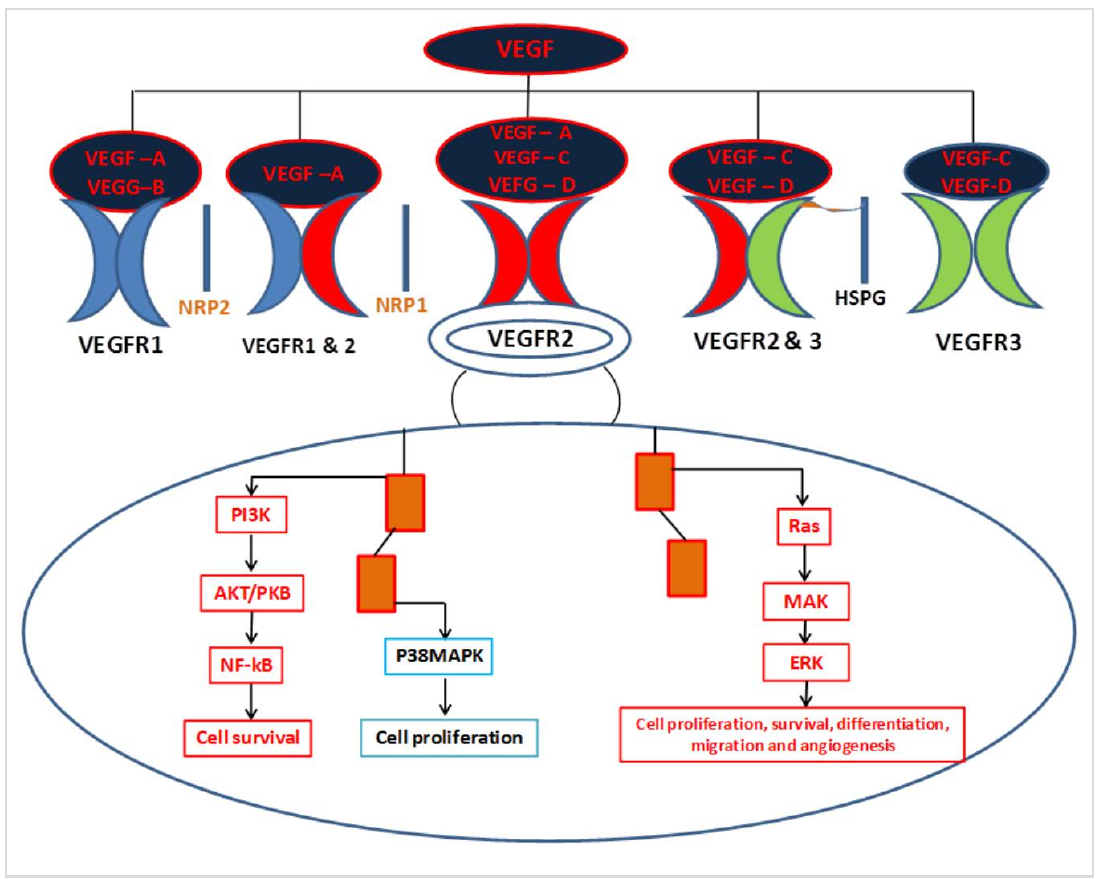
VEGF has been accounted as the chief angiogenic factor responsible for the neoangiogenesis, development and/or progression/spread of HCC tumour (25) وقد ارتبط مرضى فيروس نقص المناعة البشرية/متلازمة نقص المناعة المكتسب (الإيدز) الذين تجاوزوا نطاق التعبير في المصل والأنسجة بضعف معدل البقاء على قيد الحياة (26)- إن إنشاء أجهزة مجهرية جديدة هو أمر حاسم بالنسبة لنمو وتطور مختلف الأورام الصلبة البشرية لأنها تتيح إيصال الأكسجين والمغذيات إلى الأورام السريعة النمو. (27)بعض هذه الأورام السريعة النمو في نفس الوقت أيضاً سرية (28).
Tumor suppressive and Oncogenic Functions of TGF-ette in HCC
TGF-Bissau is a cytokine with multiple functions like regulation of cell proliferation, differentiation and extracellularmel production (29)- إن إزالة القيود المفروضة على التعبير عن فيروس نقص المناعة البشرية/متلازمة نقص المناعة المكتسب (الإيدز) أو الإشارة إليه قد تورطت في مسببات أمراض متنوعة، منها السرطان والنسيب. وكان التعبير عن الغازات المفلورة - بيتا منخفضاً جداً بحيث يزداد بشكل كبير خلال المراحل اللاحقة من تطور السرطان، ومن ثم فإن خلايا الورم لا تعمل فقط كمتفرج ولكنها تسهم بالأحرى في نمو الخلايا والغزو والتركيب وتخفض الاستجابة للمصابين بالمرض أثناء مراحل متقدمة (30)TGF-To is the prototypic member of a large family of secreted proteins, which can be further divided into two subfamilies, depending on the signal pathways they active - the TGF-ß/Activin/Nodal subfamily and the Bone Morphogenetic Protein (BMP) subfamily (31).
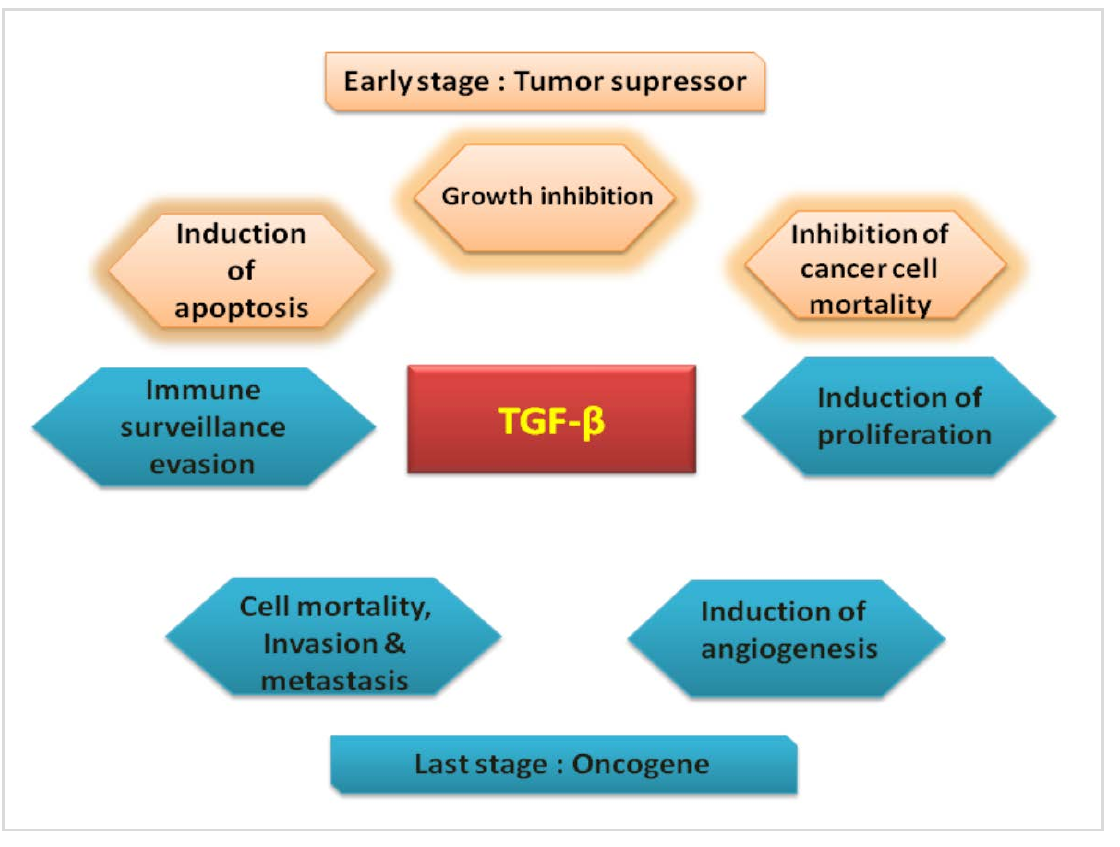
TGF-ettes are able to regulate tumor initiation, progression, and metastatic development. It is widely accepted that TGF-ßs act as both tumor suppressors and tumor promoters, depending on the cancer type and tumor development timing (32, 33)وخلال المرحلة الأولى من تطوير الورم، أُبلغ عن قيام تي جي إف - بيتا(1) بأعمال كقمع ورم أساساً بسبب قدرته على منع انتشار الخلايا الوبائية. Further it can also cause G1 cell cycle arrest by declining expression of oncogenes such as c-Myc and ID, and/or by inducing the expression of CDK inhibitors such as p21Cip1 and p15lnk4b (34, 35)وقد أُبلغ عن قيام مؤسسة تي جي إف بيا بدور مزدوج في قمع الورم وكذلك مروج الورم (الشكل 2)، غير أن الآلية لم تكن واضحة حتى الآن. In HCC expression of TGF-ette has been reported to increase concomitantly with collagen deposition and the reduction in proteolytic degradation (36).
وتتجلى وظيفة كبح جماح التورم التي تقوم بها مؤسسة TGF - بيتا في العيوب الطفرة المتكررة التي تشوب Smad4, TßRI أو TßRII (TGF-ette type II receptor) التي لوحظت في العديد من الخيول مثل سرطانات المعدة والعقيد والبروتة والصدر والرئة والكبد والبنكرير (37, 38)- لوحظ الدور المزدوج لمؤسسة TGF-ette في الخلية الوبائية للكبد أثناء تطوير وتقدّم مركز الرعاية الصحية. In the initial phase it exerts a tumour-suppressive, which is quite evident by the enhanced susceptibility to HCC because of reduced availability of TGF-ette type II receptor (TßRII) due to the ectopic expression of soluble TetteRI in hepatocytes (39) أو خفض تعبير " TßRII " في الفئران المتوهجة قد أكد أن الورم كبت وظيفة " TGF - بيتا " (40).
In most cancers that arise from epithelial cells, TGF-ß suppressed malignant cell growth by inducing cell cycle arrest through the upregulation of cyclin- dependent protein kinase (CDK) inhibitors such as p15 and p21, activating apoptosis through induction of proapoptotic proteins like Death associated protein kinase (DAP) (41)وعلى النقيض من هذا التعبير في حالة سرطان البروستات وسرطانات الألوان، تبين أن تعبير TGF-بيتا1 في خلايا السرطان يرتبط ارتباطاً قوياً بالتقدُّم والثبات. (42–44)(د) معظم الجينات المطوّرة على طريق TGF - بيتا في السرطان، وهي TGFBR2, TGFBR1, SMAD4 and SMAD2.
خاتمة
وتظهر اللجنة وجود العديد من الشذوذ الجزيئي الذي قد يشارك في عملية تطوير السرطان وتقدمه. وبالتالي، من المهم تحديد الجهات الفاعلة الرئيسية التي يمكن أن تشارك في المسببات المرضية وتقدُّم السرطان، بحيث يمكن إجراء تشخيص دقيق ويمكن تطبيق معيار اختيار معقول على المرضى المصابين بمرض الإيدز، ولا سيما خلال المراحل المبكرة. It has been observed that in various tumors including HCC, whenever there is local invasion of cancer cells or metastasis to distal parts take place, there is elevated levels of VEGF in blood through angiogenesis. ويؤدي المزيد من أعمال قمع الورم التي تقوم بها مؤسسة تي جي إف بيتا دورا هاما. Thus, both VEGF and TGF-ette regulates angiogenesis, tumor progression and production of the extracellular fisheries and immune suppression in HCC via different mechanism. In such scenario, better understanding of VEGF and TGF-ette pathway will lead to the development of modalities that can target cancer cells in HCC. وحتى تاريخه، فإن الآليات المحددة التي تنطوي على التحول الخبيث لمؤسسة TGF إلى بيتا ليست واضحة وخاضعة لبحوث مستقبلية ذات وجهة نظر علاجية.
الإقرارات
- مساهمات المؤلفين (CRediT)
- ساهم جميع المؤلفين بالتساوي في جميع أدوار CRediT الأربعة عشر (Conceptualization, Data curation, Formal analysis, Funding acquisition, Investigation, Methodology, Project administration, Resources, Software, Supervision, Validation, Visualization, Writing – original draft, Writing – review & editing).
- التمويل
-
Funding information was not reported in the published version of this article.
- تضارب المصالح
- The authors declare that there is no conflict of interests.
- الموافقة الأخلاقية
- Ethics committee approval was not required for this article, as it is based on previously published literature and does not involve human participants, patient data or animals.
- إتاحة البيانات
- Data sharing is not applicable to this article as no new data were created or analysed in this study.
المراجع (44)
36 من أصل 44 مرجعًا مرتبطة بمعرّف DOI.
- Simbaqueba Ferlay J, Shin HR, Bray Forman FD, Mathers C, Parkin DM. Estimates of worldwide burden of cancer in 2008: GLOBOCAN 2008, Int J Cancer 2010;127: 2893– 2917. DOI Crossref PubMed Google Scholar
- Mulcahy MF. Management of hepatocellular cancer. Curr Treat Options Oncol 2005;6: 423–435. DOI Crossref PubMed Google Scholar
- Thomas MB, Abbruzzese JL. Opportunities for targeted therapies in hepatocellular carcinoma. J Clin Oncol 2005;23: 8093– 8108. DOI Crossref PubMed Google Scholar
- Minguez B, Tovar V, Chiang D, Villanueva A, Llovet JM. Pathogenesis of hepatocellular carcinoma and molecular therapies. Curr Opin Gastroenterol 2009;25: 186-194. DOI Crossref PubMed Google Scholar
- 5. Kirk GD, Lesi OA, M Mendy et al. 249 (ser) P53 mutation in plasmid DNA, hepatitis B viral infection, and risk of hepatocellular carcinoma. Oncogene 2005;24:5858 5867. PubMed Google Scholar
- Li Y, SU JJ, Qin LL, Yang C, Ban KC, Yan RQ. Synergistic effect of hepatitis B virus and aflatoxin B1 in hepato carcinogenesis in tree shrews. Ann Acad Med Singapore 1999;28: 67-71. DOI Crossref PubMed Google Scholar
- Madden CR, Finegold MJ, Slagle BL. Altered DNA mutation spectrum in aflatoxin b1-treated transgenic mice that express the hepatitis B virus x protein. J Virol 2002;76: 11770-11774. DOI Crossref PubMed Google Scholar
- Weidner N. Angiogenesis as a predictor of clinical outcome in cancer patients. Hum Pathol 2000;31: 403– 405. PubMed Google Scholar
- Dvorak HF, Brown IF, Detmar MA, Dvorak M. Vascular permeability factor/vascular endothelial growth factor, microvascular hypermeability, and angiogenesis. Am J Pathol 1995;146:1029–1039. PubMed Google Scholar
- Gressner AM, Weiskirchen R, Breitkopf K, Dooley S. Roles of TGF-beta in hepatic fibrosis. Front Biosci 2002;7:d793– d807. DOI Crossref PubMed Google Scholar
- Carr BI, Hayashi I, Branum EL, et al. Inhibition of DNA synthesis in rat hepatocytes by platelet-derived type beta transforming growth factor. Cancer Res 1986;46: 2330– 2334. PubMed Google Scholar
- Nakamura T, Tomita Y, Hirai R et al. Inhibitory effect of transforming growth factor-beta on DNA synthesis of adult rat hepatocytes in primary culture. Biochem Biophys Res Commun 1985;133:1042– 1050. DOI Crossref PubMed Google Scholar
- Tischer E, Gospodarowicz D, Mitchell Silva RM, Schilling Lau JK, Crisp T, Fiddes JC, Abraha JA. Vascular endothelial growth factor: a new member of the platelet-derived growth factor gene family. Biochem Biophys Res Commun 1989;165:1198-1206. DOI Crossref PubMed Google Scholar
- Tammela TM, Enholm B, Alitalo K, Paavonen K. The biology of vascular endothelial growth factors. Cardiovas Res 2005;65: 550-563. DOI Crossref PubMed Google Scholar
- Clifford RL, Deacon K, Knox AJ. Novel regulation of vascular endothelial growth factor-A (VEGF-A) by transforming growth factor β1: requirement for Smads, β - catenin, and GSK3 β. J Biol Chem 2008;283:35337– 35353. DOI Crossref PubMed Google Scholar
- Fan F, Wey JS, McCarty MF et al. Expression and function of vascular endothelial growth factor receptor-1 on human colorectal cancer cells. Oncogene 2005;24:2647– 2653. DOI Crossref PubMed Google Scholar
- Olsson A, Dimber KA, Kreuger J, et al. VEGF receptor signalling—in control of vascular function. Nat Rev Mol Cell Biol 2006;7:359– 371. DOI Crossref PubMed Google Scholar
- Ferrara N, Gerber HP, LeCoute JR. The biology of VEGF and its receptors. Nature Medicine 2003;9: 669–676. DOI Crossref PubMed Google Scholar
- Takahashi H, Shibuya M. The vascular endothelial growth factor (VEGF)/VEGF receptor system and its role under physiological and pathological conditions. Clin Sci 2005;109:227–241. DOI Crossref PubMed Google Scholar
- Levine A, Liu C, Greenberg XH PD, et al. Androgen induce the expression of vascular endothelial growth factor in human fetal prostatic fibroblasts. Endocrinology 1998; 139:4672– 4678. PubMed Google Scholar
- Jackson MW. A potential autocrine role for vascular endothelial growth factor in prostate cancer. Cancer Res 2002;62:854– 859. PubMed Google Scholar
- Fukumura D, Xavier R, Suguira T, et al. Tumor induction of VEGF promoter activity in stromal cells. Cell 1998;94:715-725. DOI Crossref PubMed Google Scholar
- Park YN, Kim YB, Yang KM, Park C. Increased expression of vascular endothelial growth factor and angiogenesis in the early stage of multistep hepatocarcinogenesis. Arch Pathol Lab Med 2000;124:1061– 1065. DOI Crossref PubMed Google Scholar
- Hsieh MC, Hsu HT, Hsiao PC, et al. Role of VEGF-C gene polymorphisms in susceptibility to hepatocellular carcinoma and its pathological development. J Clin Lab Anal 2014;28:237-244. DOI Crossref PubMed Google Scholar
- Spinzi G, Paggi S. Sorafenib in advanced hepatocellular carcinoma. N Engl J Med 2008;359:2497-2498. VEGF and TGF-β in Hepatocellular Carcinoma Saurabh Kumar Chhonker, et al. DOI Crossref PubMed Google Scholar
- Zhou L, Liu J, Luo F. Serum tumor markers for detection of hepatocellular carcinoma. World J Gastroenterol 2006;12: 1175-1181. DOI Crossref PubMed Google Scholar
- Leung DW, Carchianes G, Kuang WJ, Goeddel DV, Ferrara N. Vascular endothelial growth factor is a secreted angiogenic mitogen. Science 1989;246:1306– 1309. DOI Crossref PubMed Google Scholar
- Fox SB, Gatter KC, Harris AL. Tumor angiogenesis. J Pathol 1996;179:232–237. PubMed Google Scholar
- Jennings MT, Pietenpol JA. The role of transforming growth factor in glioma progression. J Neurooncol 1998;36:123-140. DOI Crossref PubMed Google Scholar
- Lindholm D, Castren E, Kiefer R, Zafra F, Thoenen H. Transforming growth factor-beta1 in rat brain: increase after injury and inhibition of astrocyte proliferation. J Cell Biol 1992;117: 395-400. DOI Crossref PubMed Google Scholar
- Heldin CH, Miyazono K, Dijke PT. TGF-beta signaling from cell membrane to nucleus through SMAD proteins. Nature 1997;390:465-471. DOI Crossref PubMed Google Scholar
- Roberts AB, Wakefield LM. The two faces of transforming growth factor beta in carcinogenesis. Proc Natl Acad Sci USA 2003;100:8621–8623. DOI Crossref PubMed Google Scholar
- Wang J, Shao N, Ding X, Tan B, Song Wang QN, Jia Y, Ling H, Cheng Y. Crosstalk between transforming growth factor-β signaling pathway and long non-coding RNAs in cancer. Cancer Lett 2016;370:296– 301. DOI Crossref PubMed Google Scholar
- Pardali K, Kurisaki A, Morén A, Ten Dijke P, Kardassis D, Moustakas A. Role of Smad proteins and transcription factor Sp1 in p21(Waf1/Cip1) regulation by transforming growth factor-beta. J Biol Chem 2000;275:29244–29256. DOI Crossref PubMed Google Scholar
- Seoane J, Le HV, Shen L, Anderson SA, Massagué J. Integration of Smad and forkhead pathways in the control of neuroepithelial and glioblastoma cell proliferation. Cell 2004;117:211–223. DOI Crossref PubMed Google Scholar
- Murawaki Y, Ikuta Y, Nishimura Y Koda, M, Kawasaki H. Serum markers for fibrosis and plasma transforming growth factor-beta 1 in patients with hepatocellular carcinoma in comparison with patients with liver cirrhosis, J Gastroenterol Hepatol 1996;11:443–450. DOI Crossref PubMed Google Scholar
- Elliott RL, Blobe GC. Role of transforming growth factor Beta in human. J Oncol Clin 2005;23:2078-2093. DOI Crossref PubMed Google Scholar
- Levy L, Hill CS. Alterations in components of the TGF-beta superfamily signaling pathways in human cancer. Cytokine Growth Factor Rev 2006;17: 41-58. DOI Crossref PubMed Google Scholar
- Kanzler S, Meyer E, Lohse AW, Schirmacher P, Henninger J, Galle PR, Blessing M. Hepatocellular expression of a dominant negative mutant TGF-β type II receptor accelerates chemically induced hepatocarcinogenesis. Oncogene 2001;20:5015–5024. DOI Crossref PubMed Google Scholar
- Im YH, Kim HT, Kim IY, Factor VM, Hahm KB, Anzano M, Jang JJ, Flanders K, Haines DC, Thorgeirsson SS, Sizeland A, Kim SJ. Heterozygous mice for the transforming growth factor-β type II receptor gene have increased susceptibility to hepatocellular carcinogenesis. Cancer Res 2001;61: 6665–6668. PubMed Google Scholar
- Ohgushi M, Kuroki S, Fukamachi H, O'Reilly LA, Kuida K, Strasser A, et al. Transforming growth factor beta-dependent sequential activation of Smad, Bim, and caspase-9 mediates physiological apoptosis in gastric epithelial cells. Mol Cell BioL 2005;25:10017–10028. DOI Crossref PubMed Google Scholar
- Tsushima H, Kawata S, Tamura S, Ito N, Shirai Y, Kiso S, Imai Y, Shimomukai H, Nomura Y, Matsuda Y, et al. High levels of transforming growth factor beta 1 in patients with colorectal cancer: association with disease progression. Gastroenterology 1996;110:375-382. DOI Crossref PubMed Google Scholar
- Wikstrom P, Stattin P, Franck-Lissbrant I, Damber JE, Bergh A. Transforming growth factor beta1 is associated with angiogenesis, metastasis, and poor clinical outcome in prostate cancer. Prostate 1998;37:19-29. DOI Crossref PubMed Google Scholar
- Friedman E, Gold LI, Klimstra D, Zeng ZS, Winawer S, Cohen A. High levels of transforming growth factor beta 1 correlate with disease progression in human colon cancer. Cancer Epidemiol Biomarkers Prev 1995;4:549-554. DOI Crossref PubMed Google Scholar
اقرأ النص الكامل
افتح ملف PDF هنا
جارٍ تحميل ملف PDF…
إذا لم يظهر ملف PDF هنا، استخدم زر التنزيل أعلاه.
كيف تقتبس هذه المقالة
Chhonker SK, Rawat D, Koiri RK. Role of Vascular Endothelial Growth Factor and Transforming Growth Factor-β in Hepatocellular Carcinoma. Ulutas Med J. 2017;3(2):25-31. doi:10.5455/umj.20170608022309
Chhonker, S. K., Rawat, D., & Koiri, R. K. (2017). Role of Vascular Endothelial Growth Factor and Transforming Growth Factor-β in Hepatocellular Carcinoma. The Ulutas Medical Journal, 3(2), 25–31. https://doi.org/10.5455/umj.20170608022309
Chhonker, S.K., Rawat, D. and Koiri, R.K. (2017) 'Role of Vascular Endothelial Growth Factor and Transforming Growth Factor-β in Hepatocellular Carcinoma', The Ulutas Medical Journal, 3(2), pp. 25–31. doi: 10.5455/umj.20170608022309.