The Ulutas Medical Journal · ISSN 2149-0430 (مطبوع), 2149-388X (إلكتروني) · https://www.ulutasmedicaljournal.com/?mno=69569
مقالة أصلية · وصول مفتوح
Comparison of Partial Internal Sphincterotomy and Partial Internal Sphincterotomy with Additional Advancement Flap Anoplasty in the Treatment of Chronic Anal Fisure
ترجمة آلية للعنوان والملخص والنص الكامل. الأصل الإنجليزي
- General Surgery, Health Ministry Gebze Fatih State Hospital General Surgery Clinic, Kocaeli, Turkey ROR
- General surgery specialist, Health Ministry Gebze Fatih State Hospital General Surgery Clinic, Kocaeli, Turkey ROR
الملخص
مقدمة: استهدفنا أن نقارن نتائج مرضانا الذين تعرضوا لتشوه داخلي جانبي وارتفاع داخلي جانبي مع زيادة الانوبلاس. وقارن معدل النجاح ومعدل المضاعفات لكلا الأسلوبين بالأدب. المواد والطرق: وقيّمنا من جديد مخططات للمرضى الذين تعرضوا لعملية النسيان المزمن بين كانون الثاني/يناير 2015 وتموز/يوليه 2018. A total of 123 patients were separated into two groups as partial Lis+anoplasty (group-I, n:76) and only partial Lis (group-II, n:47) groups. Age, sex, follow up time, anal examination findings, pain, bleeding, constipation score, patient satisfaction score, VAS pain score during rest or stooling, and recurrence and continence rates of patients were recorded. النتائج: أُدرج 61 من الذكور (59 49 في المائة) و 62 من الإناث (50.41 في المائة) من المرضى. عمر المرضى كان 42,8711,69 سنة The duration of the operation was 28,5011,61 min. البقاء في المستشفى كان 1500,70 يوم وقت المتابعة كان 2410 شهر In group-II patients (15.22%), the recurrence was higher than group I. Similarly, bleeding (10.87%), pain (13.04%), and discomfort (15.22%) were higher in group-II compared to group-I. وكانت معدلات الركود، وسجلات الإمساك، وتركيب وتركيب الحسابات أعلى في المجموعة الثانية، في حين تبين أن درجة الرضا أعلى في المجموعة الأولى. ولم يكن هناك فرق بين المجموعتين من حيث معدل عدم القدرة على العمل. الخلاصة: أدى اضافة التقدم المحرز إلى التقلبات الداخلية الجزئية إلى زيادة معدل النجاح عن طريق تقليل تكرار دراساتنا والدراسات المماثلة في الأدبيات.
الكلمات المفتاحية
النص الكامل
ترجمة آلية للنص الكامل؛ النسخة المعتمدة هي الأصل الإنجليزي. الأصل الإنجليزي
مقدمة
النسيان المزمن هو دمعة لا تُشفى من الشموع الخبيثة تحت خط الهوية (1)وأُفيد بأن 10 في المائة من الزيارات إلى الوحدات السريرية الألوانية هي من أجل الضمحل، وهي أكثر تواتراً بين سن 20 إلى 39 سنة. (2)وعادة ما يحدث ذلك بسبب عوامل مثل الإمساك والإسهال والجراحة التي تسبب جميعها صدمة في قناة الأنال (3)الدموع التي تحدث في الأندرم تُسبب الارتباك في العنق الداخلي ويسبب هذا التلاؤ بدوره الألم والدموع ويقلل من إمدادات الدم من الأنهار. قد يؤدي هذا الألم، والارتجاف، ودورة الأيكيميا المفرغة إلى عدم معالجة الأنياب المزمنة (4)- تميل الأوراق المالية التي تستمر أكثر من أربعة أسابيع إلى أن تصبح مزمنة. الدخول في هامش النسيان، وجود الألياف الداخلية للنسيج في القاعدة، وجود جهاز البوليب المرسل، أو بوليب الألياف النسيجية هو نتائج لصالح مزمنة الألياف (5)- قد تكفي أساليب العلاج الطبي والتحفظي، في حالات الخزينة الحادة، للعلاج دون إجراء جراحة؛ غير أن معدل النجاح في التأمينات المزمنة أقل بكثير. (3)- في حالة المرضى الذين يعتبرون مزمنين ولا يستجيبون للعلاج الطبي، يكون من الضروري في الغالب.
يُعتَبَر أنَّ التذبذب الداخلي اللاحق مع معدل شفاء يتراوح بين 92 و10 في المائة هو المعيار الذهبي (5)ويوصف نظام المعلومات المسبقة عن علم بأنه غير مكتمل ومفتوح، تبعا لتقدير الجراح وأفضلية المريض (6, 7)وبالإضافة إلى ذلك، يرد أيضا وصف لأساليب جراحية مثل النسيج والارتفاع بمختلف الطرق. (8, 9)وعلى الرغم من أن معدلات الشفاء المرتفعة جداً قد أُبلغ عنها فيما يتعلق بنظام المعلومات المسبقة عن علم، فإن أهم تعقيدات الإجراء هي التعقيدات الدائمة أو التي تتجاوز الاتساع والتكرار.(10)- يوصف الترسبات الداخلية الجزئية (الثابتة) بانخفاض التردد وبمعدل شفاء مماثل (11)- يوصى بالأسلوب، بدلا من نظام المعلومات المسبقة عن علم، في قوائم أقل عناوين النسيج والنسيج. (12)وفي الآونة الأخيرة، أسفرت بعض الدراسات عن ارتفاع معدل النجاح، ونشر معدل مضاعفات منخفض بالنسبة للعمليات المشتركة بين نظام المعلومات المسبقة عن علم والصفوف(3)وكان الهدف من هذه الدراسة هو مقارنة نتائج المرضى الذين يعانون من التهاب جزئي ومن التهاب جزئي مع تقدم إضافي.
المواد والأساليب
The charts of patients who have undergone operation by a singleurg with the diagnosis of the anal fisure between January 2015 - July 2018 were retrospectively reviewed. واعتُبر المرضى الذين يعانون من أعراض لا تقل عن 6 أشهر أو مرضى لم يردوا على 4 أسابيع من العلاج الطبي مصابين بأمراض مزمنة من ألياف الأنانية وتم تشغيلهم. وقد استُبعدت من الدراسة المرضى الذين يعانون من تشخيص مرضى التهاب الكبدي والمرضى الرئويين الذين لديهم إجراءات جراحية إضافية لظروف مثل ناسور الولادة والنزوف. واستعرضت نتائج فحص وتشخيص المرضى، ومذكرات العمليات، وتقارير المتابعة للمرضى الخارجيين. وأُدرجت في الدراسة المرضى الذين تعرضوا لنظام المعلومات المسبقة عن علم جزئياً أو لافتات جزئية من نظام المعلومات المسبقة عن علم. في بداية الدراسة، جميع المرضى تعرضوا للمرض وقد أُنجزت الدراسة الاستقصائية عن الإصابة بفيروس نقص المناعة البشرية/الإيدز في جميع المرضى اللاحقين. وفي نهاية فترة المتابعة، دُعي جميع المرضى إلى مراقبة المرضى الخارجيين عبر الهاتف. وقد استبعدت من الدراسة المرضى الذين لم يظهروا لمراقبة المرضى الخارجيين. One hundred thirty patients who showed up for outpatient control visits were separated into two groups: partial LIS+anoplasty (group-I, n:76) and partial LIS (group-II, n:47). إجابات الشخص على الاستبيان عن العمر والجنس ووقت المتابعة ونتائج الفحص الشاذ والألم والأعراض النزيفية (13)وسجلت نتائج الفحص باستخدام برنامج إكسل وقُيس معدل رضا المرضى من 1 إلى 4: لم يُرضَى على الإطلاق، 1؛ أقل رضى، 2؛ راضية، 3؛ راضية جدا، 4. VAS سُجِّل مرتين: أولاً بعد التنظيف ثم في حالة الراحة.
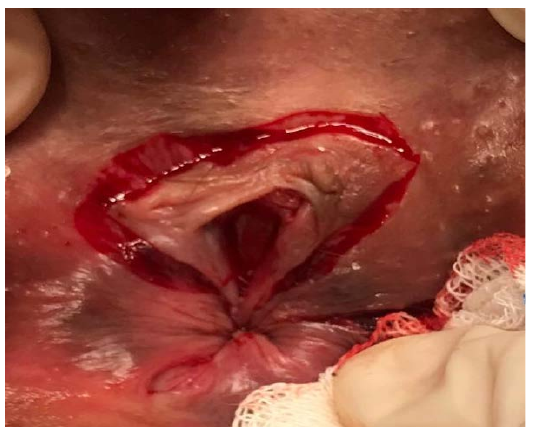
تم استخدام العدو قبل العملية وطبق التخدير العنكبوتي بعد استخدام المضادات الحيوية الوقائية. وبعد التطهير السليم، بدأت العملية في حين كان المرضى في وضع معرّض. In the first group, sphincter was exposed and 75% of sphincter was resected by using a cautery tool (open partial sphincterotomy). وقد اكتملت العملية بضبط الشق. In the second group, after the partial sphincterotomy, the fisssure tract was removed and skin and mucosa flaps were prepared. Anoplasty was done (figure-1).
أجري تحليل إحصائي باستخدام النسخة 17 -0 من نظام SPSS. وتحكم اختبارات " هيتوغرام " و " كولموغوروف - سمرنوف " في مطابقة المتغيرات مع التوزيع العادي. واستُخدمت الوسائل والانحرافات المعيارية والوسط والحد الأدنى والحد الأقصى أثناء تقديم تحليل وصفي. وقارنت البيانات الوصفية باستخدام اختبار " بيرسون تشي - سكوير " و " فيشر " . وعندما جرى تقييم متغيرات التوزيع غير الطبيعي (غير المتماثل) بين المجموعات، استخدم اختبار مان ويتني يو. A P-valueз0.05 was considered statistically significant.
النتائج
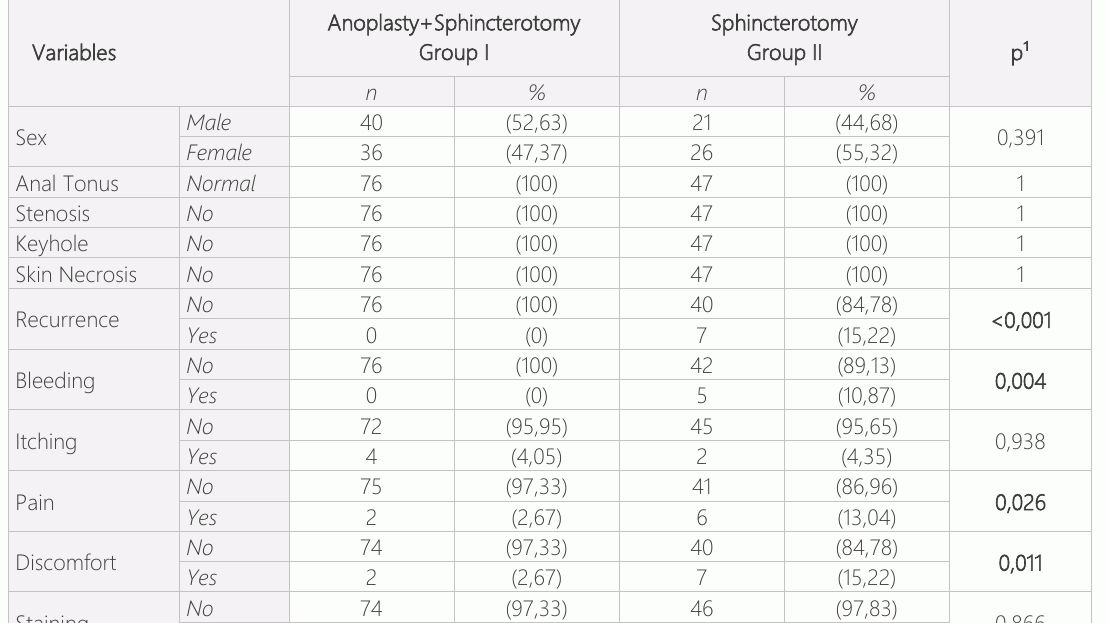
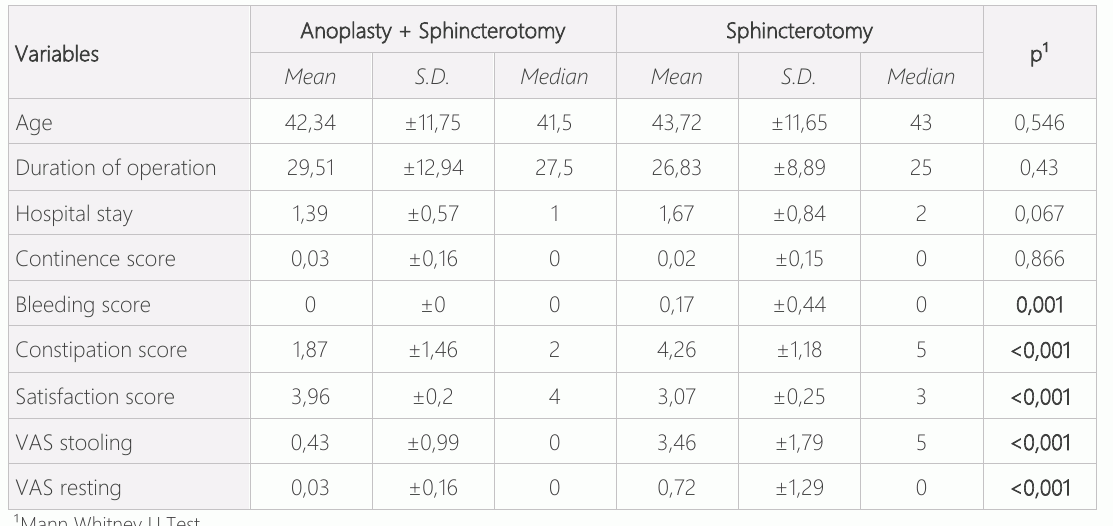
(61) ذكور (49,59 في المائة) و62 امرأة (50,41 في المائة) تم إدراج 123 مريضا. عمر المرضى كان 42,8711,69 سنة كان متوسط مدة العملية 28,5011,61 دقيقة كان البقاء في المستشفى 510 1 يوماً بينما استغرق المتابعة 2410 شهراً The patients were separated into two groups according to the operation: group-I; partial sphincterotomy +anoplasty 76 (61,79%), group-II; only partial sphincterotomy 47 (38.31%). واستعرضت النتائج وفقا لنوع العملية. وهكذا، كان هناك ارتباط كبير جدا بين نوع العملية والتكرار، والنزف، والألم، وعدم الارتياح. وفي المجموعة الثانية، كان معدل التكرار (15.22 في المائة) أعلى من الفئة الأولى. وبالمثل، كان النزيف (10.87 في المائة)، والألم (13.04 في المائة)، والقلق (15.22 في المائة) أعلى في الفئة الثانية مقارنة بالمجموعة الأولى (الجدول 1). وتمت مقارنة العمر، ومدة العمل، والإقامة في المستشفى، والملاءمة، والنزيف، وسجلات الإمساك، وترضية المرضى، وحساب التعبئة والراحة حسب نوع العملية. وبناء على ذلك، كانت معدلات النزيف والاحتجاز، وسجلات التعبئة والراحة أعلى في المرضى من الفئة الثانية، وكان معدل رضا المرضى أعلى في المرضى من الفئة الأولى (الجدول 2).
المناقشة
ويُستخدم العلاج الجراحي في مرضى النسيان المزمنين الذين لم يردوا على العلاج الطبي. والارتفاع الداخلي الجانبي هو الطريقة المفضلة للعلاج الجراحي ومعدل الشفاء يتراوح بين 85 في المائة و 95 في المائة. However, recurrence is reported in 5% of patients, and incontinence varies between 2-20%(14–16)- ومن بين المسائل التي تؤدي إلى تعقيدات وارتباك عدم القدرة على توحيد منطقة التلميح الداخلي ودرجة الترسبات الجانبية. In a study by Farouk et al. patients recurring after LIS were examined via endoanal USG. They reported factors other than LIS grade for the recurrence (17).
The main disadvantage of LIS is its potential for perianal abscess and perianal deformity in addition to bloating (gas), mucus, and fecal incontinence (18–23)عدم الكشف عن درجة عدم القدرة الفعلية بسبب عدم كفاية تسجيل حالة المرضى بعد نظام المعلومات المسبقة عن علم (20–23)- اكتشف لويس وآخرون عدم القدرة على الاتصال في 17 في المائة من المرضى (20)هذه المضاعفة كانت عابرة في ثلثي المرضى فقط Kubchandani and Reed have reported staining in 22% of patients and incontinence in the form of flatulence (passing gas) in 35.1% of the patients after LIS (24)- أبلغ ماغدي وآخرون عن معدلات عدم القدرة على العمل كنسبة 14 في المائة في المجموعة التي تعرضت لنظام المعلومات التقليدية (25)In other series, fecal incontinence was reported between 1.3% and 66% (26–29).
وقد استخدمت إجراءات بديلة، مثل شعلة التقدم المفاجئة، لا سيما في المرضى الذين يعانون من خطر أكبر من عدم القدرة على البقاء، وذلك من أجل منع حدوث ضرر متصاعد محتمل (30–36)- وقد قارن ليونغ وآخرون، في دراستهم، نظام المعلومات المسبقة عن علم و " AAP " في النسيج المزمن. 50 مريضا كانوا عشوائيين في كل مجموعة All of the patients have recovered from the illness after wound in the LIS group, on the other hand in AAP group in 2 patients the treatment has failed. In the LIS group moderate anal incontinence was observed (37)- في رابطة علم الاجتماع في بريطانيا العظمى وأيرلندا، يوصى بصياغة مبادئ توجيهية AAP لمعالجة المرضى الذين يعانون من ضغوط أقل. (ويليام تشامبرز) أبلغ عن إمكانية استخدام برغوث تقدم في السنة الخامسة بنجاح كخيار أول لعلاج مستقل عن الضغوط التي تتعرض لها العضلات (35).
ومن الناحية النظرية، وكميزة، لا يعطل برنامج التكيف الهيكلي معقّد التوابع، ومن ثم فهو وقائي ضد تنمية القارات. This is particularly important for patients who had previous wound or patients with gynecologic complications. A disadvantage of employing only AAP may be a slower healing and a higher recurrence risk. ويزيد من معدل النجاح بنسبة تصل إلى 96 في المائة ويقلل معدل التكرار إلى أقل من 2 في المائة. In a series including 150 patients, Magdy et al. have separated the patients into three groups as total LIS, V-Y advancement flap and partial sphincterotomy+V-Y advancement flap. وأُبلغ عن معدل التعافي بعد سنة واحدة، حيث بلغ 84 في المائة، و48 في المائة، و96 في المائة على التوالي، ومعدل التكرار 4 في المائة، و22 في المائة، و2 في المائة على التوالي. (25).
Hegazi et al. have compared open partial sphincterotomy plus V-Y advancement flap with open sphincterotomy only in 20 patients. In the post-op, early period (first two weeks) in the total LIS-only patients, transient gas incontinence and transient liquid incontinence was found to be extremely higher. غير أنه لم يكن هناك أي تعارض دائم في كلتا المجموعتين في السنة التي تتابع. Moreover, time to wound healing was shorter with relatively less pain in partial sphincterotomy plus V-Y advancement flap group (38).
Elbalshy et al. have compared conventional-way open LIS with KIS+mucosal advancement flap combination in a prospective study including 100 patients. وفي المجموعة المشتركة، أفيد بأن الألم في فترة ما بعد العمليات المبكرة أقل، وأن معدل التعافي كان سريعاً وأسبقاً العودة إلى النشاط المنتظم. معدل الجمود ليس مختلفا بين المجموعتين (2 في المائة)(9)- تم في الدراسة التي أجراها أنراكي وآخرون فيسورينكتومي وفي - يو في ما مجموعه 30 مريضاً يعانون من نقص في السندات الصحية والعالية والدنيا. ولا يمكن الكشف عن عدم قدرة الغاز في أي من المرضى. وكان معدل التكرار 5.9 في المائة. (8)- قامت شركة كواسي وآخرون بفحص عن طريق مغازل التقدم في 26 مريضاً، بعد سنتين من المتابعة، لم يبلغوا عن حدوث أي تكرار أو عدم قدرة.(39).
In meta-analysis of Sahabally et al. compared advancement flaps and LIS results of 4 studies by using pooled data of a total of 300 patients and reviewed the results. Incontinence was detected in one (0.6%) patient out of 150 who had advancement flap, and incontinence was detected in 17 (11.3%) patients out of 150 who had LIS. (12)تم الإبلاغ عن عدم التعافي في 31 مريضا (20.6 في المائة) وفي 14 مريضا (9.3 في المائة) (12)ولوحظت مضاعفات مواقع الجرحى في 10 (6.6 في المائة) و7 (4.6 في المائة) (12)- عند استعراض المؤلفات، لاحظت أن استخدام التشنجات الجزئية يقلل بدرجة كبيرة من معدل عدم الاتساق. وفي دراستنا، كان لكلا المجموعتين ذروة. اكتشفنا نادراً ما يحدث نقص في الغاز (النتيجة 1) في مريضين. وقد علمنا أن هؤلاء المرضى لديهم أعراض مماثلة قبل التشغيل، وأن عدم قدرة الغاز على الازدياد بعد العملية. ولم يلاحظ أي فرق من حيث عدم الاتساق بين المجموعتين. ووجدنا أن معدل الجمود في قضايانا الجزئية في نظام المعلومات المسبقة عن علم كان متسقاً مع الأدبيات. وفي ضوء هذه النتائج، قد نقترح أن القيام بالتشنجات الجزئية كان عاملا وقائيا لكلا الفئتين. In the literature, lower incontinence rate was reported in patients who had undergone partial LIS or flap-only operations compared to total LIS but recurrence rates were higher. In our study, in LIS-only group recurrence rate was higher compared to partial LIS+advancement flap patients. In the partial LIS+advancement flap group, both recurrence rate and incontinence rate were lower. وفي مقارنة المجموعتين، كانت معدلات النزيف والألم وعدم الارتياح أعلى، وكان معدل رضا المرضى أقل في المجموعة الثانية. In both groups, anal stenosis, keyhole, and skin necrosis were not observed.
خاتمة
وفي المعالجة الجراحية للألياف المزمنة، سواء في دراستنا أو في دراسات أخرى في الأدبيات، على الرغم من ارتفاع معدلات النجاح، يرتبط نظام المعلومات المسبقة عن علم ارتباطاً مباشراً بمخاطر التقلبات المرتفعة؛ غير أن الطريقة الجزئية للارتفاع فقط يمكن أن تؤدي إلى انخفاض معدلات الجمود مع انخفاض معدلات الشفاء. ووجدنا أن إضافة مغازلة التقدم إلى التذبذب الداخلي الجزئي قد زادت من معدلات النجاح وانخفضت معدلات عدم الاتساق والتكرار في دراستنا وفي دراسات مماثلة في الأدبيات. غير أن الدراسات المتعلقة بالعمليات المشتركة لا تزال تفتقر إلى المؤلفات. وستساعد الدراسات المنظورة والمتعددة المستويات في سلسلة كبيرة على توضيح هذه المسألة بشكل أفضل.
الإقرارات
- مساهمات المؤلفين (CRediT)
- ساهم جميع المؤلفين بالتساوي في جميع أدوار CRediT الأربعة عشر (Conceptualization, Data curation, Formal analysis, Funding acquisition, Investigation, Methodology, Project administration, Resources, Software, Supervision, Validation, Visualization, Writing – original draft, Writing – review & editing).
- التمويل
-
Funding information was not reported in the published version of this article.
- تضارب المصالح
- The authors have declared no conflict of interest for the present article.
- الموافقة الأخلاقية
- Ethics approval details were not reported in the published version of this article.
- إتاحة البيانات
- A data availability statement was not reported in the published version of this article.
المراجع (39)
32 من أصل 39 مرجعًا مرتبطة بمعرّف DOI.
- Jonas M, Scholefield JH. Anal fissure. Gastroenterology Clinics of North America. 2001;30(1):167-81 PubMed Google Scholar
- Garner J, McFall M, Edwards D. The medical and surgical management of chronic anal fissure. Journal of the Royal Army Medical Corps. 2002;148(3):230-5 DOI Crossref PubMed Google Scholar
- Beaty JS, Shashidharan M. Anal fissure. Clinics in colon and rectal surgery. 2016;29(01):030-7 PubMed Google Scholar
- Smink DS. Schwartz's principles of surgery. Annals of Surgery. 2015;261(5):1026 PubMed Google Scholar
- Poh A, Tan K-Y, Seow-Choen F. Innovations in chronic anal fissure treatment: a systematic review. World journal of gastrointestinal surgery. 2010;2(7):231 DOI Crossref PubMed Google Scholar
- Acar T, Acar N, Güngör F, Kamer E, Güngör H, Candan MS, et al. Treatment of chronic anal fissure: Is open lateral internal sphincterotomy (LIS) a safe and adequate option? Asian journal of surgery. 2018 DOI Crossref PubMed Google Scholar
- Jain BK, Sharma N, Gupta H. Lateral Internal Partial Sphincterotomy Technique for Chronic Anal Fissure: an Avoidable Risk to the Surgeon's Finger. The Indian journal of surgery. 2018;80(2):203 DOI Crossref PubMed Google Scholar
- Anaraki F, Foroughifar T, Laleh SH, Etemad O. Evaluation of outcomes in fissurectomy and V–Y advancement flap for the treatment of chronic anal fissure. Journal of Coloproctology (Rio de Janeiro). 2018;38(2):132-6 DOI Crossref PubMed Google Scholar
- Elbalshy MA, Eldesouky MS. Combined mucosal advancement and lateral internal sphincterotomy in treatment of chronic anal fissure: could be an effective alternative procedure? International Surgery Journal. 2019;6(2):475-81 DOI Crossref PubMed Google Scholar
- Fernandes GOdS, Murad-Regadas SM, Regadas FSP, Rodrigues LV, Dealcanfreitas ID, Pereira JdJR, et al. Clinical, functional and morphologic evaluation of patients undergoing lateral sphincterotomy for chronic anal fissure treatment. Identification of factors that can interfere with fecal continence. Journal of Coloproctology (Rio de Janeiro). 2014;34(3):174-80 DOI Crossref PubMed Google Scholar
- Nessar G, Topbas M. Lateral internal partial sphincterotomy technique for chronic anal fissure. Indian Journal of Surgery. 2017;79(3):185-7 DOI Crossref PubMed Google Scholar
- Sahebally SM, Walsh SR, Mahmood W, Aherne TM, Joyce MR. Anal advancement flap versus lateral internal sphincterotomy for chronic anal fissure-a systematic review and meta-analysis. International Journal of Surgery. 2018;49:16-21 DOI Crossref PubMed Google Scholar
- Agachan F, Chen T, Pfeifer J, Reissman P, Wexner SD. A constipation scoring system to simplify evaluation and management of constipated patients. Diseases of the colon & rectum. 1996;39(6):681-5 DOI Crossref PubMed Google Scholar
- Rakinic J. Anal fissure. Clinics in colon and rectal surgery. 2007;20(02):133-8 PubMed Google Scholar
- Ayantunde AA, Debrah SA. Current concepts in anal fissures. World journal of surgery. 2006;30(12):2246-60 DOI Crossref PubMed Google Scholar
- Hananel N, Gordon PH. Lateral internal sphincterotomy for fissure-in-ano—revisited. Diseases of the colon & rectum. 1997;40(5):597-602 DOI Crossref PubMed Google Scholar
- Farouk R, Monson J, Duthie G. Technical failure of lateral sphincterotomy for the treatment of chronic anal fissure: a study using endoanal ultrasonography. British journal of surgery. 1997;84(1):84-5 DOI Crossref PubMed Google Scholar
- Pernikoff B, Eisenstat T, Rubin R, Oliver G, Salvati E. Reappraisal of partial lateral internal sphincterotomy. Diseases of the colon & rectum. 1994;37(12):1291-5 DOI Crossref PubMed Google Scholar
- Lund J, Scholefield J. Aetiology and treatment of anal fissure. British journal of surgery. 1996;83(10):1335-44 DOI Crossref PubMed Google Scholar
- Lewis TH, Corman ML, Prager ED, Robertson WG. Long-term results of open and closed sphincterotomy for anal fissure. Diseases of the Colon & Rectum. 1988;31(5):368-71 DOI Crossref PubMed Google Scholar
- García- Aguilar J, Montes CB, Perez JJ, Jensen L, Madoff RD, Wong WD. Incontinence after lateral internal sphincterotomy. Diseases of the colon & rectum. 1998;41(4):423-7 DOI Crossref PubMed Google Scholar
- Hsu T-C, MacKeigan JM. Surgical treatment of chronic anal fissure. Diseases of the colon & rectum. 1984;27(7):475-8 DOI Crossref PubMed Google Scholar
- Madoff RD, Fleshman JW. AGA technical review on the diagnosis and care of patients with anal fissure. Gastroenterology. 2003;124(1):235-45 DOI Crossref PubMed Google Scholar
- Khubchandani I, Reed J. Sequelae of internal sphincterotomy for chronic fissure in ano. British journal of surgery. 1989;76(5):431-4 DOI Crossref PubMed Google Scholar
- Magdy A, El Nakeeb A, Youssef M, Farid M. Comparative study of conventional lateral internal sphincterotomy, VY anoplasty, and tailored lateral internal sphincterotomy with VY anoplasty in the treatment of chronic anal fissure. Journal of Gastrointestinal Surgery. 2012;16(10):1955-62 DOI Crossref PubMed Google Scholar
- Abcarian H. Surgical correction of chronic anal fissure: results of lateral internal sphincterotomy vs. fissurectomy— midline sphincterotomy. Diseases of the Colon & Rectum. 1980;23(1):31-6 DOI Crossref PubMed Google Scholar
- Blessing H. Late results after individualized lateral internal sphincterotomy. Helvetica chirurgica acta. 1993;59(4):603-7 PubMed Google Scholar
- Pfeifer J, Berger A, Uranüs S. Surgical therapy of chronic anal fissure--do additional proctologic operations impair continence? Der Chirurg; Zeitschrift fur alle Gebiete der operativen Medizen. 1994;65(7):630-3 PubMed Google Scholar
- Sultan AH, Kamm MA, Nicholls RJ, Bartram CI. Prospective study of the extent of internal anal sphincter division during lateral sphincterotomy. Diseases of the colon & rectum. 1994;37(10):1031-3 DOI Crossref PubMed Google Scholar
- Singh M, Sharma A, Gardiner A, Duthie GS. Early results of a rotational flap to treat chronic anal fissures. International journal of colorectal disease. 2005;20(4):339-42 DOI Crossref PubMed Google Scholar
- Owen HA, Edwards DP, Khosraviani K, Phillips RK. The house advancement anoplasty for treatment of anal disorders. Journal of the Royal Army Medical Corps. 2006;152(2):87-8 DOI Crossref PubMed Google Scholar
- Samson RB, Stewart WR. Sliding skin grafts in the treatment of anal fissures. Diseases of the Colon & Rectum. 1970;13(5):372-5 DOI Crossref PubMed Google Scholar
- Nyam D, Wilson R, Stewart K, Farouk R, Bartolo D. Island advancement flaps in the management of anal fissures. British journal of surgery. 1995;82(3):326-8 DOI Crossref PubMed Google Scholar
- Kenefick N, Gee A, Durdey P. Treatment of resistant anal fissure with advancement anoplasty. Colorectal Disease. 2002;4(6):463-6 DOI Crossref PubMed Google Scholar
- Chambers W, Sajal R, Dixon A. V–Y advancement flap as first-line treatment for all chronic anal fissures. International journal of colorectal disease. 2010;25(5):645-8 DOI Crossref PubMed Google Scholar
- Giordano P, Gravante G, Grondona P, Ruggiero B, Porrett T, Lunniss PJ. Simple cutaneous advancement flap anoplasty for resistant chronic anal fissure: a prospective study. World journal of surgery. 2009;33(5):1058-63 DOI Crossref PubMed Google Scholar
- Leong A, Seow-Choen F. Lateral sphincterotomy compared with anal advancement flap for chronic anal fissure. Diseases of the colon & rectum. 1995;38(1):69-71 DOI Crossref PubMed Google Scholar
- HEGAZI T, Soliman S. Combined Tailored Lateral Internal Sphincterotomy with V-Y Advancement Flap Versus Lateral Internal Sphincterotomy Alone in Treatment of Chronic Anal Fissure. Med J Cairo Univ. 2013;81:959-6 PubMed Google Scholar
- Ouaïssi M, Giger U, Sielezneff I, Yawovi K, Pamela A, Pirro N, et al. Mucosal advancement flap anoplasty for chronic anal fissure resistant to conservative therapy. World journal of surgery. 2011;35(4):900-4 DOI Crossref PubMed Google Scholar
اقرأ النص الكامل
افتح ملف PDF هنا
جارٍ تحميل ملف PDF…
إذا لم يظهر ملف PDF هنا، استخدم زر التنزيل أعلاه.
كيف تقتبس هذه المقالة
Celik Y, Demircan F. Comparison of Partial Internal Sphincterotomy and Partial Internal Sphincterotomy with Additional Advancement Flap Anoplasty in the Treatment of Chronic Anal Fissure. Ulutas Med J. 2019;5(4):243-250. doi:10.5455/umj.20191014070931
Celik, Y., & Demircan, F. (2019). Comparison of Partial Internal Sphincterotomy and Partial Internal Sphincterotomy with Additional Advancement Flap Anoplasty in the Treatment of Chronic Anal Fissure. The Ulutas Medical Journal, 5(4), 243–250. https://doi.org/10.5455/umj.20191014070931
Celik, Y. and Demircan, F. (2019) 'Comparison of Partial Internal Sphincterotomy and Partial Internal Sphincterotomy with Additional Advancement Flap Anoplasty in the Treatment of Chronic Anal Fissure', The Ulutas Medical Journal, 5(4), pp. 243–250. doi: 10.5455/umj.20191014070931.