The Ulutas Medical Journal · ISSN 2149-0430 (print), 2149-388X (online) · https://www.ulutasmedicaljournal.com/?mno=67749
Original Article · Open access
The Epidemiology of Hyperprolactinemia in A Single Tertiary Care Center: The Importance of Drug History and Role of An Endocrinologist
- Mersin University, Faculty of Medicine, Department of Hematology, Mersin, Turkey ROR
- Mersin University, Faculty of Medicine, Department of Endocrinology, Mersin, Turkey ROR
- Mersin University, Faculty of Medicine, Department of Biostatistics, Mersin, Turkey ROR
Abstract
- Introduction
- The underlying causes of hyperprolactinemia differ between studies. The study aimed to determine the causes, initial signs, and treatment methods of hyperprolactinemia.
- Materials and Methods
- Prolactin (PRL) measurement was requested from 16241 patients between January 2016 and December 2019. A total of 176 patients whose serum prolactin levels above 29.9 ng/mL in two consecutive measurements were included in this study. Electronic Health Records (EHR) of these patients were reviewed.
- Results
- Forty-Seven (26.8%) of 176 patients had a prolactinoma. Among the prolactinoma group, 63.8% of the patients had microadenoma. Polycystic Ovary Syndrome (PCOS)(29.5%), drugs (20.9%), and pituitary disorders other than prolactinoma (13.2%) were the most common causes of hyperprolactinemia in the non-prolactinoma group. Galactorrhea (38.3%) was the most common initial sign. Cabergoline's starting dose in the Endocrinology clinic was 1 mg/week, and 87.2% of the cases started with a 1 mg/week dose. All of the other cases (12.8%) who were diagnosed by other departments received inappropriate doses of cabergoline.
- Conclusions
- Drug-induced hyperprolactinemia may be much more common than previously thought. Referring these patients to the Endocrinology clinic will be much more beneficial to determine both the correct dosage of cabergoline and the cause of hyperprolactinemia.
Keywords
Full text
Introduction
Hyperprolactinemia is defined as an elevation of serum prolactin levels (1). The definite diagnosis of hyperprolactinemia is based on two consecutive measurements of serum prolactin.The prevalence of hyperprolactinemia in the adult age group was around 0.4% in the previous studies (2). There are numerous etiologies of hyperprolactinemia (3, 4). Most of the studies point out prolactinoma as the most common cause of hyperprolactinemia. However, recent studies indicate that drug-induced hyperprolactinemia is probably the actual leading cause of hyperprolactinemia (5). If there is a suspicion of drug-induced hyperprolactinemia, guidelines recommend stopping the suspicious medication and remeasure prolactin levels after 72 hours (6). Pituitary Magnetic Resonance Imaging (MRI) is the preferred method of imaging in these patients to exclude a potential hypophyseal or hypothalamic lesion. Prolactinoma is the most common pituitary adenoma and can be treated successfully by medical treatment in most cases. This study aimed to review both clinical features and etiology of hyperprolactinemia and treatment approaches in our center.
Materials and Methods
A total of 176 patients who were admitted to our center between January 2016 and December 2019 (4-year period) older than 18 years, and, whose serum prolactin levels more than 29.9 ng/ml in two consecutive measurements were included in the study (The upper limit of the average prolactin level, according to our biochemistry laboratory references was 29.9 ng/ml). Electronic health records (EHR) of the patients were reviewed. In this period, prolactin measurement was ordered from 16241 patients. Six hundred forty-one of these patients had at least one value of serum prolactin level more than 29.9 ng/ml. Among these cases, 321 patients had hyperprolactinemia in at least two consecutive measurements. However, there was not enough data in the EHR system other than 176 patients.
Serum prolactin, clinical features, presenting complaints, cause of hyperprolactinemia, initial admissions, and treatment modalities of these patients were reviewed. Prolactinoma was the cause of hyperprolactinemia in 47 patients, and all of them started cabergoline (CAB) treatment. Treatment responses in terms of prolactin levels and maximum tumor diameter on MRI were evaluated additionally in these 47 patients. Tumor diameter measurements were done through MRI. The maximum tumor diameter was identified in the initial imaging study, and the evolution of the same width was assessed in consequent imaging tests. Maximal diameter change of adenoma after treatment was calculated and recorded as a percentage relative to initial maximal diameter.
Ethical Statement
This study was conducted in compliance with the principles of the Declaration of Helsinki. It was approved by the local Ethics Committee (Ethical committee decision date: 12.06.2016 no:2016/164).
Statistical Method
The compliance controls of the data in each group were checked with the Shapiro Wilk test. For the data that conform to the normal distribution, the mean and percentile values were given as the descriptive statistics and for the data that did not meet the median (minimum-maximum) were given. Number and percentage values were given for categorical data. In the test of whether there is a difference between the two groups' averages, the student t-test was used for the parameters that fit the normal distribution, and the Mann Whitney U test was used for the parameters that did not fit the normal distribution. While the chi-square test was used to analyze the relationship of categorical data, the correlation coefficient was calculated for continuous data. Statistical significance was taken as p<0.05.
Results
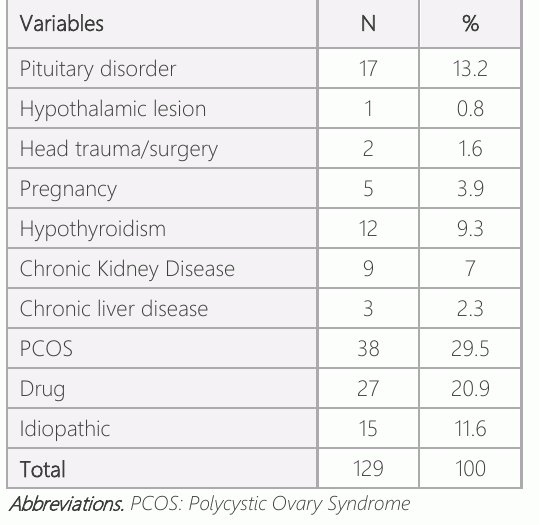
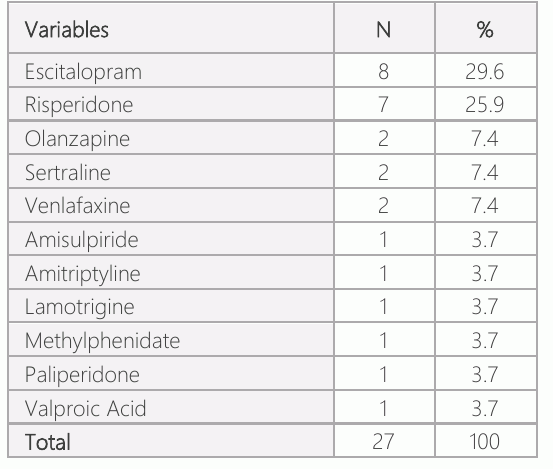
A total of 176 patients were included in our study 47 (26.8%) of the patients had a prolactinoma and 63.8% of these patients had microadenoma. Among all cases, 152 (86%) of them were female. While the most common symptoms in female patients with hyper prolactinemia were menstrual irregularity (37.5%), galactorrhea (14.5%) and infertility (11.2%); loss of sexual desire (41.7%), impotence (8.3%), and headache (8.3%) were the most common symptoms in male patients. In the non-prolactinoma, 46.5% of the patients applied to the Obstetrics & Gynecology Clinic. Polycystic Ovarian Syndrome (PCOS) (29.5%), drugs (20.9), and pituitary disorders other than prolactinoma (13.2), respectively, were the most common causes of hyperprolactinemia in the non-prolactinoma group. In 15 (11.6%) of the patients, it was observed that detailed investigations were not made; they were evaluated as idiopathic hyperprolactinemia (Table-1). None of these 15 patients were enrolled in the Endocrinology department. Twenty-seven (20.9%) patients had drug-induced hyperprolactinemia. Escitalopram and Risperidone were the most common causative drugs (29.6% to 25.9%, respectively) in the drug-induced hyperprolactinemia (Table-2). When the most common initial signs and symptoms were evaluated in patients with prolactinoma, galactorrhea (38.3%) was the most common sign. When the most common initial signs and symptoms were assessed according to gender: while galactorrhea (47.4%) was the most common one in female patients, loss of sexual desire (55.5%) was the most common in male patients.
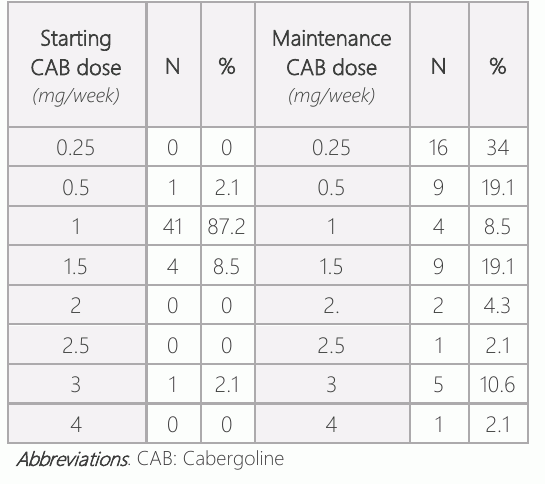
All of the patients with prolactinoma were started on CAB treatment. The CAB starting dose was 1 mg/week in 41 (87.2%) of the patients. It was noticed that patients with starting doses other than 1 mg/week were diagnosed and started on treatment in clinics other than Endocrinology. The maintenance basal maximal diameter and PRL normalization (p=0.032). PRL normalization was not related to the percent reduction diameter and gender. Table-4 reveals some characteristics of CAB treatment responses, differences between microadenoma and macroadenoma groups. CAB dose was 0.25 mg/week in 34% of the

55.55±36.15 ng/mL (29.98-208) in patients with hyperprolactinemia without prolactinoma and 411.72±940.46 ng/mL(100-4700) in patients with prolactinoma. PRL returned to normal in 25 (83.3%) of the patients with microadenoma after CAB treatment. PRL levels of the patients with microadenoma were 148.6±50.8 ng/mL before treatment and 12.8±16.79 ng/mL on CAB treatment (p<0.001). While the mean basal maximal diameter of hypophyseal adenoma was 5.7±2.26 mm before treatment, it was 3.8±3.15 mm after CAB treatment. Percent diameter reduction after treatment was found to be 39.88±44.44% in the patients. PRL levels were normalized in 10 (58.8%) of the patients with macroadenoma after starting CAB. Mean PRL levels were 876±358 ng/mL and 101±78.3 ng/mL before and after treatment, respectively (p<0.001). The mean basal maximal diameters of adenoma were 19±11.7 mm before treatment and 13±10.3 mm after the treatment. Percent diameter reduction after treatment was found to be 26±6.7% in these patients. Reduction in maximal diameter and percent diameter reduction was not statistically significant.
After treatment, basal PRL levels and maximal diameter were significantly different between microadenoma and macroadenoma groups (p=0.009 and p<0.001, respectively). There was a statistically relevant relationship between
Discussion
We tried to review the etiological causes of patients with hyperprolactinemia in our center. With this study, we found that there are many drug-related hyperprolactinemia cases in our center. In addition, we think that this study is important because we found that both the elucidation of the etiological cause and the treatment according to the guidelines are applied much better in the Endocrinology clinic in cases of drug-induced hyperprolactinemia. The cause of the hyperprolactinemia was prolactinoma in 26.8% of the patients. This rate was similar to the other previous studies (6, 7). Although microadenoma incidence among patients with hyperprolactinemia was about 90% in other studies, the microadenoma ratio was 63.8% in our study (8).
The three most common symptoms in female patients were menstrual irregularity (37.5%), galactorrhea (14.5%), and infertility (11.2%) in our study. The frequency of symptoms differs significantly from study to study. The most common symptoms were infertility (48%), headache (39%), and oligomenorrhea (29%) in a study, which included a total of 104 female patients whose ages were between 30 and 44 years(9). Being conducted in an infertility clinic may explain this high frequency of infertility in their study. Decreased sexual desire (41.7%), infertility (8.3%), and headache (8.3%) were the three most common symptoms among male patients in this study. Symptom distribution in male patients was parallel to other studies in the literature (5, 10, 11).
We found PCOS as the most common cause of hyperprolactinemia in patients without prolactinoma (29.5% of all patients, 33.3% of the female patients). There are diverse data about the association between PCOS and hyperprolactinemia in the medical literature. A study indicated that there was mild hyper prolactinemia in 30% of the patients with PCOS (12). Other than this study, multiple studies are revealing similar incidences of hyperprolactinemia in PCOS (13, 14). However, these studies were mostly conducted before the definition of Rotterdam criteria. A recent review presented that the mean prevalence of hyperprolactinemia in newer studies designed per the new criteria in PCOS patients was 11.8% (15). Thus, the authors of this review believe that the link between PCOS and hyperprolactinemia is more of a myth than a well-established medical reality, and there is a need for a more comprehensive standard etiological investigation of hyperprolactinemia.
Pregnancy-related hyperprolactinemia was present in 3.9% of our patients. As one of the physiological causes of hyperprolactinemia is pregnancy, many guidelines recommend that all female patients with hyperprolactinemia be screened with a pregnancy test before further evaluation (6). 82.2% of our patients firstly applied to the Endocrinology and Gynecology outpatient clinic.However, due to the Psychiatry Department's registration privacy, we were able to include only 3 of these patients who were consulted directly to the Endocrinology clinic. When we screened a total of 649 patients with hyperprolactinemia at the beginning of the study, we realized that 102 (15.7%) of the patients were psychiatry patients. None of these 102 patients could be included in our study. 15.3% of the whole patients and 20.9% of the patients without prolactinoma had drug-induced hyperprolactinemia. Especially considering that psychiatric drugs in the anti psychotic group may cause hyperprolactinemia frequently, it can be estimated how many patients applied to Psychiatry Outpatient Clinic with hyperprolactinemia. Therefore, it can be said that the ratio of drug-induced hyper prolactinemia may be much higher in our patients. This is one of the main limitations of this study.
Since drugs can cause hyperprolactinemia, drug-related hyperprolactinemia should be considered in the differential diagnosis of patients with hyperprolactinemia. Therefore, the drugs used by patients should be recorded. One of the most relevant results in our study was the high incidence of hyperprolactinemia in patients using Escitalopram. Although the hyperprolactinemia rate associated with Escitalopram was not that elevated in other studies, Escitalopram was the number one drug in our patients with drug-related hyper prolactinemia. On the other hand, the causative drug was sertraline in two patients and venlafaxine in the other two patients in our study. It was also an important finding in this study because sertraline and venlafaxine-induced hyperprolactinemia were relatively rare in the literature (16, 17). A multicenter study with 1234 patients revealed that drugs were the cause in 14.5% of the patients (18). PROLEARS study suggested that drug-induced hyperprolactinemia would be the leading cause of hyperprolactinemia (5). In our study, drug-induced cases were 20.9% of the non-prolactinoma group. In the light of all this information, it can be said that drug history is very important in these patients.
The recommended starting dose of CAB is 1-2 mg/week (6). After diagnosing prolactinoma in our center, regardless of adenoma size, serum PRL level, and symptoms, it was observed that cabergoline treatment was initiated at a dose of 1 mg/week in the Endocrinology Department for each standard patient. Six of 47 patients with a prolactinoma in our study were diagnosed by the Neurosurgery Department and referred to Endocrinology after CAB treatment was initiated. Starting the CAB dose was 1.5 mg/week for four patients, 3 mg/week in one patient, and 0.5 mg/day in one patient. While the literature on CAB dose was reviewed, it was observed that the initial dose was generally 0.5-1 mg/week. However, studies conducted in different centers also attracted attention to patients receiving various doses of CAB up to 11 mg/week (19–21). Although high doses of cabergoline have many side effects, the most important dose-related adverse effect is cardiac valvulopathy (22).
PRL normalization by CAB treatment was in 74.4% of the patients with a prolactinoma in this study. This success rate was parallel with other published studies (19, 23–26). PRL normalization rates in microadenoma and macroadenoma were correspondingly 80% and 58.8%. However, this difference was statistically insignificant (p=0.068).
Conclusion
This study is important as it demonstrates the high frequency of drug-related hyper prolactinemia and reminds once again the importance of the Endocrinology clinic in elucidating the etiology of hyperprolactinemia. Although the number of patients is relatively low, we find this study important in terms of emphasizing the importance of anamnesis and showing that referring patients with hyper prolactinemia to the Endocrinology department will be more beneficial.
Declarations
- Author contributions (CRediT)
- All authors contributed equally to all 14 CRediT roles (Conceptualization, Data curation, Formal analysis, Funding acquisition, Investigation, Methodology, Project administration, Resources, Software, Supervision, Validation, Visualization, Writing – original draft, Writing – review & editing).
- Funding
-
Funding information was not reported in the published version of this article.
- Conflicts of interest
- None of the authors has no conflict of interest
- Ethics approval
- This study was conducted in compliance with the principles of the Declaration of Helsinki. It was approved by the local Ethics Committee (Ethical committee decision date: 12.06.2016 no:2016/164).
- Data availability
- A data availability statement was not reported in the published version of this article.
References (26)
20 of 26 references are linked to their DOI.
- Özcan-Ekşi EE, Ekşi M, Akçal MA. Severe Lumbar Intervertebral Disc Degeneration Is Associated with Modic Changes and Fatty Infiltration in the Paraspinal Muscles at all Lumbar Levels, Except for L1-L2: A Cross- Sectional Analysis of 50 Symptomatic Women and 50 Age -Matched Symptomatic Men. World neurosurgery. 2019;122:e1069-e77 DOI Crossref PubMed Google Scholar
- Verheijen E, Munts AG, van Haagen O, de Vries D, Dekkers O, van den Hout W, et al. Transforaminal epidural injection versus continued conservative care in acute sciatica (TEIAS trial): study protocol for a randomized controlled trial. BMC neurology. 2019;19(1):216 DOI Crossref PubMed Google Scholar
- Mah PM, Webster J. Hyperprolactinemia: etiology, diagnosis, and management. Semin Reprod Med. 2002;20(4):365-74. DOI Crossref PubMed Google Scholar
- Cortet-Rudelli C, Sapin R, Bonneville JF, Brue T. Etiological diagnosis of hyperprolactinemia. Ann Endocrinol (Paris). 2007;68(2-3):98-105 Hyperprolactinemia Koyuncu et al. DOI Crossref PubMed Google Scholar
- Soto-Pedre E, Newey PJ, Bevan JS, Greig N, Leese GP. The epidemiology of hyperprolactinaemia over 20 years in the Tayside region of Scotland: the Prolactin Epidemiology, Audit and Research Study (PROLEARS). Clin Endocrinol (Oxf). 2017;86(1):60-7 DOI Crossref PubMed Google Scholar
- Melmed S, Casanueva FF, Hoffman AR, Kleinberg DL, Montori VM, Schlechte JA, et al. Diagnosis and treatment of hyper prolactinemia: an Endocrine Society clinical practice guideline. J Clin Endocrinol Metab. 2011;96(2):273-88 DOI Crossref PubMed Google Scholar
- Lee DY, Oh YK, Yoon BK, Choi D. Prevalence of hyperprolactinemia in adolescents and young women with menstruation-related problems. Am J Obstet Gynecol. 2012; 206(3):213.e1-5 DOI Crossref PubMed Google Scholar
- Mancini T, Casanueva FF, Giustina A. Hyperprolactinemia and prolactinomas. Endocrinol Metab Clin North Am. 2008; 37(1):67-99 DOI Crossref PubMed Google Scholar
- Bayrak A, Saadat P, Mor E, Chong L, Paulson RJ, Sokol RZ. Pituitary imaging is indicated for the evaluation of hyperprolactinemia. Fertil Steril. 2005;84(1):181-5 DOI Crossref PubMed Google Scholar
- Carter JN, Tyson JE, Tolis G, Van Vliet S, Faiman C, Friesen HG. Prolactin-screening tumors and hypogonadism in 22 men. N Engl J Med. 1978;299(16):847 -52 PubMed Google Scholar
- Segal S, Yaffe H, Laufer N, Ben-David M. Male hyperpro lactinemia: effects on fertility. Fertil Steril. 1979;32(5):556-61 PubMed Google Scholar
- Işik AZ, Gülekli B, Zorlu CG, Ergin T, Gökmen O. Endocrinological and clinical analysis of hyperprolactinemic patients with and without ultrasonically diagnosed polycystic ovarian changes. Gynecol Obstet Invest. 1997;43(3):183-5 PubMed Google Scholar
- Duignan NM. Polycystic ovarian disease. Br J Obstet Gynaecol. 1976;83(8):593-602 DOI Crossref PubMed Google Scholar
- Corenblum B, Taylor PJ. The hyperprolactinemic polycystic ovary syndrome may not be a distinct entity. Fertil Steril. 1982;38(5):549-52 DOI Crossref PubMed Google Scholar
- Delcour C, Robin G, Young J, Dewailly D. PCOS, and Hyperprolactinemia: what do we know in 2019? Clin Med Insights Reprod Health. 2019;13:1179558119871921 DOI Crossref PubMed Google Scholar
- Ashton AK, Longdon MC. Hyperprolac tinemia and galactorrhea induced by serotonin and norepinephrine reuptake inhibiting antidepressants. Am J Psychiatry. 2007; 164(7):1121-2 DOI Crossref PubMed Google Scholar
- Yang MS, Cheng WJ, Huang MC. Dose -related hyper prolactinemia induced by venlafaxine. Prog Neuropsycho pharmacol Biol Psychiatry. 2009;33(4):733-4 PubMed Google Scholar
- Vilar L, Freitas MC, Naves LA, Casulari LA, Azevedo M, Montenegro R, Jr., et al. Diagnosis and management of hyperprolactinemia: results of a Brazilian multicenter study with 1234 patients. J Endocrinol Invest. 2008;31(5):436-44 DOI Crossref PubMed Google Scholar
- Di Sarno A, Landi ML, Cappabianca P, Di Salle F, Rossi FW, Pivonello R, et al. Resistance to cabergoline as compared with bromocriptine in hyperprolactinemia: prevalence, clinical definition, and therapeutic strategy. J Clin Endocrinol Metab. 2001;86(11):5256-61 DOI Crossref PubMed Google Scholar
- Ono M, Miki N, Kawamata T, Makino R, Amano K, Seki T, et al. Prospective study of high-dose cabergoline treatment of prolactinomas in 150 patients. J Clin Endocrinol Metab. 2008;93(12):4721-7 DOI Crossref PubMed Google Scholar
- Pascal-Vigneron V, Weryha G, Bosc M, Leclere J. Hyper prolactinemic amenorrhea:treatment with cabergoline versus bromocriptine. Results of a national multicenter randomized double-blind study. Presse Med. 1995;24(16): 753-7 PubMed Google Scholar
- Khare S, Lila AR, Patil R, Phadke M, Kerkar P, Bandgar T, et al. Long-term cardiac (valvulopathy) safety of cabergoline in prolactinoma. Indian J Endocrinol Metab. 2017;21(1):154-9 DOI Crossref PubMed Google Scholar
- Colao A, Annunziato L, Lombardi G. Treatment of prolactinomas. Ann Med. 1998;30(5):452-9 PubMed Google Scholar
- Colao A, Vitale G, Cappabianca P, Briganti F, Ciccarelli A, De Rosa M, et al. Outcome of cabergoline treatment in men with prolactinoma: effects of a 24-month treatment on prolactin levels, tumor mass, recovery of pituitary function, and semen analysis. J Clin Endocrinol Metab. 2004;89(4):1704-11 DOI Crossref PubMed Google Scholar
- Ciccarelli E, Camanni F. Diagnosis and drug therapy of prolactinoma. Drugs. 1996;51(6):954-65 DOI Crossref PubMed Google Scholar
- Webster J. Cabergoline and quinagolide therapy for prolactinomas. Clin Endocrinol (Oxf). 2000;53(5):549-50 DOI Crossref PubMed Google Scholar
Read the full text
Open the PDF here
Loading the PDF…
If the PDF does not show here, use the download button above.
How to cite this article
Koyuncu MB, Sezer K, Temel GO. The Epidemiology of Hyperprolactinemia in A Single Tertiary Care Center: The Importance of Drug History and Role of An Endocrinologist. Ulutas Med J. 2021;7(2):92-98. doi:10.5455/umj.20210325075502
Koyuncu, M. B., Sezer, K., & Temel, G. O. (2021). The Epidemiology of Hyperprolactinemia in A Single Tertiary Care Center: The Importance of Drug History and Role of An Endocrinologist. The Ulutas Medical Journal, 7(2), 92–98. https://doi.org/10.5455/umj.20210325075502
Koyuncu, M.B., Sezer, K. and Temel, G.O. (2021) 'The Epidemiology of Hyperprolactinemia in A Single Tertiary Care Center: The Importance of Drug History and Role of An Endocrinologist', The Ulutas Medical Journal, 7(2), pp. 92–98. doi: 10.5455/umj.20210325075502.