A blood protein called kallistatin runs high in sickle cell disease
A Hatay study of 30 patients points to a possible new marker of the disease's damage.
Sickle cell disease bends red blood cells into rigid crescents that clog small vessels, starve tissues of oxygen and break down early. Doctors are still looking for blood markers that track this damage.
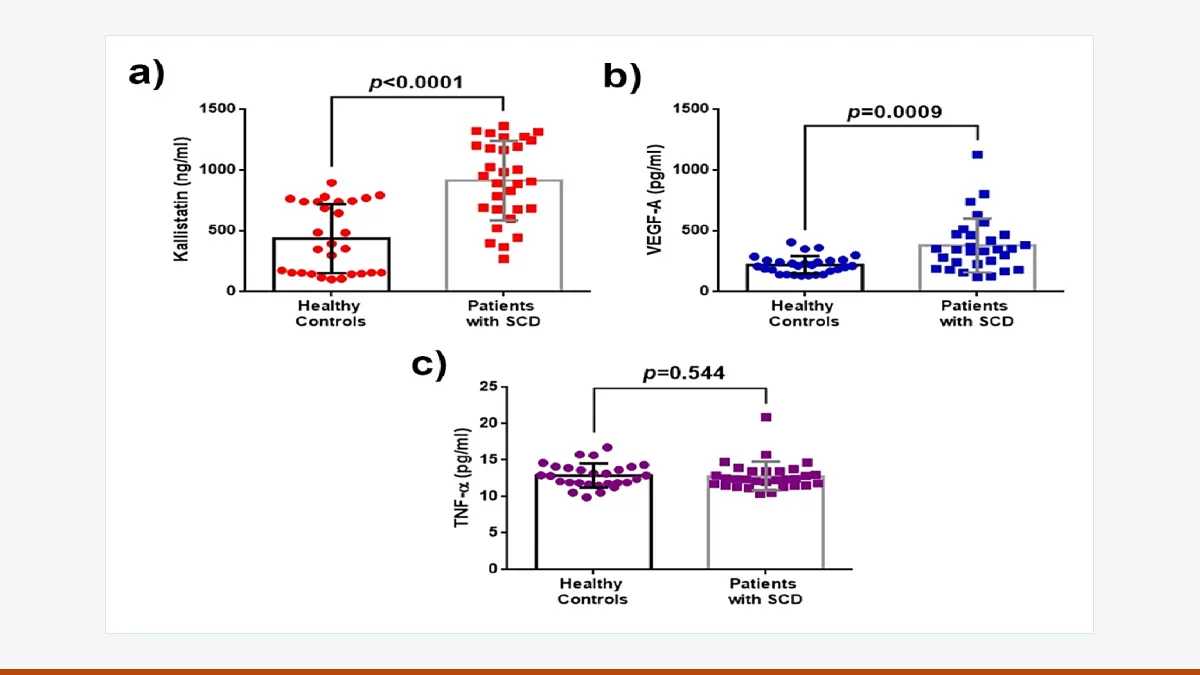
Researchers at Hatay Mustafa Kemal University compared 30 adults with the inherited HbSS form of the disease with 28 healthy people of similar age and sex. Their 2021 report in The Ulutas Medical Journal focuses on kallistatin, a protein made mainly in the liver that takes part in blood vessel growth.
Kallistatin was clearly higher in patients, and so was VEGF-A, a growth signal for blood vessels. The inflammatory signal TNF-alpha did not differ. Higher kallistatin went with more signs of red cell breakdown, such as bilirubin and LDH, and with lower haemoglobin.
As a test separating patients from controls, kallistatin reached an area under the curve of 0.85.
Caveat: this is a small single-centre study; it shows an association, not that kallistatin causes or predicts complications.
Source: Serdar Dogan et al. Serum Kallistatin Levels are Associated with the Pathogenesis of Sickle Cell Disease. Ulutas Med J 2021. doi:10.5455/umj.20211101020302.
Image: Figure 1 of the article, CC BY-NC 4.0.