COVID-19 emptied operating rooms, except for caesareans and appendectomies
One Turkish hospital's records show how the first pandemic year reshaped surgery.
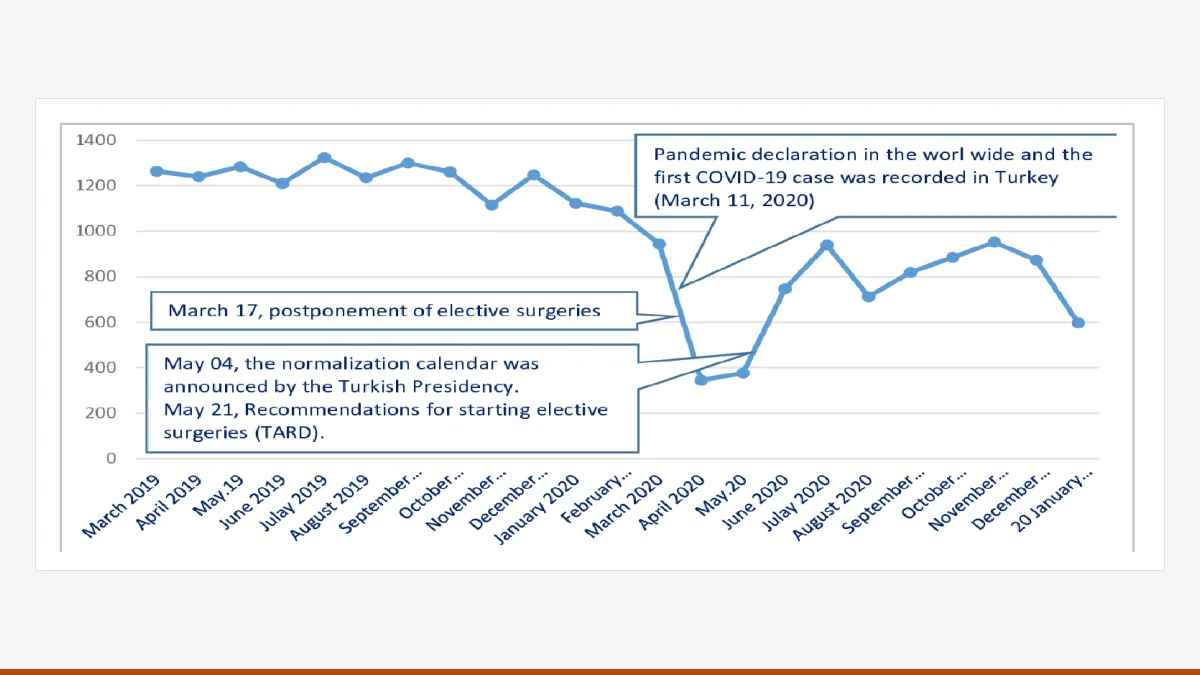
When COVID-19 arrived in Türkiye in March 2020, hospitals put planned operations on hold. What did that do to the surgical workload?
A team writing in The Ulutas Medical Journal compared every operation under anaesthesia at one tertiary hospital in the year before the pandemic with the period after it, about 22,700 cases in total.
Monthly operations dropped by 71.8% once restrictions began, bottoming out in April 2020 before climbing back from May. Ear, nose and throat surgery shrank the most, by 73.5%.
Not everything fell. Caesarean sections went up, from 1,377 to 1,492, and appendectomies rose as well.
The authors suggest that triage rules drove the decline, while a performance-linked pay scheme for doctors and a growing backlog may explain why some planned operations kept going.
Caveat: this is a retrospective look at a single centre, so other hospitals may have seen different patterns.
Source: Haci Gunes et al. Comparison Between Surgical Procedures Performed in the First Year of the COVID-19 Pandemic and the Previous Year in a Tertiary Hospital: A Retrospective Analysis. Ulutas Med J 2025. doi:10.5455/umj.20250116100903.
Image: Figure 3 of the article, CC BY-NC 4.0.