433 emergency abdominal operations in two and a half years at one Pakistani surgical unit
Records from Rawalpindi show how often surgeons must open the abdomen in an emergency, and why.
Emergency abdominal surgery rarely makes headlines, yet it keeps operating theatres busy around the clock, especially where resources are thin.
Surgeons at Holy Family Hospital in Rawalpindi, Pakistan, reviewed every emergency midline laparotomy their unit performed on patients over 12 between June 2014 and December 2016. Their 2019 report in The Ulutas Medical Journal counts 433 operations, about 173 a year.
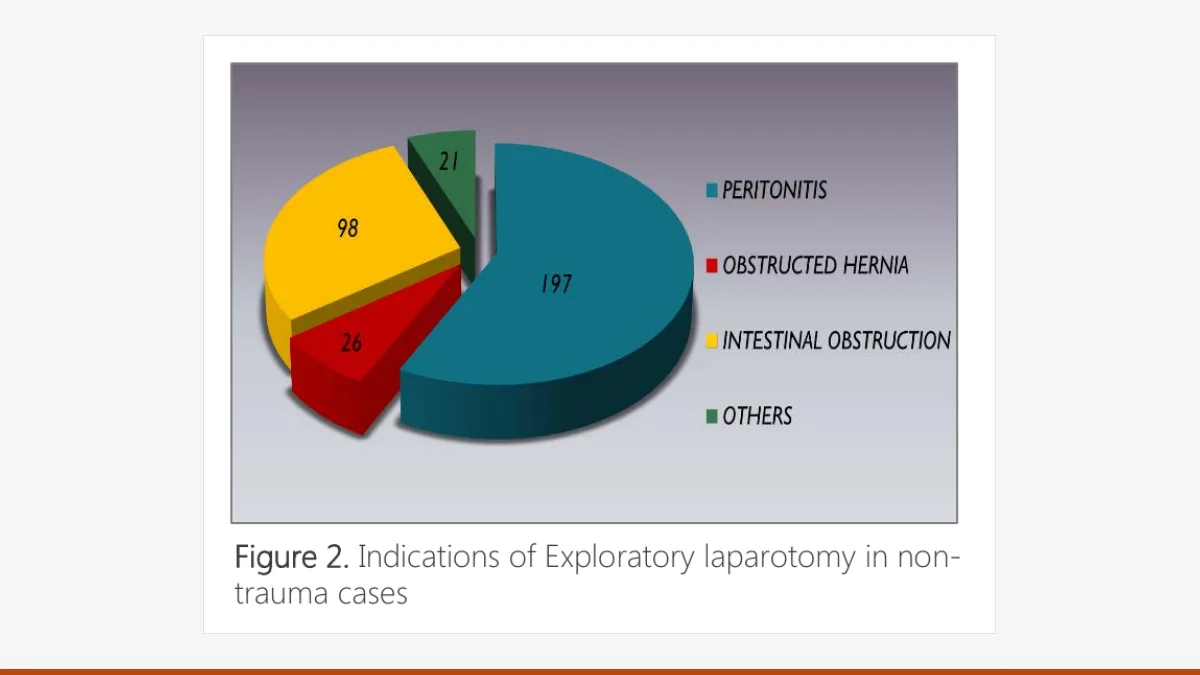
Most patients, 342, had no injury. Peritonitis, an inflammation of the abdominal lining, led the list with 197 cases, followed by bowel obstruction. The other 91 patients had abdominal trauma. Whatever the cause, a hole in the intestine was the commonest finding at surgery.
In 7.6% of the non-trauma operations surgeons found an 'abdominal cocoon', which the authors take as a sign of abdominal tuberculosis, still common in the region.
They argue for more specialised trauma centres to share the load.
Caveat: this is a retrospective count from a single surgical unit, so it describes workload rather than the results of care.
Source: Raheel Ahmad et al. Burden of Emergency Exploratory Laparotomies: Sleepless Nights in Operation Rooms. Ulutas Med J 2019. doi:10.5455/umj.20190602085150.
Image: Figure 2 of the article, CC BY-NC 4.0.