In psoriasis, a blood-vessel marker climbs step by step with disease severity
Serum endocan was more than four times higher in 94 patients in Şanlıurfa than in people without the disease.
Psoriasis is more than a skin problem: it involves chronic inflammation and the growth of new small blood vessels. Researchers have been looking for blood tests that reflect what is going on.
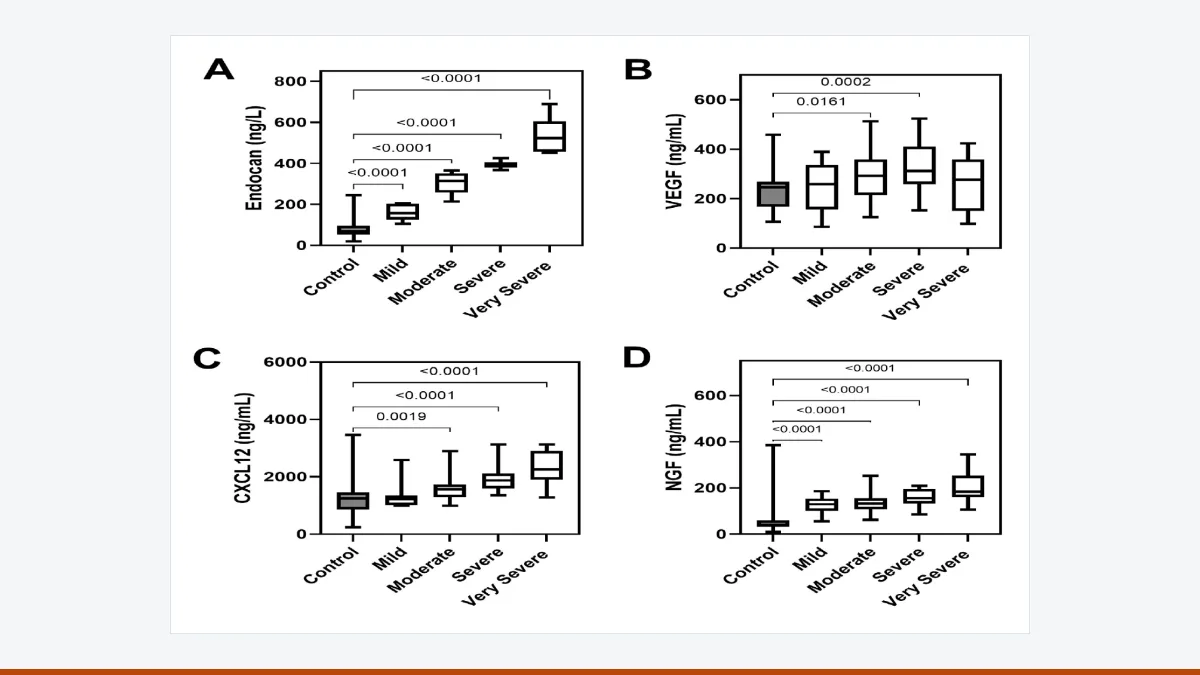
In The Ulutas Medical Journal in 2023, a biochemist and a dermatologist in Şanlıurfa measured four such molecules in 94 people with psoriasis and 100 people of similar age, sex and weight without inflammatory disease.
All four were higher in patients. The clearest signal came from endocan, a molecule tied to the lining of blood vessels: on average it was about four and a half times the level in controls. Grouped by the standard PASI severity score, endocan rose at every step, from mild to very severe disease. NGF, a nerve growth factor, showed a similar pattern.
The authors suggest endocan and NGF as possible targets for future treatment.
Caveat: each person was measured once, so the study cannot tell whether these molecules drive psoriasis or simply accompany it.
Source: Ugur Yurekli et al. The Relationship of Endocan to Disease Severity in Psoriasis: Effect of Endocan on VGEF, CXCL12 and NGF Levels. Ulutas Med J 2023. doi:10.5455/umj.20230127061036.
Image: Figure 1 of the article, CC BY-NC 4.0.