The Ulutas Medical Journal · ISSN 2149-0430 (print), 2149-388X (online) · https://www.ulutasmedicaljournal.com/?mno=168118
Original Article · Open access
Relationship between COVID-19 Infection and Buerger's Disease-Related Amputations
Also available in: العربية · Türkçe · 中文
- Department of orthopedics and traumatology, 25 Aralık State Hospital, Gaziantep, Turkey
- Department of Orthopedics and Traumatology, Faculty of Medicine, Gaziantep Islamic Science and Technology University, Gaziantep, Turkey ROR
Abstract
- Introduction
- Thromboangiitis obliterans (TAO) or Buerger's disease is a non-atherosclerotic, inflammatory arteritis involving small and medium-sized arteries and veins of the extremities, often causing gangrene and scarring. Coronavirus disease (COVID-19) may predispose to both arterial and venous thromboembolic complications. This study examined the relationship between COVID-19 infection and Buerger's disease-related amputations.
- Materials and Methods
- Between January 2018 and July 2023, 54 patients who applied to our clinic for Buerger's disease and were followed up and treated were analyzed retrospectively. Follow-up information, demographic data of patients (age, gender, body mass index (BMI), education status), when they were diagnosed, amount of smoking (pack/year), all treatments applied for Buerger's disease (Pre-Covid – Covid period – Covid Afterwards), presence or absence of limb amputation, continued smoking, medications, cardiovascular risk factors, Charlson Comorbidity Index (CCI), Venous Thromboembolic Event (Pulmonary Embolism), Covid-19 History and vaccination information were noted.
- Results
- The mean age of 54 patients included in the study was 38.1 (27-49), all male. The mean smoking rate was 32 (16 - 60) packs/year, and the mean exposure to the SARS-CoV-2 virus was 1.22 (0-4) times. There was a significant correlation between major amputations due to Buerger's disease and age, severity of COVID-19 disease, and systemic hypertension (p<0.005). Major amputation rates increased during the period of COVID-19 disease (p<0.05).
- Conclusion
- We found a statistically significant increase in major amputations as the exposure to the virus or the severity of the COVID-19 disease increased. We also observed a significant increase in major amputation rates in the presence of systemic hypertension. The presence of COVID-19 disease and hypertension should be considered when planning treatment to prevent amputation in Buerger's patients.
Keywords
Full text
Introduction
Atherosclerosis obliterans is a chronic disease with ischemia and necrosis in target organs that causes stenosis or occlusion in peripheral vessels. Thromboangiitis obliterans or Buerger's disease is a non-atherosclerotic, inflammatory arteritis involving smallandmedium-sized artery and veins of the extremities, often causing gangrene and scarring (1, 2). During the clinical course of Buerger's disease, there is an active phase of disease and usually ceases after age 60 (3). It is strongly associated with tobacco use. However, the pathophysiology is still unclear. Occlusions in the distal arteries can lead to limb amputation (4). Despite this, Buerger's disease is not a life-threatening disease. Severe acute respiratory syndrome coronavirus 2 (SARS- CoV-2) has caused a worldwide epidemic and patients with the infection are referred to as COVID-19. Although COVID-19 is considered a respiratory illness, there is an unexpected thrombotic potential. Depending on the pathophysiology of the disease and subsequent coagulopathy, inflammatory, hypocoagulable and hypofibrinolytic condition occurs (5).
Its typical clinic is viral pneumonia causing severe respiratory disorder. However, hypercoagulability has been observed in many patients. COVID-19 disease may predispose to both arterial and venous thromboembolic complications. The vast majority of thromboembolic events occurs in the venous system and is predominantly seen as pulmonary embolism. Most arterial thromboembolisms occur in the lower extremity arteries, followed by the upper extremity arteries (6–8).
In this study, we aimed to evaluate the relationship between COVID-19 infection and Buerger's disease-related amputations.
Materials and Methods
Ethical Statement
Permission for the present study was obtained from Gaziantep University Non-Interventional Research Ethics Committee (No: 312, Date: 2023/08/15). All patients signed an informed consent form that allows the participating institution to use their clinical data.
Study Design
A total of 102 patient files, which applied to our clinic for Buerger's disease between January 2018 and July 2023 and were followed up and treated in our clinic, were retrospectively reviewed. The diagnosis of Buerger's disease was based on clinically meeting 4 of the 5 main criteria (shionaya) (9). These criteria are a history of smoking, onset of the disease before the age of 50, involvement below the knee, upper extremity involvement or presence of phlebitis migrans, and no atherosclerotic risk factors other than smoking. Patients with collagen tissue disease, popliteal entrapment disease, hypercoagulable disease, thoracic outlet syndrome, atrial fibrillation, and patients who were out of follow-up were excluded from the study. During the first consultation from the patients who did not receive their first diagnosis in our clinic, necessary information was obtained through face-to-face interviews and added to the patient file.
A total of 54 (52.9%) patients who applied to our outpatient clinic for the last control and were followed up and treated regularly by our clinic during the relevant dates were included in the study. All patients were informed about the study and their consent was obtained.
Follow-up information, demographic data of the patients (age, gender, body mass index (BMI), educational status), when the diagnosis was made, and the amount of smoking (pack/year) were noted. All treatments of patients for Buerger's disease were divided into 3 periods: pre-COVID (1 year ago), COVID period and post-COVID period (1 year). Classification of limb amputations according to periods, continued smoking, medications used, cardiovascular risk factors, Charlson Comorbidity Index (CCI), Venous Thromboembolic Event (Pulmonary Embolism (PE)), COVID-19 History and vaccination information were noted.
An amputation was defined as major if it involved the tibiotarsal, tibiofemoral, or coxofemoral joint for the lower extremities. Patients who quit smoking at the time of diagnosis and quit smoking for 1 year were considered to have quit smoking. Smoking status was controlled based on verbal expression at each visit. If they declared they started consuming again during follow-up or amputation, it was considered as smoking. Sinovac (CoronaVac) and Pfizer-BioNTech (BNT162b2, mRNA) are the two most frequently used vaccines in the vaccination program in our country. BioNTech is an mRNA-based vaccine that contains the genetic material of the virus (10). Therefore, the COVID-19 disease of the patients and each BioNTech vaccine were evaluated as exposure to the virus.
Statistical Analysis
Statistical Package of the Social Sciences (IBM SPSS v.27, USA) was used for statistical analysis. Kolmogorov-Smirnov/Shapiro-Wilk was used to evaluate the normal distribution. Descriptive analyses were presented using means and standard deviations for normally distributed variables. The Chi-square test was used to compare proportions in different groups. One-way ANOVA was used to compare parameters. Pearson Correlation test was used in the analysis to compare disease-related variables. In the correlation analysis, age, hypertension and COVID-19 severity parameters, which are more associated with Buerger's disease, were evaluated. Some parameters were compared using the student’s T test. These tests were chosen within the framework of the general rules in statistics, depending on characteristics of the dependent and independent variables. The significance level was set at p<0.05.
Results
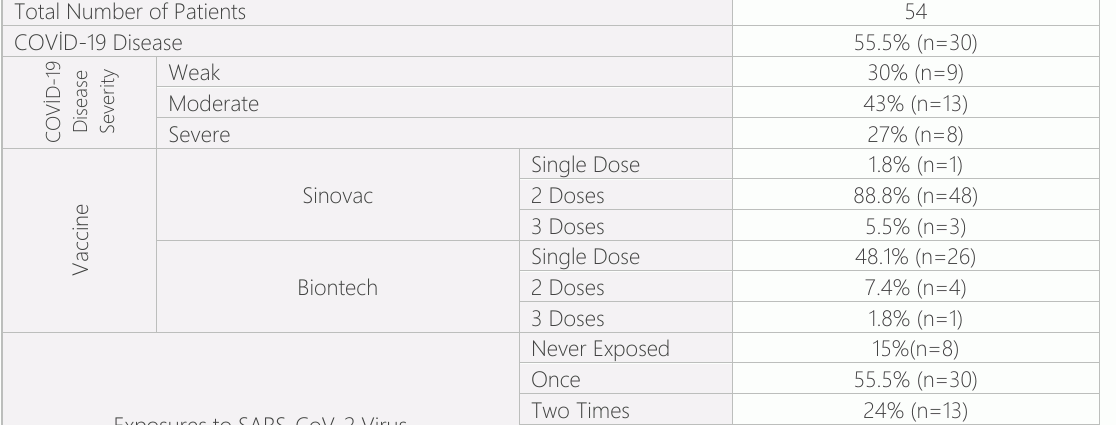
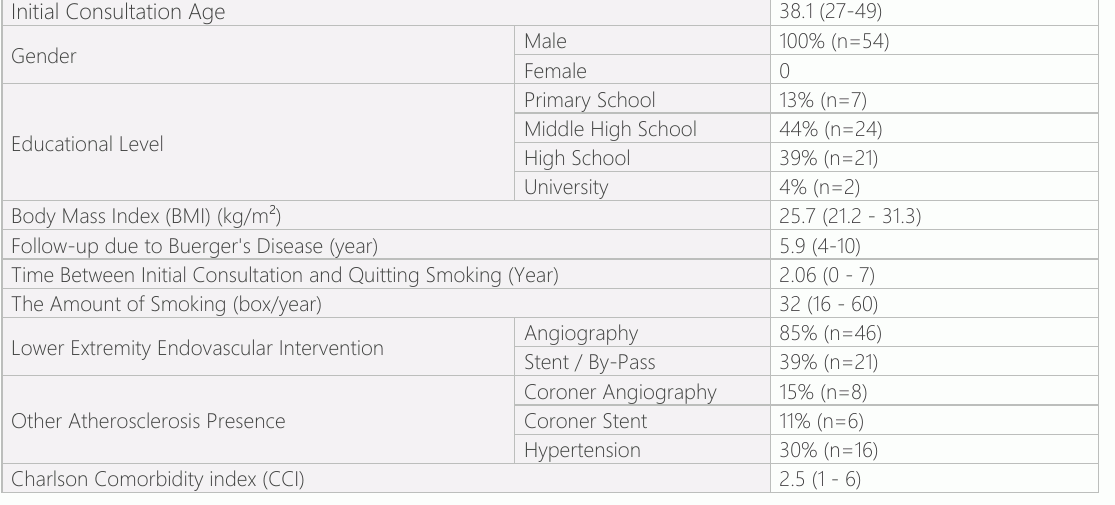
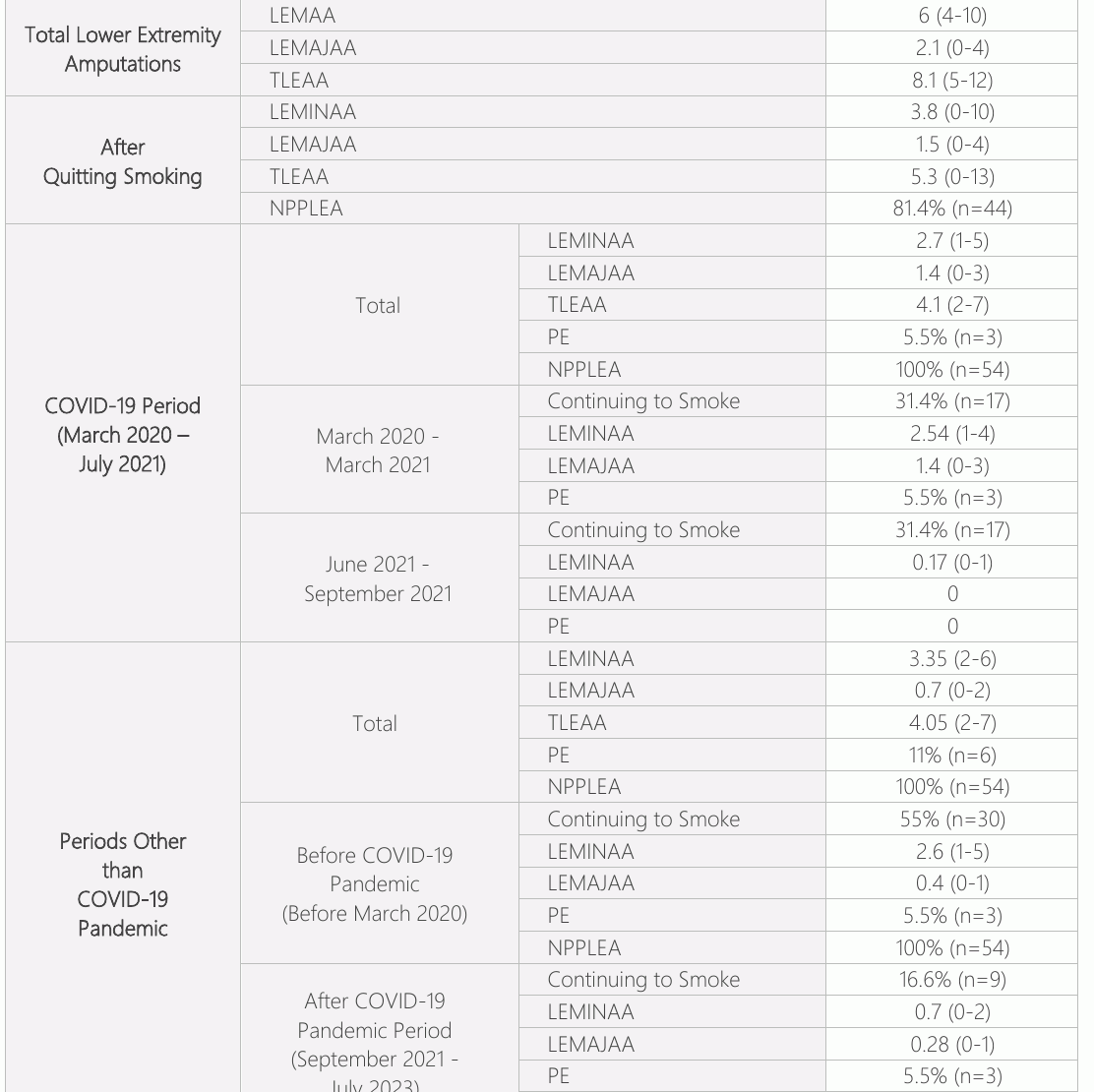
After excluding patients who did not meet the acceptance criteria, a total of 54 patients were included in the study. All the patients were using anti-coagulant and antiaggregant drugs (Warfarin/ Clopidogrel, Acetyl Salicylic Acid) during all follow-up periods. From patient files, the mean age, gender distribution, educational status of the patients, Body Mass Index (BMI), how many years they were followed for Buerger's Disease, how many years they continued to smoke after diagnosis, amount of smoking (packs/year), endovascular intervention for the lower extremities history, presence of other atherosclerosis, and Chalson Comorbidity Index (CCI) were analysed (Table1). A comparison of the total lower extremity amputations during the follow-up of disease is shown in Table 2. There was a correlation between major amputations due to Buerger's disease and age, severity of COVID-19 disease, and hypertension (p<0.005). The severity of COVID-19 disease, the vaccines administered and their amounts, and the exposure of the The lower extremity amputations applied to the patients, the status of these amputations in the period after quitting smoking, the amputation during the COVID Pandemic period (March 2020 - July 2021), the amputation status in the non-COVID Pandemic periods is shown in Table 4.
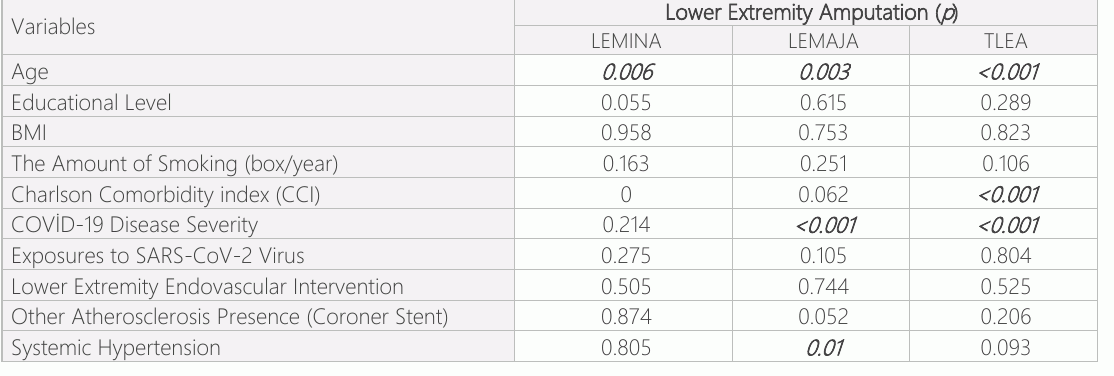
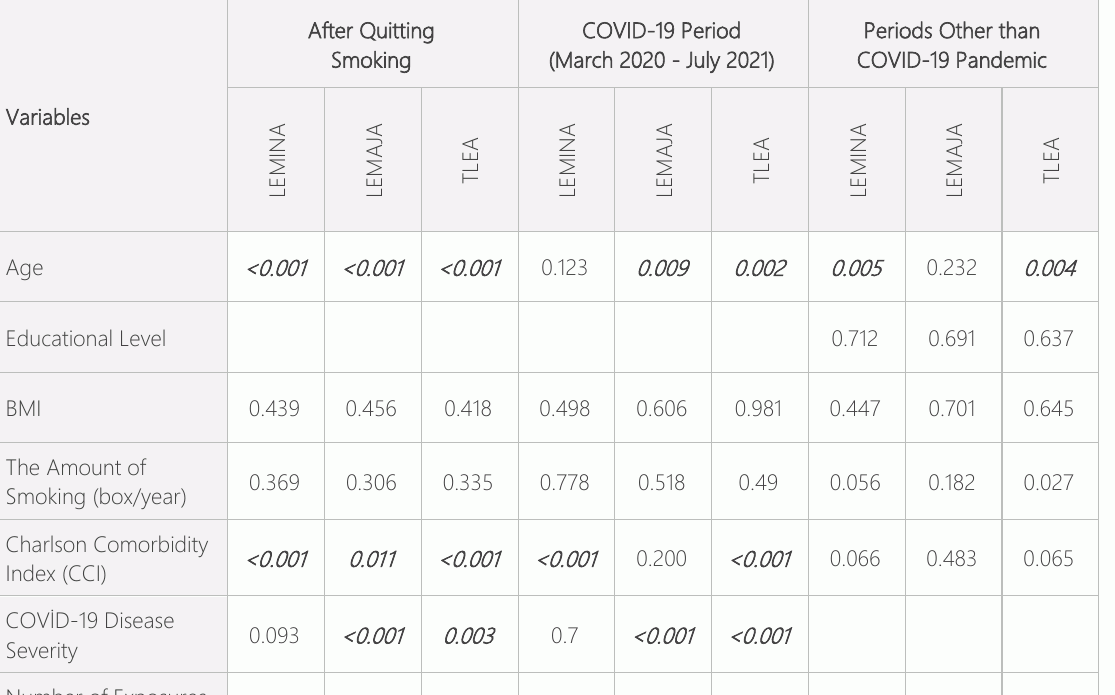
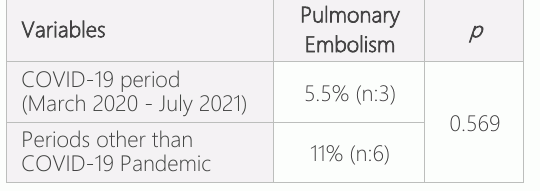
The comparison of the follow-up information of the patients with the period after quitting smoking, the COVID-19 Pandemic period and non-COVID-19 Pandemic (pre-post) periods are shown in Table 5. There was statistical significance between COVID-19 periods, age and amputation rates (p<0.001). However, there was statistical significance in terms of CCI during the COVID-19 period and smoking cessation periods (p<0.001). In addition, a statistically significant relationship was found between amputations in the COVID-19 period and the severity of COVID-19 and the number of exposures to the virus (p<0.001) (Table 5). Pulmonary embolism was taken as the basis for thromboembolic complications experienced by the patients. The pulmonary embolism (PE) experienced by the patients was analysed according to the period of COVID-19 and non- COVID-19 periods. No significant relationship was found between them (Table 6).
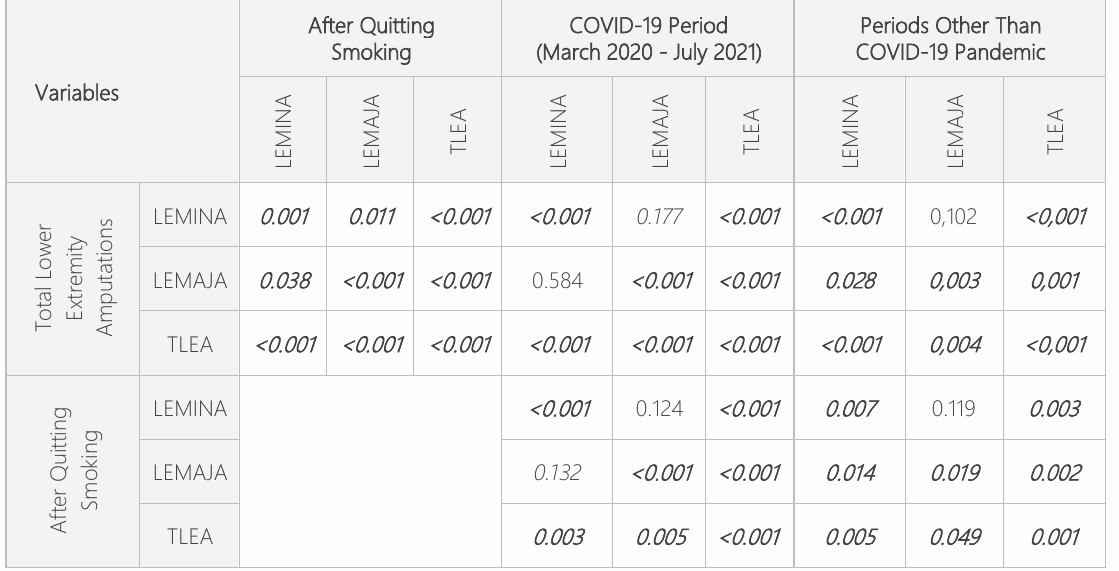
Comparison of the Effects of Smoking and Amputations at Different Periods of the Patients are shown in table 7. All amputations due to Buerger's disease were compared with the period after quitting smoking, the COVID-19 pandemic and the non-COVID-19 periods. All amputations decreased significantly in the period after quitting smoking. On the other hand, major amputation rates increased during the period of COVID-19 disease. In the non- COVID-19 periods, there was an increase in minor amputation rates (Table 7).
Discussion
In our study, we found a statistically significant increase in the number of major amputations as the exposure to the virus increased or the severity of the COVID-19 disease increased. We also observed a significant increase in major amputation rates in the presence of systemic hypertension. We analysedpulmonar embolism to evaluate venous thromboembolism caused by the SARS-CoV-2 virus. We have determined 3 periods of the patients as pre-COVID-19 Period, COVID-19 Pandemic period and post- COVID-19 Pandemic period. There was no significant relationship between the incidence of pulmonary embolisms that the patients had experienced during these periods. Therefore, in our study, we found that both the active transmission of the COVID-19 disease and the ingestion of the virus through live virus vaccine did not cause an increase in VTE. Studies in the literature have reported that COVID-19 disease has an increased incidence of peri-operative and postoperative VTE in those with recent COVID-19 disease (11–15). In a study of postvaccination (Pfizer, Moderna, and Janssen vaccines) and pre-vaccination rates (n:792.010), Houghton et al(10) reported that overall, there was no significant increase in VTE risk with COVID-19 vaccinations. The reason why there was no increase in our study was because all of the patients were using anticoagulant drugs. This may be because it prevents venous thromboembolism.
In our study, we considered every booster of the Biontech vaccine, which is one of the most used live vaccines in Turkey, and the disease itself as an individual's exposure to the virus. However, we found a statistically significant increase in the number of major amputations as the exposure to the virus increased or the severity of the COVID-19 disease increased (p<0.005). Likewise, minor amputation rates increased significantly in the non-COVID-19 Pandemic periods. In addition, we found that COVID-19 disease did not cause an increase in the rate of VTE in Buerger's disease. Therefore, we believe that it does not cause an increase in arterial thrombosis. However, we think that while normal ulcers observed in the course of disease can be resolved with minor amputation, they require major amputation as a result of late intervention. One of the main reasons for late intervention was the difficulties in reaching the health institutions of the patients during the pandemic period. As the severity of the disease increases, the patient's dependence on the bed increases, the mobilization decreases, and the involvement ofdecubitus andvenous circulation disorders may be other reasons.
Despite the strong association of Buerger's disease with tobacco use, the pathophysiology is unclear. Quitting smoking has overwhelming impact on preventing limb amputation (2). In our study, a statistical decrease was observed in amputation rates after patients quit smoking. This shows us that tobacco use is associated with the progression of the disease. Fazeli et al. (16) showed that time of smoking was the only independent factor associated with major amputations. On the other hand, Joncour et al (2) stated that they found not a relationship between amputation and the duration of exposure to cigarettes or amount of tobacco consumption. In our study, however, no relationship was found between the amount of smoking (pack/year) and amputations in all follow-up years of the patients. According to a study by Ohta et al. (17), the rate of continuing to smoke after the first consultation is highest in secondary school graduates, followed by high school and university graduates. However, they could not detect difference between continuing to smoke and education. In our study, there was no significant difference between educational status and the number of amputations.
Although administration of antiplatelet agents or anticoagulant therapy, progression of the underlying disease process is relatively rapid (18, 19). All individuals were using anticoagulants (Warfarin/clopidogrel) and antiplatelet agents (acetylsalicylic acid) during the follow-up period (20). However, this was not enough to prevent amputations. Although good bypass surgery improves symptoms of ischemia, it is often not applicable in Buerger's Disease (17). This may be because endovascular intervention is effective in vascular occlusions for atheroma plaques. 85% angiography and 35% endovascular intervention were performed on the patients in our study group during the follow-up period. Information could not be accessed because interventional radiologist and cardiovascular surgeon performed endovascular intervention. However, no significant decrease was found between endovascular interventions applied to the patients and the reduction in amputations. On the basis of Buerger's disease, there is no atheroma plaque. Therefore, the interventions did not affect the progression of the disease. Ejagwulu et al. (21) showed that there was an increase in the number of major amputations with systemic hypertension. Burleva et al. (22) reported that major amputation operations were increased in coronary atherosclerosis. In our study, 26% of the patients had a history of intervention for coronary atherosclerosis. There was no difference between the presence of coronary pathologies and amputations in the patients. On the other hand, there was an increase in the number of major amputations with the presence of systemic hypertension. The reason for this may be the delay in the healing of wounds that can be treated with minor amputation as a result of peripheral venous vasodilation of antihypertensive used.
There are a total of 22 co-morbid disease parameters in the Charlson comorbidity index (CCI). This index is used clinically as a predictor of long-term prognosis and survival (23, 24). Gibson et al. (25) found mean CCI in patients with diabetic foot ulcer to be 3.17 and reported that there was a negative correlation between CCI and amputation. The mean CCI in our study was 2.5 (1–6). A positive correlation was found between CCI and the amount of amputation. This shows us that CCI is a reliable method in comorbidity determination.
The limitations of our study are that we know the smoking status by verbal submission of the patient. While smoking is a very important factor, incorrect inferences may have been made as a result of the patient's giving false information about its use. In addition, since many of the patients had atherosclerosis, we may not have been able to detect progression with isolated Buerger's disease. The other limitation is comparison of whether vaccination status alone is associated with increased or decreased amputation rates. It would be beneficial for future studies to include a more diverse patient population in terms of gender and other demographic variables. Therefore, this information should be supported by more comprehensive and prospective studies.
Conclusion
In conclusion, we found a significant increase in the number of major amputations as the exposure to the virus increased or the severity of the COVID-19 disease increased. We also observed an increase in major amputation rates in the presence of systemic hypertension. The presence of COVID-19 and hypertension should be considered when planning treatment to prevent amputation in Buerger's patients.
Declarations
- Author contributions (CRediT)
- All authors contributed equally to all 14 CRediT roles (Conceptualization, Data curation, Formal analysis, Funding acquisition, Investigation, Methodology, Project administration, Resources, Software, Supervision, Validation, Visualization, Writing – original draft, Writing – review & editing).
- Funding
-
Funding information was not reported in the published version of this article.
- Conflicts of interest
- The authors declare no conflict of interests.
- Ethics approval
- Permission for the present study was obtained from Gaziantep University Non- Interventional Research Ethics Committee (No: 312, Date: 2023/08/15). All patients signed an informed consent form that allows the participating institution to use their clinical data.
- Data availability
- A data availability statement was not reported in the published version of this article.
References (25)
22 of 25 references are linked to their DOI.
- Buerger L. Thrombo-Angiitis Obliterans: A Study Of The Vascular Lesıons Leadıng To Presenile Spontaneous Gangrene. The American Journal of the Medical Sciences (1827-1924). 1908;136(4):567. DOI Crossref PubMed Google Scholar
- Le Joncour A, Soudet S, Dupont A, et al. Long‐term outcome and prognostic factors of complications in thromboangiitis obliterans (Buerger's disease): a multicenter study of 224 201 77 COVID-19 and Buerger-Related Amputations Yılmaz & Gonder patients. Journal of the American Heart Association. 2018;7(23): e010677. DOI Crossref PubMed Google Scholar
- Watanabe Y, Shimizu Y, Hashimoto T, et al. Demographic Traits, Clinical Status, and Comorbidities of Patients With Thromboangiitis Obliterans in Japan. Circ J. 2023. DOI Crossref PubMed Google Scholar
- Modaghegh MHS, Kamyar MM, Shafiei A, Shariatmaghani SS, Saremi E, Sadeghipour Kermani F. A comprehensive review of the epidemiology and clinical features of 91 cases with Buerger's disease. Vascular. 2023:17085381231175257. DOI Crossref PubMed Google Scholar
- Bilge A, Karasoy I, Neziroğlu E, Güner Y. Upper extremity arterial thromboembolism in a patient with severe COVID-19 pneumonia: A case report. Joint diseases and related surgery. 2021;32(2):551. DOI Crossref PubMed Google Scholar
- Etkin Y, Conway AM, Silpe J, et al. Acute arterial thromboembolism in patients with COVID-19 in the New York City area. Annals of vascular surgery. 2021;70:290-4. DOI Crossref PubMed Google Scholar
- Klok F, Kruip M, Van der Meer N, et al. Incidence of thrombotic complications in critically ill ICU patients with COVID- 19. Thrombosis research. 2020;191:145-7. DOI Crossref PubMed Google Scholar
- Lodigiani C, Iapichino G, Carenzo L, et al. Venous and arterial thromboembolic complications in COVID-19 patients admitted to an academic hospital in Milan, Italy. Thrombosis research. 2020;191:9-14. DOI Crossref PubMed Google Scholar
- Shionoya S. What is Buerger's disease? World Journal of Surgery. 1983;7:544-51. DOI Crossref PubMed Google Scholar
- Houghton DE, Wysokinski W, Casanegra AI, et al. Risk of venous thromboembolism after COVID‐ 19 vaccination. Journal of Thrombosis and Haemostasis. 2022;20(7):1638-44. DOI Crossref PubMed Google Scholar
- Al-Ani F, Chehade S, Lazo-Langner A. Thrombosis risk associated with COVID-19 infection. A scoping review. Thrombosis research. 2020;192:152-60. DOI Crossref PubMed Google Scholar
- COVIDSurg C, GlobalSurg C. SARS-CoV-2 infection and venous thromboembolism after surgery: an international prospective cohort study. Anaesthesia. 2022;77(1):28-39. DOI Crossref PubMed Google Scholar
- İğrek S, Ulusoy İ, Çeliksöz AH. Does COVID-19 vaccine exacerbate rotator cuff symptoms? A prospective study. BMC Musculoskeletal Disorders. 2023;24(1):551. DOI Crossref PubMed Google Scholar
- Kivrak A, Ulusoy I. Surgical results of different interventions in open surgery for wrist dorsal ganglion cyst. 2023. DOI Crossref PubMed Google Scholar
- Nopp S, Moik F, Jilma B, Pabinger I, Ay C. Risk of venous thromboembolism in patients with COVID‐ 19: a systematic review and meta‐ analysis. Research and practice in thrombosis and haemostasis. 2020;4(7):e12439. DOI Crossref PubMed Google Scholar
- Fazeli B, Ravari H, Assadi R. Natural history definition and a suggested clinical approach to Buerger's disease: case-control study with survival analysis. Vascular. 2012;20(4):198-202. DOI Crossref PubMed Google Scholar
- Ohta T, Ishioashi H, Hosaka M, Sugimoto I. Clinical and social consequences of Buerger disease. Journal of vascular surgery. 2004;39(1):176-80. DOI Crossref PubMed Google Scholar
- Dokuyucu R, Gokce H, Sahan M, et al. Systemic side effects of locally used oxymetazoline. Int J Clin Exp Med. 2015;8(2): 2674-8. PubMed Google Scholar
- Koca I, Ucar M, Arik HO, Yilmaz M, Dokuyucu R. Alpha-lipoic acid could be a promising treatment in steroid-induced osteonecrosis. Eur Rev Med Pharmacol Sci. 2022;26(20):7404-12. PubMed Google Scholar
- Dokuyucu R, Cevik C, Ozler GS, et al. Determination of oxidative stress and effect of erdosteine on rhinitis medi camentosa in a rat model. Eur J Pharmacol. 2014;742:153-7 DOI Crossref PubMed Google Scholar
- Ejagwulu FS, Amaefule KE, Lawal YZ, Maitama IM, Audu SS, Delia T. Peripheral Gangrene and Extremity Amputations - Painful Preventable Sequelae of Meningococcal Septicaemia: Case Series Reports. West Afr J Med. 2020;37(2):189-96. PubMed Google Scholar
- Burleva EP, Korelin SV. [Prospects of clinical application of cilostazol for peripheral artery disease]. Angiol Sosud Khir. 2020;26(3):28-36. DOI Crossref PubMed Google Scholar
- Sabaz MS, Aşar S. Yoğun Bakım Ünitesinde Takip Edilen Koronavirüs Hastalığı-2019 Hastalarında Charlson Komorbidite İndeksi ve Pnömoni Şiddet İndeksinin Mortalite ile İlişkisi. Turkish Journal of Intensive Care. 2021;19(1). DOI Crossref PubMed Google Scholar
- Tikici D, Sadettin E, Tez M. Acil kolorektal cerrahi yapılan hastalarda mortaliteyi öngörmede Amerikan Anesteziyoloji Derneği Sınıflaması (ASA) ve Charlson Komorbidite İndeksi (CCI)’nin karşılaştırılması. Turkish Journal of Clinics and Laboratory. 2018;9(3):162-5. DOI Crossref PubMed Google Scholar
- Gibson TB, Driver VR, Wrobel JS, et al. Podiatrist care and outcomes for patients with diabetes and foot ulcer. Int Wound J. 2014;11(6):641-8. DOI Crossref PubMed Google Scholar
Respond to this article
Comments on a published article are welcome as a Letter to the Editor.
Get an e-mail when new articles in your fields are published
Questions to the authors
Questions are moderated: an editor approves each question, the authors answer, and an editor approves the answer before both appear here.
No answered questions yet.
Ask the authors a question
Discussion
Comments are moderated: they appear after the writer confirms the e-mail address and an editor approves them. Each comment carries a conflict-of-interest statement.
No comments yet.
Write a comment
Read the full text
Open the PDF here
Loading the PDF…
If the PDF does not show here, use the download button above.
How to cite this article
Yilmaz M, Gonder N. Relationship between COVID-19 Infection and Buerger's Disease-Related Amputations. Ulutas Med J. 2023;9(3):193-201. doi:10.5455/umj.20230903113816
Yilmaz, M., & Gonder, N. (2023). Relationship between COVID-19 Infection and Buerger's Disease-Related Amputations. The Ulutas Medical Journal, 9(3), 193–201. https://doi.org/10.5455/umj.20230903113816
Yilmaz, M. and Gonder, N. (2023) 'Relationship between COVID-19 Infection and Buerger's Disease-Related Amputations', The Ulutas Medical Journal, 9(3), pp. 193–201. doi: 10.5455/umj.20230903113816.
@article{umj168118,
  title = {Relationship between COVID-19 Infection and Buerger's Disease-Related Amputations},
  author = {Yilmaz, Mehmet and Gonder, Nevzat},
  journal = {The Ulutas Medical Journal},
  year = {2023},
  volume = {9},
  number = {3},
  pages = {193--201},
  doi = {10.5455/umj.20230903113816},
  url = {https://www.ulutasmedicaljournal.com/?mno=168118},
  issn = {2149-388X}
}